
Like Numbers in Mahjong: American Rules & Examples
Last updated: Nov 23, 2026
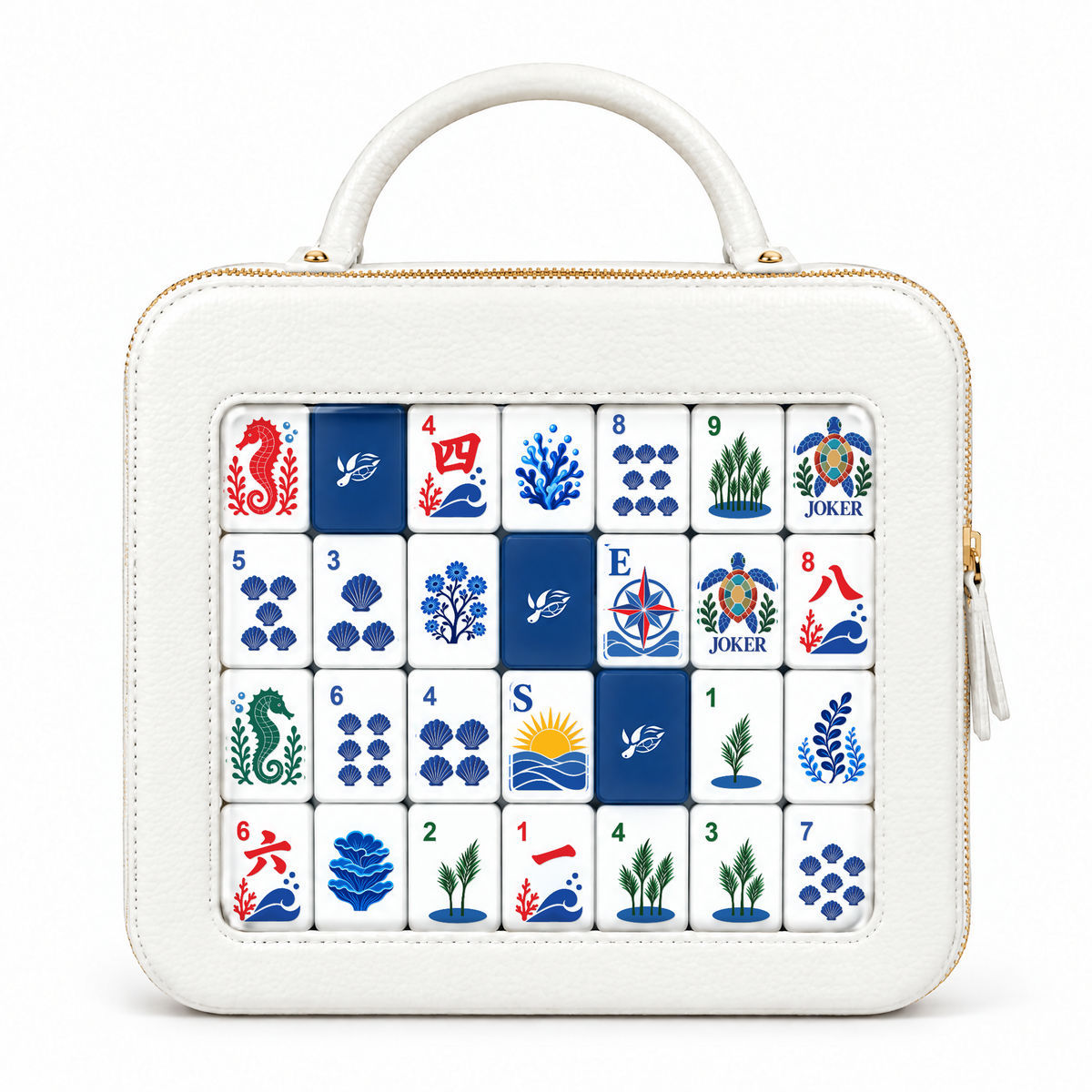
In American mahjong, "like numbers" means three or more tiles of identical rank within one suit: three 5 Dots, four 3 Bams, or five 7 Craks, for instance. These identical sets (called pungs, kongs, or quints) form the backbone of every legal hand on the National Mah Jongg League card. American mahjong does not allow sequences or "chows" (like 1-2-3); every combination must consist of either matching numbers in one suit or matching honors (winds and dragons). The annual card organizes all playable hands by like-number groups, joker counts, and special patterns. A standard 152-tile set contains exactly four copies of each numbered tile per suit, ensuring like-number combinations are always possible. Most new players confuse like numbers with sequences, which is the single most common error at the table.
🀄 Shop best-selling mahjong sets →
Why American Mahjong Bans Sequences But Loves Like Numbers
Can you meld 1, 2, and 3 Dots together in American mahjong? No—sequences (called "chows" in Chinese variants) are completely illegal. American rules require every visible combination to be either a pung (three identical tiles), a kong (four identical), a quint (five identical), or a sextet (six identical), plus one pair to complete the hand. This rule makes the game about pattern recognition and set-building rather than run-making. Our guide to reading the mahjong card shows exactly how each hand section divides like-number groups from honor combinations. If you learn only one rule, learn this: American mahjong is all about identical numbers in a single suit, not sequences across numbers.

The Three Types of Like-Number Combinations You Can Meld
When you have matching tiles, you expose them as a set. A pung is any three identical tiles—three 8 Dots, three East Winds, three Red Dragons. You can call a pung when another player discards the tile you need (claiming from the discard), or build it yourself during your turn. A kong is four identical tiles; you can form it from the wall or by calling a discard, then draw a replacement tile from the back of the wall (called the "loose tile" or "dead wall tile"). A quint (five identical) and a sextet (six identical) follow the same principle: they count as one melded group but give you a stronger pattern on the card, often worth more points. Jokers can substitute for missing tiles in any pung, kong, quint, or sextet—but never as a single tile or a pair. The difference between a three-tile pung and a five-tile quint can determine whether your hand scores or stays blocked all game.
Common Mistake: Confusing Like Numbers with Suited Sequences
The biggest error we see happens when a player new to American mahjong assumes they can lay down 4, 5, and 6 Dots because the numbers are "in order." That is wrong. American mahjong does not allow sequences. The only legal melded group in American play is a set of identical numbers in one suit (or identical honors). If you see a hand on the card that looks like "4-5-6," it actually means three separate like-number groups in different suits or a special section of the card using a different notation. Learn how to play American mahjong covers this fully, but the rule is absolute: no sequences, ever. Many players moving from Chinese or Riichi mahjong struggle here; American mahjong is its own game entirely.
Reading the Card: Sections Show Like-Number Patterns You Need
Every year the National Mah Jongg League issues a new card with rows of hand patterns. Each row shows a complete legal hand built from like-number combinations. The card is divided into sections: Year of the Dragon (all dragons and flowers), Consecutive numbers (e.g., 2 Dots, 3 Dots, 4 Dots in three separate like-number groups, not a sequence), Pairs and Quints (combinations of two-tile pairs plus larger like-number sets), and honor-heavy patterns mixing winds and numbers. To win, you must match a hand pattern on this year's card exactly—if your tiles don't appear in that year's official row, you cannot win with them, even if they feel like a "natural" hand. The card is your contract. Beginners often build what they think is a good hand, then discover it's not on the card at all. Keeping a laminated copy at the table saves countless moments of doubt; our best-selling mahjong sets often include a pocket card, and you can also purchase a standalone large-format card holder to prop at your table.

A Worked Example: Three Like-Number Groups Win a Hand
Let's build a real hand. Say you hold three 2 Dots, four 7 Craks, three East Winds, two Red Dragons, and a joker. On your turn, you draw a Red Dragon (now you have three Red Dragons). You check the card and find a pattern that reads: "2 Dots (pung), 7 Craks (kong), East (pung), Red (pair)." You have all those pieces:
Pung of 2 Dots: ✓ (three 2 Dots)
Kong of 7 Craks: ✓ (four 7 Craks)
Pung of East Winds: ✓ (three East Winds)
Pair of Red Dragons: ✓ (two Red Dragons)
You call "Mah Jongg!" and show your tiles. The hand is legal because every group is made of identical tiles, matching the card pattern exactly. Jokers are never needed here, but if you were short one 7 Crak, you could use the joker as a substitute in the kong. That's how like numbers win games: match the card, build identical groups, and play within the rules.
🎁 See our most-loved mahjong sets & accessories →
What to Check Before You Buy a Set for Like-Number Play
When you're shopping for a set to practice like-number hands, check that all 152 playing tiles are present (plus spares). Each numbered suit—Bams, Craks, Dots—should have exactly four copies of each number (1–9), giving you plenty of identical tiles for pungs, kongs, and quints. Acrylic tiles are easier to spot duplicates because the engraving is crisp and clear. If your set is missing even one copy of a number, you'll hit a wall when the card calls for a like-number combination you can't build. Our mahjong set collections ensure all 152 tiles are counted and verified before shipping. Beginners often inherit old sets with missing or damaged tiles—if you're setting up a weekly game, buy once, buy quality, and you'll play without frustration for years.
What to check | Why it matters | Red flag |
All four copies per number | Like-number sets require duplicates | "I'm short a 5 Dot" mid-game |
Clear, legible engraving | Spot identical tiles fast | Faded or smudged symbols |
Correct tile count (152 + spares) | A complete legal game every time | Missing tiles before first deal |
Honors complete (winds, dragons, flowers) | Honor-heavy hands need them | Wind set incomplete or worn |
How Jokers Interact with Like-Number Groups (and Limits)
Jokers are wildcards that substitute for any missing tile in a pung, kong, quint, or sextet. If you need a 9 Crak but don't have it, a joker stands in. However, jokers have strict limits: you can never use a joker as a single tile, as a pair, or in a hand with zero visible groups (you must have at least one group exposed to use a joker). The card dictates how many jokers are allowed in each hand—some patterns use zero jokers, others allow two or three. Our detailed guide on how jokers work walks through every rule. The most common error is trying to hold a hidden joker in your hand to "save" it—jokers must be used in melded groups or discarded. Once you see a joker in someone else's meld, you know they're short a tile; this teaches you where the deck is weak and informs your own strategy.
✨ Find your Mahstead set — free US shipping →
Why Understanding Like Numbers Transforms Your Game
Once you stop thinking of "sequences" and start seeing like-number groups as building blocks, the card becomes readable. You'll recognize that a hand labeled "2-3-4 section" doesn't mean a run—it means three separate like-number patterns from different suits or special combos defined by the card text. Your eyes will scan the wall for multiples instead of number progressions. You'll hold tiles strategically because you know you need four copies to build a quint, not three in a row. This shift from sequence logic to like-number logic is the moment new players begin winning regularly. American mahjong's unique rule set—no sequences, only identical groups—is why the game feels so different from variants you may have played. Return to our pillar guide on how to play American mahjong to see like-number rules in full context, or dive into our article on best American mahjong sets to find tiles that make spotting duplicates effortless.

FAQ
Can I make a sequence like 5-6-7 Dots instead of three identical tiles?
No. American mahjong forbids sequences entirely. Every melded group must be three or more identical tiles in one suit, or identical honors (winds or dragons). Sequences are legal in Chinese and other variants, but not in American play.
What's the difference between a pung, kong, and quint in terms of like numbers?
A pung is three identical tiles (e.g., three 4 Dots). A kong is four identical. A quint is five identical. All are like-number groups; the size determines their point value and which hands on the card they fit.
If I have four 3 Craks, do I have to declare a kong, or can I keep it hidden as a pung?
You can keep three hidden in your hand and expose one three-tile pung, or expose all four as a kong. However, once you expose a group, it stays melded and visible for the rest of the hand. Plan ahead: kongs score well but reveal your strategy.
Can a joker be used as a single tile or a pair in a hand?
Never. A joker can only substitute for a missing tile inside a melded group (pung, kong, quint, or sextet). It cannot stand alone or form a pair by itself. Many beginners try this and lose immediately.
If the card says "Pair of 5 Dots plus two quints," am I making like-number groups?
Yes, exactly. The pair is two identical 5 Dots. Each quint is five identical tiles in one suit. All are like-number combinations, just different sizes. The card tells you which tiles go into each group.
How do I know if a pattern on the card is made of like numbers or something else?
Read the suit abbreviation and number. If it says "three 8 Bams," that's three identical tiles—a like-number pung. If it says "2-3-4" or lists different numbers in one line, check the card's legend; American card sections are always like-number unless otherwise marked. When in doubt, ask the table or check your card note.


View More
View More
View More
