
Large Print Mahjong Set for Beginners: Which One?
Last updated: Nov 23, 2026
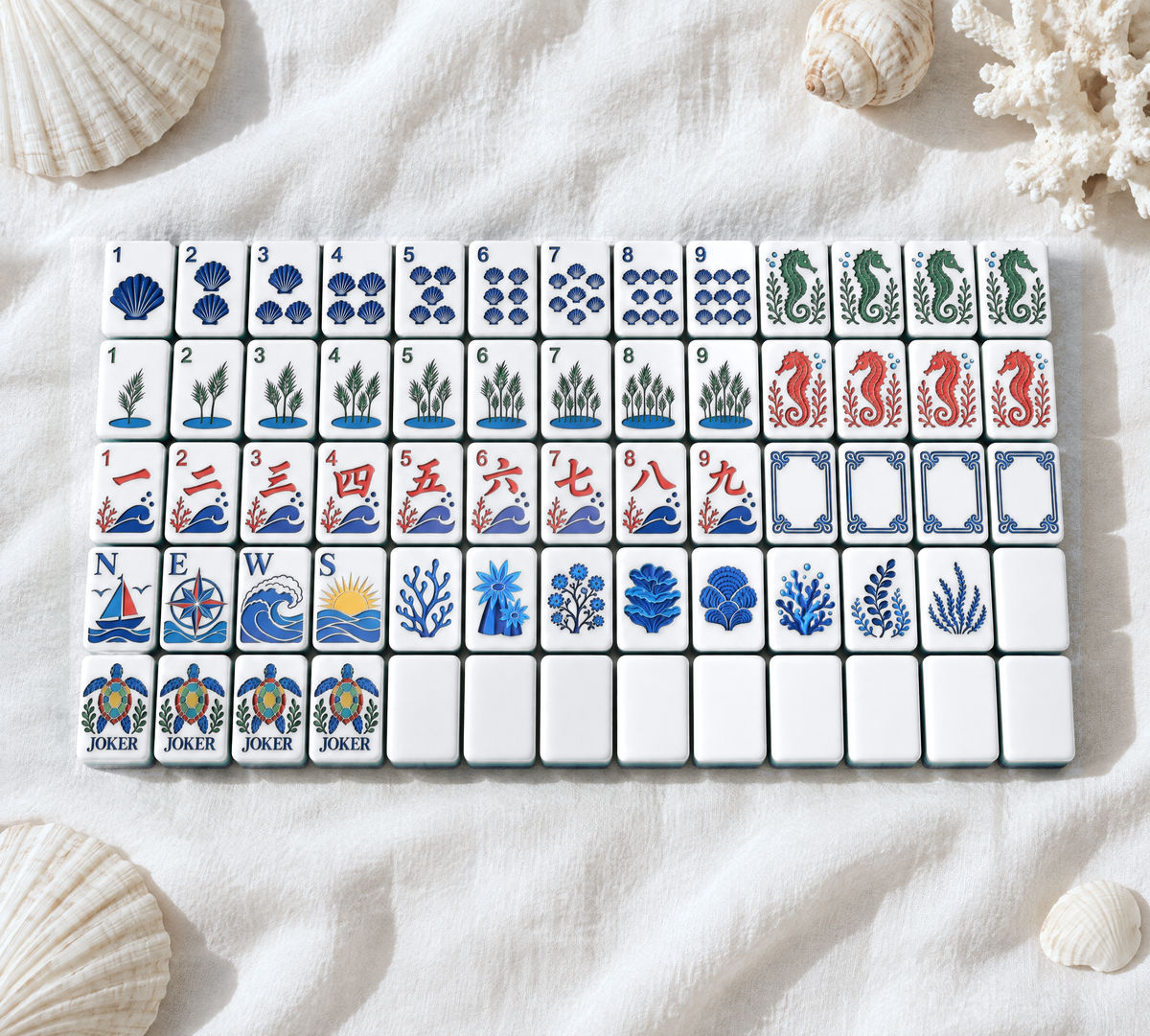
Large-print mahjong sets use bigger tiles and bolder numerals, making them ideal for beginners who need to recognize suits and numbers quickly without squinting. The tiles are typically cast acrylic with screen-printed symbols in black, red, or green ink. A full 160-tile set (152 playing tiles plus spares) costs less than most people expect and arrives ready to play. Look for sets where numerals are at least 1.5 times the standard size, characters are printed on both faces of each tile, and the plastic is thick enough to shuffle confidently. Our best-selling mahjong sets include large-print designs that fit both learning tables and casual game nights. Avoid sets where tiny numerals fade after a few weeks of play, or where tiles are so light they skitter across the mat instead of sliding smoothly.
Large-print mahjong sets remove a real barrier for beginners: the fear of not being able to read the tiles fast enough. In our weekly games, we see new players hesitate before drawing or playing because they're not yet fluent in recognizing Bams, Craks, and Dots at a glance. A set with clear, large numerals and bold suit symbols cuts that learning curve in half.
But "large print" isn't one standard. Some sets enlarge the numeral only; others enlarge the tile itself. Some print symbols on one face per tile; the best print on both faces so you can read a tile from your hand or on the table without rotating it. Picking the right one depends on your eyesight, your table size, and how often you'll use it.
🀄 Shop best-selling mahjong sets →
What makes a large-print set easier to read?
The numeral—usually 1–9 for each suit—needs to be thick, tall, and positioned so it's visible even when tiles are stacked in a rack or held at an angle in your hand. The suit symbol (Bam bird, Crak character, or Dot circle) also needs to be clear and consistent across the entire set. Tiles printed on both faces mean you never have to flip or rotate to identify what you're holding. Black ink on white or cream acrylic gives the best contrast. Color-coded suits (red for Craks and Dots, green for Bams) help some players but confuse others. The best large-print sets use both color and clear alphanumerics so you can rely on one or the other.

Why do some large-print sets wear out faster?
Screen-printed tiles are only as durable as the ink bond and the plastic base. When ink is applied too thin or to low-grade acrylic, it flakes or fades within months of regular shuffling. Heat and sunlight accelerate the wear. Sets we stock are printed with inks that cure properly and adhere to acrylic that's thick enough to withstand typical table play. When evaluating a set, look for tiles that feel solid and weighty (not hollow or thin), and ask whether the maker stands behind the print longevity. Budget sets often have bright ink that looks great at first but dulls quickly; mid-range sets usually outlast casual play by years.
How do size and spacing affect your game?
Standard mahjong tiles are roughly 1.25 inches wide; large-print tiles are often 1.5 inches or wider. A larger tile takes up more room on the mat and in your rack, which matters if your table is small or if your hands are already crowded. Spacing between numerals and suit symbols also affects readability. On a cramped tile, a large numeral can obscure the suit symbol. On a well-spaced large tile, both are equally prominent. Our best-selling mahjong sets balance tile size, numeral scale, and spacing so new players get confident visibility without running out of room on a standard mat.

Which large-print sets are best for beginners?
Feature | Standard Print | Large Print, Both Faces | Large Print, Single Face | Oversized Print |
Numeral size | ~0.4 in. | ~0.6 in. | ~0.6 in. | ~0.75 in. |
Readability from 3 ft | Difficult | Easy | Easy | Very easy |
Fit on standard mat | Snug | Comfortable | Comfortable | Tight |
Best for | Experienced players | New learners, mixed tables | Budget learners | Impaired vision, small groups |
Durability (years) | 5+ | 4–6 | 3–4 | 4–5 |
Most beginners thrive with large print on both faces. Single-face large print works if players are comfortable rotating tiles, but it adds a step that slows learning. Oversized print is excellent if you have vision concerns or play with grandparents and younger children; just confirm your mat and racks can accommodate the bigger tiles before ordering.
What else matters when choosing your first large-print set?
The tiles are just one part of the setup. A beginner also needs a good mat that shows the four seats clearly, racks with pushers so tiles stay upright and organized, and a bag to transport everything. Racks are often the forgotten piece—without them, tiles sprawl on the mat and beginners can't keep their hand stable or read it quickly. Mahjong racks with pushers give each player a dedicated, angled space for their 13 tiles, which speeds up play and reduces errors.
Jokers are also critical. A 160-tile set includes 8 jokers, and jokers are essential in American mahjong—they substitute for any tile you don't have and are printed clearly on both faces in almost all modern sets. Make sure your large-print set includes jokers with the same font size and contrast as the number tiles; some budget sets print jokers in tiny text even when the regular tiles are large, which defeats the purpose.
✨ Find your Mahstead set — free US shipping →
What to check before you buy
Confirm tile size and numeral scale. Ask the seller for exact measurements or comparison photos. If the product page doesn't show numerals next to a ruler or familiar object, email before ordering.
Verify both faces are printed. Single-face printing saves manufacturers money; double-face printing is standard in quality sets and worth the slight price difference.
Check ink durability claims. Reputable makers describe the printing process (screen-printed, UV-cured, etc.) and often mention years of table testing. Vague descriptions are a red flag.
Count the jokers and verify their size. Jokers should be as readable as the numbered tiles. A set with 8 jokers is standard for American mahjong; anything less is incomplete.
Look at reviews from beginner players, not just experienced ones. Experienced players tolerate small print; beginners cannot. Reviews mentioning ease of reading are your best guide.
Confirm the total tile count is 152 or 160. American mahjong requires exactly 152 tiles to play (108 number tiles, 16 winds, 12 dragons, 8 flowers) plus 8 jokers. A 160-tile set includes extra jokers and blanks as spares, which is normal.
Measure your table or mat. If your mat is smaller than 36×36 inches or if you play in tight quarters, oversized tiles may feel crowded.
Once you have your large-print set, learn the fundamentals. The mahjong Charleston is the tile-trading ritual before every hand; how jokers work is a stumbling block for many new players; and how to read the mahjong card is your map to legal hands. Those three topics will accelerate your confidence more than any feature of the tiles themselves.
🎁 See our most-loved mahjong sets & accessories →

FAQ
Can I use a large-print set in a competitive league?
Yes, but check the league rules first. Most leagues, including the National Mah Jongg League, allow any tile set as long as the tiles meet size and marking standards. Large-print sets are never penalized—some experienced players use them simply because they prefer clarity.
Will a large-print set slow down my game?
No. After one or two sessions, tile recognition becomes automatic and speed returns to normal. Large print actually builds speed in beginners because they hesitate less and make fewer errors.
How many players can play with one large-print set?
Four players per hand. A single 160-tile set plays one hand at a time. If you host a larger group, you'll need multiple sets or multiple hands played sequentially.
Are large-print sets more expensive?
Not significantly. Price varies by material quality, engraving options, and finish, not primarily by print size. A quality large-print set costs roughly the same as a comparable standard-print set from the same maker.
Can I mix large-print and standard-print tiles from different sets?
Not for play. The tiles would be visually inconsistent, sizes might differ slightly, and new players would be confused. Keep sets separate and use one set per hand.
What's the difference between Mahstead's designs and other large-print sets?
Mahstead sets are engraved acrylic with screen-printed suits and numerals, made to withstand weekly play in home groups. Every set is built to standard American mahjong specifications (152 tiles plus 8 jokers) and ships ready to play, with racks and mats available separately to build your complete setup.


View More
View More
View More
