
Is Mahjong Solitaire Good for the Brain?
Last updated: Nov 23, 2026
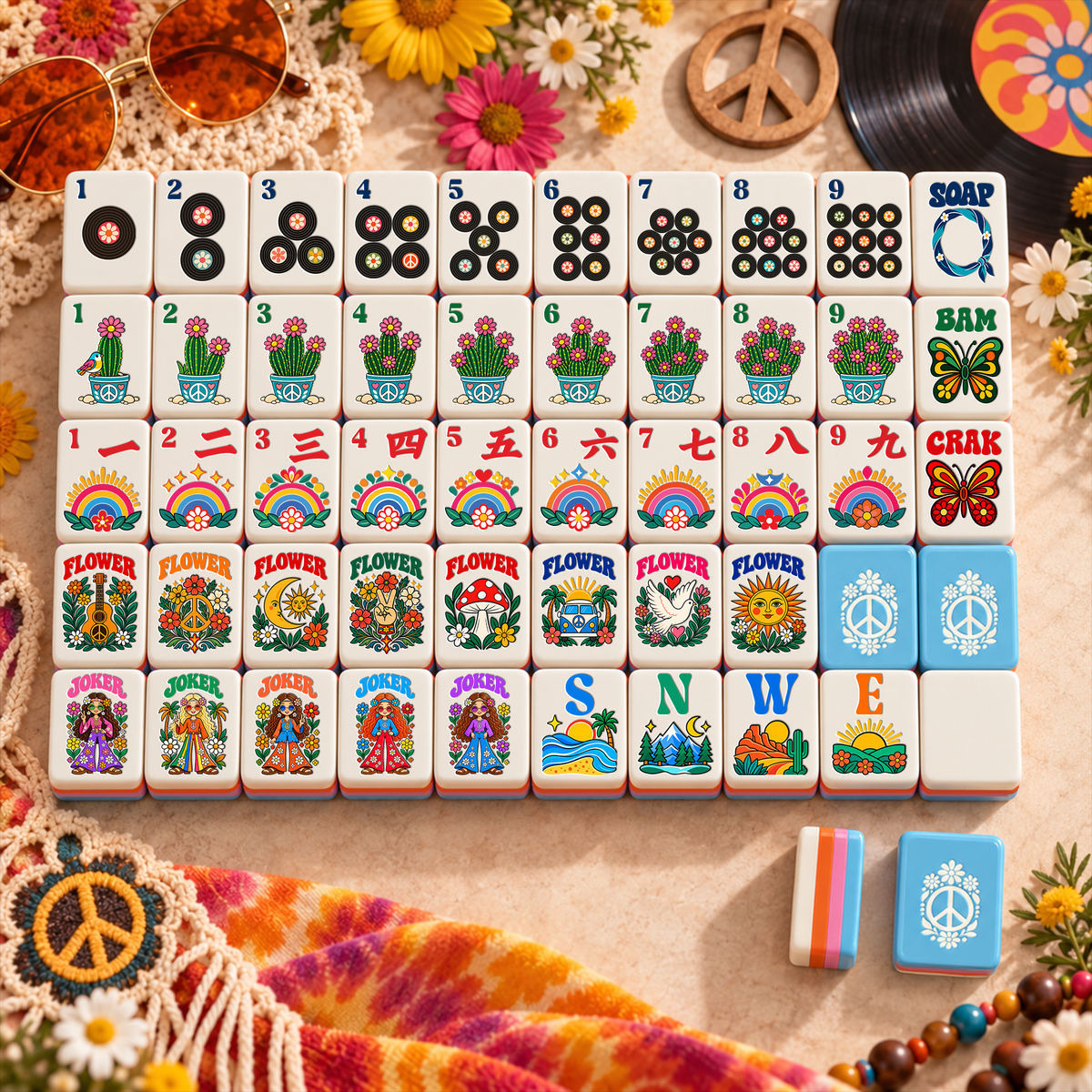
Yes. Mahjong solitaire—the single-player, tile-elimination game—strengthens working memory, visual-spatial reasoning, and strategic planning. A typical 30-minute session engages pattern recognition and forces you to anticipate tile sequences before moving them, activating the same prefrontal cortex regions used in puzzle-solving and chess. Unlike social mahjong (which demands rapid rule recall and tile reading), solitaire offers low-stakes, self-paced mental exercise. Research into tile-matching games suggests benefits comparable to Sudoku or jigsaw work. The cognitive load is moderate: you're not memorizing discard patterns or opponent strategy, just training focus and foresight. For beginners, it's a no-pressure way to learn tile names and recognize hand patterns before joining a game. We recommend keeping a solitaire app or physical board handy; many players use solitaire as warm-up before weekly hosted games or as a solo wind-down practice.
🀄 Shop best-selling mahjong sets →
How does mahjong solitaire train your memory?
Mahjong solitaire requires you to track which tiles remain face-down, predict future moves two or three steps ahead, and remember which tile types you've already removed. This constant updating of a mental map activates working memory—the brain's short-term holding space. Unlike passive games, solitaire forces active recall: you must recall tile positions and rules without hints. Repeated play strengthens the neural pathways for visual-spatial memory, similar to how regular chess players improve pattern recognition.

What's the difference between solitaire and American mahjong for brain health?
American mahjong is social, real-time, and rule-heavy: you're reading the current year's card, identifying legal hand patterns, managing your discard strategy, and responding to opponents' plays. It demands divided attention—multitasking under time pressure. Solitaire is solitary, self-paced, and pattern-focused: you're eliminating matching tiles and uncovering hidden pieces. Both train the brain, but differently. American mahjong sharpens social reasoning and rapid decision-making; solitaire builds patience and methodical thinking. For someone learning to play, starting with mahjong for beginners often includes solitaire practice first, then moves to group play.
Can you really improve focus by playing mahjong solitaire daily?
Yes, with consistent play. Focus improves when you practice under minimal distraction—the solitaire format itself. Setting a timer and aiming to clear the board in under 10 minutes raises the cognitive demand. Twenty to thirty minutes daily, three to five days per week, appears sufficient to sustain gains in sustained attention (based on the pattern in similar puzzle-game studies). The key is regularity and intentional play: playing mindfully, not while scrolling or half-watching TV. Many of our players use a high-quality set during evening play, which adds tactile engagement and removes phone temptation—a simple habit boost.

Does solving mahjong solitaire translate to better performance in real games?
Partially. Solitaire teaches you tile recognition and the feel of legal combinations (pugs, kongs, quints), so you learn to spot patterns faster. When you move to American mahjong, that pattern-spotting speed gives you an edge in reading how to read the mahjong card and identifying available hands quickly. However, real games add social and strategic layers—managing your discard pile, reading opponents' intentions, understanding how jokers work in live play—that solitaire doesn't cover. Solitaire is a foundation, not a replacement. Most new players alternate: solitaire three or four times weekly for practice, plus one group game session.
What evidence shows mahjong solitaire benefits brain aging?
Observational studies on game-playing and cognitive aging suggest that tile-matching games correlate with slower decline in working memory and processing speed in older adults (based on longitudinal data from aging cohorts, though randomized trials are limited). The repetitive attention demand and the low-stakes nature—no performance anxiety—make solitaire sustainable long-term. Neuroimaging in younger players shows activation in the dorsolateral prefrontal cortex (executive function) and posterior parietal cortex (spatial reasoning) during solitaire play. For healthy aging, the consistency of play matters more than intensity: 20 minutes most days outperforms an occasional marathon session.
Brain-training comparison: solitaire vs. social mahjong
Factor | Mahjong Solitaire | American Mahjong Group |
Memory type trained | Visual-spatial, working | Working + social, rapid pattern-matching |
Time pressure | Self-set | Real-time, opponent-driven |
Distraction level | Low | High (opponent plays, rules, discard tracking) |
Accessibility for beginners | Easier; no rules to learn first | Requires learning card, Charleston, hand values |
Sustainability (daily play) | High; no social friction | Medium; requires group coordination |
Cognitive load | Moderate & steady | High & variable |
Best age/audience | Any age; focus-building | Social players; strategic thinkers |
Our pick: What you'll need to start
If you're serious about making solitaire a daily habit, invest in a quality set. A physical board—rather than an app—forces you away from screen time and adds tactile feedback, which improves memory encoding. The best-selling mahjong sets offer durable tiles, clear markings, and a non-slip mat. Many players pair a set with a dedicated mahjong mat, which protects tiles and keeps play organized. If you play daily at a desk or coffee table, a mat prevents tiles from skittering and keeps you focused.
For group play later, you'll want mahjong racks with pushers—these let four players draw tiles efficiently, and the pushers prevent accidental knockover. A travel bag keeps your set safe between sessions. Start with solitaire, use one mat, and upgrade racks and bags only when you're hosting or joining regular games.
🎁 See our most-loved mahjong sets & accessories →
What to check before you buy a solitaire set
Tile size and readability: Make sure characters are large and high-contrast. Poor visibility ruins focus and introduces frustration.
Material durability: Acrylic or bone tiles last for daily use; cheap plastic wears fast and feels cheap underhand.
Completeness: Confirm the set contains all 152 tiles needed. Some budget options ship incomplete or with bent tiles.
Non-slip backing: A mat or a set with non-slip feet prevents tiles from sliding during play, a key annoyance for solo players.
Storage: Ensure the storage box closes securely and tiles fit snugly, so you're not fishing for pieces every session.
Getting the most cognitive benefit from daily solitaire play
Set a consistent time—say, 6 p.m. on weekdays—and play for 20–30 minutes without interruption. Use physical tiles, not an app. Turn off notifications. Start easy: clear a full board without a timer, focusing on recognizing all tile types. Once comfortable, add time pressure (set a 10-minute target). Increase difficulty by playing blind: shuffle the tiles, lay them face-down, and reveal as you go, forcing deeper memory work. Track your clear times in a simple journal—improvement is motivating and provides concrete feedback.
After four to six weeks of consistent play, join a group game once a week. Solitaire will have primed your tile recognition and pattern-spotting; the social game will feel less overwhelming. Many communities host beginner sessions at libraries, community centers, synagogues, or country clubs—search local meetup boards for "mahjong" plus your city. If you're hosting games, a best-selling set paired with mats and racks elevates the experience and makes group play more enjoyable, which in turn deepens your brain engagement.
✨ Find your Mahstead set — free US shipping →

FAQ
Is mahjong solitaire as good for your brain as crosswords or Sudoku?
Yes, equally. All three train working memory, pattern recognition, and sustained attention. Mahjong's tactile element (handling tiles) adds proprioceptive feedback, which some researchers believe strengthens encoding. Choose whichever you find most engaging; consistency matters more than the game type.
How long should I play solitaire to see cognitive benefits?
Research on puzzle games suggests benefits appear within four to six weeks of 20–30-minute sessions most days. You'll notice sharper focus during play first; memory improvements follow over two to three months of regular engagement.
Can I play mahjong solitaire on my phone instead of buying a physical set?
You can, but a physical set offers better focus and memory encoding because it removes screen distractions and engages tactile learning. Phone play works if consistency is your priority; tile play works better if brain engagement is the goal.
What age group benefits most from mahjong solitaire?
All ages. Children build pattern recognition; adults maintain executive function; older adults slow cognitive decline. Play is beneficial across the lifespan, though younger players often transition to group mahjong faster.
Does mahjong solitaire help with ADHD or attention disorders?
The low-distraction, self-paced format can help some people with ADHD build focus habits, but solitaire is not a treatment. If you have diagnosed ADHD, consult your clinician before relying on games as an intervention. Many ADHD players find the tactile, rule-light nature of tile play calming.
Should I start with solitaire or jump straight to learning American mahjong rules?
Start with solitaire if you want low-pressure pattern familiarization. Jump to American mahjong rules if you're playing with a group soon. Most beginners mix both: solitaire two to three times weekly for confidence, one group session weekly to learn live strategy. See mahjong for beginners for a structured path.


View More
View More
View More
