
Mahjong Party Ideas in Chicago: Host Your First Game Night
Last updated: Nov 23, 2026
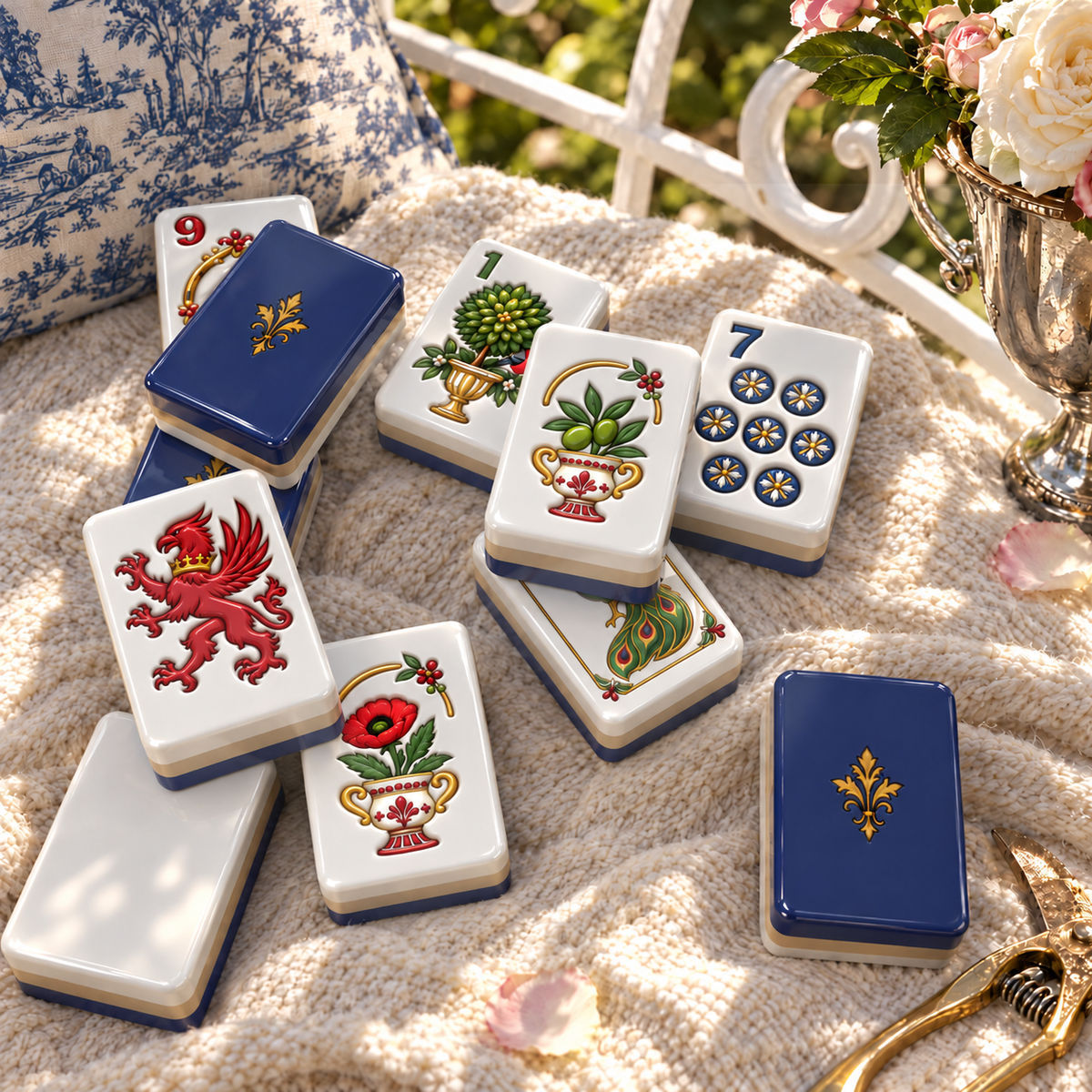
Mahjong parties in Chicago happen in living rooms, community centers, libraries, synagogues, and country clubs across the city—ask your local library or search "mahjong" on community meetup boards to find existing groups and venues. Most weekly games follow American mahjong rules (152 tiles, winds, dragons, flowers, jokers, and the National Mah Jongg League card) with four players around a table, a Charleston tile-passing ritual before play, and rounds lasting 30–90 minutes depending on skill. Hosting a beginner party requires one complete mahjong set, a reference card or printed guide, a dedicated playing surface (mat or table), and honest expectations: teach the Charleston and tile-recognition first, expect mistakes, and keep the first session to three rounds. Our best-selling sets come ready to play with no assembly; shipping to Chicago is free across the US.
Hosting a mahjong party in Chicago starts with one honest question: Are your guests beginners, seasoned players, or mixed? The answer shapes everything—setup time, rule explanation, and which accessories matter most.
What's the Best Way to Find Chicago Players to Invite?
Chicago has active mahjong communities scattered across neighborhoods. Visit your local public library, community center, or synagogue—many host open mahjong nights or can connect you with existing groups. Search community meetup boards and social media groups for "mahjong Chicago" or "mah-jongg meet-up"; you'll find regular Thursday or Friday games in coffee shops, cultural centers, and private homes on the North Shore, Lincoln Square, and Rogers Park. Many groups welcome newcomers and can explain local house rules. Starting small—inviting two friends who've never played before—is less pressure than joining a competitive group immediately.
🀄 Shop best-selling mahjong sets →

How Do You Set Up a Mahjong Party for Beginners?
Beginners need three things before tiles hit the table: a clean, clutter-free playing surface; clear tile visibility; and a written reference card handy. Set up your table 2–3 hours before guests arrive. Arrange one complete American mahjong set in the center—all 152 tiles plus 8 jokers. Place a printed National Mah Jongg League card (or a digital copy on a tablet) where all four players can see it. Seat players on all four sides, one to the left of the wall (dealer's left). Before dealing, explain the Charleston: each player passes three tiles to the left, then three to the right, then three across. Mistakes happen here—players sometimes grab four tiles by accident—so walk through it slowly. Have a notepad ready to track payments (if you're playing for stakes) and round winners. Never assume your guests know winds or dragons; spend 10 minutes naming each tile type and showing real examples.
What Mistakes Do First-Time Hosts Make?
The most common hosting mishap is starting to play before everyone has handled a few tiles. Beginners panic when they can't name a tile mid-game, and games stall. Solve this by dealing practice hands 20 minutes early: draw tiles, set down some pungs (matching sets of three), call out what you see. Let your guests do the same without penalty.
A second mistake: choosing a table or surface too small. American mahjong demands plenty of elbow room—each player needs a distinct rack or tile space on their side, and the center wall of 14 tiles must be visible to all four without reaching. A dining table works; a coffee table does not.
Third: forgetting joker rules. In American mahjong, jokers can substitute for any tile except a single tile (one Bam alone cannot be a joker) or a pair. New players constantly try to use a joker as a singleton or matching pair, and the table erupts in confusion. Print the joker rule or point to a reference card every time someone draws one.
Fourth: mixed-skill tables. If two players know the card and two don't, the game stalls while experts teach. Pair skilled players with learners only if someone sits out to coach, or run all-beginner games separately.
What's the Ideal Setup for a Long Party or Tournament-Style Night?
For a 3–4 hour party with multiple rounds, rotate players through dealer and seat positions. American mahjong cycles through Winds (East, South, West, North); traditionally, East deals first and plays stay East until East wins—then South becomes dealer. After four rounds (one per wind), the evening ends or you reshuffle and start again.
Set clear rules before you begin: Will we play for money? (Agree on scoring stakes upfront.) How many rounds? (Three rounds = 60–90 minutes, ideal for a casual party.) Do we play with house rules? (Chicago groups sometimes allow or forbid certain joker substitutions; state these before the Charleston.)
Create a rotating scoreboard. Use a notepad or whiteboard to track each player's points each round; totals keep games friendly and let players see their progress. Provide snacks and water—mahjong nights run long, and hydration helps focus.
Set a rule about tile counting: before the Charleston, each player counts their 13 tiles out loud; miscount and you re-draw. This catches dealer errors early.
Party Size | Duration | Player Mix | Best Surface | Key Tip |
4 players, all new | 60–90 min | Beginner-only | Dining table or mat | Teach tile names first; play practice hand |
4 players, mixed skill | 90–120 min | 2 new, 2 experienced | Card table + mat | Pair experts with learners; assign a coach |
6–8 players, rotating | 2–3 hours | Mixed | Multiple small tables or one large + sidelines | Run separate beginner & advanced tables |
4 players, repeat group | 90 min + | All intermediate | Dedicated surface + racks | Track scores across weeks; house rules must be written |
🎁 See our most-loved mahjong sets & accessories →
Where Should You Place Your Mahjong Set for Everyone to See?
Visibility matters more than you'd expect. The 152-tile wall sits in the center of the table. East (dealer) and West sit across from each other; North and South sit on the remaining sides. Each player builds a wall of 14 tiles in front of them, face-down, in two rows of seven. Jokers live in a visible zone—often a corner of the center wall or a player's side rack. The National Mah Jongg League card should hang on a wall or rest on a tall easel so no one has to crane or squint.
Bad setup: cramming tiles on a small mat with the card tucked under a stack of books. Good setup: plenty of breathing room, high card visibility, and a dedicated spot for melds (exposures) so no one knocks them over mid-game.
We recommend a mahjong mat with clear markings for first-timers—the printed guide lines and player zones take the guesswork out of setup. A mat also protects your table and makes cleanup easier.

What Gear Actually Makes a Difference for Hosting?
Not all mahjong accessories are worth the cost, but a few genuinely speed up your party and prevent chaos.
A complete set with extra jokers and spares (160 tiles) ensures you always have backups if a tile breaks or gets lost. Standard American play uses 152 tiles and 8 jokers; spares mean you'll never hunt for replacements mid-game.
Racks with pushers keep tiles upright and organized—beginners especially appreciate not having to hold 13 tiles in their hands the whole round. Pushers slide tiles forward when you draw, freeing your hands to think.
A mat with player zones and scoring printed on it cuts setup time and prevents arguments about where tiles belong. Beginners get fewer "wait, which side is mine?" questions.
A sturdy travel bag or case matters if you're hosting at someone else's place or want to join Chicago meetup groups without your tiles getting crushed in a car. A padded case protects against moisture and damage.
Dice (two or three for rolling) decide the wall. Standard American play uses three dice; rolling determines where the wall breaks. Many hosts skip dice and just agree on the break point—fine for casual games, but dice add tradition and fairness.
Our best-selling collection includes complete sets paired with mats and racks; many Chicago hosts choose these because the price point is clear and the quality handles weekly games without wear.
What Should You Check Before You Buy a Set?
Before ordering, ask yourself: Will this be my only set or a backup? If you host every week, buy one premium set now and a second backup in 2–3 years. Who's my audience—beginners or advanced? Advanced players notice tile weight and engraving quality; beginners just need legible suits and working jokers. How will I store it? Sets live longest in bags or cases in dry conditions away from direct sunlight. Will I travel with it? A lighter set in a padded case beats a heavy set in a flimsy box.
Check the tile count: American mahjong always uses 152 playing tiles and 8 jokers in gameplay; a 160-tile set includes spares for replacement. Never add extra tiles to the playing game—those spares sit in a drawer.
Verify the suits are correct: Bams (bamboo), Craks (cracks), and Dots, plus winds (N/E/W/S), dragons (Red with Craks, Green with Bams, White/Soap with Dots and as zero), flowers, and jokers. If any tile is missing or chipped on arrival, contact the seller before hosting.
✨ Find your Mahstead set — free US shipping →
How Long Does a Typical Chicago Mahjong Party Last?
A beginner-focused game with setup, teaching, and three rounds lasts 2–2.5 hours. Experienced groups finish three rounds in 75 minutes. The Charleston takes 3–5 minutes; each game hand takes 10–25 minutes depending on how quickly players recognize tiles and read the card.
If you're hosting a "drop-in" party—people arrive at staggered times—plan for 3 hours and run two games side-by-side: one for beginners (teaching-heavy), one for repeats (faster, fewer rules questions). This keeps everyone engaged and prevents the advanced group from sitting bored while you explain a pung.
Snack timing: serve food and water before the Charleston so players aren't eating over the tiles. Suggest people use a side table; mahjong and greasy fingers don't mix.
What You'll Need to Host
Start with one best-selling set and add gear based on your party size and frequency. A mahjong mat anchors your setup and protects your table. If you're hosting regularly, racks with pushers make tile handling smoother for everyone. For parties with multiple tables or travel, a padded bag or case keeps sets safe. All Mahstead sets ship free across the US.
Before You Host: A Checklist
[ ] Locate one nearby Chicago mahjong group or meetup (library, synagogue, or online board) to learn house rules.
[ ] Buy or borrow one complete 152-tile American mahjong set with 8 jokers and spare tiles.
[ ] Print or bookmark the current National Mah Jongg League card (updated each spring).
[ ] Test your table size: all four players' elbows should clear without touching.
[ ] Teach the Charleston to one friend before game night—practice it yourself so you don't stumble.
[ ] Invite 3 other people; keep your first party to one table, all beginners or mixed with one experienced host.
[ ] Set a clear rule about money, round count, and house rules—write it down.
[ ] Have water and snacks ready on a side table.
[ ] Set up 30 minutes early; deal practice hands so guests familiarize themselves with tile names.
[ ] Expect a slow first round; speed increases in round two.

FAQ
Can I play mahjong with just two or three people in Chicago?
American mahjong is designed for four players; the game breaks with fewer. However, modified two- and three-player variants exist—Chicago groups sometimes run them on off-nights. Ask your local meetup group for house rules. Standard American mahjong requires all four seats.
What do I do if someone in my party doesn't know any rules?
Spend 15–20 minutes before the Charleston teaching tile names (Bams, Craks, Dots, winds, dragons), then walk through one practice Charleston and one practice hand. Let them draw tiles and set down a simple pung without penalty. Most learners catch on after one full round; don't expect perfection on round one.
Is there a Chicago mahjong league or tournament I can join?
The National Mah Jongg League (NMJL) card is the official American standard. Chicago has no NMJL-sanctioned league office, but many community centers, synagogues, and cultural organizations run weekly open games. Ask your library for a calendar of local games or search "mahjong meet-up Chicago" online.
How much does a mahjong set cost?
Prices vary by material, size, and engraving. Visit the Mahstead product pages to see current pricing and compare options. All sets ship free across the US, and quality sets handle weekly play for years.
What should I buy first—the set, a mat, or racks?
Buy the set first; it's the only essential. A mat comes second (adds clarity and protects your table). Racks and pushers come third (convenience for regular games). A travel case comes last (only if you're hosting elsewhere). Start simple and add gear as your group grows.
Can I use house rules different from the official American mahjong standard?
Yes—every Chicago group agrees on house rules before play. Common variations include joker restrictions, payment systems, or "dead" tile rules. Write your house rules down and confirm with your guests before the Charleston. Stick to one rule set all evening; switching mid-game causes chaos.


View More
View More
View More
