
Is Mahjong Similar to Phase 10? The Real Differences
Last updated: Nov 23, 2026
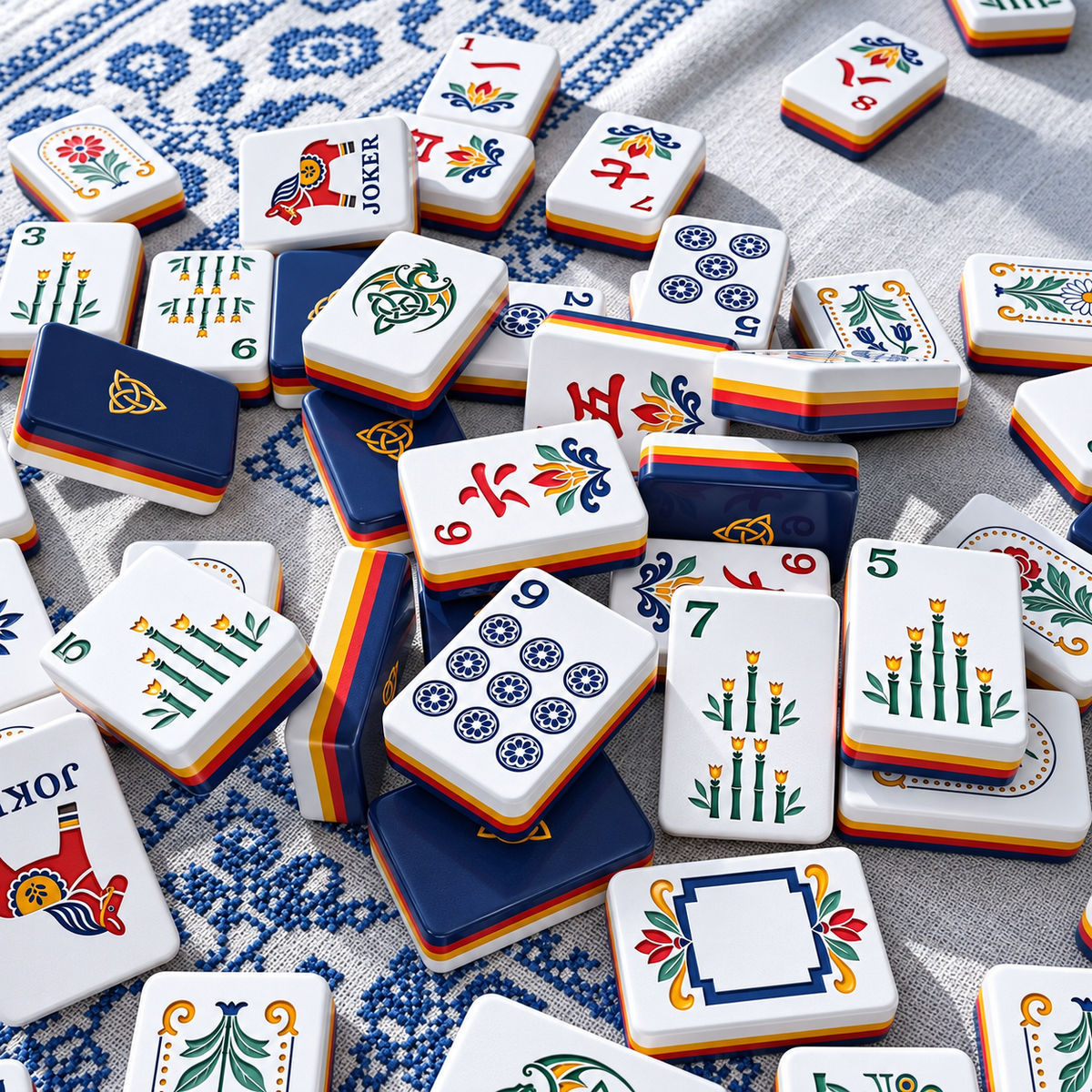
Phase 10 and American mahjong both involve grouping tiles or cards into sets and sequences, but they're fundamentally different games. Phase 10 is a simplified card game where players work through ten predetermined "phases" in order; mahjong is a 4-player tile game with 152 tiles, where players build one hand per game using combinations from the current National Mah Jongg League hand card. Phase 10 emphasizes luck and linear progression; mahjong demands memory, strategy, and skill to read a complex card. A mahjong round takes 20–45 minutes; Phase 10 hands typically resolve in 5–15 minutes. Neither game charges entry fees at home tables. Mahjong requires learning the tile suits (Bams, Craks, Dots), winds, and dragons; Phase 10 uses standard colors and numbers. If you're drawn to Phase 10 but want more depth and social challenge, mahjong is worth exploring—especially with a quality set from our best-selling collection. 🀄 Shop best-selling mahjong sets →
What's the core gameplay difference?
Phase 10 players complete a preset list of phases in sequence: first a set of three, then a set and run, then runs and sets in a fixed order. You're racing through a predefined path. Mahjong players, by contrast, choose one of dozens of valid hands from the year's league card and work to complete only that one hand during a single game—no sequential ladder. In mahjong, the hand card changes every spring, so seasoned players must relearn patterns annually. Phase 10 remains identical year to year, lowering the barrier but removing strategic novelty.

How do turns and tile draws work differently?
In Phase 10, you draw one card per turn and discard one; it's rhythmic and quick. American mahjong follows a much stricter turn order: you draw from the wall, expose melds when they match the hand card, and can only declare a "win" (called "mahjong") once your entire hand matches a single printed pattern. Mahjong's wall draw is sequential and visible; Phase 10's deck is a reshuffled pile. Mahjong also uses the Charleston—a tile-passing ritual before play begins—adding a social, strategic layer Phase 10 lacks entirely.
What role do jokers play in each game?
Phase 10 has wild cards that substitute for any card you need—they're abundant and make hand completion easier. In American mahjong, jokers are controlled and strategic. A standard 152-tile set includes 8 jokers; you may use them to substitute for any tile in a pung, kong, quint, or sextet, but never in a pair or single tile. This constraint forces real decisions: do you burn a joker now or save it for the final push? Jokers are scarce and visible on the mat, so opponents track their movement.
Can you play both games with the same materials?
No. Phase 10 uses a 108-card deck; mahjong requires a dedicated set of 152 playing tiles (plus spare tiles in most sets). The tiles are thicker, heavier, and engraved with Chinese characters and suit symbols (Bams show bamboo stalks, Craks show symbols, Dots are circles). You also need a rack to hold tiles, a mat or table cover, and the current year's National Mah Jongg League hand card—none of which are required for Phase 10. If you're curious about the full tile inventory, our guide to what's in a mahjong set breaks down every piece.
Quick Comparison Table
Aspect | Phase 10 | American Mahjong |
Players | 2–6 | Exactly 4 |
Materials | 108 cards | 152 tiles + hand card |
Goal | Complete 10 phases in order | Match one hand per game |
Jokers | Abundant, always wild | 8 total, restricted use |
Hand strategy | Linear, preset | Variable, league card each spring |
Avg. game time | 20–45 min. per phase | 20–45 min. per hand |
Learning curve | Shallow | Moderate to steep |
Relearning yearly | No | Yes (new card each spring) |

How does luck vs. skill differ?
Phase 10 is largely luck-dependent: you draw cards in random order and hope the right cards appear before opponents complete their phases. Mahjong is heavily skill-weighted. Yes, the wall draw is random, but experienced players:
Memorize 20+ valid hand patterns from the league card
Track exposed tiles to deduce which combinations remain
Read opponents' discards to block dangerous plays
Manage joker use tactically
Execute the Charleston to position their starting hand strategically
This is why weekly mahjong tables develop hierarchies and stakes. Phase 10 resets every hand; mahjong rewards study and pattern recognition.
Is there a learning checklist if I'm switching from Phase 10?
If you've played Phase 10 and want to try mahjong, here's what to learn first:
Memorize the three suits: Bams (bamboo; 1 Bam has a bird), Craks (Chinese symbols), Dots (circles). Each runs 1–9; White "Soap" dragon is the 0 for Dots.
Learn the honor tiles: Four winds (North, East, West, South) and three colored dragons (Red, Green, White). Winds and dragons never form sequences—only sets of three or four identical tiles.
Understand valid melds: A pung is 3 identical tiles; a kong is 4. These are the only exposed combinations in American mahjong. Jokers can substitute in any meld except pairs.
Get the league card: Buy or download the current year's National Mah Jongg League card (available each spring). It shows every legal hand; you build only one hand per game.
Practice the Charleston: Before the first hand, players pass 6 tiles left, 6 across, and 6 right in a choreographed exchange. Our Charleston guide explains the ritual step-by-step.
Study one hand deeply: Pick a simple pattern (e.g., "2020 Consecutive Pungs") and track which tiles you need. Play 5–10 hands focused on that pattern.
What to check before you buy a mahjong set if you're coming from Phase 10
Tile clarity: Can you read the suit symbols and numbers at a glance? Cheap sets have faded engravings or inconsistent finishes.
Weight and feel: Mahjong tiles should have heft and a satisfying clack sound. Lightweight tiles shift during play and don't feel like the game is "real."
Rack stability: Does the rack hold 13 tiles firmly without tiles tilting or sliding? Poor racks derail focus.
Mat or table space: Do you have room for a mat (roughly 30" × 30") or a dedicated table? Mahjong requires 2–3 times the surface area Phase 10 does.
Joker count: Standard sets include 8 jokers in the tile count. Make sure your set has enough; many older sets include fewer.
Set size: Most sets sold today are 160 tiles—152 playing tiles plus spare tiles. This matches the American game exactly.
🎁 See our most-loved mahjong sets & accessories →
Why mahjong might click better for you than Phase 10
If Phase 10 felt too linear or too luck-heavy, mahjong offers a richer game. You're not locked into a preset path; you're solving a puzzle with four minds competing simultaneously. The league hand card resets yearly, so the game never stales. And once you learn the tile names and the patterns, playing feels less like memorization and more like chess with tiles—each discard carries meaning.
The barrier to entry is higher than Phase 10 (you need a dedicated set, the hand card, and an hour to learn the basics), but the payoff is proportional. Weekly mahjong players develop a community, and the skill cap is genuinely high. You can play casually forever and still be learning.
If you decide to dive in, start with our guide to how to play American mahjong and grab a set from our best-selling collection—sets that are built to last through hundreds of games.
✨ Find your Mahstead set — free US shipping →
What to check before you buy
Do you have 4 regular players? Mahjong requires exactly 4; Phase 10 scales to 2–6.
Is your table or mat large enough? You need roughly 30" × 30" of playing surface, plus wall space for the tile wall.
Can you commit to learning the hand card? Phase 10 is plug-and-play; mahjong requires 30–60 minutes of upfront study.
Do you prefer strategy or luck? Mahjong rewards skill heavily; Phase 10 is more luck-dependent. If you dislike randomness, mahjong fits better.

FAQ
Can I play mahjong with fewer than 4 people?
American mahjong is designed for exactly 4 players. Modified rules exist for 2–3 players, but they alter the game significantly and require special hand cards. Phase 10 handles 2–6 players seamlessly, so it's more flexible for smaller groups.
Do I need to memorize the entire hand card to start?
No. Pick 5–10 simple hand patterns and focus on those in your first 10 games. Most beginners play 20–30 hands before they're comfortable scanning the card quickly. Experienced players recognize 30+ patterns by sight.
Is mahjong harder than Phase 10?
Mahjong has a steeper learning curve because of the tile names, suit symbols, honor tiles, and hand card. However, the core mechanic—grouping tiles into sets—is simpler than Phase 10's phase sequencing. After 10 games, most players feel proficient at mahjong; mastery takes years.
What if my mahjong set is worn or damaged?
Tiles can chip, engravings fade, or racks crack after hundreds of plays. If you buy a quality set from the start (engraved acrylic with a solid rack), you'll get 1,000+ games before replacement is necessary. Budget sets often need replacing after 100–200 games.
Where do I find players near me?
Check local community centers, libraries, synagogues, and country clubs—many host open mahjong nights or beginner classes. Meetup boards and Facebook groups also list weekly tables. Start by asking people in your social circle; you'd be surprised how many play.


View More
View More
View More
