
Is Mahjong Similar to Go? Key Differences for Players
Last updated: Nov 23, 2026
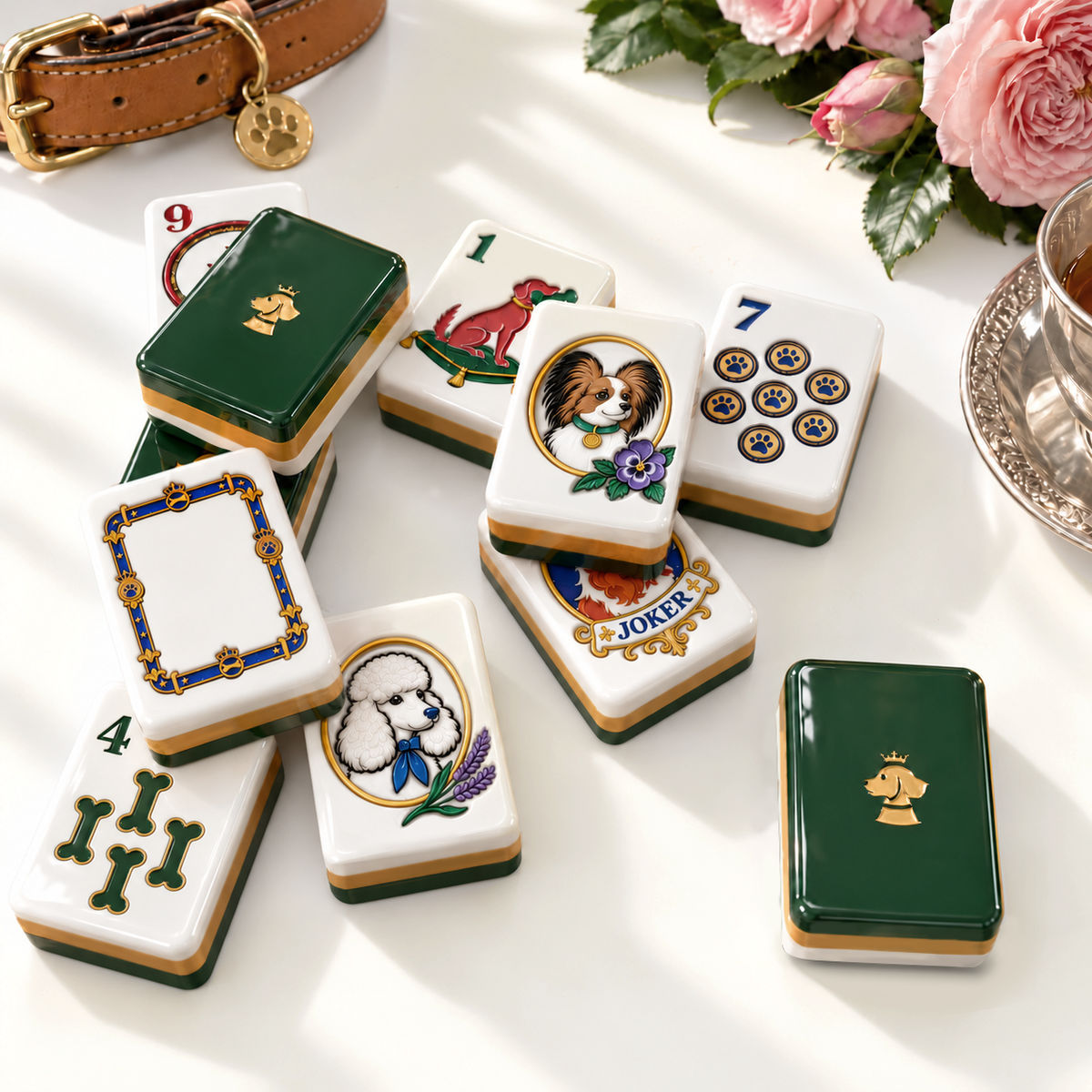
Mahjong and Go are both strategic, tile- or stone-based games, but they operate on completely different principles. Go (originated in China ~2,500 years ago) is about controlling territory on a 19×19 board; players place stones one at a time, and the game ends when the board fills. Mahjong (developed ~200 years ago) is a hand-building game: you draw and discard tiles to form a specific winning hand pattern from the current year's card. Go has no luck component—only skill—while mahjong mixes strategy with tile draw. American mahjong uses 152 playing tiles (three suits of 1–9 plus honors), played by four players in about 30–45 minutes. Both reward long-term thinking, but Go is territorial and infinite; mahjong is combinatorial and finite. If you're starting a game group, mahjong is faster and more social, while Go suits players who love pure strategy with no randomness.
Go and mahjong are often confused as similar "ancient Asian games," but they're almost opposites. Go is territorial control; mahjong is hand completion. Go is slow and meditative; mahjong is social and punctuated by quick discard choices. Understanding those gaps helps you decide which game fits your table—and whether you want to learn mahjong as your next weekly pastime.
How does the goal differ between Go and mahjong?
Go's goal is to surround and control territory—the player with the most enclosed space wins when the board fills. Mahjong's goal is to be the first player to complete a specific hand pattern from the official card that year. In Go, you react to your opponent's moves over 100+ turns; in mahjong, you're building toward your pattern while blocking others, and the game ends when someone wins or the wall is exhausted. Go is a zero-sum territorial race; mahjong is a race to form one of dozens of legal hand combinations, which makes it feel more collaborative and less predictive.

Why is mahjong faster than Go if both are strategy games?
Go games can last 1–3 hours or more, especially at competitive levels, because players have infinite move options and no turn limit beyond the board. Mahjong's American version runs 30–45 minutes per game because the hand size is fixed (14 tiles), each turn is simple (draw, discard), and winning hands come from a published card—not invented patterns. In Go, you're solving the entire board; in mahjong, you're solving one hand at a time. Mahjong also has eight players playing in rotation (four per table), so turns flow quickly. If your game group wants strategy but needs to fit it into a weeknight, mahjong wins.
What role does luck play in each game?
Go has zero luck—every stone placement is deterministic, and the outcome depends entirely on skill and calculation. Mahjong blends luck and strategy: the tile draw is random (you don't know what's coming from the wall), but your discard choices and reading opponents' patterns are pure skill. Because of the luck element, a beginner can beat an expert in a single hand—though experts win more often over time. This makes mahjong more forgiving and fun for casual groups; Go rewards mastery but punishes guessing. For family or workplace games, mahjong's luck factor keeps everyone engaged and levels the field.
How do player count and turn structure differ?
Go is typically one-on-one: two players, alternating turns on a shared board until the board fills. Mahjong is always four players (or adaptable to 2–3 with variant rules), seated around a table, each with a hidden hand. In mahjong, all four players act during each round—you draw, pass to the next player, and discard—while everyone else watches and reacts. Go is bilateral and sequential; mahjong is parallel and reactive. If you're hosting a game night, mahjong naturally includes more people and feels more like a social event, whereas Go is a heads-up duel that requires audience watching or many boards running in parallel.

Why do mahjong players struggle to switch to Go (or vice versa)?
Mahjong players trying Go often expect to "block" an opponent or "build toward a win" on shared terrain—but Go's territory system doesn't reward those tactics. They also expect randomness and are frustrated by the pure logic. Go players trying mahjong feel anxious about not knowing what's in the wall, miss the one-move-at-a-time rhythm, and struggle with reading the card. The mindset flip is real: mahjong is "I have 30 seconds to make the right discard"; Go is "I can spend 5 minutes calculating this move." Both are deep strategy games, but they reward opposite skills—Go rewards foresight and territorial geometry; mahjong rewards speed, pattern recognition, and opponent reading.
Game | Turn Limit | Luck | Players | Typical Time | Replayability |
Go | ~150–300 | None | 2 | 1–3 hours | Infinite (no fixed rules) |
Mahjong (American) | 14 tiles per hand | Yes (tile draw) | 4 | 30–45 min | Annual card changes |
Mahjong (Chinese) | 14 tiles | Yes | 4 | 30–40 min | Varies by region |
Mahjong (Riichi) | 14 tiles | Yes | 4 | 30–45 min | Fixed hand patterns |
🀄 Shop best-selling mahjong sets →
What do you need to play each game?
Go requires a board (19×19), two sets of stones (typically 181 black, 180 white), and often a timer for competitive play. Mahjong requires a 152-tile set, the current year's official card, a mat (strongly recommended for tile grip and speed), racks to hold your tiles, and dice to determine seating and starting position. Our best-selling American mahjong sets include all tiles needed; we also offer engraved sets personalized for gift games, and mats that make play faster and cleaner. Go is simpler in equipment but requires more mental energy per move; mahjong requires more gear but is easier to learn and play casually.
Is mahjong a "puzzle" game like Go, or a "party" game?
Both, depending on the player. Competitive American mahjong rewards pattern speed and probability reading, which attracts puzzle solvers. But the social discard rhythm, the Charleston tile-passing ritual before play, and the luck element give it a party-game vibe that Go lacks. Go is almost never played casually—beginners study opening patterns, dan ranks matter, and losses sting. Mahjong beginners can sit down, learn how to play American mahjong in 20 minutes, and enjoy a game the same evening. If you want strategic depth and social laughter, mahjong is the pick; if you want pure intellectual challenge with no distractions, Go is it.
🎁 See our most-loved mahjong sets & accessories →
What should you check before choosing between them?
Before you commit:
Do you want to play with more than two people? → Mahjong (four players standard; Go is one-on-one).
Do you have 30–45 minutes or 1–3 hours? → Mahjong for weeknight; Go for Sunday marathon.
Do you like luck and variety, or pure logic? → Mahjong for luck; Go for pure skill.
Can your group tolerate randomness, or do they want deterministic outcomes? → Mahjong for casual groups; Go for competitive ones.
Do you want to buy one set and play forever, or enjoy rule changes? → Go is fixed; mahjong's card changes yearly, keeping it fresh.
If you're a beginner choosing your first game, mahjong is more forgiving—you can start playing today and gradually improve. Go requires weeks of study before competitive play feels fair. But both are lifelong games worth learning.
✨ Find your Mahstead set — free US shipping →

FAQ
Can you play Go and mahjong on the same table during a game night?
Yes. Go plays two people; mahjong plays four. If you're hosting a night, run one Go board for early arrivals while others learn mahjong at the main table, then swap. Both are strategic but appeal to different moods—Go is meditative, mahjong is social.
Which game is easier to teach to a beginner?
Mahjong is faster to learn (30 minutes) but requires understanding the card and hand patterns. Go's rules are simpler (stones don't move, control area) but strategy takes weeks to grasp. For a casual night, mahjong wins; for a long-term hobby, Go requires less gear but more study.
Do Asian countries play both games equally?
Go is strongest in East Asia (Korea, Japan, China, Taiwan) with professional ranks and tournaments. Mahjong is played worldwide but dominates China, Hong Kong, and diaspora communities. Both are culturally significant but Go is more "intellectual sport," while mahjong is more "social game."
What's the minimum number of players for each?
Go is one-on-one (two players). Mahjong is four players standard; two and three player variants exist but use modified rules and fewer tiles. If you have a group of 2–3, Go fits naturally; mahjong needs a fourth or a rule hack.
If I learn one, is it easier to learn the other?
Not particularly. Both teach pattern recognition and long-term planning, but Go teaches territorial thinking while mahjong teaches combinatorial thinking. Someone strong at Go may actually find mahjong frustrating (the luck), and vice versa. Treat them as separate games—learning one doesn't accelerate the other.
Which game is better as a gift for someone who likes strategy?
If they like pure logic and long games, gift a Go set and board. If they're social, play with groups, and enjoy faster games, gift a mahjong set from our collection—many of our sets arrive ready to play with no additional purchases. Go boards are cheaper but mahjong is more memorable as a table event.


View More
View More
View More
