
Is Mahjong Similar to Bridge? A Player's Honest Comparison
Last updated: Nov 23, 2026
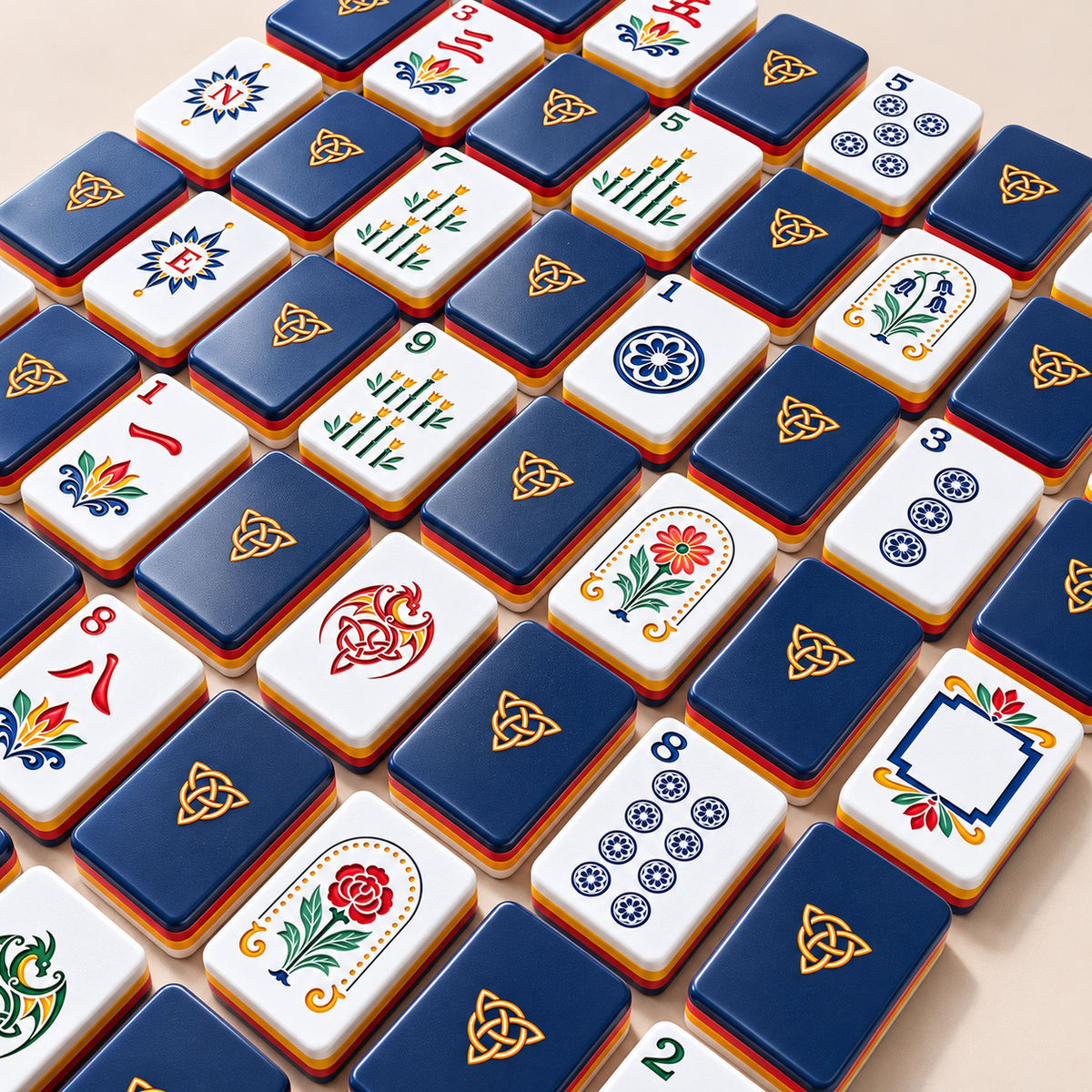
Bridge and mahjong are both four-player games centered on strategy, communication, and reading opponents, but they work in opposite directions. Bridge is a card game where players bid on tricks, then play them out in a deterministic order; mahjong is a tile game where you build hands from a shuffled draw and use a published card to score winning patterns. Bridge has minimal luck after the deal (cards are fixed); mahjong involves constant draws and discards. Both require partnership, memory, and patience—so if you love bridge's tactical depth, you'll likely enjoy mahjong's blend of skill and chance. American mahjong, played with 152 tiles and 8 jokers, also uses a seasonal reference card (the National Mah Jongg League card) that changes yearly, keeping the game fresh. Mahstead offers best-selling mahjong sets in acrylic for durability during long sessions—ideal if you're curious to try it with friends who already play bridge. 🀄 Shop best-selling mahjong sets →
What draws are determined vs. chosen in each game?
Bridge is fully determined once cards are dealt; you cannot change what you hold. Mahjong is semi-determined: you draw one tile each turn and choose which one to discard, building your hand strategically. Bridge players announce their strategy via a bidding system before play begins. Mahjong players work silently or with minimal communication, relying on what they discard and their opponents' discards to infer hands. In bridge, luck is front-loaded (a bad deal can cripple you); in mahjong, luck is continuous (each draw matters). Both demand adaptation, but bridge's adaptation is tactical (how to play your fixed cards), while mahjong's is positional (whether to pursue one winning hand or switch when the draw turns cold).

How do partnerships work differently?
Bridge partnerships sit across from each other and are locked for the entire session. Partners must communicate only through bids and play—no talking allowed. Mahjong partnerships sit opposite each other too, but in American mahjong, players rotate seats every hand, so your partner changes frequently (typically after 4 hands, each player has played every position). This rotation is part of the game's structure; you're not building a long-term partnership bond like in bridge. Many mahjong players find the rotation energizing because no single player dominates, and rookies aren't stuck learning from an expert all night. Bridge rewards deep partnership understanding and years of shared conventions; mahjong rewards rapid adaptation and reading new partners' tendencies.
Does memory play the same role?
Both games reward memory, but differently. Bridge players track which cards have been played (suit distribution) and bidding patterns to infer opponents' hands and plan ahead. Mahjong players track which tiles have been discarded and which suits/numbers are "dead" (unlikely to be drawn or paired safely). Bridge memory is about cards you've seen; mahjong memory is about tiles you've rejected and what opponents need. Mahjong players who play Chinese variants (like Hong Kong mahjong) also memorize tile probability and payout tables, adding another memory layer. American mahjong players reference the yearly National Mah Jongg League card during play—it's legal and expected—so long-term memory is less critical; the card does heavy lifting bridge players' minds provide.
How does scoring and winning differ?
Bridge assigns points for tricks won and bonuses for bidding accurately. The scoring system is complex but consistent year to year. Mahjong scores hands based on patterns (sets of identical tiles, number sequences, dragons, winds, honors) and scoring categories on the reference card, which changes every spring. An American mahjong player must own or consult the current year's card to know what wins; a bridge player learns the rulebook once and plays forever. Mahjong's yearly card refresh keeps players engaged but also creates a "ramp" for new players—you need this season's card or you can't verify a win. Many groups post the card at the table or use a digital version; Mahstead recommends you learn how to read the mahjong card before sitting down to ensure you're interpreting hands correctly.

Which game is easier to learn, and which holds your interest longer?
Bridge has a gentler entry curve if you know card games; the bidding system is the big climb. Mahjong feels opaque at first (152 tiles, suit names, the reference card) but becomes intuitive after 3–5 hands. Both take years to master, but they plateau at different points. Bridge mastery is largely about bidding conventions and signal reading—add study and partner work, and you improve steadily. Mahjong mastery is partly about tile mechanics (which you'll absorb quickly) and partly about yearly card changes—players who've played 20 years must relearn winning patterns each spring. This refresh makes mahjong feel eternally new; bridge can feel static if your circle doesn't adopt new conventions. For players who switch between games: bridge teaches you card pressure and partnership trust; mahjong teaches you probability, adaptability, and cool-headed discard judgment. Both are social anchors. If your bridge circle is curious, our mahjong-for-beginners guide walks you through a first session.
What's the setup and time commitment?
Bridge requires a deck of cards and a score pad; it's portable and fast to set up. American mahjong requires 152 tiles (and 8 jokers), a wall, racks, and a mat for stable play. A complete game takes 30–90 minutes depending on your group's pace; bridge typically runs 45–120 minutes. Mahjong's "Charleston" tile-passing ritual (see the Charleston explained) adds 3–5 minutes before every hand, which bridge doesn't have. If you're hosting bridge regularly, cards cost almost nothing. If you're hosting mahjong, a quality acrylic mahjong set from our best-selling collection is an investment—but acrylic lasts decades and feels professional at the table. We also offer mahjong mats and racks with pushers to make play smoother; neither is required, but both reduce fumbling and keep games flowing.
A side-by-side comparison
Aspect | Bridge | Mahjong (American) |
Setup time | <1 min | 3–8 min (includes Charleston) |
Learning curve | Medium (bidding) | Medium (tiles + card) |
Luck after setup | Minimal | Continuous (every draw) |
Partnership stability | Fixed all season | Rotates each hand |
Reference material needed | Rulebook (once) | Current-year card (every hand) |
Memory focus | Cards played & bids | Tiles discarded & dead suits |
Social feel | Formal, convention-heavy | Casual, discovery-driven |
Mastery timeline | 2–5 years of study | 6–12 months of play, yearly refresh |
🎁 See our most-loved mahjong sets & accessories →
What to check before you buy a mahjong set
If you've decided to give mahjong a try after playing bridge, here's what matters:
Tile material: Acrylic sets are durable and feel substantial; bamboo-and-wood sets (common in Asian variants) are heavier but require care. Mahstead's acrylic sets are engraved and designed for weekly play, so they won't fade or chip easily.
152 or 160 tiles? American mahjong uses exactly 152 tiles in play; sets sold with 160 tiles include spares. Mahstead sells 160-tile sets so you have backups if a tile cracks.
Reference card access: Make sure your group has a copy of the current year's National Mah Jongg League card. Many players download it free or buy a laminated version. Without it, you cannot verify a win.
Table space: Mahjong needs more table space than bridge—roughly 3×3 feet minimum. If your bridge table is cramped, a dedicated mahjong mat can help you claim the real estate you need.
Hand comfort: If you're used to holding bridge hands, mahjong racks with pushers will feel foreign at first but save your wrists during long sessions by letting you stand tiles vertically instead of fanning them.
✨ Find your Mahstead set — free US shipping →
Why bridge players often become mahjong players
Bridge and mahjong draw the same personality type: people who enjoy pattern recognition, calculated risk, and the social ritual of a regular game. Bridge players prize perfect information after the bid; mahjong players prize incomplete information throughout. Many bridge players find this shift refreshing because mahjong removes the pressure of bidding "perfectly"—there's no contract to make or break. Instead, you're simply chasing the best hand available and reading what your opponents are throwing away. The partnership rotation also attracts bridge players tired of being locked with the same person. After a few sessions, bridge players often report that mahjong feels like a parallel universe where strategy is gentler, luck is kinder, and the yearly card change keeps you humble. If your bridge group is looking to branch out, our guide to how to play American mahjong includes a section on what bridge players should unlearn to avoid costly mistakes.

FAQ
Do bridge and mahjong use the same scoring system?
No. Bridge scores tricks and bonuses; mahjong scores completed hand patterns from the yearly reference card. Bridge scoring is consistent year to year; mahjong scoring changes every spring when the National Mah Jongg League releases a new card.
Can I play mahjong with bridge partners, or do I need to switch groups?
You can absolutely play with bridge partners—many do. The main difference is partnership rotation (you'll have a new partner every hand or every few hands) versus bridge's fixed partnership. Both feel social; it's just a different rhythm.
If I'm good at bridge, will I be good at mahjong?
Your memory and strategic thinking will help, but mahjong's tile-reading and probability skills are learned fresh. Bridge rewards planning ahead; mahjong rewards adapting to each draw. Most bridge players pick up mahjong in 5–10 hands.
How long does a game of mahjong take compared to bridge?
A single mahjong hand (one deal) takes 5–20 minutes; a full mahjong session is typically 8 hands (East, South, West, North, repeated twice) and runs 1–2 hours. Bridge games vary similarly depending on pace and stakes.
What's the biggest difference between bridge and mahjong that surprised you?
The constant draw-and-discard momentum in mahjong feels more energetic than bridge's bidding-then-play sequence. Mahjong keeps all four players engaged every second; bridge has moments of downtime during play. Both are engaging, just rhythmically different.
Do I need to memorize the mahjong card like I memorize bridge conventions?
No—the card is legal to consult during play. You don't memorize it; you learn to read it quickly and recognize the suit and number patterns. After 20–30 hands, pattern recognition becomes automatic and you'll reference the card less.


View More
View More
View More
