
Mahjong Classes for Beginners in Phoenix: A Local Player's Guide
Last updated: Nov 23, 2026
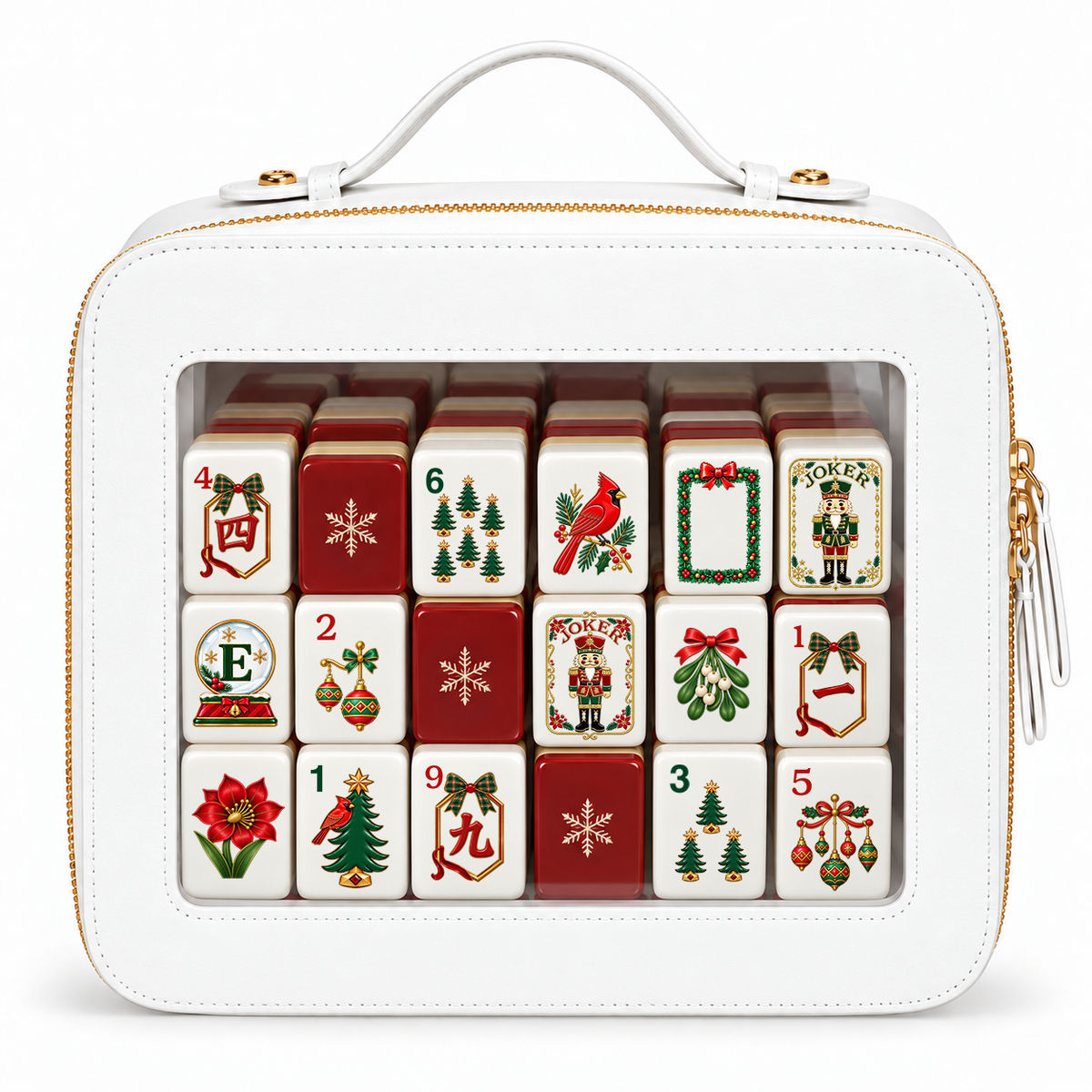
Phoenix has multiple entry points for learning mahjong: start by checking your local community centers (Phoenix Parks & Recreation runs programs year-round), public libraries (many offer free beginner sessions or referrals), and private instructors advertised through meetup boards and neighborhood Facebook groups. Classes typically run 4–8 weeks, meeting once or twice weekly for 2–3 hours, and cost varies from free library introductions to modest private-lesson fees. Before signing up, confirm the instructor teaches American mahjong (the version played with the annual National Mah Jongg League card) and plays with standard equipment like a best-selling mahjong set. Avoid assuming online videos alone will prepare you; live instruction plus practice with the same rule set and tiles matters most for building correct habits from day one. --- 🀄 Shop best-selling mahjong sets →
Where Do Phoenix Beginners Actually Learn Mahjong?
Phoenix residents have three proven paths: community recreation departments, library systems, and small-group private lessons. Parks & Recreation often lists mahjong beginner classes in their spring and fall catalogs; check the City of Phoenix Parks & Recreation website directly, or call branch offices to ask about seasonal offerings. Library systems (Phoenix Public Library and branches throughout the Valley) frequently host free intro sessions or can connect you with local instructors. For privacy and smaller groups, search neighborhood Facebook groups, Meetup.com filtered to Phoenix, and community center bulletin boards where established players post contact info. The best-selling local pattern: sign up for a structured 4-week program first, then join an existing game group once you've learned the card, the Charleston, and basic hand recognition.

What Should a Good Beginner Class Cover?
A solid Phoenix beginner class teaches the rules in this order: the 152-tile setup and what each tile represents, how the Charleston tile-passing ritual works, how to read the current year's National Mah Jongg League card, basic hand patterns (like pungs and kongs), and the turn-by-turn flow of play. It should include at least one full practice game so you see timing, calling, and scoring in real time. Red flags: instructors who skip the Charleston, claim tiles have secret meanings unrelated to the card, or mix American rules with Chinese or Hong Kong variants without clearly stating the shift. Look for classes that provide loaner sets so you don't feel pressured to buy before your first session—though once you know you'll keep playing, having your own best-selling set and a mat that fits your table makes the experience far smoother.
How Long Until You're Ready to Play Regularly?
Most beginners become playable—meaning they can follow a game without constant rule clarification—in 4 to 6 weeks of weekly lessons plus one to two practice games outside class. The learning curve isn't steep; the difficulty is remembering which hand combinations appear on the card and trusting the Charleston feels natural after doing it three or four times. Phoenix's established game groups tend to welcome graduates from community classes, especially if the class instructor recommends them or if you show up punctual and ready to play at regulation speed. Reality check: expect to feel slow at first, to ask "Can I call that?" a dozen times in your second live game, and to gradually stop thinking about when to say "pung" and just say it. Most Phoenix players we know were off-speed and uncertain after week one; fluent and confident by week eight.
🎁 See our most-loved mahjong sets & accessories →
Phoenix Class Options: How to Choose Between Them
Class Type | Best For | Schedule | What You Get |
Parks & Rec program | Budget-conscious, structured learning | 4–8 weeks, weekly or twice weekly | Instructor, loaner tiles, small group, set starting date |
Library intro session | Total newcomers, no commitment | 1–2 sessions, drop-in or fixed | Free, basics only, meet other curious people |
Private instructor or small club | Personalized pace, exact question answers | 1-on-1 or 2–4 players, flexible dates | One-on-one coaching, play real hands faster |
Online + Phoenix meetup hybrid | Self-paced theory, live practice | Your schedule + local group meetings | Videos to review at home, live games weekly |
The Parks & Rec route works well if you like structure and a cohort starting together; the library route works if you want zero pressure and to dip in casually; private instruction works if you're ready to invest and want personalized feedback. Many Phoenix players combine library intro + Parks & Rec class + one private lesson with a confident player to lock in card-reading speed—that's roughly six weeks total, active learning, and a working foundation.

What to Bring (and What Your Class Provides)
Ask your instructor or class coordinator in advance: Do they supply tiles, a mat, and a card? Most classes do. If not, you'll need a best-selling mahjong set (sets come complete with everything except a mat), a printed National Mah Jongg League card (usually included in sets or available free online), and a pencil for scoring. Bring water, snacks, and comfortable sitting clothes—mahjong games can run 2–3 hours and you'll be on your hands and arms. Wear something that lets you move; wrist and hand fatigue happen if you're tense. If the class meets at a church or community center, bring cash for a small snack donation if one is suggested. Once you join a regular game group, many Phoenix players prefer bringing their own engraved set so they have a consistent tile feel and weight, and a mat with racks with pushers—setup takes 90 seconds instead of five minutes, and the game flows faster.
Common Beginner Mistakes to Avoid in Phoenix Games
Mistake 1: Not learning the Charleston first. Many newcomers skip this or think it's optional. It's not—the Charleston is the rule-mandated tile exchange before every game, and Phoenix players expect you to pass tiles confidently. Spend one full class session or practice night just doing Charlestons until you can do one without thinking.
Mistake 2: Assuming any three matching tiles can be exposed. American mahjong lets you expose pungs (three identical tiles) and kongs (four), but you cannot expose sequences like 1–2–3 Dots (that's called a chow, and it's forbidden in American play). Sequences can only be in your hidden hand. This rule divides American from other variants; confirm your instructor teaches American rules.
Mistake 3: Forgetting the card is law. The card changes every spring. What was a winning hand last year isn't this year. Always have the current card in front of you. Don't rely on memory or another player's word.
Mistake 4: Stalling on your first drawn tile. New players often freeze after drawing, worried about making a wrong move. The rule is simple: each turn, you draw one tile, and you must discard one (or call a winning hand). If you're stuck, discard the tile you just drew. The turn takes seconds; keeping up rhythm matters as much as perfect strategy.
Mistake 5: Not keeping your hand organized. Ask your instructor how to arrange your tiles (many Phoenix groups keep them in racks for clarity). A tidy hand helps you spot patterns on the card and lets other players see you're not hiding a chow or miscounting—builds trust and prevents accusations or slowdowns.
✨ Find your Mahstead set — free US shipping →
Building Your Game Group After Class
After completing a beginner class, you have two paths: ask the instructor or coordinator if there's a weekly open game you can join, or connect with players through the same Facebook groups, Meetup, or community boards where you found the class. Bring your own equipment (a best-selling set and a mat) if you want to host once you're comfortable; hosting cements your membership in the group and gives you a reason to invite friends. Phoenix has enough active players that multiple game groups usually run concurrently, so if the first one doesn't click, there's a second. Respect the house rules of each group (house rules vary: some play for fun only, some do a nickel per game, some speed up or slow down the play tempo)—ask before your first session what their standard is, then commit to it.
What to Check Before You Buy Your Own Set
Once you know you'll play regularly, investing in your own mahjong set makes sense. Here's the checklist:
Tile clarity: Can you read the numbers and suit symbols from arm's length while sitting? Test a loaner set first.
Tile weight: Do the tiles feel pleasant in your hand for 2+ hours, or do they feel flimsy or too heavy?
Case durability: Will a travel bag or hard case survive your car rides to and from games?
Racks and pushers: Do you prefer racks with pushers (faster, cleaner) or loose tiles (traditional feel)?
Customization: Do you want engraved tiles with a custom name or phrase? Great for a keepsake or group gift.
Once you've played four or five games, you'll know exactly what texture and feel you want. That's the right time to order your own set and have it ready for the next session.

FAQ
Are there any free mahjong classes in Phoenix?
Yes. Phoenix Public Library branches sometimes offer free beginner intros, and some Parks & Recreation centers run low-cost or scholarship-eligible programs. Call your local branch or check the Parks & Rec website for current offerings.
What's the difference between American mahjong and Chinese mahjong taught in Phoenix classes?
American mahjong uses a paper card that changes yearly, has no sequences (chows), and requires a Charleston before play. Chinese and Hong Kong variants use hand memory, allow sequences, and have different scoring rules. Confirm your instructor teaches American before enrolling if that's what you want to play.
How many people play in a Phoenix mahjong game?
Always four players. Some clubs may have waiting lists if one person drops out, and you can learn the basics in smaller groups, but a real game requires exactly four.
Can I learn mahjong online instead of a Phoenix class?
You can learn rules online, but live instruction plus in-person practice games are far faster. Most Phoenix beginners who try online-only get stuck on card reading and the Charleston rhythm; seeing it done correctly across a real table matters.
What's the National Mah Jongg League card and why does it matter?
It's the official paper showing every legal winning hand combination for that year. American mahjong is played entirely from this card; it's not optional. A new card is released each spring, so hands change annually.
Do I need to buy a mahjong set before my first class?
No. Most beginner classes provide loaner sets. Bring your own only after you've played several games and confirmed you'll keep playing regularly.


View More
View More
View More
