
Is Mahjong Harder Than Shogi? A Player's Honest Comparison
Last updated: Nov 23, 2026
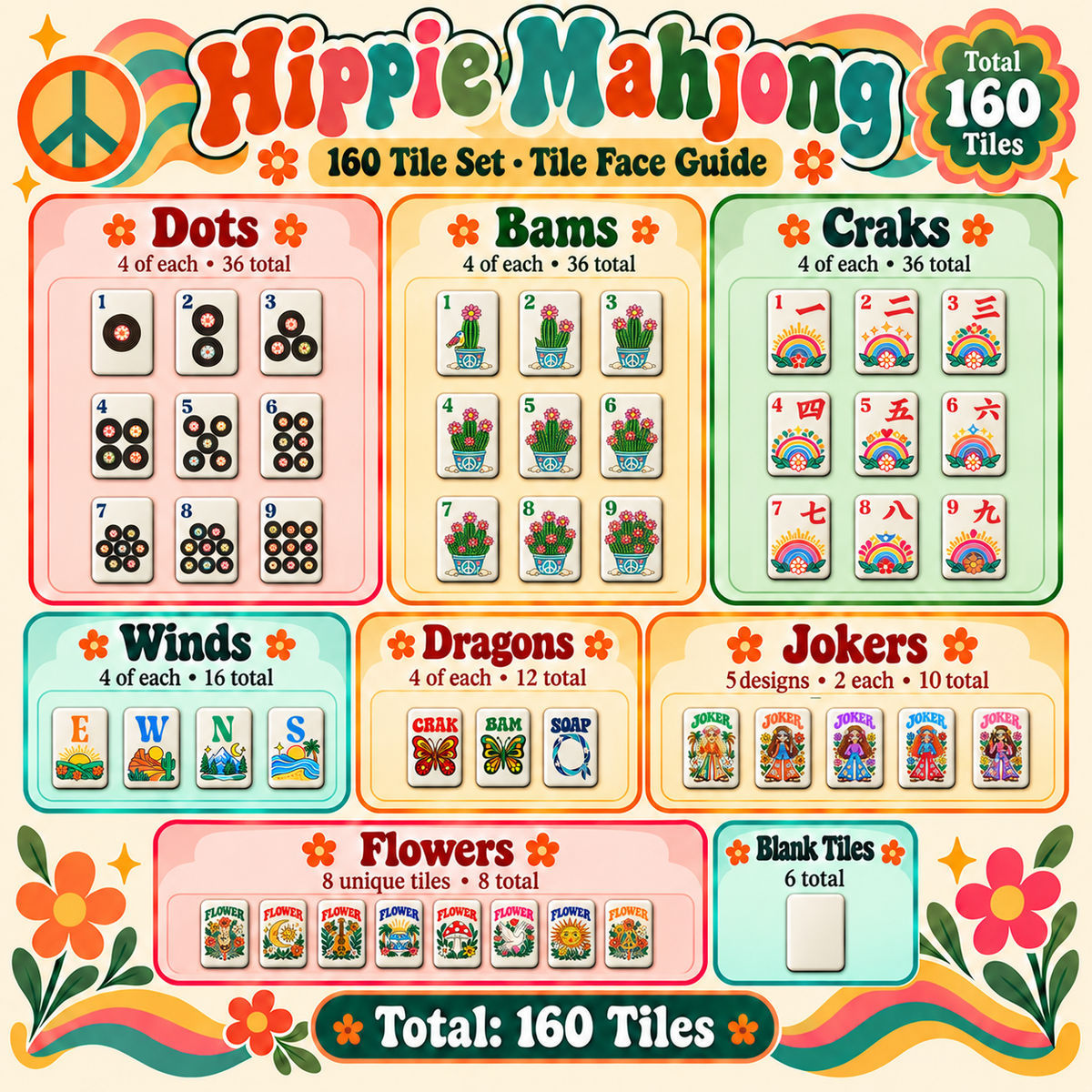
Mahjong and shogi are hard in opposite directions. Shogi (Japanese chess) is purely strategic—you control every piece, see the whole board, and defeat depends entirely on your moves. Mahjong mixes luck with skill: you don't control what tiles come to you, the card changes yearly, and reading patterns matters as much as planning. Neither is objectively "harder"; shogi teaches tactics and deep foresight; mahjong teaches risk assessment, probability, and rapid-fire pattern recognition. Most players find shogi's barrier is time (years to master endgames); mahjong's barrier is the learning curve itself—dozens of hand types, the annual card shuffle, and rule variants across regions (American, Chinese, Hong Kong, Riichi). If you enjoy controlled logic puzzles, shogi wins. If you like games where luck creates narrative, mahjong rewards you. We host weekly American mahjong games at our Dallas store, and many shogi players switch over—not because it's easier, but because the social chaos is addictive. That's the honest difference.
Shogi and mahjong sit at opposite ends of the game-theory spectrum, yet both demand years to play well. Let's separate myth from reality.
What exactly are we comparing here?
Shogi is Japanese chess: two players, one 9×9 board, 40 pieces with fixed moves, complete information, zero randomness. Mahjong is a four-player tile game where you draw from a hidden wall, match patterns from the year's card, use jokers strategically, and succeed through luck + skill + reading opponents. Shogi is deterministic; mahjong is probabilistic. These are not the same game type, so "harder" depends on what you mean.

Does shogi require deeper strategic thinking?
Yes, but only in endgame positions. Shogi rewards deep calculation—you plan five moves ahead, sacrifice pieces to build advantage, exploit tiny board weaknesses. A strong shogi player memorizes opening sequences (fuseki) and endgame tactics (shomate) that take years. Mahjong also requires strategy (hand building, discard reading, probability), but it's strategy under fog: you never know what tiles are coming, and the yearly card resets mean no universal openings. Shogi training is incremental and logical; mahjong training is pattern-based and adaptive. If pure calculation is harder for you, shogi is harder. If incomplete information and probability are harder, mahjong is.
How much luck versus skill does each game have?
Shogi: ~95% skill, ~5% luck (who moves first, sometimes). Every outcome traces back to decision-making.
Mahjong: ~55% skill, ~45% luck (tiles drawn, wind of the round, who discards what). You can play perfectly and lose because tiles favor another player. This frustrates players who expect control; it delights players who love narrative. American mahjong compounds this: the card changes yearly, so mastering the 2026 card is a different puzzle than the 2025 card. We refresh our house card annually so players stay sharp.
Aspect | Shogi | Mahjong |
Players | 2 | 4 |
Board | Visible, complete | Hidden wall (partial info) |
Randomness | None | ~45% (tile draw) |
Learning curve | Steep, long | Steep, short, repeats yearly |
Time per game | 20 min–2 hrs | 1–2 hrs |
Transferable skill | Tactical thinking | Pattern recognition + probability |
Rule complexity | Stable for centuries | Shifts by region & year |
What makes mahjong feel harder for beginners?
The card. Shogi teaches on day one: knights move like Ls, bishops move diagonally. Mahjong? You need the current year's card to know which hands are valid. A beginner holding three 5 Dots, two 6 Dots, and a wind might play them wrong because they don't recognize the pattern yet. Shogi doesn't have this: the rules are printed on the pieces.
Joker placement. In American mahjong, jokers are wildcards—use them as needed in exposed melds. But they have two hidden rules: (1) you can't use a joker as a single tile or a pair, and (2) when a pung or kong is exposed, opponents can replace a joker in it with the missing tile and steal the joker back. Joker strategy is where casual players stumble.
The Charleston. Before every game, tiles are passed in a rotating ritual—three tiles passed right, three left, then one extra to the right, then one to center. Get this wrong and the game starts in error. Shogi has no equivalent.
Four players, four different hands. In shogi, you beat one opponent. In mahjong, you're reading three other players' strategies, discard patterns, and wind priority simultaneously. This social load is real.

How long does it actually take to get decent at each?
Shogi: Beginners play after learning piece moves (~2 hours). Decent play (beating a casual opponent consistently): 3–6 months of weekly games. Competitive-level play: 2–5 years.
Mahjong: Beginners play after learning how to read the card and the Charleston (~4 hours, often across two sessions). Decent play (winning without luck anomalies): 4–8 weeks of weekly games. Competitive-level play: 1–3 years. Mahjong front-loads the learning curve; shogi spreads it thin over years.
🀄 Shop best-selling mahjong sets →
Why do so many shogi players switch to mahjong?
Because shogi is solitary perfectionism, and mahjong is social chaos. After a shogi game, one player wins because they calculated better. After a mahjong game, you replay the last hand, laugh about who read the wall wrong, and reset. Shogi is a sport; mahjong is a ritual. Neither is harder—they're different challenges. Shogi teaches you to think like a computer; mahjong teaches you to read a room.
If you're deciding which to learn, ask yourself: Do I want to outsmart one opponent through pure calculation, or do I want to join a weekly community where luck and strategy collide? Both are legitimate. But here's the truth: we've never had a shogi player walk away from weekly mahjong. We've had plenty of mahjong players try shogi and come back to the tiles.
The real answer is play both. Mahjong gives you confidence faster (first-month wins happen). Shogi teaches deeper strategy. You'll use skills from each in the other.
🎁 See our most-loved mahjong sets & accessories →
What to check before you buy a mahjong set (and why shogi doesn't need this)
Shogi sets are shogi sets—move on. Mahjong requires planning:
Tile size. If you have arthritis or weak eyesight, large tiles (standard acrylic sets) beat tiny ones.
Jokers. American mahjong uses 8 jokers per 152-tile deck. Sets with extra jokers prevent disputes over lost tiles.
Card format. Some players use physical cards; others memorize. A printed card holder mat keeps the year's card visible.
Racks. Shogi doesn't need them. Mahjong? Racks with pushers keep your hand organized and prevent accidental exposures.
Mat. A dedicated mahjong mat protects tiles and defines the wall. Shogi plays on any surface.
The barrier to entry for mahjong is not rules—it's equipment. With shogi, you're good with a board and pieces. With mahjong, you need the card, jokers, a mat if possible, and ideally racks. That's not harder gameplay; it's just more stuff.
The variant maze: shogi has one, mahjong has five
Shogi has one game. Rules date back centuries; modern tournaments use standard rules. Done.
Mahjong has multiple official variants:
American: 152 tiles, yearly card, exposed melds only (no chows/sequences called), eight jokers
Chinese (Cantonese): 144 tiles, different hand patterns, can call sequences (chows)
Hong Kong: Similar to Cantonese with regional tweaks
Riichi (Japanese): Drawn-from-discard (kan), different honor tiles, subtle scoring
Taiwanese: Combines Chinese and Riichi elements
A shogi player moves to a new country and plays the same game. A mahjong player learns a variant—not just a new ruleset, but a different tile count, legal hand shapes, and sometimes dealer rotation. This makes mahjong harder by variety, not by depth. Shogi is one mountain; mahjong is a mountain range.
If you're starting American mahjong (the most common variant in the US), use current-year card sets and ignore the variants until you're solid. Shogi players don't have this problem.
✨ Find your Mahstead set — free US shipping →

FAQ
Can you play mahjong alone like you can practice shogi?
No. Mahjong requires four players or a variant rule set (two or three player versions exist but aren't standard competitive play). Shogi is one-on-one or solo analysis. If solo practice matters to you, shogi wins.
Is there a world championship for both?
Yes, both have official tournaments. Shogi's World Championship (Kisei) has run since 1924. Mahjong has the Riichi Mahjong World Championship and various national American Mahjong League tournaments. Shogi tradition is older, but both are established.
Do I need to memorize anything for mahjong like I do shogi openings?
For American mahjong, memorizing the current-year card patterns helps (60–100 distinct hand types per year). For shogi, memorizing opening sequences (fuseki) and endgame tactics (shomate) is almost mandatory to compete. Both require memory, but mahjong resets annually, and shogi's knowledge compounds.
How expensive is a decent mahjong set versus a shogi set?
A basic shogi set starts low and scales with wood quality. A decent American mahjong set with acrylic tiles, a mat, racks, and a card is a larger initial investment, though sets vary widely in price based on design and material—see current prices on our collections. If budget is tight, shogi is cheaper.
If I speak only English, which is easier to learn?
American mahjong. Most rules exist in English, and the yearly card is printed in English. Shogi terminology is mostly Japanese (fukushi, shomate, kifu), so you'll learn foreign names either way, but mahjong has more English-language teaching resources for the American variant.


View More
View More
View More
