
How to Use the 8 Dot Tile in American Mahjong
Last updated: Nov 23, 2026
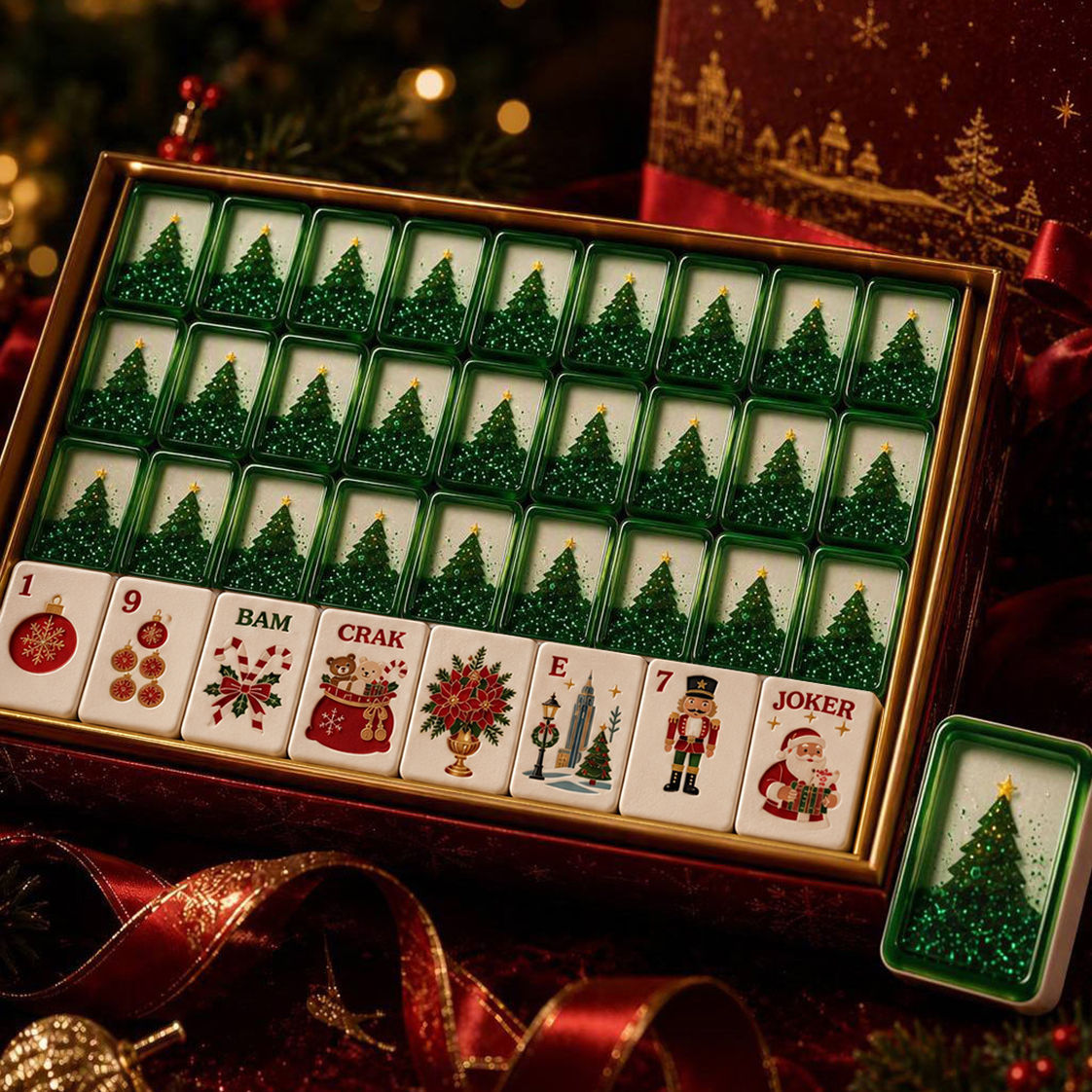
The 8 Dot is one of four identical tiles in the standard 152-tile American set, belonging to the Dot suit (which also includes 1–9 Craks and Bams). You'll use it to form pungs (three identical 8 Dots), kongs (four 8 Dots), or larger melds, and jokers can substitute for any missing 8 in your hand. On the current year's National Mah Jongg League card, the 8 Dot appears in multiple hand patterns—check your card's numbered sections to spot which ones. Unlike Craks or Bams, Dots have no suit-specific rank advantage, so the 8 Dot holds the same strategic weight as any other number tile. You can expose pungs or larger melds containing 8 Dots once you're building toward a winning hand; never discard it carelessly early in the round, since other players will need it too.
🀄 Shop best-selling mahjong sets →
Where is the 8 Dot on the card?
The National Mah Jongg League card organizes hands by section number. The 8 Dot appears in patterns across multiple sections—look at your card's index to find which numbered sections include it. Sections mix number ranges, suit combinations, and exposure rules (e.g., "all exposed," "concealed hand," "one pung exposed"). You'll spot it in sections featuring mid-range Dots (typically sections covering 5–9 or mixed-suit sequences). The exact hand patterns change annually, so always check the current year's card before you play.

Can you expose an 8 Dot pung or kong?
Yes—you can expose a pung (three identical 8 Dots) or kong (four 8 Dots) if your target hand pattern allows it. American mahjong has strict exposure rules: some patterns require all melds exposed, others require all concealed (hidden in your rack), and many allow a mix. When you expose a pung or kong on the table, other players see it; when you call a tile from the discard, the whole table knows you needed it. Never expose a meld unless you're sure it fits a hand on the current year's card and you're confident you can complete the rest of the hand. Exposing too early signals your strategy and wastes jokers if you change course.
How do jokers work with the 8 Dot?
In American mahjong, jokers are wild tiles—they can stand in for any missing tile, including the 8 Dot. You cannot use a joker to represent the 8 Dot if you already have three or four actual 8 Dots (they must be identical tiles), and you can never use a joker as a single tile or a pair. If your hand needs an 8 Dot as part of a pung and you hold only two actual 8 Dots, you can substitute a joker for the third. Most hands allow one to four jokers; the card tells you exactly how many your target hand uses. Read our full guide to joker rules and strategy to avoid costly mistakes during play.
Why would you hold or discard the 8 Dot?
Early in the round (after the Charleston), hold the 8 Dot only if you've identified a specific hand on the card that requires it. If three other players have already discarded 8 Dots or you see it exposed in a pung, your odds of winning with it drop sharply—discard it. The 8 Dot is mid-rank within its suit, so it's less "sticky" than 1 or 9 (which anchor sequences in other games, though sequences don't exist in American mahjong). Late in the round, if your hand is nearly complete and needs only an 8 Dot, hold it; if you're still fishing for multiple tiles, releasing it frees space and reduces the risk that you're sitting on a tile another player desperately needs. Watch the discard pile: if many 8 Dots are gone, your hand is less likely to win.

What's the difference between 8 Dots and 8 Craks or 8 Bams?
All three—8 Dot, 8 Crak, and 8 Bam—are distinct tiles with four copies each in the set. They cannot substitute for one another; a pung must contain three identical 8 Dots, never a mix of 8 Dot, 8 Crak, and 8 Bam. Many hand patterns require specific suits, so the 8 Dot may appear in a pattern that also specifies "Dot suit only," while another pattern on the card calls for 8 Craks in a mixed or Crak-suit-only hand. Check your card carefully: the suit symbol (• for Dot, ⊓ for Crak, ◯ for Bam, or written abbreviations) must match exactly. Beginners often confuse the symbols—use our guide on how to read the mahjong card to spot patterns faster and avoid misreads at the table.
🎁 See our most-loved mahjong sets & accessories →
Real-world table scenarios: when to move the 8 Dot
Scenario | Hold or Discard? | Why |
Early hand; no 8 Dot hand spotted yet | Discard | You're guessing; space is scarce |
You have two 8 Dots and a joker; hand nearly done | Hold | One more 8 Dot wins; odds are decent |
Three 8 Dots already discarded by other players | Discard | Impossible to draw a fourth; almost no hands left |
Late round; you're concealed hand; need 8 Dot for pair | Hold | Few tiles remain; pair is stationary (doesn't need other 8s) |
Mid-round; someone called tile; you have exposed pung of 8 Dots | Hold | You're locked in; discard other suits |
Common mistakes when working with the 8 Dot
Confusing 8 Dot with 8 Crak. The symbols look similar if you're squinting under bad light or using worn tiles. Always verify the suit mark before building a meld. Exposing too early. Newer players often expose an 8 Dot pung the moment they collect three, signaling strength before the hand is playable. Wait until you're confident the rest of the hand will close. Hoarding the 8 Dot out of habit. Because it's a mid-number tile, players sometimes keep it reflexively, forgetting that if no hand on the card uses it, they're wasting rack space. Mixing joker rules. You can use a joker for the third 8 Dot in a pung, but not if you're building a pair (pairs cannot contain jokers). Review our rules on how to play American mahjong before each season to stay sharp.
✨ Find your Mahstead set — free US shipping →
What to check before you buy a set for learning the 8 Dot
If you're new to the 8 Dot or American mahjong, choose a set with large, clear tile faces and readable suit symbols. Our best-selling collection includes sets with engraved or printed markings designed for durability and legibility—no guessing on the tile names during play. Acrylic tiles resist fading and chipping, so the suit marks stay crisp through hundreds of rounds. Pair your set with a felt mahjong mat to keep tiles from sliding during exposure and a rack with pushers to organize your hand—both make it harder to misread or accidentally flash tiles to the table. A sturdy bag or case protects your tiles and keeps them portable for weekly games. All Mahstead sets include the full 152 tiles (including four copies of the 8 Dot and eight jokers) and ship free across the US.

FAQ
Can the 8 Dot be part of a sequence like 7–8–9?
No. American mahjong has no sequences (called chows). Melds are only pungs (three identical), kongs (four identical), quints (five identical), or sextets (six identical). The 8 Dot works only as identical tiles grouped together.
If I need an 8 Dot and a joker is available, can I use it instead of drawing?
Yes, if your hand pattern allows jokers and you're one tile short. But jokers don't "appear" on the discard; you use one from your hand as a substitute when building a meld. You still need to claim or draw a real 8 Dot or another tile to complete your hand shape.
What if the 8 Dot never appears on this year's card?
It will. The National Mah Jongg League card includes every number 1–9 across all three suits in dozens of hand patterns. However, if you miscounted or checked an old card, verify the current year's card at the start of the season.
How do I know if 8 Dot appears in the section I'm targeting?
Look at the card's section number (usually on the left margin), read the hand pattern, and identify the suit and number tiles listed. If the pattern shows an 8 and the suit is Dots (•), the 8 Dot is required. Use the card's legend to decode abbreviations and symbols.
Should I ever pass an 8 Dot during the Charleston if I don't need it?
Yes. The Charleston is the tile-exchange ritual before play. If your opening hand doesn't need an 8 Dot for any of your target hands, pass it to maximize your odds of collecting tiles you do need. Be strategic—pass tiles that reduce your options, not ones that open them.


View More
View More
View More
