
What Set Do You Need for Sanma Mahjong?
Last updated: Nov 23, 2026
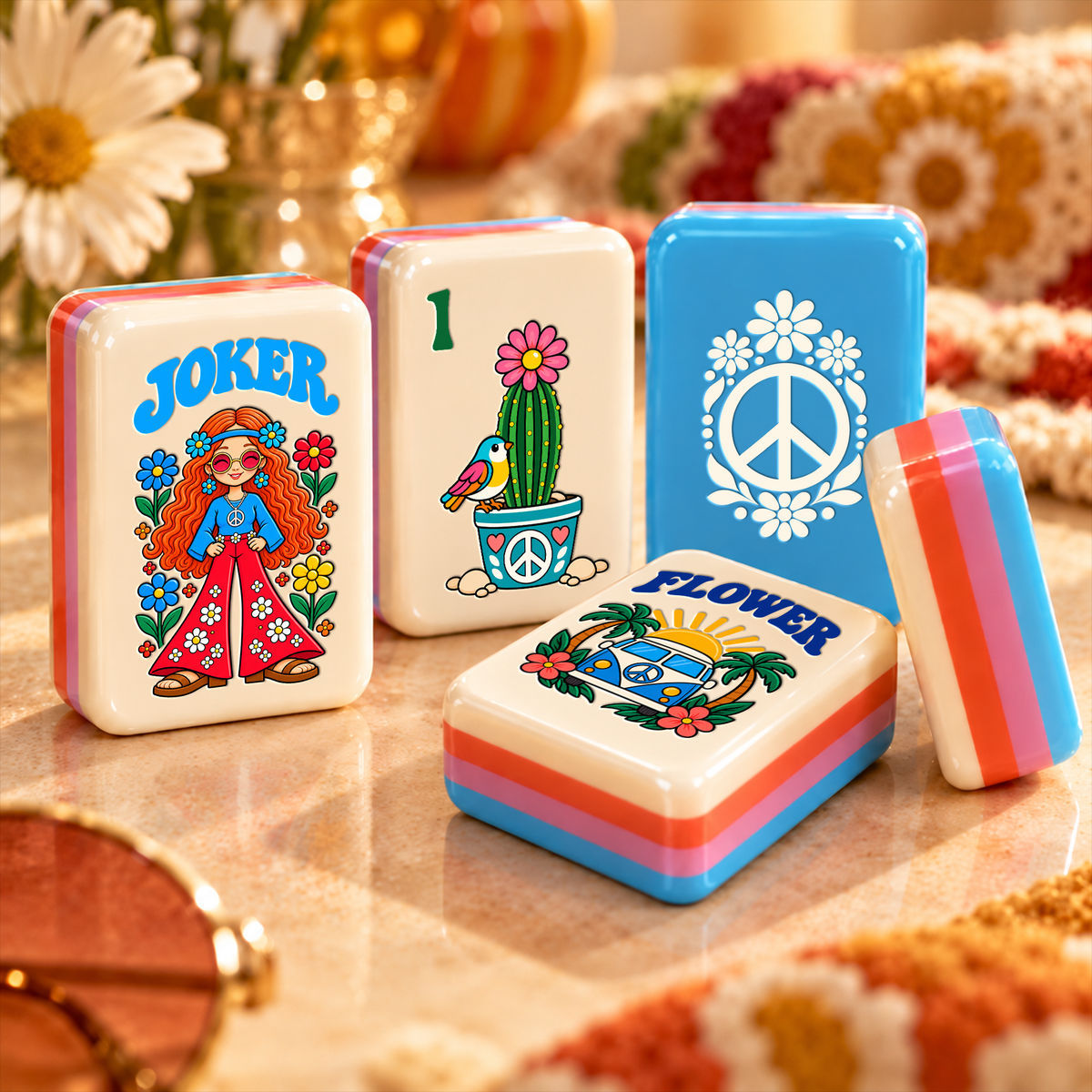
Sanma uses 108 tiles: one suit (Bams, Craks, or Dots) numbered 1–9, with four copies of each (36 tiles), plus all 16 winds, 12 dragons, 8 flowers, and 8 jokers—a smaller pool than the 152-tile American game. You can buy a dedicated Chinese sanma set (which comes as a complete 108-tile deck) or adapt a full 160-tile American set by removing two of the three suits and storing them away. Sanma rules differ significantly: draws happen from a smaller wall, honor tiles play differently, and hands often prioritize simpler melds. Most players learn sanma rules from a dedicated guide rather than the National Mah Jongg League card, since sanma is a Chinese variant. If you host regular sanma games, a dedicated sanma set eliminates sorting; if you play American casually and want to try sanma occasionally, removing two suits from your existing American set works fine. 🀄 Shop best-selling mahjong sets →
What exactly is sanma and how does it differ from American mahjong?
Sanma means "three players" in Chinese and removes all suits except one, plus shrinks the tile pool by roughly 30%. In American mahjong, all four players draw from a 152-tile wall; in sanma, three players draw from a 108-tile wall, forcing faster play and fewer possible hands. Sanma has no National Mah Jongg League card—players follow regional Chinese rules, which vary by location. Melds work similarly (pungs, kongs, quints), but honor scoring and tile-calling sequences differ. The result: sanma feels faster, more bluff-heavy, and less about memorizing a printed reference.

Can you use an American mahjong set for sanma?
Yes. Remove two complete suits (72 tiles) from your 160-tile American set and set them aside; you're left with 88 tiles—still playable. Add the 8 jokers from the set, and you have 96 tiles. Some players add blanks from the spare pool to reach 108, though this is regional preference. The wind and dragon tiles remain in play, and flowers stay as honor tiles. The main drawback: sorting and storing the unused suits each time takes 5–10 minutes. If you play sanma twice a year, this works. If sanma is your weekly game, a dedicated set moves faster.
🎁 See our most-loved mahjong sets & accessories →
Should you buy a dedicated sanma set or modify an American set?
Choice | Best for | Setup time | Storage | Cost basis |
American set + remove 2 suits | Casual players; American as primary | 5–10 min | 1 full set + bag | One investment |
Dedicated sanma (108 tiles) | Weekly sanma players; collectors | <1 min | 1 compact deck | Lower per-set cost |
Both (American + sanma) | Hosts playing both variants | Minutes to switch | 2 sets, 2 bags | Two investments |
A dedicated sanma deck is smaller, lighter, and requires zero sorting—ideal if your regular group plays sanma every week. An American set modified for sanma makes sense if you play American 90% of the time and sanma occasionally. Buying both gives you the cleanest experience: no rush to restore tiles, no confusion on the wall, both games ready to play at full speed. Check your expected play frequency before ordering; a player hosting sanma-only groups should prioritize a dedicated set over modifying a full American deck.
What's the actual tile composition of a sanma set?
A sanma set contains 108 tiles: one suit (Bams, Craks, or Dots) in numbers 1–9 with four copies each (36 tiles), all 16 winds (4 North, 4 East, 4 West, 4 South), all 12 dragons (4 Red, 4 Green, 4 White), all 8 flowers (usually numbered 1–8 or decorated), and 8 jokers. Some regional sanma sets omit flowers or adjust joker counts; check your game group's local rules before ordering. The wall is typically 27 tiles per player (81 total) with a 27-tile discard zone, compared to American mahjong's 38-tile per-player wall. Tile counts this precise let you verify you have exactly 108 before shuffling—a common mistake is missing one flower or joker.
How do you set up a sanma game with your equipment?
Divide the 108 tiles equally: each of three players receives a 27-tile wall (arranged in a 9×3 or 13×2 wall layout, depending on preference). One player is East (dealer) and draws first; after East's initial draw, turns rotate counterclockwise (a convention some groups reverse). The remaining 27 tiles form a live draw pool in the center, and a separate 27-tile zone holds discards. If you use mahjong racks with pushers, each rack holds up to 13 tiles, making hand management easier on a tight table. A mahjong mat marked with three player zones (rather than four) helps reduce setup errors—many standard mats have four zones, so you'll shade or ignore the unused zone. Travel bags and cases designed for complete sets hold sanma decks with room to spare, making transport to a friend's house simple.
✨ Find your Mahstead set — free US shipping →

What rules changes happen in sanma vs. American mahjong?
Sanma has no printed card system—players call hands based on regional custom, not a licensed reference. Chows (sequences like 1-2-3) may or may not be allowed depending on local rules; some regions permit only pungs and honor tiles, others allow limited sequences. Winning hand values are often lower because fewer tiles mean fewer combinations. Bonus melds (like all flowers or all dragons) are scored differently; some sanma variants award large bonuses for collecting all four of one wind, while others ignore winds entirely. The discard convention differs too: in some regions, you must discard immediately after drawing; in others, you may hold and play strategically. Before joining a sanma group, ask one experienced player to walk you through their local ruleset—don't assume American rules transfer. This is the biggest difference from American mahjong, where the annual League card is the single authority.
What to check before you buy a set for sanma
Verify tile count. Count all 108 before your first game; missing even one flower or joker breaks the wall math.
Confirm suit removal. If adapting an American set, physically remove and bag two suits to prevent confusion.
Check joker usage. Some sanma groups use all 8 jokers; others cap jokers to 4 or 6. Ask your group before ordering extras.
Inspect the wall layout. A mat or guide showing a three-player wall (27 per player) beats guessing on the fly.
Test racks if buying them. Sanma racks may be shorter or narrower than American racks; measure before committing.
Ask about flower variants. Some sets show numbered flowers (1–8) and some show season symbols; confirm your group's preference.
Comparing one-suit sanma vs. full-set hybrid play
Some casual groups play a hybrid: they use a full American set but remove only one suit (keeping two suits and all honors), creating a 104-tile game between sanma (108) and American (152). This isn't standard sanma—it's a house variant that's faster than American but fuller than true three-suit sanma. If your group plays this, a standard American set is all you need; no special purchase required.
When to buy a dedicated sanma set vs. renting or borrowing
Buy a sanma set if: you host weekly sanma games, you travel to sanma groups regularly, or you collect regional mahjong decks. Borrow or rent if: you've played sanma once and want to try it a second time, or your group shares a community deck. Buy an American set and adapt it if: you play American 80%+ of the time and sanma occasionally—the setup cost is zero beyond what you already own.
Sanma thrives on speed and regional flavor, so equipment choice hinges on play frequency and local custom. Whether you buy a dedicated 108-tile deck, adapt your American set, or invest in both depends on your table's rhythm. Start by asking your sanma group what composition they use—some prefer all winds, others drop them entirely. Once you know, the right set (and the right gear) becomes obvious. We host mixed American and sanma games monthly, and the clearest wins come from having the right tile pool ready and a mat that marks three zones clearly.

FAQ
Can sanma be played with a 144-tile Chinese mahjong set?
No. Chinese standard sets (144 tiles) include four suits, not one. You'd remove three full suits, leaving 36 tiles—far too few. Use a 108-tile sanma set or adapt a 152-tile American set by removing 44 tiles (two suits minus some flowers/jokers).
What happens if one player in sanma runs out of tiles to draw?
The wall ends after 27 draws per player (81 total). If no one has won by then, the hand is void—no points awarded, dealer stays the same, and you reshuffle for the next round. This is faster than American mahjong's wall end rules.
Do sanma jokers work the same way as American mahjong jokers?
Mostly, but with regional variation. In some sanma rules, jokers substitute for any tile in a meld just like in American play. In others, jokers are limited to honor tiles or cannot be used in the winning pair. Check your group's local rule before counting on a joker to complete your hand.
Is a three-player mat necessary for sanma?
Not necessary, but helpful. A standard four-player mat has four zones; you'll simply ignore one. A mat designed for three players saves confusion and looks cleaner. Many players use a standard four-player mat without issue—just agree which seat stays empty.
If I buy a 160-tile American set, do I have enough tiles to play sanma plus keep a full American set?
No. A 160-tile American set contains 152 playing tiles plus 8 spare jokers/blanks. If you remove two suits (72 tiles) for sanma, you're left with 80 tiles plus 8 jokers for a 88-tile American game—not enough to play a full American round later. To have both games ready simultaneously, you'd need two complete sets.


View More
View More
View More
