
How to Use the 3 Bam Tile in American Mahjong
Last updated: Nov 23, 2026
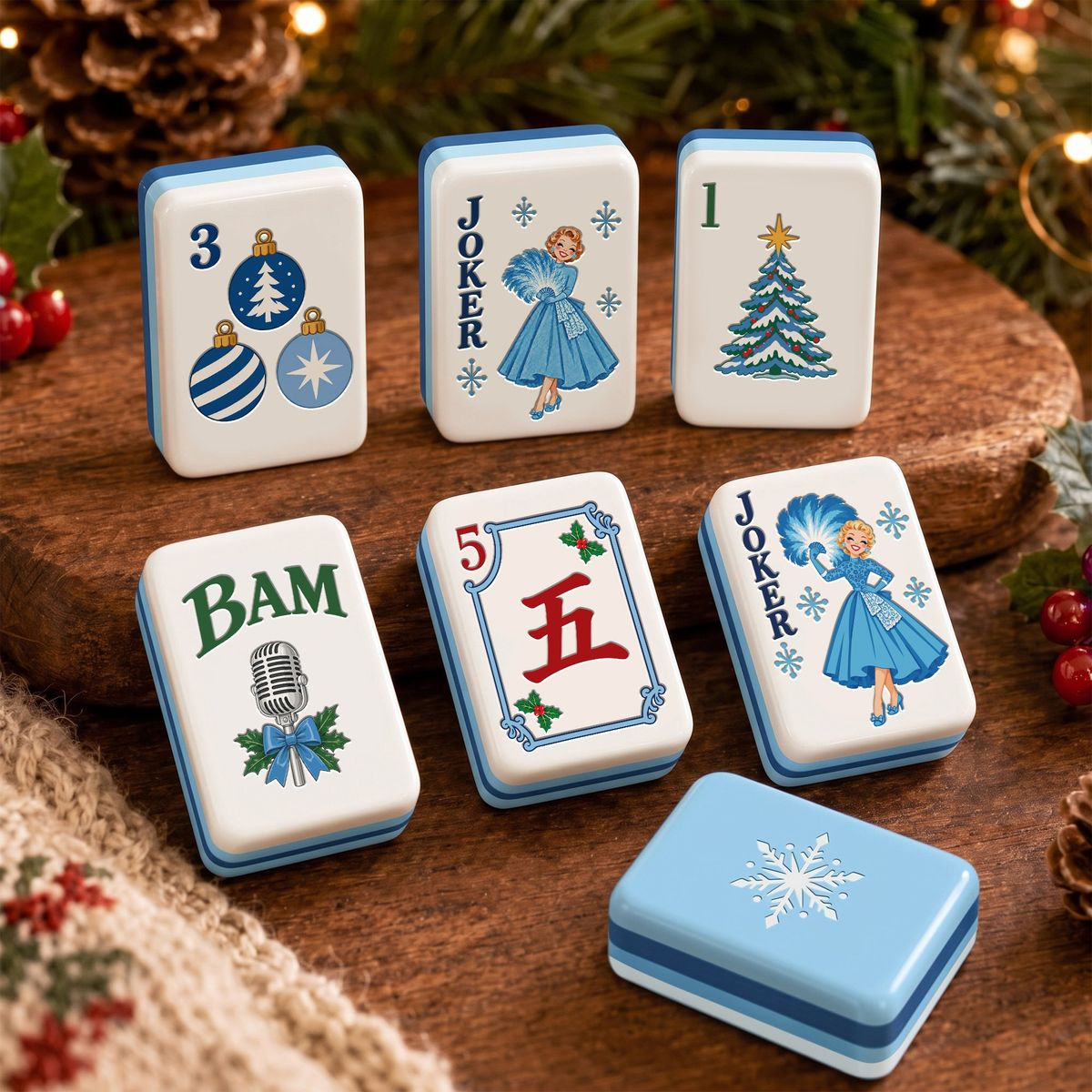
The 3 Bam is one of nine numbered Bam tiles in the American game—four copies in every standard set. It has no special power; it's treated like any other Bam number when building pungs (three identical 3 Bams), kongs (four), quints (five), or sextets (six), or when completing concealed hand combinations. You'll find it listed in the current year's card across many hand types. A 3 Bam cannot be used alone or as a pair; it cannot be swapped for a joker in exposed sets. Most hands use 3 Bams in mixed suit groups (pairing Bams, Craks, and Dots together) or in sequences within the card notation. Beginners mistake it for a rank-specific tile—it isn't. The card tells you exactly where it fits; your job is to recognize the pattern, build that group, and expose it only when the card allows. Mahstead's best-selling sets come with clear, durable Bam tiles so you can spot them quickly during play.
What exactly is the 3 Bam tile?
The 3 Bam is one of 36 Bam tiles in a standard American mahjong set (one of three suits: Bams, Craks, Dots). Each Bam number from 1 to 9 appears exactly four times. The 1 Bam often shows a bird symbol; the 3 Bam displays the numeral "3" with the Bam suit marker. It has no rank advantage—it's purely a numbered unit used to form groups. Unlike winds or dragons, the 3 Bam never serves as a bonus or end-game wildcard.

Where does the 3 Bam appear on the card?
The current year's National Mah Jongg League card organizes hands by section and pattern type. The 3 Bam appears in many sections because it's a mid-range number that fits both "like number" patterns (hands using mostly 1s, 2s, 3s, 4s, etc.) and mixed-suit combinations. You locate it by reading the card notation—each hand shows suit symbols and numbers. If a line reads "Bam 1, 2, 3" you're building a three-tile sequence within your concealed hand; if it shows a pung symbol with "3 Bam," you expose three identical 3 Bam tiles. The card is your rulebook; every legal use of the 3 Bam is spelled out there. How to read the mahjong card covers notation in detail.
🀄 Shop best-selling mahjong sets →
When can you expose a 3 Bam?
You expose a 3 Bam only as part of a group with two other identical 3 Bams (a pung), four 3 Bams (a kong), or larger multiples (quint, sextet) if the card calls for it. You cannot expose a single 3 Bam or use it as a pair. The moment you pick a tile that completes an exposed group, you announce it, show your hand, and declare the group to the table. Jokers can substitute for a 3 Bam in an exposed pung or larger set—never in a concealed hand combination or as a single tile. If your card pattern requires three 3 Bams exposed and a joker fills one slot, that's legal. If it requires four 3 Bams and you only have three tiles plus a joker, you're short and cannot win on that hand. Study how jokers work to avoid miscounting.
What are the most common 3 Bam hand patterns?
Three broad pattern families include the 3 Bam:
Like-number hands: All tiles are 1s, 2s, 3s, 4s, etc. across all three suits. A hand might require three 3 Craks, three 3 Dots, and three 3 Bams exposed, plus matching concealed groups.
Mixed-suit pungs: Hands with groups that blend all three suits (Bam, Crak, Dot) in a single pung. A 3 Bam pung sits alongside a 3 Crak pung, a 3 Dot pung, and so on.
Dragon or wind combinations: Hands pairing numbered tiles (including 3 Bams) with honor tiles (winds, dragons). The 3 Bam is concealed; the honors are exposed.
The card also includes hands requiring 3 Bams in specific sequences or as part of quints and sextets. Most hands use 3 Bams in two or three exposed groups, depending on the year's card design.
Pattern Type | 3 Bam Role | Exposed or Concealed? | Common Mistake |
Like-number (1s, 2s, 3s) | One of three 3 Bams | Exposed pung | Using only two 3 Bams + joker when hand calls for three real tiles |
Mixed-suit pung | Sits with 3 Crak, 3 Dot | Exposed | Confusing 3 Bam with a different number |
Dragon/wind blend | Filler in concealed hand | Concealed only | Trying to expose it; it only counts hidden |
Quint or sextet | Part of five or six | Exposed | Miscounting tiles in a larger set |
🎁 See our most-loved mahjong sets & accessories →
What mistakes do players make with the 3 Bam?
Forgetting the card is the law. The biggest error: picking up a 3 Bam and exposing it because you think it "belongs" in a group, when the card doesn't authorize that hand. Always check the card first. If your card hand doesn't require that pung or group, you're breaking the hand and cannot win.
Mixing up suits. Some players confuse 3 Bam with 3 Crak or 3 Dot mid-game, especially under pressure. Quality tile sets with clear suit icons help; Mahstead's engraved American mahjong sets use distinct markings so suits are unmistakable even across a crowded table.
Using jokers incorrectly. You cannot substitute a joker for a 3 Bam in a concealed hand tile. Jokers work only in exposed groups. If your hand requires three real 3 Bams in a pung, one joker can fill one slot—but the other two must be real tiles.
Counting wrong in multiples. When a hand requires a quint (five tiles) or sextet (six), players miscount how many 3 Bams they need. The card shows it plainly; write it down if you're tired or new.
Winning incorrectly. Calling "Mahjong!" on a hand that doesn't match the card invalidates the win. Before you declare, trace every group on the card and confirm every tile is in place.

How do you build a concealed hand with 3 Bams?
Most winning hands include both exposed and concealed groups. The 3 Bam often appears in your concealed hand—the 13 tiles you hold in your rack before you win. You're building combinations according to the card while keeping these tiles hidden from other players. For example, if a hand requires three 3 Bams exposed (a pung) and a concealed "like-number" group (say, three 4 Bams), you're holding four 3 Bam tiles: three to expose when you're ready, and one spare. Your concealed tiles do the same job—you're quietly assembling the groups the card demands until the moment you pick the winning tile and expose everything. Mahjong for beginners walks through a full hand build-out step by step.
What to check before you buy a set
Tile clarity: Can you see the suit symbol (Bam, Crak, Dot) and number clearly on every tile? Test under table light.
Joker and spare count: A 160-tile set includes extra tiles for backup. Confirm you have enough jokers so play never stops due to a lost or damaged tile.
Tile size and grip: Some players prefer slightly larger tiles for arthritis or vision ease. Try a set at a local game or club before committing.
Storage: Do you have a mat, rack, and bag that fit your playing style? A mat keeps play organized; racks with pushers speed up your tile management during the Charleston and play.
Our pick: Sets and mats that make 3 Bam (and every tile) unmistakable
Setup Type | Who It's For | Why It Works |
Acrylic set + printed mat | Weekly home game hosts | Durability + easy tile reading + organized play |
Engraved set with custom titles | Gift-givers, club players | Personalization + heirloom quality + memorable games |
Set + racks with pushers | Serious or arthritis-prone players | Hands stay organized; pusher system speeds Charleston |
Travel set + protective case | Road players, vacation groups | Portability; no tiles lost in transit |
Start with our best-selling mahjong sets—they're tested for clarity and durability. Pair your set with a mahjong mat to define player zones and keep the 3 Bam (and all tiles) visible and organized. If you host weekly games, racks with pushers cut setup time and reduce the chance you'll accidentally skip a tile during the Charleston.
✨ Find your Mahstead set — free US shipping →
Understanding 3 Bams in context
The 3 Bam is not special—it's ordinary. That's the point. Mastering American mahjong means treating every tile as a tool the card directs you to use. The 3 Bam fits into hand patterns across the entire season's card, and your job is to recognize those patterns, build the groups, and know when to expose or hold. New players often overthink individual tiles; experienced players trust the card and focus on flow. As you play more weeks, the 3 Bam (and every other tile) becomes invisible—you're reading the card and moving tiles, not thinking about names. That's when the game feels effortless.
For more on how every tile in a standard set works together, see what's in an American mahjong set. For a full rules overview, read how to play American mahjong.

FAQ
Can a joker replace a 3 Bam in my concealed hand?
No. Jokers work only in exposed groups (pungs, kongs, quints, sextets). Any 3 Bam in your concealed hand must be a real tile. If a joker is in your rack and not part of an exposed group, it's just a spare.
What if I have four 3 Bams but the card only calls for three exposed?
Expose three as a pung. The fourth goes into your concealed hand if the card pattern includes another group that needs it, or it stays unused in your rack. You never force tiles into a group the card doesn't ask for.
Is 3 Bam stronger or weaker than 3 Crak or 3 Dot?
No. All three are equal in rank and power. The card determines where each one fits; the suit symbol is the only difference. Strength comes from the hand pattern, not the tile rank.
How do I know if I'm using a 3 Bam correctly during the Charleston?
During the Charleston (the tile-passing phase before play), you're just passing tiles to other players—suit and number don't matter yet. Once play begins, the card is your guide. If you've picked a 3 Bam and it completes an exposed group the card requires, announce it and show the group to the table.
Can I use a 3 Bam as a wildcard or substitute for any other tile?
No. A 3 Bam is always a 3 Bam—it cannot become a 4 Bam, a 3 Crak, or anything else. Only jokers (and only in exposed groups) substitute for missing tiles. The 3 Bam has one identity and one use per hand.
What if the card changes next year—will the 3 Bam work differently?
No. The 3 Bam itself never changes. The new card may include different hand patterns and use the 3 Bam in new combinations, but its function—a numbered tile in the Bam suit—stays the same. You'll just read the new card and adapt your hand recognition.


View More
View More
View More
