
How to Teach Mahjong to Moms: A Step-by-Step Guide
Last updated: Nov 23, 2026
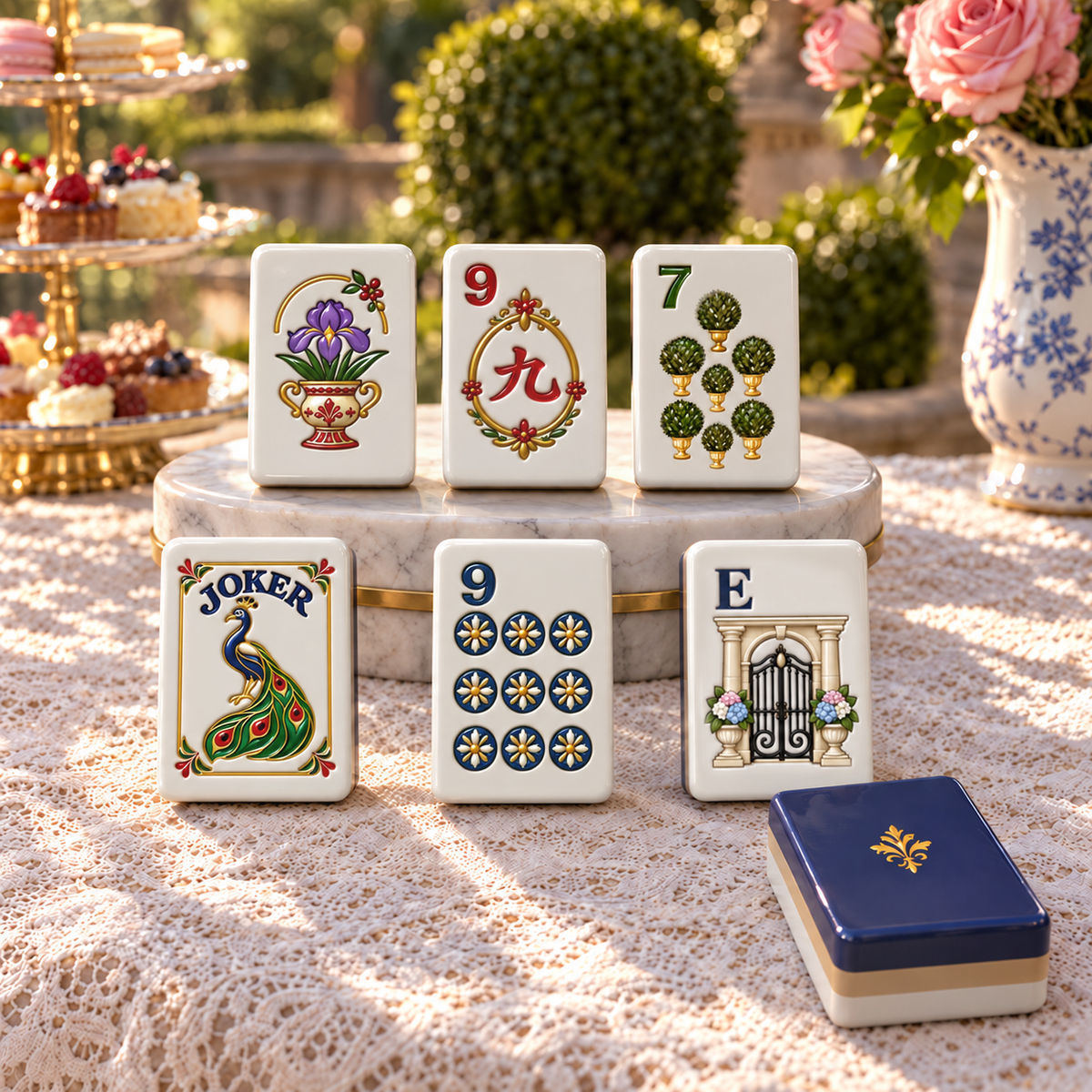
Teaching moms American mahjong starts with understanding the game's real rules and setting her up with clear, patient instruction. Start by showing her the three suits (Bams, Craks, Dots), winds, and dragons—then teach the hands one row at a time from the card. Pick a quiet evening, give her 13 tiles plus 1 draw, and explain that she builds a hand matching exactly one pattern from the card. Most moms learn fastest when you play WITH her the first few times, not against her. Allow 90 minutes for a first game.
What does your mom actually need to know first?
Your mom doesn't need to memorize the card. She needs to understand that every winning hand is a specific pattern from the current year's card, and there are only about 80 active patterns to learn gradually. Start by showing her one row: "Look—a pair and three pungs means Hands 1–3. All the 1-Dot pair sits here, and these three tiles repeat three times each." Don't explain scoring on day one. The moment she realizes she can follow the card and spot a pattern, she'll feel confident. Introduce the Charleston (the tile-passing ritual) AFTER the first game—let her learn hand-building first.
🀄 Shop best-selling mahjong sets →

How do you organize the tiles so beginners don't get lost?
A mahjong mat with a clear center line and wall zones helps your mom see where tiles live and what she's building. Place her 13 tiles on a rack with pushers—this keeps her hand tidy and frees up the wall space for discards. You draw from the wall, discard in the center, and she learns the flow without tiles scattering. Avoid playing on a bare table; the visual chaos overwhelms beginners. A mat costs little and makes teaching feel organized, not chaotic. After three games, most moms arrange tiles without the rack and feel proud of the upgrade.
What mistakes do first-time teachers make—and how do we avoid them?
The biggest mistake: starting with scoring. Your mom doesn't care who wins by how much on game one. Teach hand-building first, scoring second. Second mistake: explaining "you can call a pung" before she knows what a pung is. Show her the tiles in your hand first—"these three 5 Dots are a pung"—then say what she can do with it. Third: playing too fast. Beginners need time to read the card and find their tiles. Slow down; make space for questions. Fourth: using a printed card without a clear font. Small type makes her squint and quit. The card should be at least 8.5×11 inches and laminated so she can handle it without guilt.
How long does it really take to get moms comfortable?
Most moms feel genuinely playful by game three or four. Game one is "what are we doing?" Game two is "okay, I see the patterns." Game three is "I called a pung!" and suddenly she's engaged. If she plays with your group weekly, she'll be fluent—reading the card, knowing the winds, spotting patterns—by week six to eight. Don't pressure her to memorize. The card is there for a reason. Many veteran moms still flip the card mid-game and feel zero shame. Mahjong is a lifetime game; there's no graduation date, just deeper joy each season.
Game Number | What Mom Learns | How She Feels | What to Skip |
1 | Tiles, suits, the card structure | Curious, a bit overwhelmed | Scoring, strategies, rare hands |
2 | Hand patterns, how to read rows | Confident she can do this | Complex scoring variations |
3–4 | Calling pungs, the Charleston | Playful, asking questions | Betting or strategy nuance |
5–8 | Faster reading, recognizing patterns | Genuine interest in weekly games | Pressure to remember everything |

How do you know when to add the Charleston and new rules?
Wait until she's won a hand. Once she builds and completes a legal hand, she owns the basic win. Then, before your next session, teach the Charleston as a game not a rule. "Before we start, we pass tiles four times in this special way—it mixes them up." Play it, laugh when tiles spill, make it social. After she's Charlestoned twice, introduce calling rules: "If we play a tile you need, you say 'I want that,' and we hold while you complete your hand." These additions are layers, not prerequisites. The card teaches her hands; the other rules make the game social and strategic.
🎁 See our most-loved mahjong sets & accessories →
What to Check Before You Buy
Before you invite your mom to game night, audit your setup:
Tile clarity: Can you read the suit symbols (bamboo, circle, character) from 18 inches away? If not, upgrade.
Mat or table: Do you have a designated play surface, or will tiles slide off the edge?
Current card: Is it the 2026 card? Hands change every spring; an old card confuses beginners.
Racks (optional): Do your moms have hand holders, or will they fan tiles on the edge and strain their hands?
Bag or case: Will you transport the set safely, or will tiles rattle and chips crack?
A 160-tile acrylic set ships with spare tiles so you always have a full game ready. Mahjong mats fold into a bag or closet, and racks with pushers make handling tiles easy for hands that tire quickly. We ship free across the US, so your mom can start any week.
The Core Teaching Sequence: A Checklist
Unbox the set together. Show her each suit and count the tiles. "Look—152 tiles, and all the numbers repeat four times. That's how we always have enough."
Deal 13 tiles each. Teach the hand-building layout: pair in front, then three groups of three tiles (or four, if using a joker).
Show her the card. Point to one winning pattern. Read it aloud: "A pair of 1 Dots, three 2 Dots, three 3 Dots, three 4 Dots, three 5 Dots."
Play one hand together. Draw from the wall, discard, take turns. No betting, no scoring yet.
Let her win game one. Stack the deck if you must. Confidence matters more than fairness.
Play game two without help. She reads the card herself. Slow it down; let her think.
Add the Charleston before game three. Make it fun, not formal.
Invite a second player (or a third) once she's won twice with your help.
That sequence takes about three weeks of weekly games. By week four, your mom can teach a friend.
✨ Find your Mahstead set — free US shipping →
Start With Clarity, Not Pressure
The real secret to teaching moms mahjong is remembering that most of them are NOT trying to master the game overnight—they're trying to find a reason to gather, laugh, and feel sharp. When you set up the tiles clearly, teach the card calmly, and celebrate her first win genuinely, you've given her that. The rules will follow. The confidence will grow. And in a few seasons, she'll be the one teaching her friends, and you'll watch her light up explaining the winds to a beginner just like you did for her.
Start with a best-selling set and a mahjong mat to keep everything visible and organized. If your moms have mobility concerns, add racks with pushers—they're the most-loved accessory for comfortable, injury-free play. See the full range of how to play American mahjong and mahjong for beginners guidance to go deeper on any rule or term.

FAQ
Should I teach my mom American mahjong or another variant?
American mahjong is the best choice for moms new to the game. It uses a printed card, so hands are visible and learnable. It has no complex sequences (chows), only pungs and groups from the card. Chinese or Riichi mahjong demand more memorization and have subtle scoring rules. American mahjong lets her focus on pattern recognition and strategy without overwhelming her.
How many times do we play before she'll want to play without me?
Most moms feel confident leading a game themselves after 4–6 plays. They may still flip the card or ask about hand order, but they can run the table and enjoy it. Confidence grows faster if she wins early and plays with the same group weekly, so social rhythm matters more than solo practice.
What if my mom has trouble reading the tiles or card?
Upgrade to a set with larger, clearer tile faces and a laminated card printed at 8.5×11 inches minimum. Acrylic tiles with high-contrast engraving are easiest to read. Sit closer during the first game. If her vision is low, let her wear reading glasses and move the card closer—no shame in that. Many veteran moms play that way.
Do we need special racks or mats, or can we just play on a table?
You can play on any flat table, but a mat and racks make teaching faster and more comfortable. A mat shows the wall zones and keeps tiles from sliding. Racks hold her tiles upright so she doesn't strain her hands fanning them on the edge. For moms over 60 or with arthritis, racks are a game-changer. Start without them; upgrade if she plays weekly.
How do I explain the Charleston without scaring her?
Describe it as "the mixing game." "Before we deal our hands, we each pass four tiles to the player on our left, then we pass three, then two, then one to our right. It's like shuffling but with our hands." Play it slowly the first time. Tiles will scatter; laugh about it. By the second Charleston, she'll join in and it becomes the fun ritual that starts each game.
What if she doesn't want to learn scoring on day one?
That's perfectly fine. Scoring is the second layer of mahjong. Hands and hand-reading come first. Many casual moms never learn detailed scoring—they just play for the fun of it and split any small bet evenly. Offer scoring lessons only when she asks or after she's won three times on her own.


View More
View More
View More
