
History of Mahjong Competition Rules: American, Chinese & Beyond
Last updated: Nov 23, 2026
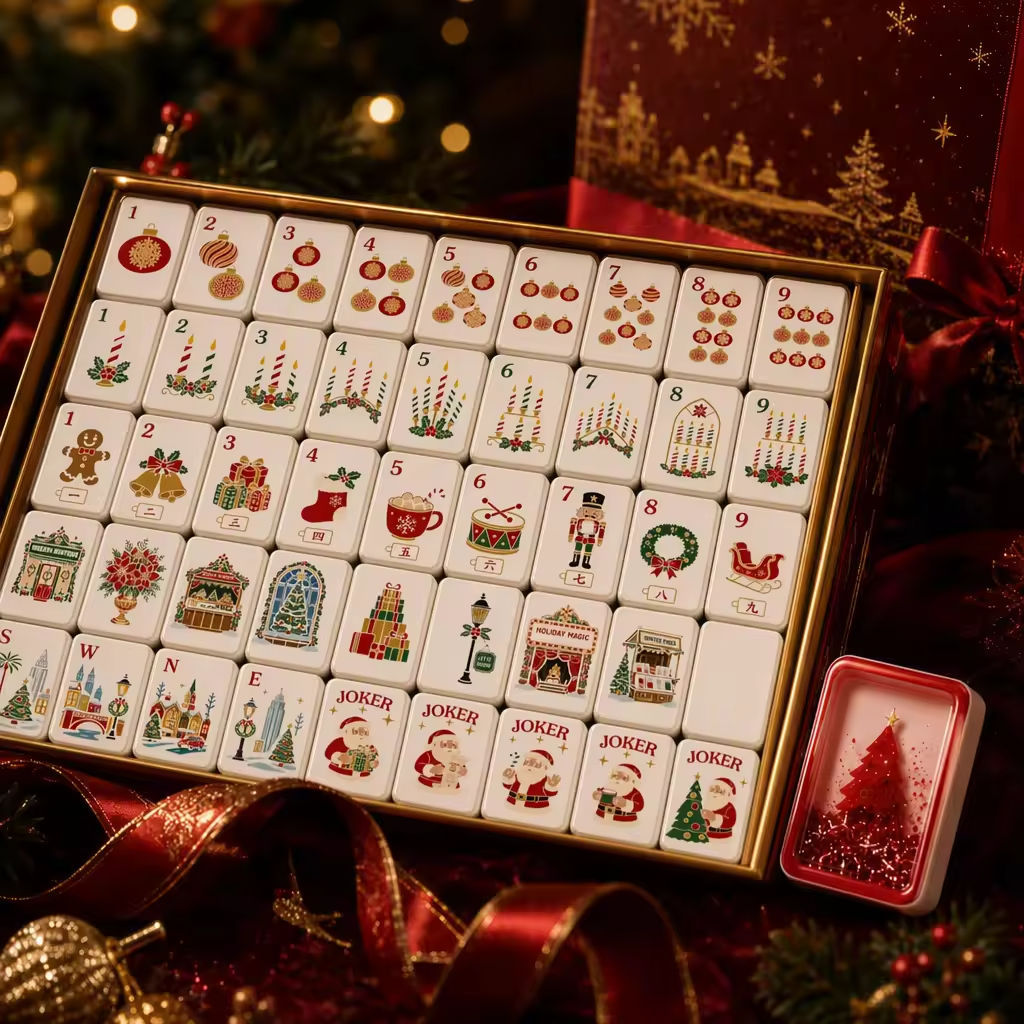
Mahjong competition rules emerged around the early 1900s as the game spread from China across Asia and the West. The Chinese variants (Classical, Hong Kong, Riichi) developed rigid hand structures and scoring systems by the 1950s–1970s; American mahjong, formalized in the 1930s–1940s by Jewish players in New York, uses a seasonal card system with no chows and no exposed melds except pungs through sextets. The National Mah Jongg League standardized American play in 1937 and still issues the official hand card each spring. Taiwanese mahjong evolved separately with its own point calculations. Today, competitive play worldwide follows one of these frameworks: Chinese (regional variants with strict sequences), Japanese Riichi (13-tile draws, all-concealed melds, immediate declaration), and American (card-dependent, exposed melds allowed). Tournament rules specify hand validity, scoring disputes, dead walls, and misdeal recovery. Choosing your variant depends on your group's preference and which best-selling mahjong sets your players already own, since American sets are designed specifically for the card system and contain different tile ratios than Chinese or Riichi sets.
When did standardized mahjong tournament rules first appear?
Formal competition rules crystallized in the 1930s–1950s. The National Mah Jongg League published its first official hand guide in 1937, establishing American mahjong as a distinct rule system. In China, competitive play wasn't systematized until the 1980s and 1990s, when international bodies created standards for Classical, Hong Kong, and other Chinese variants. Japan's Riichi Association formalized Riichi mahjong rules in the 1980s. Each region's rules developed from centuries of casual home play, but the tournament frame—dead walls, misdeal protocols, time limits, and scoresheet standards—emerged only after 1930.

How does American mahjong competition differ from Chinese variants?
American mahjong uses a published hand card (renewed yearly by the League) listing all legal 14-tile combinations; players draw 14 tiles and must match one printed hand, incorporating how jokers work as wildcards. Exposed melds (pungs, kongs, quints, sextets) are permitted and the dealer position rotates. Chinese variants (Classical, Hong Kong, Taiwanese) require players to construct hands from principles rather than a card; sequences (chows: 1-2-3, 4-5-6, etc.) can be exposed or concealed, and jokers are typically absent or limited. Riichi mahjong, played in Japan and internationally, is entirely concealed—no exposed melds except the final hand—and uses a different tile count and scoring system. American tournament play emphasizes tile management and card knowledge; Chinese emphasizes probability and hand construction mastery; Riichi rewards concealment and reading opponents. American sets contain 152 playing tiles plus extras; Chinese sets often come as 144 tiles; Riichi sets are standardized at 136 tiles.
What role does the National Mah Jongg League card play in American tournaments?
The League card is the official rulebook for American play: it lists every legal hand combination for the current year, organized by hand type (Pungs, Kongs, Sequences, Honors, etc.). All sanctioned American tournaments use the current year's card, and casual home players typically do too. The card resets each March, removing old hands and introducing new ones to keep the game fresh. This means your group must use the 2026 card if you're playing competitively or with modern home rules. The card is not a optional variant—it is the law of American mahjong. Tournament organizers verify that winning hands match the card, and disputes hinge on card interpretation. No other mahjong variant uses this mechanism; it makes American play more regulated and standardized than open-ended hand construction in Chinese variants.
Which competition rule systems allow exposed melds and which don't?
Variant | Exposed Melds Allowed | Concealment Requirement | Key Rule |
American | Yes (pungs, kongs, quints, sextets) | No | Hand must match current-year card |
Chinese (Classical) | Yes (pungs, kongs, chows) | No | Hand follows hand-construction principles |
Hong Kong | Yes (pungs, kongs, chows) | No | Specific scoring for each combination |
Taiwanese | Yes (pungs, kongs, chows) | No | Regional point-calculation rules |
Riichi (Japanese) | No—all melds concealed until win | Yes | Final hand revealed; fastest tournaments |
Riichi is the only major competition variant that forbids any exposed melds during play; this creates higher tension and faster decisions. American and all Chinese variants permit exposure, making games longer but more socially flexible. American tournaments often use timers (10–20 minutes per hand) to prevent stalling; Chinese tournaments vary by region. If you play at home, your group's preference matters more than tournament standards. Our best-selling mahjong sets support American rules out of the box—card included—but can also be used for casual Chinese play if your group learns hand-construction principles.
🀄 Shop best-selling mahjong sets →

How have tournament misdeal and dispute rules evolved?
Early American home play had informal misdeal rules; the League standardized them in the 1937 guide and refined them through the 1960s–1980s. Today's American tournament protocol specifies: if tiles are drawn incorrectly, the hand is declared dead and replayed; if a winning hand doesn't match the card, the win is void and play continues; if joker placement is disputed, the scorekeeper's record stands. Chinese tournaments established similar protocols in the 1990s through regional and international federations. Riichi tournaments in Japan operate under the strictest standards—a tournament rulebook exceeds 50 pages—covering wall-building errors, discard misdeclaration, and live-hand recovery. Disputes are adjudicated by a tournament director, not negotiated by players. This formalization reflects mahjong's shift from parlor game to organized sport. Home players rarely need these rules, but knowing them helps you run cleaner games and avoid conflicts. A high-quality mahjong mat with clearly marked seat positions and a four-rack setup reduces misdeal frequency by keeping tile flow and player rotation clear.
What scoring systems emerged in competitive mahjong history?
Scoring evolved separately in each tradition. American uses a simple point-value system based on hand rarity: a Pung hand scores fewer points than a Kong hand; payment is unit-based and multiplied by the winning player's wind (dealer earns double). Chinese (Classical) assigns points to each hand type (flowers, terminals, dragons) with multipliers for specific conditions (all Pungs = double points, concealed hand = triple, etc.); scoring varies by regional variant. Hong Kong uses a fast-calculating system: all hands score 1 unit base, multiplied by hand difficulty (Limit hands = fixed maximum). Riichi employs meld-point tables: each combination (pair, pung, sequence) earns points; hand completion type (self-draw vs. discard) applies multipliers; scoring is deterministic and precise. Taiwanese blends Chinese principle with regional twists on point values and payment rules. American scoring is least math-intensive; Riichi is most precise; Chinese variants occupy the middle. Tournament rules codify one scoring system per variant—casual play often relaxes these rules or mixes them, which works fine for home games but creates chaos in tournaments.
🎁 See our most-loved mahjong sets & accessories →
How do modern tournament organizers adapt rules for online play?
Online tournament platforms (especially for Riichi and Hong Kong mahjong) have introduced time-banking, hidden hands (verified by server), and automated rule-checking since the mid-2010s. American mahjong has been slower to go online because the hand card is central; some platforms now embed the current League card and enforce it automatically. Dispute resolution in online play relies on gameplay logs, not human referees. Speed increases because there's no physical tile shuffling; online Riichi tournaments can run 4 hands per hour vs. 1–2 in person. Scoring is calculated instantly. However, online play removes social elements (player reading, psychology, tile-speed tells), so many longtime competitors prefer in-person tournaments. Home players rarely encounter online rule variants unless they join remote leagues. If you're building a serious home group, an in-person setup with quality engraved American mahjong sets and a tournament-grade mahjong mat creates the full competitive experience without needing to adapt to digital platforms.
What to check before you buy for your rule variant
Confirm your group's variant. Are you playing American (card-based), Chinese (hand-construction), Riichi (concealed), or a casual mix? This determines tile count and set design.
Verify tile count. American competitive play uses 152 playing tiles; Chinese uses 144 or 152 depending on regional rules; Riichi uses 136. Our sets are 160-tile (152 playing + spares), built for American rules.
Check if the set includes current-year documentation. American sets should ship with or reference the current League hand card; Chinese and Riichi sets may not need external docs.
Inspect tile clarity and size. Competition-grade tiles must be uniform in size (±1–2mm), easy to read, and durable through 20+ hours of play per year. Plastic acrylic tiles withstand this better than bone/bamboo for high-turnover tables.
Assess mat and storage quality. A tournament-level game benefits from a mahjong mat that marks discard zones and keeps tiles aligned; racks with pushers reduce misdeal errors.
✨ Find your Mahstead set — free US shipping →

FAQ
What's the difference between tournament mahjong rules and casual home rules?
Tournaments enforce strict dispute protocols, use official scoring systems, and require current-year documentation (American card, League rulebook, etc.). Home games are flexible—players negotiate rules and often mix variants. Casual play prioritizes fun; tournaments prioritize fairness and standardization.
Can I use the same mahjong set for American and Chinese rules?
Yes, if your American set has 152–160 tiles. American tile content (4 copies of each Bam/Crak/Dot 1–9, 16 winds, 12 dragons, 8 flowers, 8 jokers) overlaps with Chinese tile sets. However, American players use the League card; Chinese players construct hands from memory and principle. Both work with the same physical tiles.
Is Riichi mahjong harder to learn than American mahjong?
Riichi requires memorizing hand patterns and scoring tables (no written card). American requires learning the current-year League card. Riichi has steeper initial study but faster decision-making in play; American has gentler entry but hand-card dependency. Difficulty is subjective.
Do competitive mahjong tournaments allow jokers?
American tournaments use 8 jokers as wildcards within the hand-card system. Chinese tournaments typically disallow or limit jokers. Riichi tournaments rarely use jokers. Each variant's tournament rules specify joker rules explicitly—check before entering.
How often do mahjong competition rules change?
American rules (League card) change yearly every March. Chinese and Taiwanese variants adjust incrementally through regional federation guidance, not annual resets. Riichi rules remain stable year to year, with updates published 6–12 months in advance. Home players rarely need to track changes unless they join formal tournaments.
What's the fastest-growing mahjong competition format worldwide?
Riichi (Japanese mahjong) has the largest organized tournament circuit (thousands of events annually across Asia, Europe, North America) as of 2026. American mahjong remains popular in the US and Canada but has a smaller tournament infrastructure. Chinese mahjong competitions are regional but growing in mainland China and Southeast Asia.


View More
View More
View More
