
Easiest Mahjong Rules for Gen Z: Start Today
Last updated: Nov 23, 2026
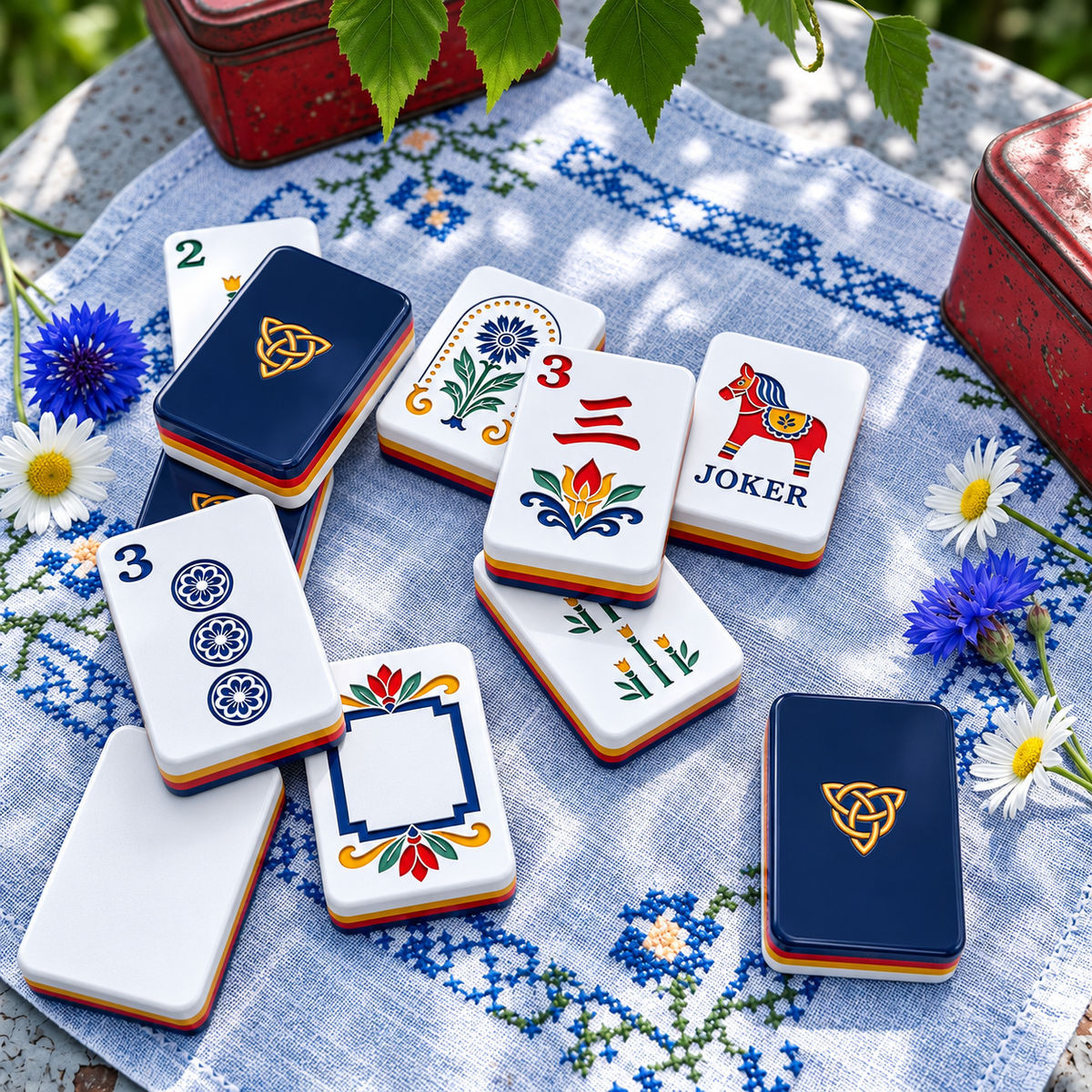
American mahjong is a four-player tile game where you collect matching groups (Bams, Craks, Dots, winds, dragons) to form a winning hand from the current year's National Mah Jongg League card. Each player draws and discards tiles in turn; the first to match one of the card's legal patterns calls "Mahjong" and wins the round. A standard game uses 152 tiles plus 8 jokers, lasts 10–15 minutes per round, and requires one hand card (updated yearly by the League). You can play online for free to learn, or buy a physical set—we recommend acrylic sets from our best-selling mahjong collection for durability and clarity. Avoid the myth that you must memorize hundreds of hands: the card shows you exactly what's legal, and jokers let you substitute any tile. Start with the Charleston (the tile-passing warm-up), learn to read one section of the card, and play.
Why Gen Z finds American mahjong easier than the older generation?
Gen Z learns rules faster because they're used to game interfaces and pattern recognition from gaming. American mahjong doesn't require memorizing complex sequences (no "runs" like 1-2-3 the way Chinese does): you only grab identical tiles—three 5 Dots, four Red Dragons, five Bams—and jokers fill gaps. The card is your cheat sheet: it literally shows you which combinations win, so there's no hidden knowledge to learn. Most importantly, you don't have to understand scoring math to play; you just match, call, and move on. Start with one section of the card (like "Like Numbers" or "Pairs"), ignore the rest for your first night, and you're already playing real hands.
🀄 Shop best-selling mahjong sets →

What tiles do you actually need to know on day one?
Learn three: Bams (stick symbols), Craks (line drawings), Dots (circles). Each comes in numbers 1–9, and you'll see four identical copies of each number in the set. Winds (N, E, W, S) and dragons (Red, Green, White) are bonus patterns you recognize by shape, not number. Jokers are wildcards that stand in for any tile you're missing. On day one, ignore flowers and blank tiles—they're spares, not part of play. The moment you can say "that's a 3 Bam," "that's East wind," and "joker replaces anything," you can read the hand card and start playing. Don't memorize the tile names before your first game; pick them up as you draw and discard.
How does the Charleston actually work, and why skip it?
The Charleston is the four-pass ritual before play: each player pushes three tiles to the right, then left, then back right, then one tile center (optional). It randomizes the opening draw so the game feels fresh. If you're learning alone on your first night, you can skip it and deal 13 tiles to each player directly. Once you're comfortable, add the Charleston—it takes 90 seconds and teaches you how to read a hand (you're holding tiles and thinking about what to keep). Online beginner games often let you toggle it on or off. Don't let it intimidate you; it's just tile roulette before the real game starts.
What does the hand card actually show, and how do you read it?
The National Mah Jongg League card is a one-page poster divided into sections (Like Numbers, Consecutive Numbers, Pairs, Winds/Dragons, and special patterns). Each section shows rows of winning combinations, and each row is a legal hand. For example, one row might show "2024: Like Numbers—three 5 Dots, three 7 Craks, three 2 Bams, and a pair of Red Dragons." That means if you're holding exactly those tiles, you can call Mahjong. Your job is to glance at the card, see which hands you're building, and grab the tiles that get you closer. The card changes every spring, so last year's card doesn't work. Start with how to read the mahjong card if you want a deeper dive, but the basic workflow is: hold 13 tiles, pick one up each turn, discard one, watch for matches on the card.
Aspect | What Beginners Think | What's Actually True |
Memorizing hands | Must memorize 400+ | You read them from the card |
Joker rules | Complex wildcards | Any joker = any missing tile |
Scoring | Math-heavy | Not needed to play or win |
Tile knowledge | Learn all 152 names first | Pick them up as you play |
Time to play | Weeks of study | 15 minutes of instruction + play |
Luck vs. skill | Luck-only | Mix: card reading + discard strategy |
🎁 See our most-loved mahjong sets & accessories →

What's the biggest beginner mistake, and how do you avoid it?
The biggest mistake is treating jokers as scarce resources. Beginners hoard them, afraid to use one, and then hold 14 tiles at the end (illegal). Jokers are abundant—one-twelfth of your draw. Use them freely. The second mistake: not calling "Mahjong" fast enough. If you're holding a hand that matches the card, call it immediately; waiting one turn risks someone else discarding into you, and the hand is lost. The third: forgetting that only identical tiles count (no "1 Bam, 2 Bam, 3 Bam" runs are allowed in American mahjong, unlike Chinese). If you're holding three different numbers, it's not a pung, and it doesn't count. Watch the experienced player discard, copy the pace, and play. You'll make mistakes; everyone does in round one. By round three, you'll see the card and the game flow naturally.
How do you actually win, and what happens after?
You win by holding exactly 14 tiles that match one row on the current year's card. One player calls "Mahjong," the round ends immediately, scoring is calculated (but most casual tables skip detailed scoring), and the next game begins. The role of dealer (East) rotates, and players reset. A typical session is four or five quick rounds, 10–15 minutes each, and done. There's no complex settlement unless you're playing for stakes or playing at a formal club (which uses detailed scoring rules). At casual tables, the joy is the speed, the pattern recognition, and the social moment—someone wins, everyone laughs, shuffle and deal again. If you want to learn scoring, see American mahjong scoring, but it's optional for a first game.
✨ Find your Mahstead set — free US shipping →
What to check before you buy a mahjong set for your first game?
Tile size and clarity. Acrylic tiles are easier to read than bamboo for beginners; look for sets with clean printed symbols (not carved). Check that all numbers and suits are visible from across the table.
Mat and racks. A mat keeps tiles from sliding and lets you organize your hand neatly. Racks with pushers let you push tiles up as you draw (keeps your hand count honest). Both make the game feel less chaotic.
Spare jokers. Sets with extra jokers let you replace a missing tile without stealing one from the game.
Storage. A bag or case means you'll actually bring the set to friends' houses. Bags are lighter; cases protect tiles during travel.
We make sets with these basics built in. See engraved American mahjong sets if you want a personalized touch, or mahjong mats and racks with pushers as add-ons to an existing set.

FAQ
Can I learn mahjong online before buying a physical set?
Yes. Free browser games and phone apps let you play American mahjong rules without spending money. Play five rounds online to confirm you like the game, then buy a physical set to host at home.
Do I have to buy a new hand card every year?
Yes. The National Mah Jongg League releases a new card every spring; hands from 2025 don't work in 2026 play. Tiles are reusable forever.
How many people do I need to play?
American mahjong is built for four players. Two- and three-player variants exist but use different rules; see 2 and 3 player mahjong rules for details.
Is American mahjong the same as Chinese mahjong?
No. American has no "chows" (1-2-3 sequences), uses a hand card instead of memory, and plays differently in speed and strategy. Start with American if you're new; it's clearer for beginners.
What happens if two people call "Mahjong" at the same time?
The player closest to East (the dealer) or the player in rotation order wins. Rules vary by table; agree before play starts. At casual games, the player who called first usually wins.
How do I find a weekly game near me?
Check community centers, libraries, synagogues, country clubs, and meetup boards in your city for mahjong groups. Many post beginner-friendly nights. Online communities often have local Discord channels or Nextdoor posts advertising games.


View More
View More
View More
