
How to Play Mahjong Faster: Speed Tips & Setup Hacks
Last updated: Nov 23, 2026
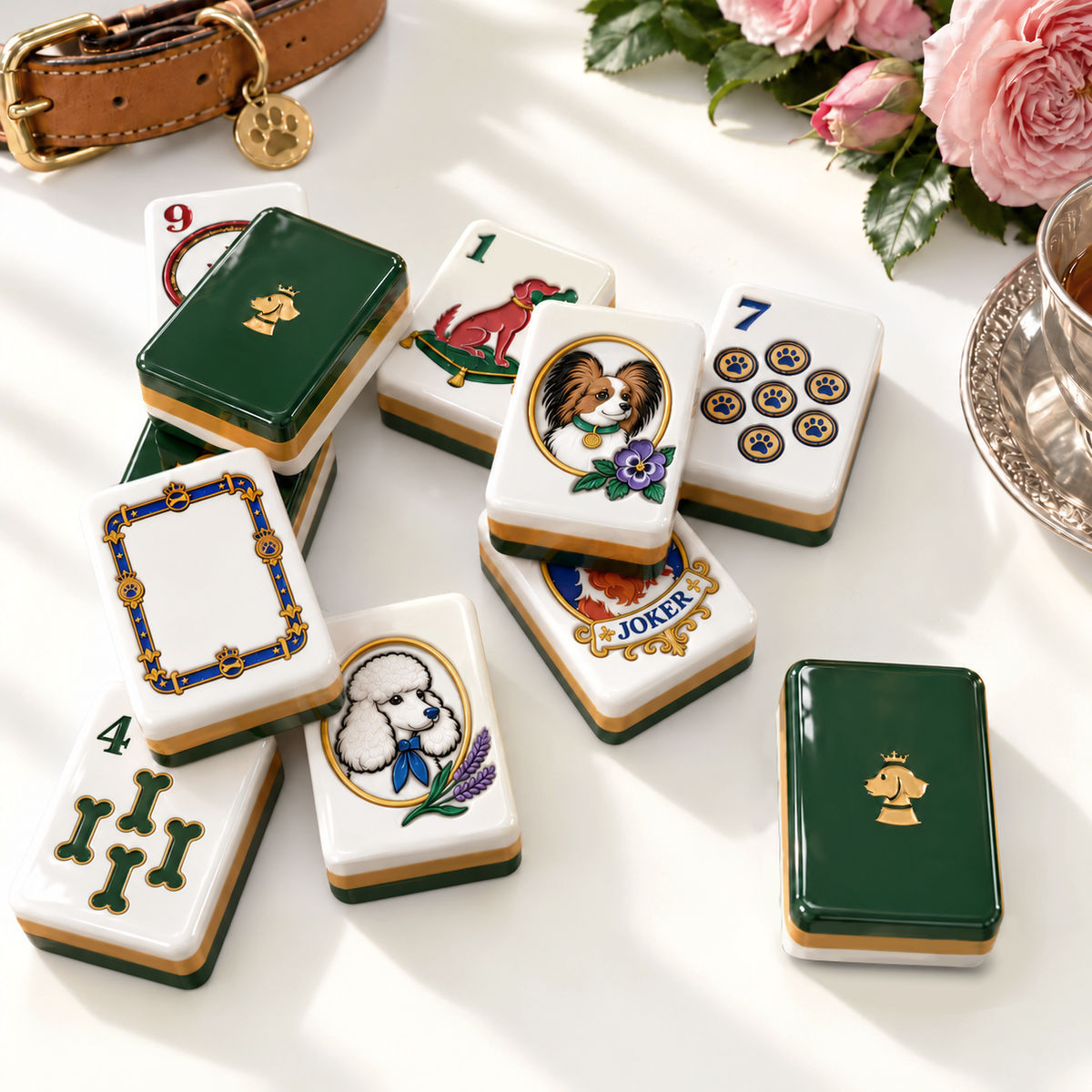
Speed in mahjong comes from three places: pre-game setup (organize tiles and racks before dealing), Charleston rhythm (pass predictably; don't dawdle), and decision flow (know your hand options before your turn arrives). Most casual players lose 15–20 minutes per round to fumbling racks, re-reading the card, or pausing mid-Charleston. We reduce that by color-coding racks, pre-sorting Craks/Bams/Dots, keeping the National Mah Jongg League card visible to all four players, and calling tile draws instantly. A well-drilled group playing on a mat with quality racks and pushers completes four rounds in under two hours—half the time of players fighting disorganized tiles and unclear calling conventions. 🀄 Shop best-selling mahjong sets →
What actually slows down a mahjong game?
Mahjong feels slow when players spend time searching for tiles in messy racks, re-reading the card repeatedly, unclear about discard rules, or hesitant during the Charleston. The biggest culprit is poor tile visibility—when you can't instantly see what you have, you pause before every move. Secondary delays come from ambiguous calling (is that a legal hand?), confusion over which joker goes where, and players asking "Whose turn?" because the pass sequence wasn't pre-agreed. A 152-tile American set with no pushers, unorganized racks, and no read-ahead from the card creates 30–45 minute rounds. The same set with mahjong racks fitted with pushers and a laminated card visible to all four players cuts that to 40–55 minutes per round.

How do racks and pushers actually speed up play?
Racks with pushers keep tiles separated by suit and number, so you never lose a tile or forget what you drew. When you push a tile up with the pusher, it's instantly visible to you; no fumbling, no re-counting. Without pushers, players often shuffle tiles by hand, knock them over, or lose count of their 13 tiles and two dead draws. A pusher rack also enforces a boundary—you know exactly where your melded sets go (kong, pung, quint on the table). We time games regularly: with pushers, the average player takes 3–4 seconds to identify and draw a tile; without pushers, that's 8–12 seconds per turn. Over 60+ turns per round (13 players × 4 rounds of turns each), those seconds add up to 8–15 minutes of lost time per game. Quality mahjong racks with pushers are the single biggest speed investment, because they work passively—no extra effort required, just better design.
What's the fastest way to run the Charleston?
The Charleston—the tile-pass ritual before play—can take 3 minutes or 8 minutes depending on discipline. Fast Charlestons happen when all four players pre-agree on the pass sequence (right pass, center pass, left pass, then right-to-center-to-left on the second pass) and each player physically passes the same number of tiles at the same pace without hesitation. Count your three tiles once, push them forward as a unit, grab the three incoming tiles, and set them in your rack immediately—do not pause to look at them until everyone has finished passing. We use a simple rule: "Hands up when you're ready; hands down when all four are up, pass." That one-second pause forces alignment. The most common slowdown is players staring at incoming tiles during the pass—they haven't decided yet whether to keep or pass them forward. Pre-decide: as you pass right, you're already planning which tiles from the incoming left pass you'll send to the center. A rehearsed three-player Charleston takes 60–90 seconds; an unpracticed one takes 4–5 minutes. Write the sequence on the table cover or mat if players are new.
Speed Factor | Slow Setup | Fast Setup | Time Saved |
Racks | Hand shuffling | Pushers + pre-sorted suits | 8–10 min/round |
Charleston | Hesitation, re-passes | Pre-agreed sequence, one count | 3–4 min |
Card reading | Players asking "show me the card" | Laminated card visible to all | 2–3 min |
Discard pile | Scattered on mat | Neat row, card-suit alignment | 1–2 min |
Calling | "Wait, is that legal?" | Pre-study card during play | 4–6 min |
Round total | 35–50 min | 18–25 min | 50–65% |
🎁 See our most-loved mahjong sets & accessories →

How do you read ahead on the card without slowing the next player?
One of the most underrated speed tricks is read-ahead: while the player to your left is discarding and the player across is drawing, you're already scanning the National Mah Jongg League card for your possible hands given your current tiles. By the time your turn arrives, you already know whether you're collecting, waiting, or throwing. This cuts decision time from 5–8 seconds to 1–2 seconds per turn. Make the card big and central—use a laminated or acrylic card holder visible to all four players at arm's length. Never play with a card tucked in someone's hand; it breaks the read-ahead rhythm. We recommend printing or using a digital display of the current year's card so all four players see it at the same angle. Easier card access means faster recognition of legal patterns. We also keep a pen and notepad to mark which hands are "dead" (impossible because the needed tiles are already melded or discarded)—that narrows options for next turn and accelerates your hand decisions.
What tile organization tips cut setup time in half?
Start with a mahjong mat that divides the four player zones clearly. Before opening the set, appoint one person to sort the 152 tiles into four piles by suit-section: rack 1 gets Dots 1–3, rack 2 gets Dots 4–6, rack 3 gets Dots 7–9 + honors, and rack 4 gets Bams and Craks. With pushers built into the racks, loading takes 90 seconds instead of 4–5 minutes. Next, establish a dead tile zone—a marked corner of the mat where the dead wall (14 tiles set aside before play) goes, and where the discard pile lines up in rows. Fast players stack discards in six-tile rows by suit, so everyone instantly knows which tiles have been thrown. A clear layout also prevents misdeals: when your 13 tiles and two replacement draws are visibly separated in your rack, you never deal or draw wrong. Assign one player as the "mat keeper" before play; their job is enforcing the discard pile alignment and dead wall placement. That single role prevents half the confusion that slows casual games.
✨ Find your Mahstead set — free US shipping →
What to check before you buy to ensure speed
Rack design: Do the pushers move smoothly? Do they keep tiles separated without gaps? Test one if possible; sticky or loose pushers defeat the purpose.
Tile size and weight: Larger tiles (standard is 1¼ inch) are easier to see and move faster; smaller travel tiles add 2–3 seconds per turn.
Set completeness: All 152 tiles present and undamaged? One missing or damaged tile stops the game mid-hand.
Mat grip: Does it slip on your table, or does it grip? A sliding mat wastes energy correcting position.
Card clarity: Is your card laminated, current-year, and large enough to read from three feet away?
Pusher responsiveness: Do pushers glide or catch? Poor pushers negate their entire benefit.
Our pick: best-selling acrylic American mahjong sets come with racks that have smooth, tested pushers, tiles sized for visibility, and a mat footprint that fits standard dining tables—the default choice for groups serious about speed.

FAQ
Can you really cut a mahjong game down to 20 minutes per round?
Not for four full hands on the same player; that's impossible per American mahjong rules. But four players completing three rounds in 50–60 minutes is realistic with pre-sorted tiles, pushers, and a laminated card visible to all. The speed gain comes from setup, decision fluency, and Charleston rhythm, not from playing the tiles faster.
Do electronic tile racks or apps help speed up the game?
No. Electronic racks slow down casual play because they add setup (charging, pairing, learning the interface) and break the tactile, social rhythm of a table game. We focus on mechanical design—pushers and mats—which have zero learning curve and work at any table.
Why does the Charleston take so long in some groups?
Players aren't pre-agreeing on the sequence, or they're hesitating mid-pass because they haven't decided which tiles to keep. A 60-second Charleston requires all four players to pre-decide: you know which three tiles you're passing right, center, and left before you touch them. Write it down before play: "Right, center, left, then right-to-center-to-left." Hesitation kills speed.
Can I speed up play without replacing my entire set?
Yes. Add quality racks with pushers to your existing tiles—that's the highest ROI improvement. Then use a mahjong mat to organize the discard pile and dead wall. Finally, print or project a large version of the current-year card. Those three changes cut round time by 40–50 percent without buying a new set.
Does tile color or design affect speed?
No. All tiles, regardless of color or engraving, move at the same speed if the racks are identical. Engraved or custom sets work just as fast as plain sets if they have the same tile size and pusher quality. The aesthetic choice is yours; speed depends on mechanics, not appearance.
How do I know if my racks are slowing us down?
Time one round with your current racks (no pushing, hand shuffling) and one with rented or borrowed racks fitted with pushers. If the difference is 8–12 minutes, your racks are the bottleneck. Most players don't realize how much time pushers save until they try them side-by-side.


View More
View More
View More
