
Wright-Patterson vs. Siamese Mahjong: Rules & Play Differences
Last updated: Nov 23, 2026
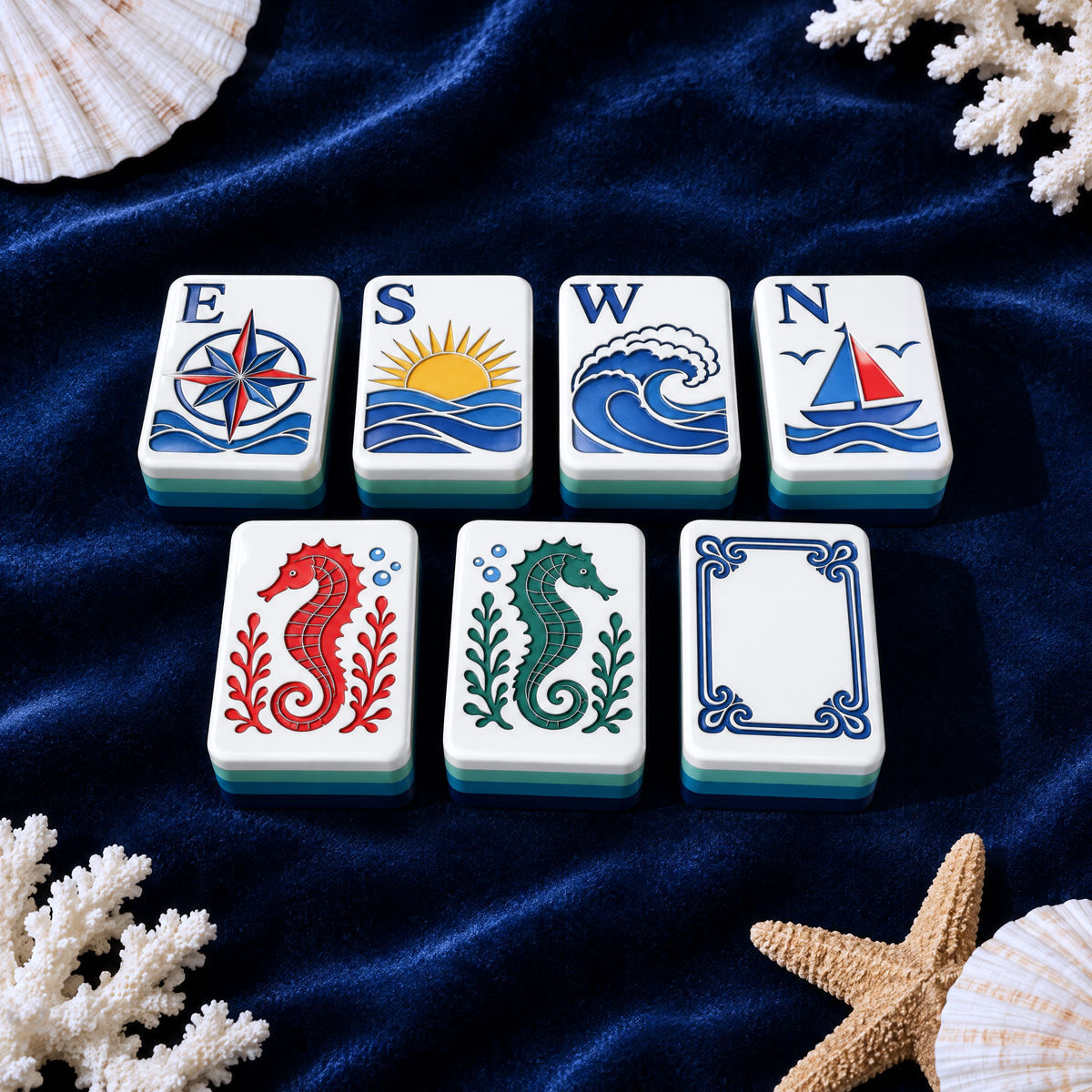
Wright-Patterson mahjong uses a 144-tile set (no jokers or blanks) and requires players to call hands from printed season-specific cards, similar to American mahjong but with stricter hand structure and no Charleston. Siamese mahjong, played primarily in Thailand and among Thai communities, uses a traditional Chinese-style 108-tile set (Bams, Craks, Dots, Winds, Dragons, no Flowers), allows chows and sequences, plays without a card reference, and permits more flexible hand-calling and joker use. Neither is widely played outside their original regions; American mahjong dominates U.S. game nights.
What is Wright-Patterson mahjong, and where did it come from?
Wright-Patterson mahjong emerged as a regional variant in the mid-20th century, associated with U.S. Air Force communities near Wright-Patterson Air Force Base in Ohio. It borrows heavily from American mahjong's card-based system but uses fewer tiles and simpler hand patterns. Players draw from a 144-tile deck and must match hands printed on a reference card. The game emphasizes speed and clarity over complexity, making it accessible to casual groups. Today, it remains niche—played mostly in legacy circles rather than widespread social mahjong groups.

How does Siamese mahjong differ from Wright-Patterson?
Siamese mahjong is fundamentally a Chinese-family game adapted in Thailand, unrelated to Wright-Patterson's American roots. It uses 108 tiles (one complete suit set plus Winds and Dragons), permits chow sequences that players can call and expose mid-game, and relies on memory and hand strategy rather than a reference card. Players announce winning hands freely without consulting a printed guide. Joker use is more liberal, and hands evolve organically during play. Siamese mahjong emphasizes adaptability; Wright-Patterson emphasizes rule-bound structure. The two games appeal to entirely different regional cultures and play styles.
What tiles does each variant use—and why it matters?
Tile Composition Comparison
Variant | Total Tiles | Suit Tiles | Winds | Dragons | Flowers | Jokers/Blanks | Hand-Calling Method |
Wright-Patterson | 144 | 108 (Bam/Crak/Dot: 1–9 × 4) | 16 | 12 | None | None | Seasonal printed card |
Siamese | 108 | 108 (Bam/Crak/Dot: 1–9 × 4) | 16 | 12 | None | Variable | Memory-based winning patterns |
American | 152 | 108 | 16 | 12 | 8 | 8 | National Mah Jongg League annual card |
Wright-Patterson's 144-tile count reflects pure Chinese mahjong structure with no Flowers and no jokers—cleaner, deterministic, and easier to verify tile counts mid-game. Siamese mahjong also uses 108 core tiles but adds jokers flexibly depending on house rules, making the deck variable. American mahjong's 152-tile set (plus 8 jokers) is the heaviest, supporting the elaborate hand patterns on the current year's NMJL card. If you host groups that mix variants, tile count confusion is the top stumbling block; standardizing on American sets prevents mid-game disputes.

Why do Wright-Patterson and Siamese players reject the Charleston?
Wright-Patterson mahjong skips the Charleston—the 14-tile passing ritual that precedes every American game. Instead, players simply draw their starting tiles from the wall, then play begins immediately. This speeds up setup and reduces the strategic depth American players enjoy; some view it as a strength (less fussy), others as a weakness (fewer decisions pre-game). Siamese mahjong similarly has no Charleston, but for a different reason: the game is designed around freeform hand-building, so an initial discard-heavy exchange contradicts the flow. American players accustomed to the Charleston often find both variants feel abrupt; the 14-tile swap is where American mahjong's social and strategic fun begins.
Which variant should your group actually play?
Choose Wright-Patterson if your group values simplicity, speed, and legacy appeal—it plays faster than American mahjong and appeals to players who want strict card-based rules without complexity. Choose Siamese mahjong if your group includes Thai or broader Asian players and enjoys freeform hand-calling, chow sequences, and adaptive strategy; it emphasizes memory and intuition over reference cards. Choose American mahjong—the clear winner for U.S. game nights—if you want the largest community, the richest hand variety, the most accessible teaching materials, and the easiest way to find compatible players at clubs, community centers, and libraries nationwide. American mahjong's annual NMJL card system ensures consistency across thousands of groups; Wright-Patterson and Siamese variants isolate players from wider networks.
What do you need to start playing either variant?
For Wright-Patterson, you need a 144-tile set, a printed hand card specific to the variant (harder to source), a mat for organizing tiles, and racks if players prefer not to hold tiles in hand. For Siamese mahjong, a 108-tile Chinese set, dice, and house-rule documentation suffice. For American mahjong—the variant we host most Fridays—you need a 160-tile set (152 playing tiles plus spares), the current year's NMJL card, a mat, racks with pushers, and a secure tile storage solution.
What to Check Before You Buy
Tile count on the box: Does it match your variant? (144 = Wright-Patterson or legacy China; 108 = Siamese; 152+ = American)
Tile material: Bamboo or bone is traditional; acrylic is durable and lighter for travel.
Card availability: Can you source the reference card for Wright-Patterson, or does Siamese ruleplay depend on verbal house rules?
Set durability: If you play weekly, acrylic withstands shuffling better than plastic.
Storage & transport: Do you have a case or bag to protect tiles from damage?
🀄 Shop best-selling mahjong sets →
We recommend starting with American mahjong sets if your group is new—the NMJL card system, nationwide club network, and abundant online tutorials make it the easiest on-ramp. If you already play Wright-Patterson or Siamese, adapting to American mahjong takes one practice session because tile composition is identical; the hand patterns and Charleston are the learning curve.
🎁 See our most-loved mahjong sets & accessories →
Pair your set with a durable mahjong mat—it protects tiles during shuffles and defers tile wear by years. If your group shuffles hard or plays twice weekly, a mat is non-negotiable. Combine a mat with racks and pushers to standardize hand-holding and speed up tile display during calls; Wright-Patterson players especially benefit because the faster game punishes slow tile recognition.
Store your set in a dedicated bag or case if you rotate hosting duties—tiles shift loose in a regular box, and one missing Crak ruins a session. American mahjong's 160-tile count makes secure storage especially important because replacing one tile is harder than a full set refresh.
✨ Find your Mahstead set — free US shipping →

FAQ
Can I play Wright-Patterson mahjong on an American mahjong set?
Yes—tile composition is identical (144 of the 152 American tiles). You'll just need a printed Wright-Patterson hand card instead of the NMJL card. The main difference is hand patterns, not tiles.
Is Siamese mahjong the same as Chinese classical mahjong?
Similar but not identical. Siamese mahjong is Chinese-family mahjong adapted in Thailand, with local rule variations. Classical Chinese uses the same 108-tile structure but follows stricter hand-calling conventions that vary by region.
Why does American mahjong use 152 tiles instead of 144?
American mahjong adds 8 Flowers and 8 jokers to the traditional 144-tile Chinese set. Flowers and jokers support the elaborate hand patterns on the NMJL card; they're essential for American play but absent in Wright-Patterson and Siamese.
Do Wright-Patterson and Siamese variants have organized leagues or clubs?
Wright-Patterson has minimal organized play today—mostly legacy circles. Siamese mahjong is played in Thai communities and online platforms, but lacks a centralized league. American mahjong has the National Mah Jongg League, thousands of affiliated clubs, and a structure that makes finding compatible groups straightforward.
If my group plays Wright-Patterson now, how hard is it to switch to American mahjong?
Moderate effort—tiles are the same, but hand patterns, the Charleston, and joker rules are new. One practice session with the NMJL card will orient most players; the real shift is learning 40–50 common hand patterns rather than memorizing one compact card.
Can I use a 160-tile American set to play Siamese mahjong?
Yes, though not ideal. Remove the 8 Flowers and 8 jokers, and play with the remaining 144 tiles (or use house rules to work jokers in as wild tiles). Siamese play traditionally omits Flowers entirely, so having them in your set is unused complexity.


View More
View More
View More
