
Mahjong vs Rummy: Which Game Fits Your Table?
Last updated: Nov 23, 2026
Both games use tiles and require players to form sets before melding or declaring, but mahjong and rummy diverge sharply in complexity and setup. American mahjong uses 152 playing tiles (three suits numbered 1–9, winds, dragons, flowers, and jokers); rummy uses a standard deck of cards or fewer tiles depending on the variant. Mahjong requires the current year's National Mah Jongg League card to know legal hands—a 2026 card, for instance, changes annually. Rummy has one rule set: form runs (sequences) or sets (matching ranks) and lay off cards until you go out. Mahjong takes 30–45 minutes per game; rummy averages 20–30 minutes. American mahjong has no sequences (only identical pungs, kongs, and special combos on the card), while rummy is all sequences. Neither game requires advance purchase of a reference card in rummy, but mahjong players must own or subscribe to the current League card. Our best-selling mahjong sets include everything you need to start; rummy needs only cards.
What's the core rule difference?
American mahjong hands come directly from the National Mah Jongg League card each season—you cannot invent hands. Rummy players form sequences (1-2-3, 7-8-9) and matching sets on the fly, using no external reference. In mahjong, all sets are pungs (three identical tiles) or higher; sequences (chows) exist in Chinese mahjong but not in American. Rummy rewards improvisation; mahjong demands memorization and card consultation. This makes mahjong a more structured, reference-dependent game—and rummy a faster, rule-of-thumb experience.

How many tiles and cards do you need?
Mahjong uses exactly 152 tiles plus 8 jokers per game—that's 160 tiles total on the table. A standard mahjong set holds all of these. Rummy typically uses a single deck of 52 playing cards (without jokers) or two decks shuffled together for 3–4 players. Some rummy variants add tiles instead of cards, but card-based rummy is by far the most common. Mahjong sets are heavier, require a playing surface like a mat, and racks to hold tiles upright; rummy can be played on any table with just cards in hand or fanned on the surface. If portability and setup speed matter, rummy wins. If you want a complete, enclosed game system, mahjong's all-in-one tile format is cleaner.
Which game teaches faster: mahjong or rummy?
Most players pick up rummy's basic flow—draw, match, discard—in under 10 minutes. Mahjong takes 2–4 weeks of weekly play before most newcomers feel confident reading the card and calling hands. Mahjong's steep learning curve comes from memorizing pung/kong/quint patterns, understanding joker placement rules (jokers can never be used as a single tile or a pair), and cross-referencing the League card during play. Rummy has no jokers; you either match or don't. If you're hosting mixed-skill groups, rummy removes the gatekeeping; if your table is committed to mahjong culture, the deep learning curve is part of the appeal and social ritual.
How long does each game take?
A typical mahjong game runs 30–45 minutes from the Charleston (the tile-passing ritual before play) through a winner. Rummy games finish in 15–30 minutes, often faster because there's no tile-shuffling ritual, no seat rotation protocol, and no wall-building step. Speed matters if you're hosting back-to-back games: rummy lets you run 4–5 rounds in two hours; mahjong gives you 2–3. However, mahjong's slower pace often means deeper social engagement—players chat, strategize, and build narrative across a single game. Rummy's quickness suits casual drop-in players; mahjong's rhythm suits committed weekly groups.
Should your group choose mahjong or rummy?
Factor | Mahjong | Rummy | Pick it if … |
Setup time | 8–10 min (Charleston, wall) | 2–3 min (shuffle, deal) | You want quick starts → rummy |
Tiles/cards | 152 tiles + 8 jokers | 52–104 cards | You prefer one closed system → mahjong |
Reference needed | Yes (annual League card) | No | You dislike looking things up → rummy |
Play time | 30–45 min | 15–30 min | You have limited time → rummy |
Sequences allowed | No (American) | Yes (core mechanic) | You like run-building → rummy |
Luck vs. strategy | 50/50 (card is fixed) | 60/40 (hand varies) | You want more control → mahjong |
Joker rules | Complex (no singles/pairs) | Simple or none | You want clarity → rummy |
Hosting cost | One set ($$$) | Deck of cards ($) | You're budget-conscious → rummy |

What do you need to host mahjong at home?
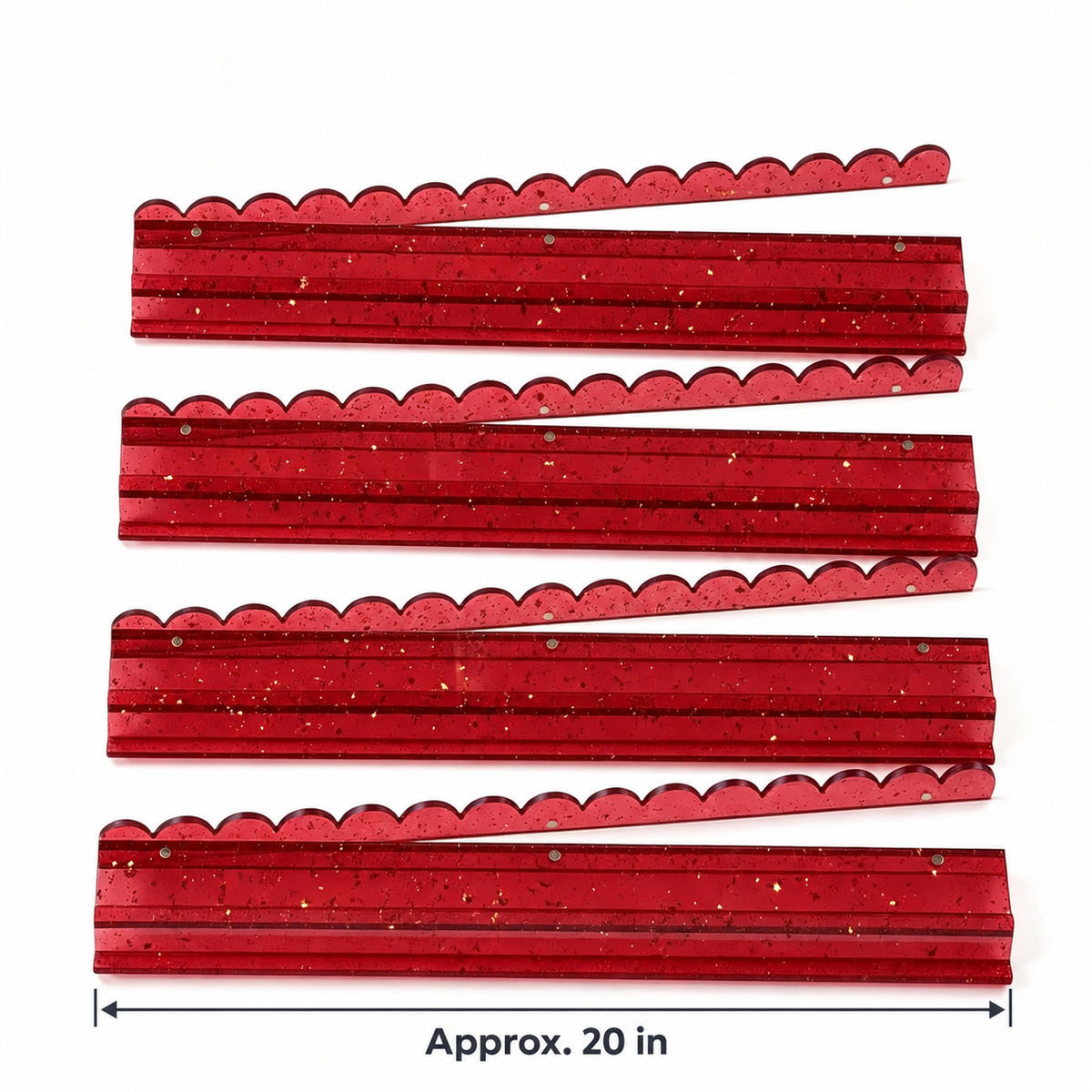
If you choose mahjong, start with a quality mahjong set from our best-selling collection: 160 tiles (152 playing + spares), a mat to organize play, racks with pushers to hold your hand, and the current National Mah Jongg League card (available from the League directly, not Mahstead). Many groups photocopy the card or share one reference across the table. You'll also want a mahjong mat to protect tiles and define the playing area, and racks with pushers so players can organize and discard efficiently. If you rotate hosting, invest in a travel bag or case so the set survives transport. Rummy needs almost nothing: cards, a table, and house rules written down if your group has house variants.
🀄 Shop best-selling mahjong sets →
How do the player counts compare?
Both games work with 4 players as the standard. Mahjong requires exactly 4 (one per wind: North, East, West, South). Rummy scales from 2–8 players, though 3–5 are ideal; two-player rummy is slower because fewer discards cycle through the deck. If you sometimes have 2 or 3 players, rummy is more flexible. Mahjong has specific 2- and 3-player rules that alter the wall and Charleston, making it playable but less standard. Most mahjong groups prefer 4 and rotate out players between games.
Where do you find the rules?
Mahjong rules come from the National Mah Jongg League (the only authority for American mahjong); the League publishes the annual card and rules online. Rummy rules vary by region and house: check the American Contract Bridge League, local card clubs, or Wikipedia's rummy variants for the specific version your area plays. If your rummy group hasn't standardized, write down house rules (wild card status, draw-two penalties, discard pile rules) before play starts. Mahjong is more uniform because all American players reference the same League card each year.
🎁 See our most-loved mahjong sets & accessories →
What to check before you buy or host
Do you have the 2026 National Mah Jongg League card? (Mahjong only—order directly from the League; mahjong cannot be played without it.)
Is your group committed to weekly play? (Mahjong has a learning cliff; rummy is pick-up friendly.)
How many players will you host? (Mahjong = 4 exactly; rummy = 2–8.)
Do you have 30–45 minutes per game, or do you need 15–20? (Mahjong is slower; rummy is faster.)
Does your table space allow a mat and racks? (Mahjong needs room; rummy fits any table.)
Will the set travel, or stay home? (If travel, mahjong bags are essential.)
If you're hosting mahjong, you'll want our engraved or best-selling sets—they're built to last through weekly play and come ready to use. If rummy, grab a quality card deck and a pen for house rules.
The honest takeaway
Mahjong and rummy occupy different niches. Mahjong is a system—a fixed annual card, a ritual (the Charleston), precise tile rules, and a 30-minute cadence that rewards deep learning and group cohesion. Rummy is a skill game—improvised hands, fast setup, flexible player counts, and tactical discarding. Choose mahjong if your table wants to join a 100-year tradition and commit to learning; choose rummy if you want a lighter, faster social game that works with drop-in players. Both are rewarding—they're just different games.
✨ Find your Mahstead set — free US shipping →

FAQ
Can you play American mahjong without the League card?
No. The National Mah Jongg League card is the sole authority; without it, you cannot determine legal hands. Chinese or Hong Kong mahjong have different rules and don't require a card, but American mahjong is rules-bound to the annual League publication.
Do mahjong and rummy use the same tiles?
No. Mahjong uses 152 tiles (suits, winds, dragons, flowers, jokers); rummy uses cards. Some rummy variants use tiles, but standard Western rummy is card-based. Mahjong tiles are unique to mahjong.
Which game is better for beginners?
Rummy teaches faster—most new players understand it in one session. Mahjong takes 2–4 weeks of weekly play because you must memorize the card and tile-naming conventions. If speed of learning matters, rummy wins.
How many jokers are in mahjong vs. rummy?
American mahjong includes exactly 8 jokers as part of the 152-tile game. Rummy cards typically have 2 jokers per deck (or none, depending on house rules). Mahjong jokers follow strict placement rules—they can never be a single tile or pair.
Can I play mahjong with 2 or 3 players?
Yes, but it's unconventional. Special 2- and 3-player variants exist and modify the wall and Charleston. Rummy plays 2–8 normally. Most mahjong groups prefer 4 players (one per wind) and rotate sits if needed.
Which game costs more to set up?
Mahjong. You need a 160-tile set, a mat, racks, pushers, and the League card—total investment is moderate. Rummy needs only a deck of cards, making it nearly free if players bring their own cards from home.


View More
View More
View More
