
How to Host a New Year's Eve Mahjong Party
Last updated: Nov 23, 2026
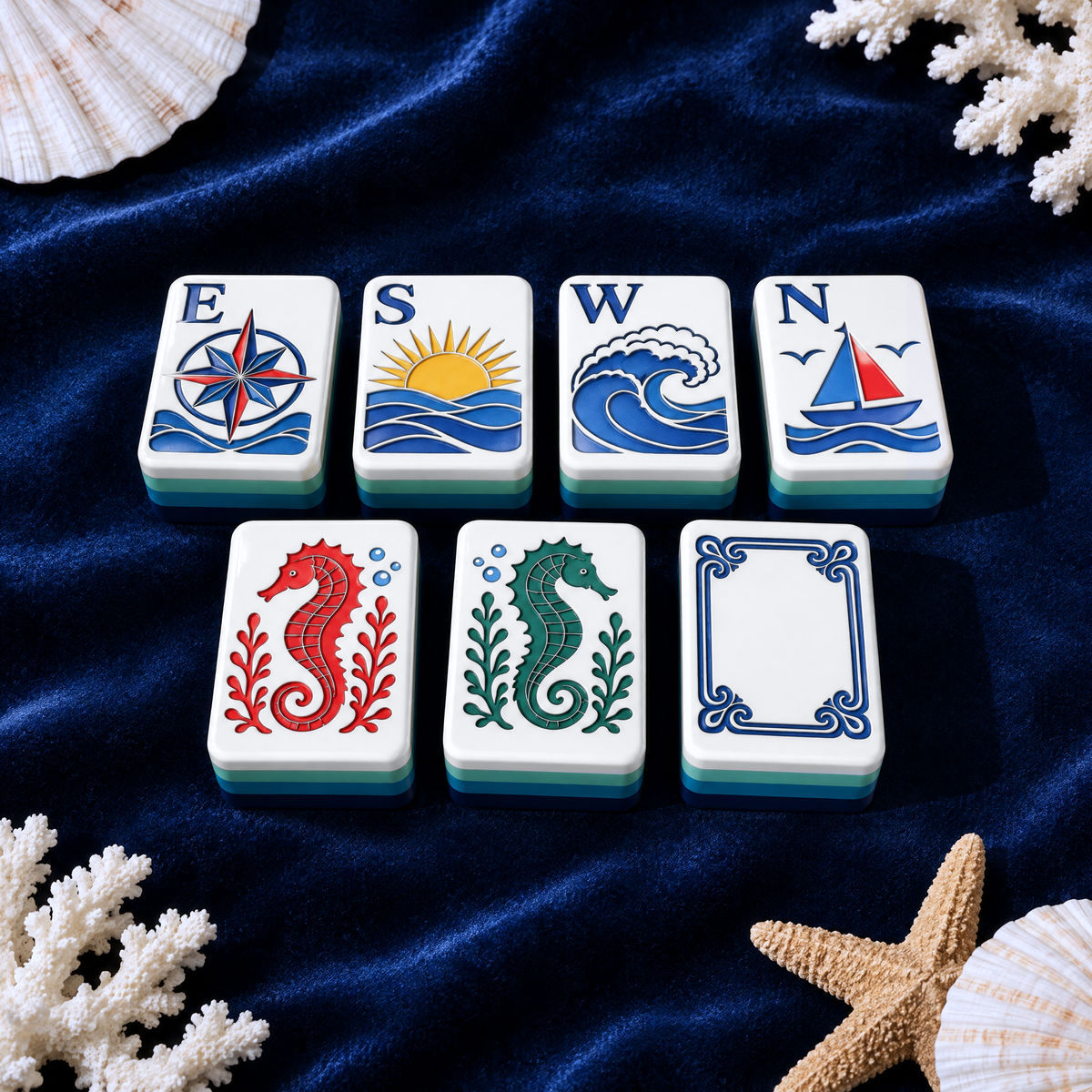
A New Year's Eve mahjong party combines festive energy, live gameplay, and the satisfying click of tiles. Hosting requires one complete acrylic mahjong set per table (or shared if rotating), a felt mat to protect tiles and reduce noise, and comfortable seating with good lighting. Plan for four confirmed players, set a pre-game Charleston tile-passing ritual 15 minutes before dealing, clarify house rules on jokers and scoring beforehand, and keep the current-year National Mah Jongg League card visible. Expect beginner rounds to take 30–45 minutes; experienced players finish in 15–20 minutes. Mahstead's best-selling mahjong sets arrive ready to play, with spare tiles and jokers included so you're covered if anyone needs a refresher mid-party.
How many players and tables do I need?
American mahjong is a four-player game; one table seats exactly four people. If you're hosting 4 guests, you need one set and one table. If you're hosting 8 guests, set up two tables and run them simultaneously or rotate players between rounds. For 5–7 guests, designate one person as the scorekeeper or kibitzer for the first round, then rotate. Never try to force three players into American mahjong—the rules and hand-drawing sequence don't work; instead, learn 2 and 3 player mahjong rules if that's your group size.

What equipment do I actually need on the table?
Each player needs a spot with a mahjong rack with pushers to hold and organize their 13 tiles upright so others can't see them. One player needs wind tiles (called "position winds") to determine seating order: North, East, South, West. You need one complete 152-tile set—no substitutions or missing tiles. A felt mahjong mat underneath protects tiles from damage and muffles the click so neighbors stay asleep. Keep a pen and paper for scoring, the current-year NMJL card visible to all four players, and a workspace off the table for the discard row (called the "wall") and the draw pile. Good overhead lighting is essential—many hosting mistakes stem from squinting at tiles under a chandelier.
When should new players practice before the party?
If your guests have never played, host a 30-minute tutorial two weeks before NYE. Teach how to play American mahjong in this order: what tiles are in a set (using what's in an American mahjong set), how the Charleston works, how to read the NMJL card, and how mahjong jokers replace tiles in a hand. Play one real hand start-to-finish so they see the rhythm. One week before the party, send each player the NMJL card link (searchable online, issued fresh each spring) and a one-page summary of your house rules—especially joker limits and what happens if someone exposes a tile by accident. This prep cuts party-night confusion in half.
What are realistic house rules for a NYE game?
Before the first hand, agree on these four rules in writing so no one misremembers:
Joker swaps: Standard American allows trading a joker on the table for the tile it replaces—decide if this happens once per hand or twice. Many home games allow one swap; tournaments allow zero.
Exposure penalties: If someone flips a tile accidentally, do they draw an extra tile as penalty, or just play on? (Most home games waive it for first offense.)
Scoring settlement: Will players pay winners in cash, chips, or just tally points on a scorecard? (Scorecard keeps the focus on the game, not the money.)
Beginner grace: If a newcomer misreads the card or calls a wrong hand, do you allow one mulligan per person per night? (Makes the party more welcoming and keeps energy up.)
Write these on an index card and tape it to the table. This takes five minutes and prevents three-way arguments at 11:47 pm.
How do I set the table and welcome guests?
Arrive 45 minutes early. Set up chairs at table height (usually 28–30 inches) with seats 24–28 inches apart so each player has elbow room. Place one mahjong rack with pushers at each seat, facing the player. Center the felt mahjong mat and set the 160-tile set in its storage box nearby so guests can see you're organized. Place the NMJL card in a card holder or laminated sleeve at the table's edge. Have a scorepad, pen, and a printed one-page rules card at the center. Set out snacks and drinks on a side table—never on the mahjong table, where spills ruin tiles. Play soft background music (classical or lofi—not games or sports noise). When guests arrive, seat them, do a quick five-minute rules review, run the Charleston at 15 minutes past the hour, deal the first hand, and play one trial round so everyone feels the actual pace. By hand two, first-time players feel confident.
Setup Task | When | Why | Common Mistake |
Arrange chairs and racks | 45 min before | Guests sit comfortably, racks are level | Uneven table height = dropped tiles |
Place mat and set on table | 40 min before | Visible, ready to go | Set still in shipping box = looks chaotic |
Print rules card + NMJL card | 40 min before | Everyone agrees upfront | Arguing over rules mid-hand |
Set up snack/drink station away from table | 30 min before | No spills on tiles | Drinks near the mat = disaster |
Do five-minute rules walkthrough | 10 min before | No confusion during play | Jumping straight to hand one |
Run the Charleston | At the hour | Standard ritual, breaks ice | Skipping = feels informal |
🎁 See our most-loved mahjong sets & accessories →

What time should guests arrive and how long does the party run?
Invite guests for 8:00 pm with a target first-hand start time of 8:15 pm. Each round takes 15–45 minutes depending on player skill (beginners take longer). Plan four to six hands before a dinner break at 10:00 pm, then resume for two or three hands running up to midnight. This structure gives everyone a good play window, a chance to chat and eat, and a natural wind-down before the ball drops. If your players are all experienced, you can run more hands per session. If mixed skill levels, stick to three hands per 90-minute block with a break.
What happens if someone can't make it and the table is short?
If one player cancels, you have three options: (1) Teach a fourth guest the game in the week before the party so you hit four; (2) Play 2 and 3 player mahjong rules, which modify hand-drawing and tile counts—these are less common but legitimate; or (3) Rotate: one person watches and scores while three play one hand, then swap in. None is perfect, so confirm guest count a week in advance and have one backup friend on standby.
What should I check before the party starts?
Count the tiles in your set when it arrives—a 160-tile Mahstead set includes 152 playable tiles plus spares, so you're always covered if a tile chips or goes missing. Check that all four wind tiles and all four dragons of each color are present (the 1 Bam usually shows a bird; the White dragon is sometimes called "Soap"). Test your mahjong rack with pushers to make sure tiles slide smoothly and don't jam. Lay the mat on a flat, dry surface—any warping or water spots should be noted before guests arrive so you can swap it out. Verify your felt mat or acrylic surface is clean and free of dust. Print the current NMJL card from the National Mah Jongg League website (updated every spring) and confirm it's this year's version—hands on last year's card don't count. Do a test Charleston shuffle with the full set 30 minutes before guests arrive so you're confident in the rhythm. These five minutes of prep prevent three hours of frustration.
✨ Find your Mahstead set — free US shipping →
What's the simplest way to choose a set and mat for my first NYE party?
If you're buying your first set, our best-selling mahjong sets collection offers acrylic sets in a range of designs and finishes. Acrylic is durable, easy to clean, and quiet on a felt mat. Pair it with a standard felt mahjong mat in a neutral color—felt protects tiles and your table, and most players prefer the matte surface for grip. If you're buying for a specific group (say, an NYE celebration with a themed vibe), engraved American mahjong sets let you personalize the set with a name or date, turning it into a keepsake. All Mahstead sets ship free across the US and arrive ready to play—no assembly needed.
🀄 Shop best-selling mahjong sets →

FAQ
Do I need a mahjong mat for a NYE party?
Yes. A felt mat reduces tile noise (important if others are sleeping nearby), protects tiles and your table, and makes shuffling and organizing easier. It's one of the highest-ROI investments you'll make. Mahstead mats range in style and size; choose one that fits your table.
What if one of my guests has never played mahjong?
Teach them the basics one or two weeks before the party using our how-to guides. Have them watch one live hand before sitting in as a player. Assign them a more experienced player as a "buddy" for the first round. Most beginners catch on after two hands.
Can I host mahjong with fewer than four people?
Standard American mahjong requires four players. If you have three or fewer, you'll need to learn and apply 2 and 3 player mahjong rules, which adjust tile counts and drawing sequences. Otherwise, consider rotating players or inviting a fourth guest.
What's the difference between acrylic and bone/bamboo tiles for a party setting?
Acrylic tiles are durable, affordable, easy to clean, and quieter on a felt mat—ideal for parties where tiles get handled a lot. Bone and bamboo are heavier, feel more premium, and are traditionally favored by long-time players. For a NYE party, acrylic is practical and forgiving.
Should I buy extra jokers or blank tiles?
Mahstead 160-tile sets include spare jokers and blank tiles beyond the 152 used in play, so you're covered if one gets lost or damaged. You won't need to buy extras. Keep the spares in the original box for future reference.
How do I decide between a standard felt mat and a storage-style bag?
A felt mat stays on your table and is used during every hand—it's a one-time setup. A bag or case is for storage and travel. If you're hosting a party at home, buy the mat. If you're taking your set to a friend's house or to a club, a bag or case protects it during transit and storage.


View More
View More
View More
