
American vs. Chinese Mahjong: Rules, Tiles & Play Differences
Last updated: Nov 23, 2026
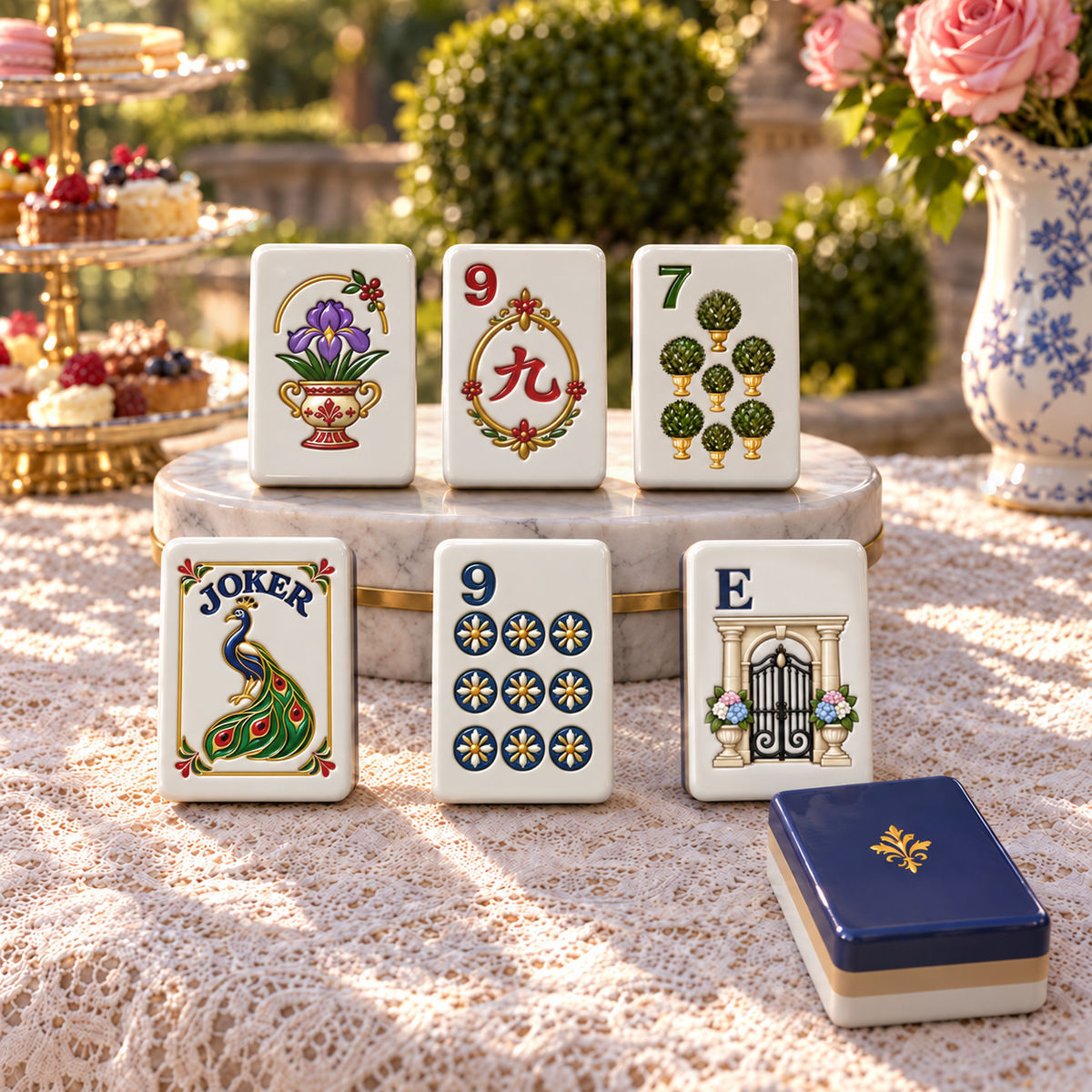
American mahjong uses 152 tiles (three suits, Bams/Craks/Dots numbered 1–9, plus winds, dragons, flowers, and jokers) and requires players to match hands from the National Mah Jongg League card, refreshed yearly. Chinese mahjong uses 136 tiles (also three numbered suits, winds, dragons—but no flowers or jokers) and allows melds called chows (consecutive runs like 2-3-4). American forbids chows entirely and disallows jokers in pairs or single tiles. Play speeds and tile counts differ too: American typically takes 30–45 minutes per round with four players, while Chinese games are faster. Both use a 4×4 layout and similar tile designs. Beginners often confuse the two because tiles look nearly identical; our best-selling mahjong sets ship with American tiles and instructions, making them the right choice for North American players learning the American game.
How many tiles are in each version?
American mahjong contains exactly 152 playing tiles plus 8 jokers. The set breaks down as: 36 Bams, 36 Craks, 36 Dots (three numerals 1–9, four copies each); 16 winds (four each of North, East, West, South); 12 dragons (four Red tied to Craks, four Green tied to Bams, four White/"Soap" tied to Dots—White also serves as zero); 8 flowers; and 8 jokers. Chinese mahjong uses 136 tiles: 36 numbered tiles per suit (Bamboo, Characters, Dots), 16 winds, 12 dragons—no flowers, no jokers. The missing 16 tiles in Chinese are flowers and jokers, which American players use for flexibility and hand variety. This tile-count difference shapes strategy: American players hunt for specific card-listed melds, while Chinese players build hands from scratch using any valid combination.

Why can't you play chows in American mahjong?
American mahjong forbids chows—consecutive sequences like 2 Bam, 3 Bam, 4 Bam—entirely. You may only expose pungs (three identical tiles), kongs (four identical), quints (five), or sextets (six). Chinese, Hong Kong, and Taiwanese mahjong all allow and reward chows; they are core melds. American's exclusion came from the 1920s American ruleset and remains unquestioned; it forces hands to rely on identical-tile melds and joker substitution, making the game slower and more tactical. If you sit down to American mahjong without knowing this, you'll discard tiles you think form a chow, confuse opponents, and derail the game. The National Mah Jongg League card lists only pungs, kongs, quints, and sextets; no sequences appear on it.
What's the role of the card in American mahjong versus Chinese?
American mahjong requires players to match one of hundreds of hand patterns printed on the National Mah Jongg League card—one card per year. The card shows patterns in sections (Like Flowers, Consecutive Run, etc.) using symbols and colors; players must know how to read the mahjong card to call a winning hand legally. Chinese mahjong has no card. Instead, players know winning patterns from tradition and local rules—typically sets of pungs and chows or melds like Seven Pairs. The card gives American play structure and prevents disputes but also requires study; Chinese play rewards memory and familiarity with one region's ruleset. A North American beginner without a current-year card cannot verify a win; the card is non-negotiable equipment.
How do jokers work differently between the two?
American mahjong includes 8 jokers that act as wild tiles, substituting for any tile to complete a meld. Critically, jokers can never form a pair (the set-aside two tiles that end the hand) and can never be the single tile in a meld—they must be part of a pung, kong, or exposed set. This rule prevents joker abuse and keeps strategy honest. Chinese mahjong has no jokers; players adapt their hands using only the 136 tiles drawn. Some regional Chinese variants (like Vietnamese mahjong) add jokers, but classical Chinese play does not. American joker rules demand discipline: new players often instinctively place a joker as a pair or single and must be corrected. Understanding joker constraints before your first game saves embarrassment and re-dealing.

What happens if you're learning—which variant should you start with?
If you live in North America, start with American mahjong. The game is the standard in the U.S., Canada, and many North American communities; local clubs, synagogues, libraries, and community centers teach American rules. American mahjong's reliance on the annual card gives you a fixed target and clear hand patterns to study. Chinese mahjong demands deeper tile knowledge, familiarity with regional variants (Cantonese, Shanghai, Sichuan styles differ), and no card safety net—perfect for players ready to commit to one region's tradition. Most Western beginners find American more forgiving because the card does the thinking; in Chinese, you memorize every winning combination. If you've played Chinese mahjong and want to try American, expect a learning curve: you'll have to unlearn chows, study the card, and adjust your pacing.
Comparison: American vs. Chinese Mahjong at a Glance
Feature | American | Chinese |
Total Tiles | 152 (+ 8 jokers, not in play count) | 136 |
Tile Suits | Bams, Craks, Dots (1–9 each) | Bamboo, Characters, Dots (1–9 each) |
Dragons | 4 Red, 4 Green, 4 White | 4 Red, 4 Green, 4 White |
Winds | 16 (N, E, W, S ×4) | 16 (N, E, W, S ×4) |
Flowers | Yes (8 tiles) | No |
Chows | Forbidden | Required |
Jokers | 8 (wild, no pairs/singles) | None |
Hand Selection | From current-year card | From memory/tradition |
Typical Game Length | 30–45 minutes | 20–35 minutes |
Learning Curve | Moderate (card is guide) | Steep (all patterns memorized) |
What to check before you buy a mahjong set
Verify it's American before ordering. Not all sets sold online label themselves clearly; check product descriptions for "152 tiles," "American mahjong," or "includes card." Chinese sets list "136 tiles" or "no card included." If you're buying a best-selling mahjong set from Mahstead, the set is always American (160-tile format: 152 playing tiles plus spares), and you can confirm your local rules with the seller. Check tile markings. American tiles use Bam, Crak, Dot labels (or show icons: 1 Bam displays a bird); Chinese tiles use Bamboo, Character, Dot. Count before game time. A standard American set has 36 tiles per suit, 16 winds, 12 dragons, 8 flowers, 8 jokers = 152 tiles total in play. Miscount and you'll detect it fast when the wall builds unevenly. Ask your group which variant they play. You cannot mix rule sets mid-game; one decision now prevents a wasted evening.
🀄 Shop best-selling mahjong sets →
A beginner's first set should be engraved American mahjong sets—clear, durable, and matched to your table aesthetic. Pair it with a mahjong mat to stabilize the wall and protect your tiles, and consider mahjong racks with pushers if you play weekly. Both protect your investment and speed up turns.
How regions adopt—and adapt—the American rules
American mahjong remains dominant in the U.S. because the 1920s ruleset, formalized by Josephine Baker and later standardized by the National Mah Jongg League (founded 1937), took root in North American leisure clubs and never left. Chinese communities in North America often preserve their regional Chinese variant for home play, while American mahjong dominates in mixed or Western settings. Canada follows American rules almost entirely; Mexico and parts of South America blend Chinese influence with American structure. Europe leans Chinese. Understanding which variant your group plays prevents you from buying the wrong set or showing up with the wrong expectations. Most North American mahjong Meetup boards, library groups, and synagogue clubs use American rules and play with the annual card.
🎁 See our most-loved mahjong sets & accessories →

FAQ
Can you play American mahjong hands in a Chinese game?
No. American hands are designed around pungs, kongs, and the card; Chinese hands include chows and require different tile math. Mixing them breaks both games. Stick to one ruleset per table.
Do I need to memorize the mahjong card in American play?
You need to recognize section colors and shapes on the card during play, not memorize 300+ hands. New players consult the card every turn; veterans glance once to call. Start by learning three common patterns (Like Flowers, Like Numbers, Like Winds) and expand over months.
Is one variant harder than the other?
Chinese mahjong has a steeper entry (no card guide, all patterns memorized), but American play is slower and more cerebral because it lacks chows. American is harder to play casually; Chinese rewards speed and intuition.
Can I switch between American and Chinese if I play both?
Yes, if you actively play both and keep the rules separate. Most players specialize in one. We recommend starting with whichever your local group plays so you can join games immediately.
Why do American tiles look so similar to Chinese tiles?
Both variants descend from 19th-century Chinese mahjong and share the same basic suit, wind, and dragon symbols. The main visual difference is flowers (American only) and tile wear patterns differ by age and maker, not ruleset.
What if I buy a set and discover it's the wrong variant?
Confirm the tile count (152 = American, 136 = Chinese) and whether a card is included before your first game. If you've bought an American set and need to play Chinese, the tiles still work—only the rules change—but you'll be learning two games at once, which we do not recommend for beginners. --- ✨ Find your Mahstead set — free US shipping →


View More
View More
View More
