
How to Host a Christmas Mahjong Party: Setup, Rules & Tips
Last updated: Nov 23, 2026
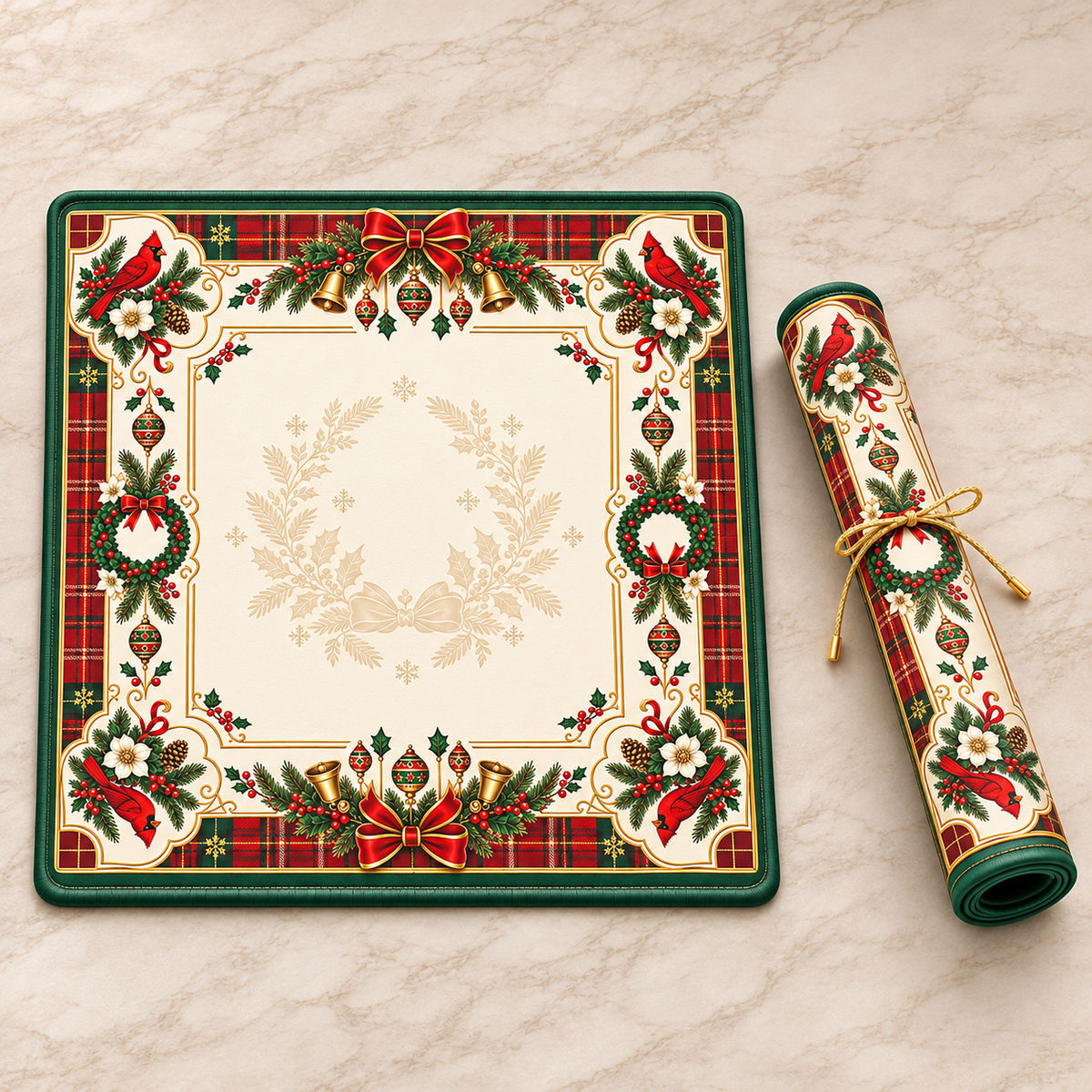
A Christmas mahjong party requires one standard 152-tile American mahjong set (160-tile sets include spares), a flat playing surface or mat, four players, and a current year's National Mah Jongg League card. Invite players 1–2 weeks ahead; plan 2–3 hours for three to four games, plus the Charleston tile-passing ritual before each game. Set house rules in writing: whether payments use chips or are friendly-only, how long seats rotate, and which variant you play (almost always American). A festive Christmas set with holiday tile designs or engraved player names adds warmth without changing gameplay. Provide the card (free online or printed), snacks, note-taking supplies for scoring, and a quiet table away from pets or drafts that might shift tiles. Beginners often forget that jokers never sit as a single tile or in a pair, and that only the current-year card hand list is valid—set expectations clearly ahead of time to avoid mid-game disputes.
Hosting a Christmas mahjong party means securing a full 152-tile American mahjong set, a mat for play space, a clear house rule sheet, and snacks. We walk through setup, the Charleston, common beginner mistakes, and how festive tile designs set the holiday mood.
Why does the Charleston matter more at a holiday party?
The Charleston is the tile-passing ritual that happens before each game starts—players pass stacks of tiles to neighbors in a specific sequence to randomize hands fairly. At a Christmas party with mixed skill levels, running the Charleston exactly keeps newcomers from feeling like the game is rigged and gives everyone visible confidence that starting positions are random. Spend five minutes learning the Charleston sequence before guests arrive: pass three stacks to your left, then three stacks to your right, then three stacks across the table, then offer a "return" pass if anyone wants to swap further. Write this on a card next to the table. Skipping the Charleston or rushing it is the single biggest reason holiday players feel the game is unfair.
🀄 Shop best-selling mahjong sets →
What's the actual table setup and how much space do you need?
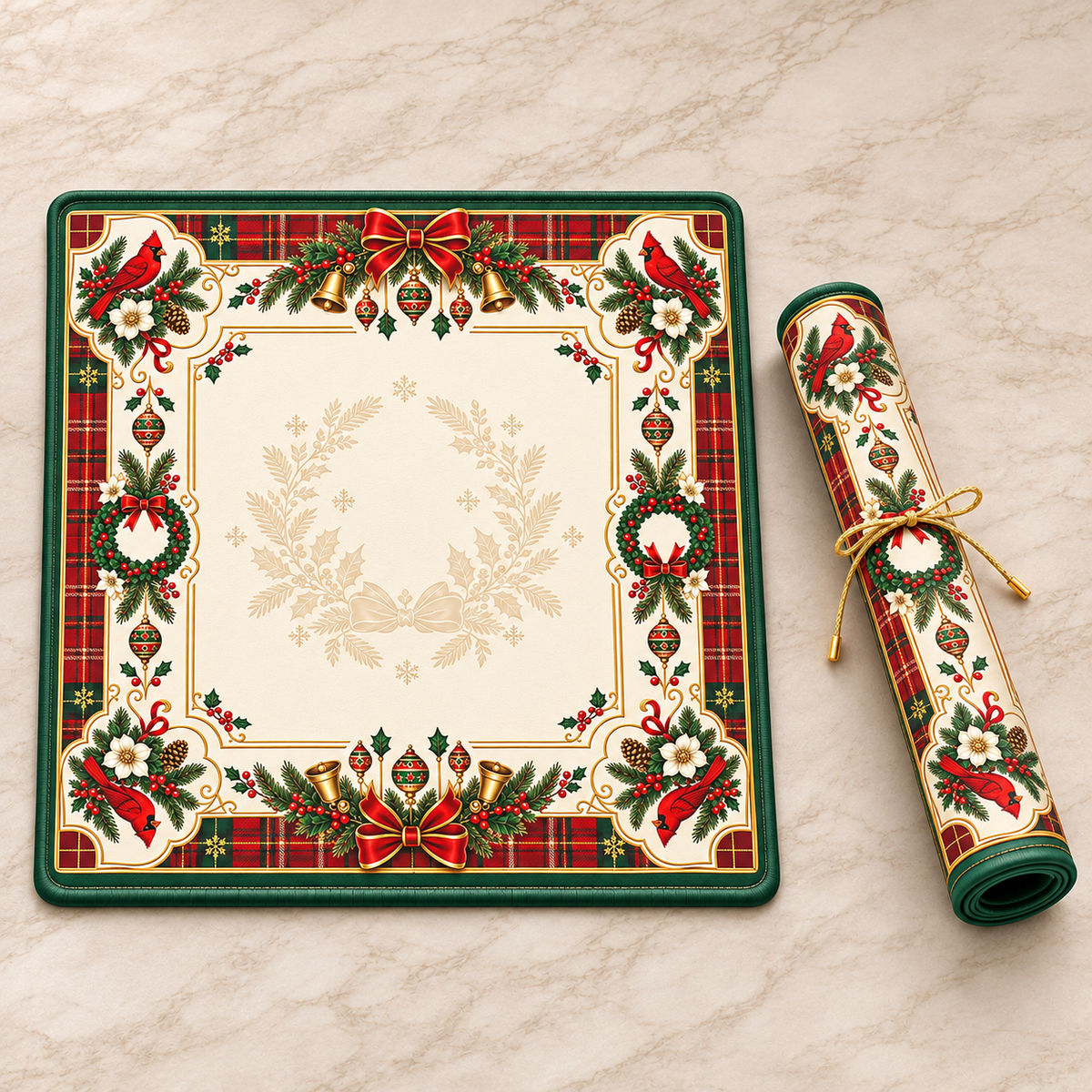
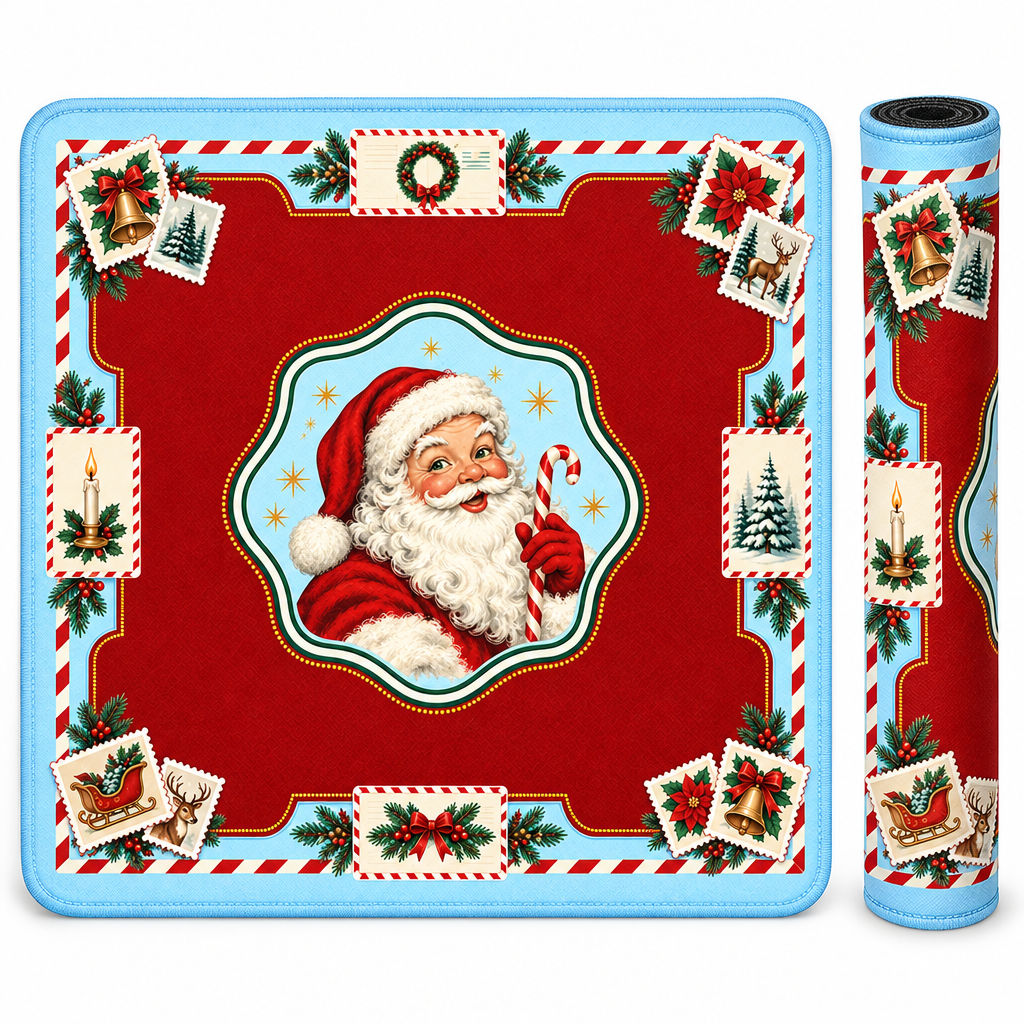
A standard American mahjong game uses exactly 152 tiles and 8 jokers arranged in a closed wall: imagine four stacks of face-down tile pairs (the "wall") arranged in a square around the table, with each player sitting on one side facing inward. Each player sits roughly 18 inches apart, so a 48×48-inch dining table or a dedicated mahjong table works perfectly; a smaller card table squeezes three players comfortably. Before anyone sits, place a mahjong mat on the table to define the playing zone and protect the surface—mats come in sizes from 24×24 inches for small groups to 36×36 inches for full-sized tables with built-in rack guides. No mat? Use a flat bedsheet or beach towel to keep tiles stable and visible. Seat assignments rotate after each game (usually counterclockwise), so mark seats with place cards that say "East," "South," "West," "North"—this matters because wind direction affects hand validity and scoring. Bright overhead lighting reduces eye strain; keep a notepad at each seat for personal scoring.
How do you avoid the four most common beginner mistakes?
Mistake 1: Mixing jokers into exposed melds. Jokers (wild tiles) can only fill empty slots in a 5- or 6-tile meld; they can never be a single tile or a pair or a pair-plus-joker. A beginner exposes a pung (three identical 5 Dots) and later replaces it with two 5 Dots plus a joker—this is illegal. Prevent this: announce aloud when you expose a meld: "Three 5 Dots, no jokers used yet."
Mistake 2: Playing a hand not on the current year's card. The 2026 National Mah Jongg League card (released each spring) is the only list of valid hands; a hand that worked in 2025 is invalid now. Have a printed or projected card visible so all four players can confirm hands before drawing begins.
Mistake 3: Calling "Mahj" (winning) with five or fewer unmatched tiles in your hand. Your fourteen tiles must split into fourteen exact melds (no "almost matches" or loose tiles). If you call Mahj and your hand is invalid, you pay penalties to all three opponents—this is heartbreaking at a holiday table. Slow down: count your tiles twice before calling.
Mistake 4: Forgetting that only pungs, kongs, quints, and sextets can be exposed. A "pung" is three identical tiles; a "kong" is four; a "quint" is five; a "sextet" is six. American mahjong has no chows (sequences like 1-2-3) that you can call or expose—only identical tiles in groups of 3, 4, 5, or 6. This is the biggest rules difference from Chinese mahjong and trips up cross-variant players.
How should you choose between a casual and an "official" holiday setup?
Setup Type | Who It's For | Player Count | House Rules | Scoring | Best For |
Casual | Friends & family new to mahjong | 3–4 | Jokers = wild in any position; simplified penalty sheet | Chip-based or just-for-fun | Holiday relaxation; teaching newcomers |
Official American | Regular players or a mix of levels | Exactly 4 | Strict 152-tile + 8-joker count; jokers only in 5/6-tile melds; current-year NMJL card only | Scored per NMJL system; payments in chips or cash (friendly) | Authentic experience; multi-game league-style event |
Blended | Most holiday parties | 3–4 | Official tile rules; simplified scoring (e.g., chip penalties only, no bonus multipliers) | Chips or friendly points | Maintains integrity; keeps game moving and spirits high |
The blended approach works best at Christmas parties: use a full regulation American mahjong set, follow the true Charleston ritual, enforce the "no jokers in pairs or singles" rule, but skip the NMJL scoring bonus modifiers (concealed/exposed, etc.) if your group finds them complex. Players feel they're playing the real game without getting bogged down.
What checklist ensures your party runs smoothly?
Two weeks before:
Confirm guest list (must be exactly 4 for standard American, or look up 2 and 3 player rules if needed).
Verify you have a 152-tile set and print or download the current NMJL card.
One week before:
Test your set: count tiles, check that all jokers are clearly marked, confirm no tiles are chipped or warped.
Decide: friendly play or chip-scoring? Write house rules and print two copies.
Day of:
Set up the table with a mat; arrange chairs so all players face inward toward the wall.
Place the rules sheet, the NMJL card (projected or printed × 2), a pen, and scoring pads at the table.
Have snacks, water, and a small clock visible so games don't run past the time you've allotted.
During play:
Run the Charleston before each game without skipping steps.
After each game, rotate seats and mix jokers back into the spare tile pool.
After three games, take a 15-minute snack break; this prevents tile fatigue and keeps energy high.
Tile & space checklist:
[ ] One 160-tile set (152 playing tiles + spares) confirmed working.
[ ] Mahjong mat or clean flat surface 36×36 inches minimum.
[ ] Printed current-year NMJL card (× 2 copies or one displayed screen).
[ ] Racks with pushers (optional but helpful for newer players to organize their hand).
[ ] Notepad and pen for each player.
[ ] House rules printout (friendly/chip-based; rotation; hand validity).
✨ Find your Mahstead set — free US shipping →
Why does a festive set change the mood without changing the game?
A standard set looks identical whether tiles are plain white or decorated; a Christmas mahjong set with holiday motifs (snowflakes, gold trim, festive engravings) or personalized player names makes the party feel intentional and special—players feel the host cared enough to plan ahead. The tiles play exactly the same; the atmosphere feels warmer. Engraved sets with player names or "Mahstead 2026" engravings also become keepsakes your guests remember. If a guest has hosted you before, a set for their home is a gift that keeps giving: every time they host a game, they think of you.
🎁 See our most-loved mahjong sets & accessories →
What to check before you buy
Tile count: Confirm the set includes 152 playing tiles plus spares (our sets are 160 tiles total); never add extra tiles to the 152 used in play.
Joker design: Verify jokers are clearly marked and distinct from number tiles so no one accidentally draws them into the wall.
Mat size: Measure your table; a 36×36-inch mat fits a standard 48×48-inch table with room for racks and scoring pads.
Racks: If your group includes players with arthritis or anyone who struggles to hold 14 tiles, racks with pushers make the game accessible and enjoyable.
Storage: After the party, tiles need a safe spot; a mahjong bag or case keeps tiles organized and ready for your next game.

FAQ
Can you play American mahjong with only three people?
Yes, but the rules and tile distribution change. Look up three-player variant rules (some use 144 tiles instead of 152, some skip a wind) and confirm all players understand the variant before starting. Standard American assumes four players and is much easier to teach.
What if someone wants to join mid-game?
Don't add them mid-round; instead, invite them to sit out and join the next game. American mahjong is built for four fixed seats, and adding a fifth mid-game breaks the wall and scoring math. Use the break between games to bring them in.
How do you handle disputes over whether a hand is valid?
Stop play immediately and consult the current-year NMJL card as the absolute authority. No house rule overrides the card. If a player called "Mahj" with an invalid hand, they typically pay all three opponents per house penalty rules (usually one chip each, or friendly-only in casual play). Agree on penalties before the first game starts.
Is it okay to use jokers as substitutes in the wall (for missing tiles)?
No. The wall must be built from the exact 152 playing tiles you have. If a tile is missing or damaged, either rebuild with a complete replacement set or pause and use a spare from your set. Never add jokers to fill the wall; they're reserved for melds only.
How long do four games typically take?
Two to three hours, depending on player speed and experience. Beginners take longer (45 minutes per game); regular players move faster (30 minutes). A Charleston adds five minutes per game. Budget three hours and let games end naturally rather than rushing.
What if you have four players but one is a complete beginner?
Pair them with an experienced neighbor for the Charleston and hand-naming; then play normally. Avoid "teaching mode" during play because it slows the game and confuses other players. After the game, offer a brief one-on-one review of what they saw. Beginners improve fastest by watching and playing, not by hearing rules mid-round.


View More
View More
View More
