
How to Host a Brunch Mahjong Party: Setup & Hosting Tips
Last updated: Nov 23, 2026
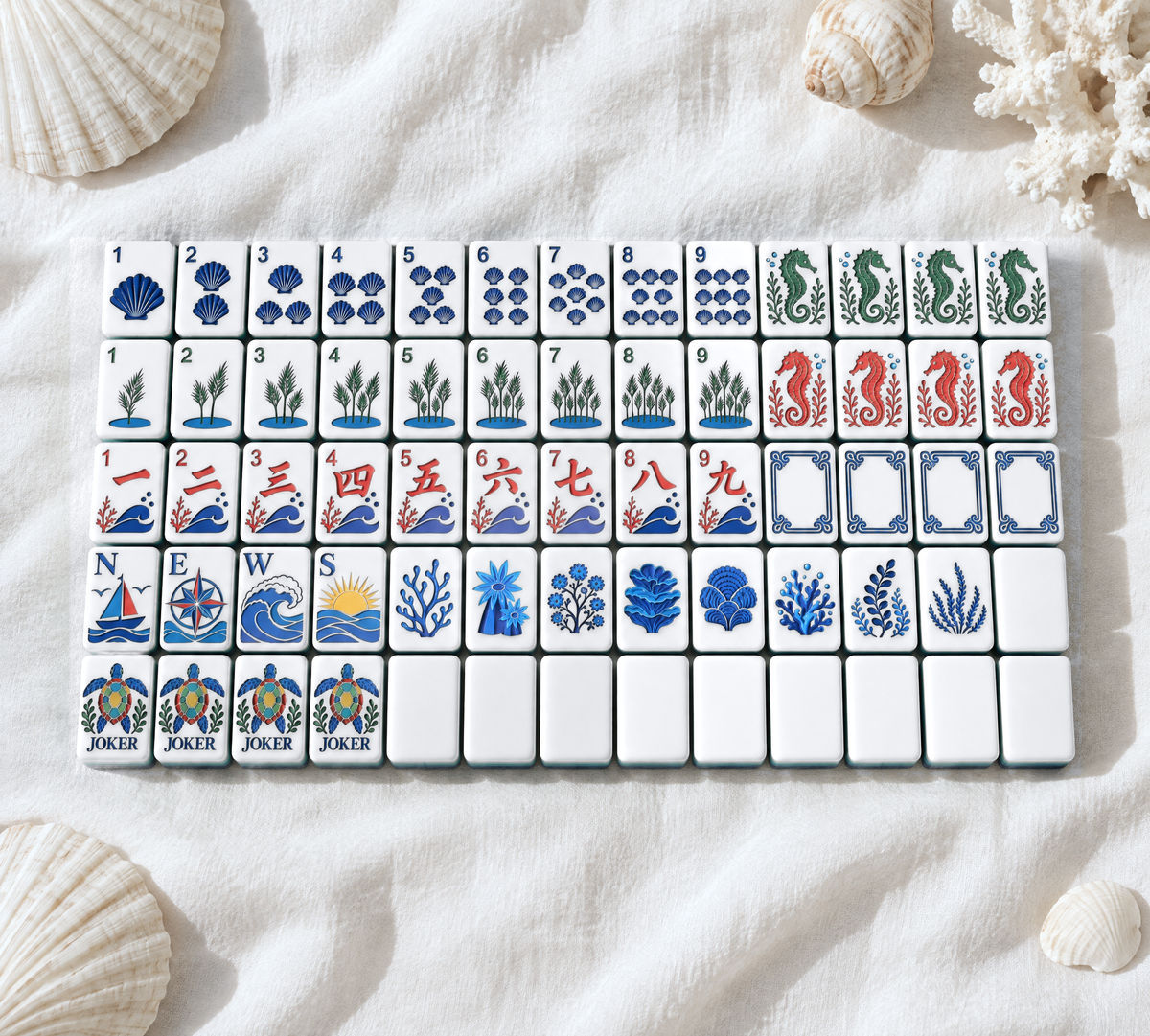
A brunch mahjong party is four players, breakfast or lunch food, and a three-hour game session—plan for 90 minutes of eating and socializing, 90 minutes of active play. Set up in a dining area with a mahjong mat over your table or a dedicated side surface, ensure seats are stable and level, and prep one American 152-tile set (plus spares) before guests arrive. Invite four players of similar skill level; beginners need a practice hand first. Provide the current year's National Mah Jongg League card, score pad, and dice. Avoid cramped seating, missing tiles, and mixed rule variants mid-game. A best-selling acrylic set with a mat and racks makes hosting seamless—tiles stay visible, the mat protects your table, and racks keep hands organized so you focus on food and fun, not logistics.
A brunch mahjong party combines casual dining with serious tile play. Here's how to prep the space, seat your players, keep the game flowing, and what equipment makes hosting easier.
What does a beginner-friendly brunch mahjong party look like?
Most brunch games run four hours total: guests arrive, socialize 30–45 minutes over coffee and pastry, play two or three hands (30 minutes per hand plus wind changes and scoring), then break for lunch. Intermediate players who know the current year's card can jump straight into play; newcomers should be taught the hand-reading basics and one or two simple hands before the real game starts. Expect 45 minutes for that teaching session. Keep the pace relaxed—this is food, friends, and tiles, not a tournament.

How do you arrange the playing surface?
Your game surface must be level, stable, and at least 36 inches square—standard dining tables work perfectly. Lay a mahjong mat over the table: it protects the wood, defines the playing zone, and signals "game time" to everyone at the table. Seats should be slightly back from the table so players can reach the mat without leaning. Each player needs arm room for tile racks and space to draw and discard cleanly. If your home has uneven floor or wobbly chairs, test the setup the morning of—wobbles ruin tile handling and frustrate players mid-hand. Keep the mat clean before guests arrive; dust or lint catches under shuffling tiles and creates jams.
What tiles and gear do you need before guests sit down?
Set up one American 160-tile set (standard 152 playing tiles plus spares). Lay out all tiles face-down on the mat, then gather them into a compact wall—the traditional setup ritual. Stock the table with the current year's card, a score pad with pencil, and dice for determining the dealing hand. Have a backup set of dice and extra pencils. Set a timer (phone or kitchen timer) for 30-minute hands so the game doesn't drift. Position the card holder or card prop so all four players can read it from their seats without moving. Many hosts keep a second set of cards at the table—one less source of confusion. If any players have never seen how jokers work or read the card structure, have that guide printed or share it verbally before the first hand.
How do you manage the Charleston and keep the flow smooth?
The Charleston is the tile exchange before every hand—it takes 90 seconds if everyone knows the steps. East player (determined by dice) passes three tiles right to West; West passes three right to North; North passes three right to South; South passes one tile or three tiles back to East, then West has the option to make one final pass with North or South. Newer players often hesitate, so call the steps aloud: "Pass right. Pass right. Pass right. South to East. West—will you pass?" After the Charleston, East rolls dice to determine who draws first, then tile drawing and play begin. Write the sequence on a small card at the table—it eliminates repeated questions and keeps the brunch atmosphere friendly, not tense. Experienced groups often shorthand it to "Pass, pass, pass, back, option," so signal that your table's pace is relaxed and playful.
What common hosting mistakes tank the vibe?
Missing or stuck tiles: Before guests arrive, count all 152 tiles in your set and run them through a shuffling motion. Tiles stick when moisture or dust binds them—Acrylic tiles from our collection slide smoothly if kept dry; wipe them down with a soft cloth if they've been stored a while. Crowded seating: If chairs are too close, players bump elbows during discards and tile draws. Leave at least 18 inches of elbow room per seat. Wrong hand selections: Beginners picking hands at random from the card confuses scoring. Sit with them the first hand and walk through the card together. Scoring arguments: Keep score visible on the pad so no one disputes the running total. Have a second person verify additions. Mixing rule variants: If half your group plays American and someone tries to call a chow (a sequence), the hand breaks. Confirm everyone's playing American mahjong with no exposed sequences—only pungs, kongs, quints, and sextets using the current card. No card holder: Players squinting at a flat card on the table slow the game. A simple card prop or stand keeps it visible to all four seats.
Hosting detail | What to do | Why it matters |
Table height | 28–30 inches, level | Tile drawing feels natural; backs don't strain |
Mat overlay | Washable, non-slip | Protects table; tiles move cleanly; signals game space |
Card placement | Holder or easel, center | All players read without moving; hands flow faster |
Tile condition | Wiped, sorted, counted | No jams; no player sits waiting for a stuck tile |
Seating gap | 18+ inches per player | Elbows stay clear; discards land cleanly in center |
Lighting | Bright overhead or task | Tiles read accurately; no squinting at card |
Backup gear | Extra dice, pencils, card | One dropped pencil doesn't pause the game |
How do you seat four players and assign wind positions?
In American mahjong, the four winds (East, South, West, North) determine drawing order and scoring weight: East deals first and scores double. Have guests sit where they're comfortable, then roll dice to assign winds—highest roll becomes East. Write the winds on a card and place it at each seat. If a player has never been East, explain: East rolls dice to determine who draws first, then East begins the hand by drawing and discarding. East's position matters because East's hand counts double for bonus or loss. After each hand completes, the East position rotates (usually counterclockwise): South becomes East, West becomes South, North becomes West, East becomes North. Explain this once before hand one, then call it between hands. Newer players relax faster when they know the rotation won't surprise them.

What food works best with tile play?
Serve foods that don't require two hands or drip onto tiles. Pastries, fruit, cheese, toast, yogurt, and muffins are ideal. Avoid sticky sauces, runny eggs, and foods that require fork and knife mid-hand. Set a separate side table or cart for food, drinks, and plates—keep it away from the playing surface. Ask guests to wash hands after eating and before returning to the mat. One spilled orange juice ruins the day; one small crumb under a tile causes a 30-second dig to find it. Coffee and tea are fine; keep mugs back from the mat edge. Some hosts use coasters taped to the corner of the mat so drinks never tip during an excited discard. It sounds fussy, but it prevents the only real disaster: a player's elbow bumping a full mug mid-game.
🀄 Shop best-selling mahjong sets →
What equipment makes hosting easiest?
A mat is non-negotiable—it defines the play zone, protects your table, and gives the setup a professional feel that signals to guests this is a serious game. Racks with pushers keep each player's tiles organized and tilted up so they're readable; without racks, hands are messy and draws slow. For a brunch party, these two items alone save 15 minutes of setup time and prevent half the common complaints. If you're hosting regularly or want to expand to eight players (two tables), a travel bag protects the set and mat during transport between homes—tiles and mats stay clean, and setup at a friend's house becomes portable.
Many hosts ask: should I invest in engraved tiles? For a recurring brunch group, yes—they're memorable, last forever, and often become conversation starters when new players arrive. The engravings don't affect play; they just make your set personal. Standard acrylic sets work equally well for occasional games.
How do you set a tone that keeps the game friendly?
Brunch mahjong is casual, so play music softly in the background, keep the table energy upbeat, and laugh off shuffling fumbles. If someone makes a rules error, explain it gently without "correcting" them in front of the group. Keep a beginner's card guide (linked above) near the table; players check it themselves without needing a referee. Announce scoring after each hand so there's no surprise when totals are tallied. If the skill gap is huge (one expert and three learners), have the expert play for fun and help teach the learner beside them. The goal is a morning or early afternoon where people eat, laugh, and play—not a tournament where someone feels defeated. Most groups that meet regularly say the social glue is as much about the food break as the tiles.
What should you check before guests arrive?
[ ] Table level and stable (place a marble on the mat—it shouldn't roll)
[ ] All 152 tiles counted and shuffled
[ ] Mat clean and laid flat
[ ] Current year's card and backup card in holders, readable from all seats
[ ] Dice, pencils, and score pad at the table
[ ] Chairs adjusted so seats are roughly 28–30 inches high
[ ] 18+ inches of elbow room per player marked or visualized
[ ] Racks and pushers (if using) placed at each seat
[ ] Food and drinks on a separate side table or cart
[ ] Guests' phone numbers or group chat so latecomers text in advance
[ ] One person assigned to track score so the host can focus on hospitality
🎁 See our most-loved mahjong sets & accessories →
How long should a brunch party actually last?
Aim for four hours: 45 minutes socializing and eating, two hands of 45 minutes each (including Charleston, draws, play, and scoring), 30 minutes for lunch, one more hand if energy is high. End by 1 p.m. or 2 p.m. before the day gets heavy. If guests want to stay longer, let them—but don't force it. People often remember brunch games as "the time we laughed over that hand" or "that incredible wall," not the number of hours. Quality beats quantity. If a player needs to leave early, plan a game that finishes by a set time so no one feels rushed.

FAQ
Can I play American mahjong if I've only played Chinese mahjong before?
American mahjong uses a different set (160 tiles, no sequences, a yearly hand card) and rules—it's a new game. Expect a 30-minute learning curve; your tile sense from Chinese mahjong helps, but start with simple American hands and don't mix the rule sets mid-brunch.
Do I need racks and pushers?
Not required, but they're worth the investment if you host regularly. Racks keep hands tilted and organized so players read tiles faster; without them, hands collapse and draws are clumsy. For a one-time brunch, standard tile holders work.
What if someone can't make it and I have only three players?
American mahjong is designed for four. Two or three-player variants exist but play differently—postpone if possible, or teach the three of you a simplified two-hand demo before switching to a card game or a different activity.
How do I explain the hand card to beginners without overwhelming them?
Teach one example hand in full (walk through how to read one line on the card, show how tiles match, confirm it's valid). Skip the other patterns. After one real hand, they'll ask "how did you read that so fast?"—that's when deeper card study happens. Brunch is not the time for a 45-minute seminar.
Can I mix beginner and expert players?
Yes. Seat the expert between two beginners so each can ask quick questions. Keep the game playful, not competitive. If the expert gets frustrated, the brunch falls flat; if the expert teaches with patience, everyone has fun and the learners often come back.
Should I tell guests to bring anything?
No—host everything. If a guest offers, politely decline or ask them to bring pastries (not something tile-related; duplicates create confusion). Control the gear so the setup is seamless and you're not tracking who brought what. ✨ Find your Mahstead set — free US shipping →


View More
View More
View More
