
How Long Does a Game of Two-Player Mahjong Take?
Last updated: Nov 23, 2026
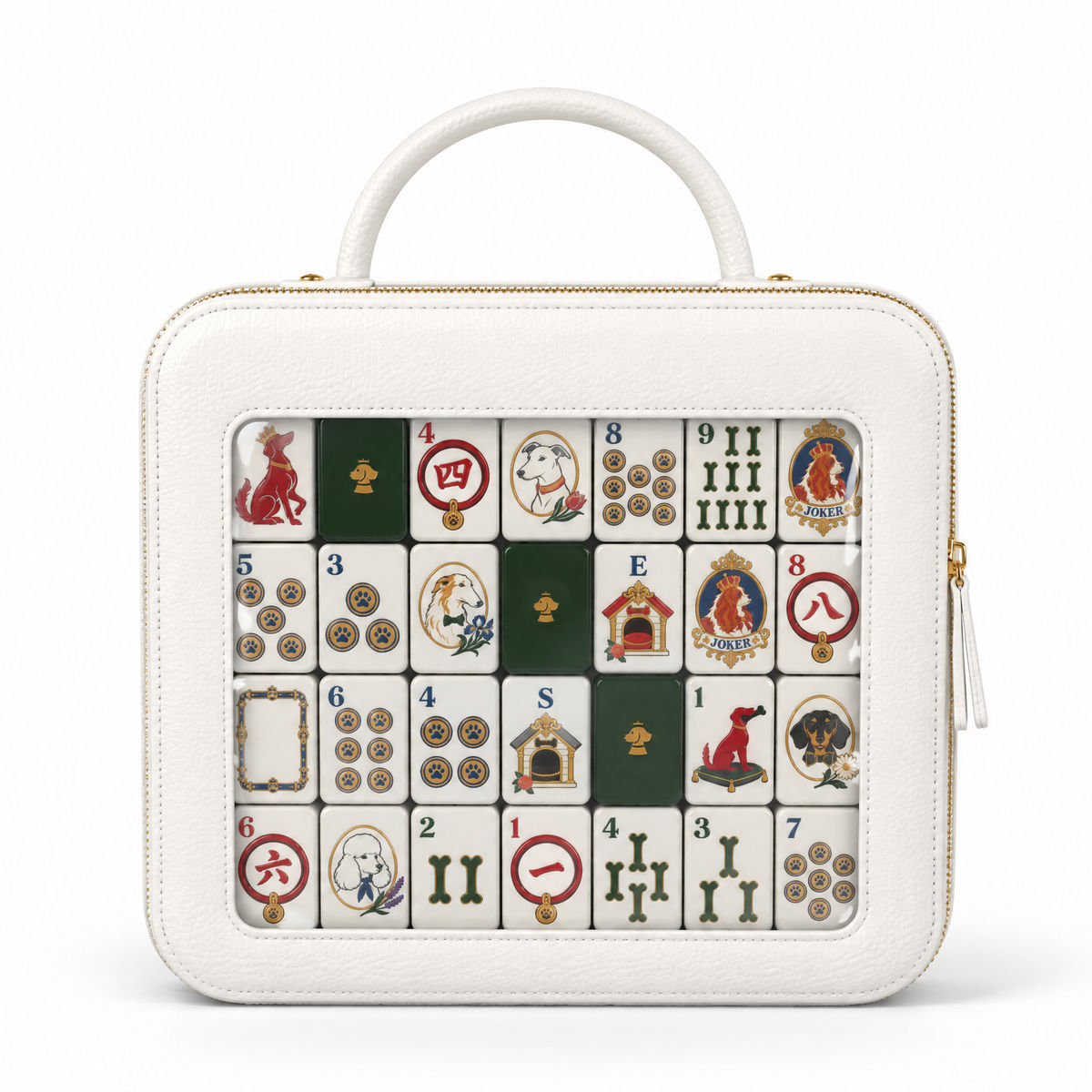
A single hand of two-player mahjong typically takes 20–40 minutes, depending on hand difficulty and player skill. American mahjong hands resolve faster (20–30 minutes) because players can only call fixed patterns from the current year's card; Chinese and Hong Kong variants allow sequences (chows) and can stretch longer. Setup—shuffling 152 tiles, building walls, and distributing hands—adds 3–5 minutes. A full game (usually four hands, one per wind position) runs 90–180 minutes total, excluding breaks. Newer players move slower; experienced players finish in the lower range. The National Mah Jongg League's American rules create predictable rhythm because players must match the card exactly, whereas open-sequence rulesets invite improvisation and longer decision trees.
🀄 Shop best-selling mahjong sets →
Why does American two-player mahjong go faster than other variants?
American mahjong locks play to one official card per year, so both players see identical valid patterns. You can't invent a hand; you either have it on the card or you don't. This eliminates negotiation and scoring disputes mid-game. Chinese and Hong Kong variants allow sequences (1–2–3, 5–6–7) to be called and melded openly, which means players must calculate compatibility between their hand and every discard—a slower cognitive loop. Plus, American tiles are clearly read acrylic on our sets, while traditional bone-and-bamboo tiles slow down matching for newer eyes.

How much time does the Charleston take in two-player games?
The Charleston—the pre-game tile-passing ritual—normally takes 2–3 minutes in four-player American mahjong. In two-player, we skip the Charleston entirely because both players face each other across the table and need no tile-exchange ceremony to balance luck. This saves you 2–3 minutes per hand right away. Some two-player groups do a modified pass to feel traditional, but the standard rule for American two-player is: deal 13 tiles to each player directly, then draw and discard as normal. We've covered the Charleston explained in detail if you're hosting four-player games on other nights.
What slows down two-player hands the most?
Indecision, tile-counting delays, and rule disputes are the three main time sinks. New players often freeze mid-discard while they mentally scan the card for any possible hand using their remaining tiles—a habit called "planning ahead." Experienced players discard within 5–10 seconds. Mixed-skill pairs see hands stretch to 35–45 minutes because the newer player hesitates and the experienced one must wait. Also, if neither player is fluent in reading the card layout, each potential win claim requires re-checking the hand against the card line by line. We recommend how to read the mahjong card as a pre-game study aid. Thick, acrylic tiles like ours sit lower on a mat and don't scatter during fast discarding, reducing tile-reset downtime.
🎁 See our most-loved mahjong sets & accessories →
How does player experience level affect game length?
Two advanced players complete a hand in 18–25 minutes. A beginner paired with an expert takes 28–40 minutes. Two beginners may stretch to 50–60 minutes as they re-read hands, double-check discard legality, and verify winning combinations. Experience isn't just speed; it's muscle memory. Expert players recognize tile patterns instantly, know which tiles are risky discards, and never need to recount their hand mid-draw. We see this clearly when we host weekly games: the same four hands take 75 minutes with our regular crew and 140 minutes with a teaching session. Teaching-game hands are normal; they're just slower. The best prep is playing the same ruleset repeatedly with the same group; consistency beats speed every time.

Which two-player variants are fastest, and which take longest?
Variant | Hand Length | Why | Best For |
American (League card) | 20–30 min | Fixed patterns; no sequences | Competitive, predictable rhythm |
Chinese (sequences allowed) | 28–45 min | Open melding; more decision points | Social, improvisational play |
Hong Kong (fast discard) | 22–35 min | Fewer tiles; rapid win logic | Quick rounds, lunch breaks |
Riichi (Japanese) | 25–40 min | Hidden melds; higher stakes | Strategic, skill-focused |
American mahjong is fastest because the card removes guesswork—you see all legal patterns upfront. Hong Kong runs close behind due to smaller tile counts. Chinese play longest because sequences create branching decision trees: a discard that's safe for one hand is dangerous for another. Riichi sits middle because hidden melds (your non-exposed pung or kong) add psychological strategy without tile-counting delays.
How can you speed up or slow down two-player games intentionally?
To speed up:
Use acrylic tiles with large, clear print; bone sets require squinting.
Study the card before dealing—don't look it up mid-hand.
Set a house rule: 20-second discard timer after the first move.
Play Hong Kong rules (smaller tile set) instead of American.
Disable the "pause for tea" tradition; keep tempo steady.
To slow down:
Play Chinese or Riichi variants with open sequences and hidden melds.
Use a teaching-game rule: explain each discard choice aloud.
Increase hand count per game (six hands instead of four).
Play with beginners; teach as you go.
Use compact mats; more shuffling = more downtime = longer games.
Most pairs naturally settle into a 25–30-minute rhythm after a few games. We host weekly games with the same core crew, and our hands have stabilized at a consistent 27-minute average per hand on American rules.
✨ Find your Mahstead set — free US shipping →
What's your checklist before hosting a two-player match?
Tiles clean and counted? Missing or bent tiles force recounts mid-game.
Card in print (not phone)? Screens are slower than paper.
Mats or table cover ready? Tiles slide and scatter on bare wood, eating 2–4 minutes per reset.
Racks or tile stands? Holding 13 tiles in hand tires wrists; racks let players rest hands between discards.
Pen and scoring sheet? American mahjong scoring is tightly structured; handwritten notes prevent disputes.
Timer or clock visible? Not required, but helps manage pace if one player is much slower.
Bag or case for tiles? If you're moving sets between homes, damaged tiles extend setup time.
We store our sets in acrylic cases; setup goes 3 minutes instead of 5 because tiles never get lost or dented in transit.
What to check before you buy
Tile size and weight: Standard acrylic tiles are 1 × 1.25 inches and weigh ≈1 oz each. Smaller tiles slow visual recognition for aging eyes. Heavier bone tiles feel premium but fatigue hands in a 90-minute session.
Font legibility: Print must be crisp and high-contrast. Faded or small text kills hand-reading speed.
Shuffling ease: Acrylic tiles shuffle 20–30% faster than bamboo because they're smoother. Beginners benefit most.
Set completeness: Confirm your set has 152 playing tiles plus spare jokers and blanks. Never mix partial sets.
Mats and racks: Two-player tables need less mat space than four-player, but racks prevent tile spills during long games.
Our mahjong racks with pushers are built for tiles to move smoothly without jamming, which keeps discard timing consistent and hands on schedule.

FAQ
Can two people play mahjong on a 2×4 table, or do I need a full mahjong table?
Two players need about 2 × 3 feet minimum. A standard dining table works fine. Full-size mahjong tables (four players) are 3 × 3 feet; using one for two players just means more space to shuffle. We recommend a mahjong mat on any surface to prevent tile scatter and speed play.
Does two-player American mahjong follow the same rules as four-player, or are there differences?
Yes, major differences. Two-player skips the Charleston entirely and uses East and West winds only—no North or South. Winning hand values are recalculated per the current League card because the smaller player count changes tile probability. Read our 2 and 3 player mahjong rules for the full breakdown.
If I'm learning, will my first games take much longer than 40 minutes?
Yes, easily 60–90 minutes per hand for the first 5–10 games. You'll spend time re-reading the card, recounting tiles, and checking hand legality. By game 15–20, you'll hit the 25–30-minute range. Playing the same opponent and ruleset repeatedly cuts learning time dramatically.
What's the fastest two-player mahjong ruleset to learn and play?
Hong Kong mahjong uses fewer tiles and simpler win logic than American or Chinese, so hands finish in 22–35 minutes on average. American is a close second (20–30 min) because the fixed card removes improvisation. Hong Kong is friendlier to beginners who want quick rounds.
Should I use a timer to keep two-player games on pace?
Not necessary, but helpful if one player is much slower than the other. A visible 20-second discard timer keeps rhythm steady and prevents one slow player from stretching 90-minute games into 2+ hours. Most casual pairs don't time and naturally settle into consistent rhythm after 5–6 games.


View More
View More
View More
