
Housewarming Mahjong Party Favors: Gifts That Build Community
Last updated: Nov 23, 2026
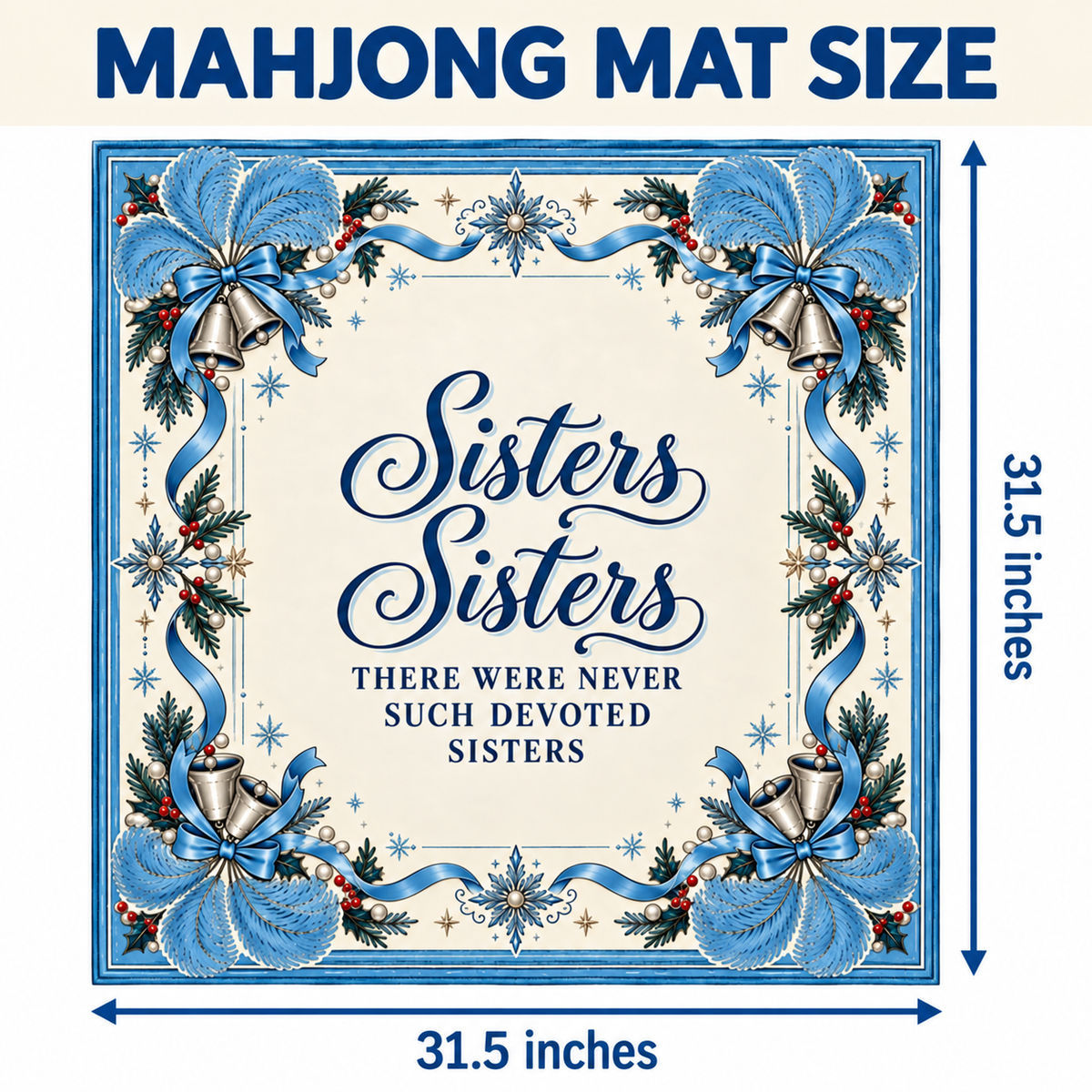
Housewarming mahjong party favors work best as complete starter kits: a 160-tile acrylic American set, a felt mat for table protection, a rack with pushers, and a dice set. Personalized engraved sets feel like the host invested in creating a gathering space. American mahjong sets ship ready to play—no assembly needed—and last decades with normal care. From the best-selling collection, you'll find sets in classic neutrals or bold patterns that match any décor. Avoid solo tile sets without a mat or rack; they signal "optional," not "I want you here every Thursday." Budget for a complete setup (set + mat + rack) rather than tiles alone: the mat protects furniture, the rack keeps hands organized, and together they make hosting feel intentional and professional. A housewarming mahjong gift says: This home is a gathering place.
A housewarming mahjong gift opens the door to weekly game nights, inside jokes, and real friendships. We'll show you how to choose one that matches your guests' skill level and your hosting setup.
What makes mahjong the perfect housewarming gift?
Mahjong creates ritual—the weekly game becomes the reason people show up, not just a rainy-day activity. Unlike board games that live in a closet, a mahjong set with a mat and rack becomes furniture, a permanent anchor for a social routine. New homeowners need this. They're building a place for others to belong. A mahjong gift says: Your home is the gathering place. It's practical (fun, teaches strategy), beautiful (sets look great on display), and social (always a four-player game). When you give a set paired with hosting essentials—a mat, rack, and dice—you're not just giving tiles; you're giving permission to host.

Should you buy a complete set or build a starter kit?
Most new hosts benefit from a complete setup. A standalone 160-tile set costs less than a full bundle, but without a mat, the tiles scratch the table; without a rack, players fumble with hand organization; without dice, someone has to find a phone roller. The real cost isn't the tiles—it's the friction that stops people from playing.
Build your kit this way:
Set (American, 160 tiles): The tiles themselves. A good set includes four copies of each tile, 8 jokers, and spares.
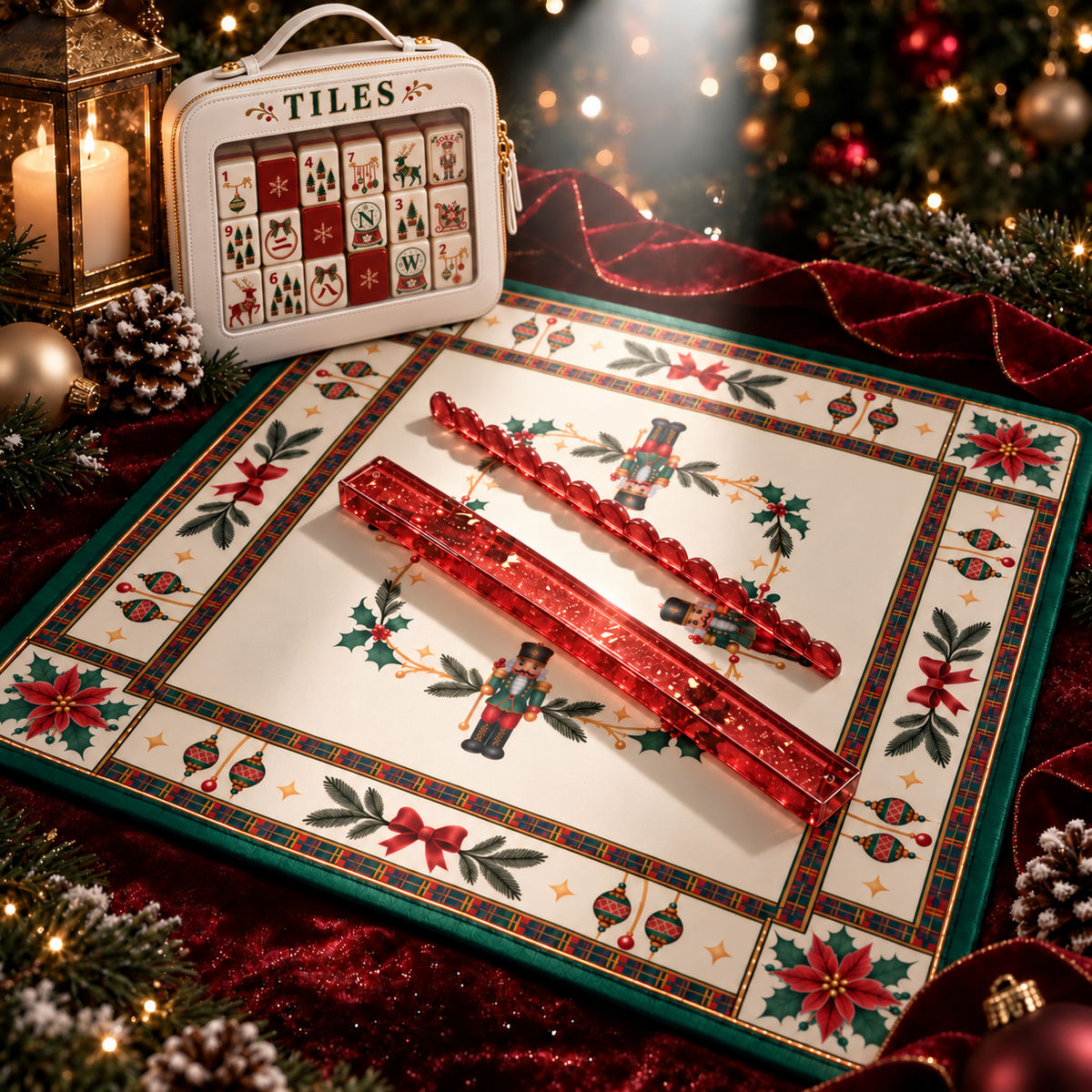
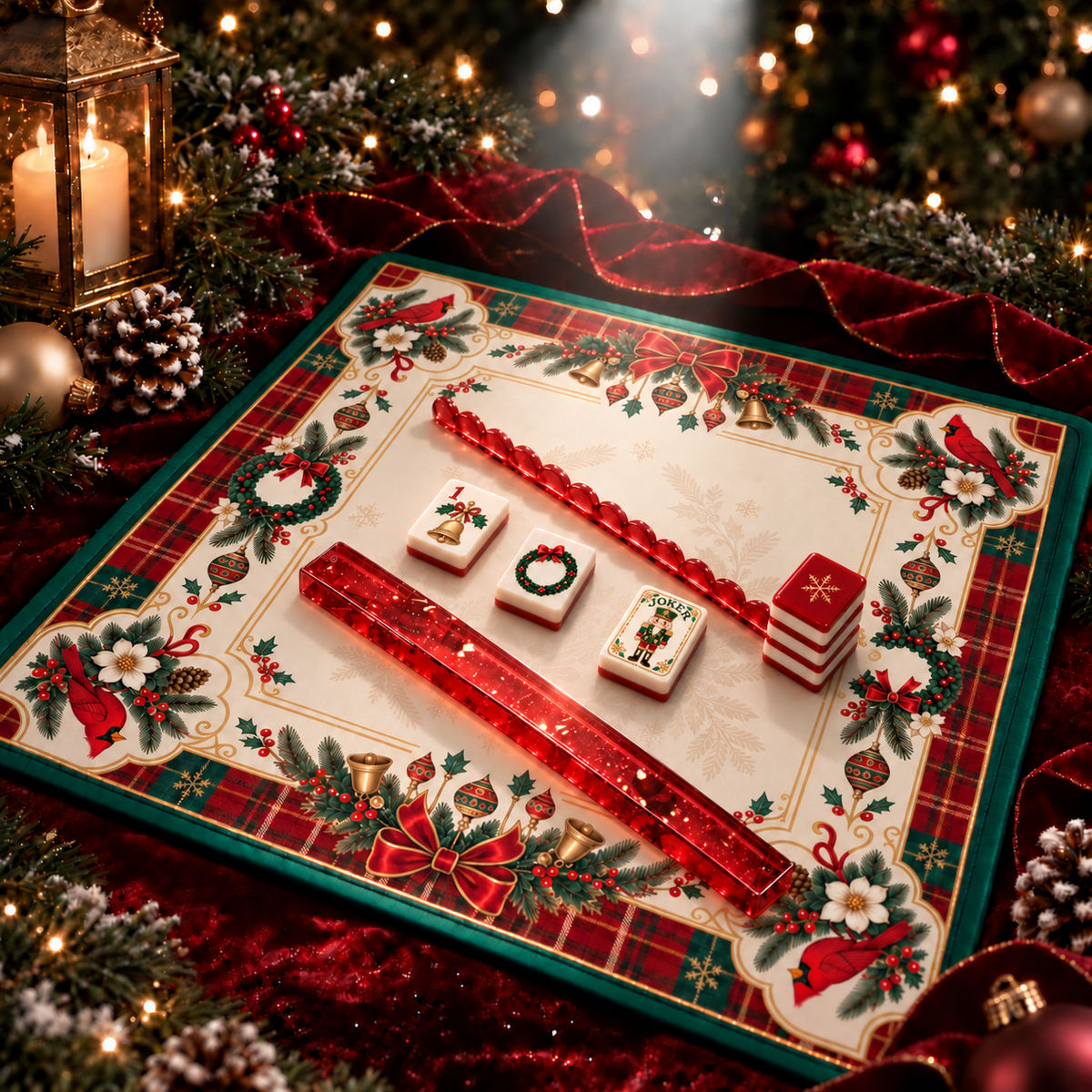
Mat (felt or rubber, 36–43 inches): Protects the table, quiets tile noise, makes hands easier to read. See guidance in how to choose a mahjong mat.
Rack with pushers (four, for four players): Organizes each player's hand, keeps tiles upright and hidden. Browse racks with pushers guide.
Dice (typically two six-sided): Rolls for who goes first and how far the discard pile starts. Included in many starter sets.
A fully engraved set with a monogram or house name, paired with a matching mat and rack, costs more upfront but becomes a keepsake and a constant, visible reminder that this home is designed for gathering.
🀄 Shop best-selling mahjong sets →
How do you choose between engraved, patterned, and classic designs?
Engraved sets feel personal and irreplaceable. A homeowner's name, initials, or a phrase like "Casa Lopez" or "The Wednesday Night Table" turns tiles into heirlooms. Patterned sets (floral, geometric, seasonal) blend into décor and appeal to hosts who want the set to feel like part of the room's aesthetic. Classic designs (solid colors, jade-look, bamboo-inspired) work everywhere and never look dated.
Design Type | Best For | Visibility | Longevity |
Engraved (name/date) | New home milestone, strong personal tie | High—becomes a conversation starter | Permanent; no trend risk |
Patterned (florals, geometric) | Hosts who décor-coordinate | Medium—depends on room palette | Timeless patterns stay current |
Classic solid (jade, white, black) | Any style home, all-season appeal | Low—professional, not flashy | Always works; never ages poorly |
Engraved designs from our mahjong titles collection cost more but justify themselves: each game night, the host glances at those tiles and feels affirmed in their choice to build a gathering space.
🎁 See our most-loved mahjong sets & accessories →
What's the difference between beginner and experienced host setups?
A first-time host with beginner friends needs durability, clarity, and simplicity. Acrylic tiles are loud and bright—good for learning because numbers are easy to read and the click-clack sound signals "this is a real game." Include a reference card (the annual National Mah Jongg League card issued each spring) and a mat that doubles as a storage base.
An experienced host upgrading to new furniture or gifting for seasoned players might choose a set with softer tones or a mat that coordinates with their dining décor. Beginners won't notice the color nuance; experienced players will appreciate that the host thought about the entire experience, not just the tiles.
For true beginners in the recipient's circle, pair the gift with a blog guide like how to play American mahjong or mahjong for beginners—either as a printed card or a link. This removes the "I don't know how" barrier that stops people from accepting the invitation.
How do mat and rack choices affect the party experience?
A felt mat deadens sound and keeps tiles from sliding; a rubber mat is easier to clean (spills, dust). A 36-inch mat fits a small apartment table; a 43-inch mat is standard for dining tables. Mats come in solids and patterns. Mahjong mats aren't interchangeable with tablecloths—a mat is a game surface, not just décor.
Racks (also called pushers or tile holders) come in bamboo, acrylic, and wood. Four racks per set is standard: one per player. A good rack holds 13 tiles upright and includes a pusher to slide tiles up as the hand fills. Without racks, a player's tiles sprawl flat on the mat, and everyone can see the hand—game over.
Host experience improves dramatically when:
Noise is quiet. Felt mat + wooden racks = civilized gaming. Acrylic mat + acrylic racks = loud but fun.
Tiles stay put. A rubber or felt mat prevents sliding during tile-drawing. A good rack keeps hands organized throughout the round.
Cleanup is fast. A mat and rack make reset between games 30 seconds instead of five minutes.
New hosts often underestimate the mat and rack. They buy the tiles, forget the mat, and regret it after the first game scratches the table. The mat and rack aren't upgrades—they're essentials.
What's your decision checklist before buying a housewarming mahjong gift?
Before you choose:
Is the recipient a beginner or experienced player? (Beginners need clarity; experienced players appreciate aesthetics.)
Will they host in a small apartment, dining room, or outdoor space? (Size matters for mat choice.)
Do they want engraved personalization or a pattern that matches their home? (Personalized sets take 1–2 weeks; patterned sets typically ship faster.)
Who will play: family, work friends, longtime game club, or a mix? (New players need beginner guides; established groups may want a backup set.)
Will this set stay in one room or travel? (Travel sets need a bag or case; home sets don't need mobility.)
What's the room's color palette? (A classic set fits anywhere; a bold pattern needs to work with existing décor.)
What to check before you buy:
Verify the set is 160 tiles (152 playing tiles + spares) and includes 8 jokers. American mahjong requires exactly 152 playing tiles per round; extras are spares only.
Confirm the mat is felt or rubber, ≥36 inches, and includes corner grips (so it doesn't slide during play).
Check that racks are included and match the set's aesthetic (acrylic, bamboo, wood).
If ordering engraved, verify the name spelling and check the expected ship date—personalized sets take longer than stock designs.
Confirm free shipping is included for your order.
✨ Find your Mahstead set — free US shipping →
Why housewarming mahjong gifts work for almost any home
A mahjong set is the only gift that creates a recurring reason for people to gather. It's not consumed (like a bottle of wine), stored (like a vase), or worn out (like a candle). It becomes the home's social engine. Every Thursday, every Sunday, people arrive and say, "So glad we're doing this here." That gratitude flows back to the host. The gift pays dividends for years.
Choose a complete setup—tiles, mat, rack, dice—over tiles alone. Add personalization (an engraved name or date) if the home feels permanent. Include a beginner's guide if the guests are new to the game. And give the gift with the assumption that the host will actually use it: "I picked this so you and your friends have everything you need to start playing together."
That's how a housewarming mahjong gift stops being a thing and becomes a tradition.
FAQ
How long does a 160-tile mahjong set last?
Acrylic tile sets last 20+ years with normal play (weekly games, storage in a case or box, no excessive moisture). Racks and mats degrade slower—felt mats may need replacement after 10 years of heavy use; wooden racks rarely wear out. Tiles themselves are nearly indestructible if stored dry.
Can beginners play on day one, or do they need lessons first?
Beginners can play day one if someone at the table knows the rules and has a current National Mah Jongg League card (the annual reference card that shows all winning hands). One experienced player teaching four beginners usually takes 20–30 minutes for the first hand, then 10 minutes per hand after. Without an experienced player, beginners need a lesson guide beforehand.
Is American mahjong the same as Chinese mahjong?
No. American mahjong uses 152 tiles, 8 jokers, a specific set of hands from the annual League card, and no calling/exposing of sequences. Chinese mahjong uses different tile counts, different hand combinations, and allows exposed chows (sequences). They're distinct games with different rules. A housewarming gift should specify "American" if your guests play that variant.
Should the mat be stored rolled or flat?
Felt mats can be rolled for travel but should be stored flat in a cool, dry place at home (rolling permanently for storage can crease and weaken felt). Rubber mats are more durable rolled. Check the mat's material before storage to prevent creasing or mold.
Can a mahjong set be used outdoors or on a patio?
Yes, but acrylic tiles and mats should be brought inside when not in use. Prolonged sun exposure fades acrylic tiles and deteriorates rubber mats. Felt mats are vulnerable to moisture and mildew outdoors. A patio game is fine for an afternoon; permanent outdoor storage isn't recommended.
Do I need four racks, or can fewer players share?
Four racks are standard, one per player. Fewer racks (for 2 or 3 player games) is possible but awkward—each player needs to hide their hand. A fourth rack (unused) can sit empty during 3-player games. For regular 2 or 3 player games, use tile holder stands or a hand holder designed for fewer players.


View More
View More
View More
