
Malaysian Mahjong for Beginners: Rules, Tiles & First Game Setup
Last updated: Nov 23, 2026
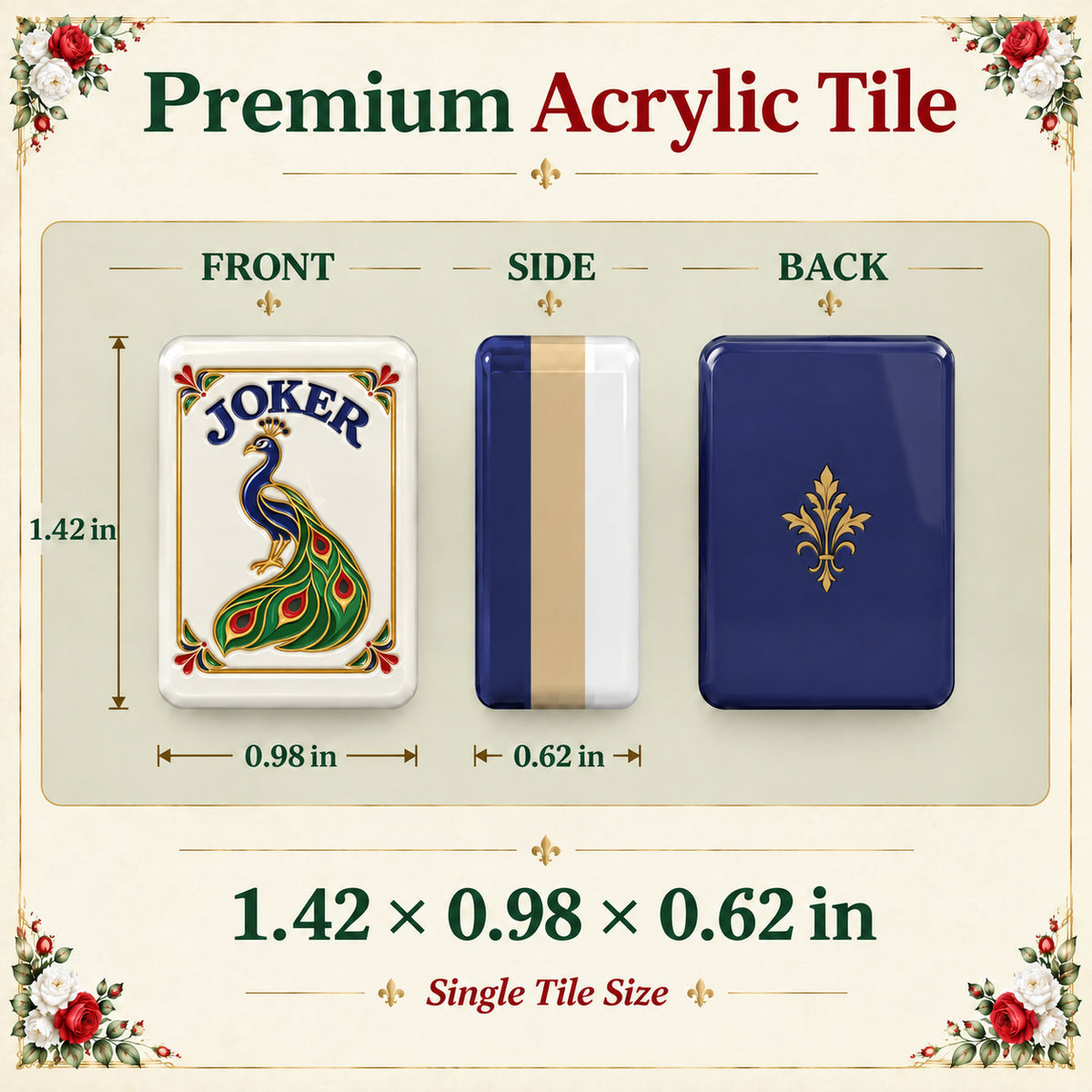
Malaysian mahjong uses 144 tiles divided into suits of Bams, Craks, and Dots numbered 1–9, plus Winds, Dragons, and Flowers. Games are played with four players and typically take 1–2 hours per round. Unlike American mahjong, which relies entirely on a printed annual card, Malaysian play includes a mixture of fixed hand patterns and house variations that shift by region and table. Sequences (chows) are allowed and can be called, exposed, or stolen—a major difference from American rules. The pace is faster, hands feel more fluid, and luck plays a smaller role once you learn the core patterns. Most Malaysian tables use jokers sparingly or not at all. Beginners should expect a learning curve steeper than American play but find it rewarding once the hand logic clicks.
How is Malaysian mahjong different from American mahjong?
American mahjong locks you into one year's printed card; Malaysian mahjong works from memorized patterns and house rules that stay consistent year-round. American play forbids sequences entirely—you can only make groups of three identical tiles (pungs), four identical (kongs), or more. Malaysian play treats sequences as legitimate melds. American mahjong requires exactly 152 tiles; Malaysian uses 144. In American play, jokers are built into the system and heavily used; in Malaysian games, jokers are optional and rarely seen. American wins require matching a printed pattern; Malaysian wins follow elemental logic—all one suit, honor tiles only, or mixed patterns that players learn by repetition. The rule density differs too: American play has strict calling protocols and limited passing; Malaysian tables often allow more fluid calling and stealing from discards.

What tiles do I need and what do they mean?
A Malaysian mahjong set contains 144 tiles: three Suits (Bams, Craks, Dots) numbered 1–9 with four copies of each, totaling 108; Winds in sets of four (North, East, South, West) totaling 16; Dragons in sets of three (Red, Green, White) totaling 12; and Flowers numbered 1–4 in sets of four, totaling 8. The 1 Bam tile shows a bird; the White Dragon is often blank or marked with a border. Each tile is drawn blindly from a wall of stacked pairs and must be played or discarded according to hand rules you'll learn from your group. Unlike American sets that come with 152 tiles and jokers, Malaysian sets stop at 144 tiles and run cleaner, faster games with fewer variables. Beginners benefit from tiles with clear suit symbols and large numbers, so worn or faded tiles can slow down your early learning.
🀄 Shop best-selling mahjong sets →
What are the main hand patterns I need to memorize?
Malaysian mahjong hands revolve around a few core ideas: All Pungs (hand made entirely of three-tile groups of identical tiles), All Chows (hand made entirely of sequences like 1-2-3, 4-5-6 within one suit), Honor Hands (all four Winds or all three Dragons, or mixtures), and Mixed Patterns (combinations of the above). Within these sit region-specific variations: some tables play Kong Hands (one or more four-tile groups), Flower Hands (using all four Flowers in your hand), or Limit Hands (rare patterns worth maximum points). The winning hand structure is always 4 melds (groups of three or four) plus a pair of identical tiles, totaling 14 tiles. Your group will teach you which variations they use in the first session; write them down or ask for a printed sheet. Common beginner mistakes include misunderstanding which sequences (1-2-3 vs. 8-9-1 wrap) are legal—clarify this before your first game. Most tables accept 8-9-1 as illegal; always ask.

How do I call tiles and avoid dead hands?
When you discard a tile, any player holding a tile that completes a pung, chow, or winning hand can call it immediately. Calls have priority: a win call beats a pung call, which beats a chow call. Once you call, you expose your tiles and cannot hide your intentions. Stealing from discards (taking a tile someone else discarded to complete a meld) is allowed in most Malaysian variants, though some tables restrict it to winning calls only. A dead hand occurs when you draw a tile you cannot use and no discard helps you progress toward a win—you fold and sit out the round. Beginners often dead-hand early because they try to hold onto too many options; instead, commit to a suit or honor pattern within the first three turns and discard heavily outside it. Never hoard high-value Honors (Winds and Dragons) unless you have two or three matching tiles already.
What's a realistic timeline to play your first full game?
Expect 20–30 minutes to learn tile names and basic hand shapes, 15 minutes to understand calling and stealing rules, and 30–60 minutes to play your first round. Your group will pause frequently to explain discards and validate calls; this is normal and encouraged. By game two or three, the rhythm clicks and table speed increases to 45 minutes per round. Most beginners feel confident after 4–6 sessions, though mastery of advanced patterns takes months of regular play. Many Malaysian groups meet weekly, so you'll see familiar faces and the same house rules repeatedly—this repetition is your learning accelerator. Don't memorize all patterns upfront; instead, learn the 8–10 most common ones and ask players to name the pattern they're building during their turns. After three weeks of weekly play, you'll recognize 70% of winning shapes at a glance.
🎁 See our most-loved mahjong sets & accessories →
Aspect | Malaysian Mahjong | American Mahjong | Why It Matters |
Tiles per set | 144 | 152 | Malaysian games faster; fewer jokers/blanks |
Sequences allowed | Yes, called and stolen | No sequences at all | Malaysian feels more fluid; American stricter |
Hand patterns | Memorized, house rules | One printed card per year | Malaysian consistent year-round; American changes spring |
Calling protocol | Open, immediate, steals allowed | Limited calls, no stealing | Malaysian gives more meld options |
Jokers | Rare or none | Built-in system | American relies on jokers; Malaysian doesn't |
Game duration | 45–90 min per round | 30–60 min per round | Malaysian slightly longer due to more melds |
Learning curve | Moderate to steep | Moderate | Malaysian requires pattern memory; American requires card reading |
What should you check before you buy or join a game?
Before investing in a set or joining a table, confirm five things with your host or group: (1) Do they use jokers, and if so, how many? (2) Which hand patterns are legal at their table (e.g., are wrapped sequences like 8-9-1 allowed)? (3) Is calling from all four players allowed, or only specific players? (4) Can you steal a discard for any meld, or only to win? (5) What is the point system—doubling rules, limit hands, penalties for dead hands? Write the answers down and refer to them before your first three games. If you plan to play regularly, borrow or rent a set before buying; a full Malaysian set lasts decades, but if the group folds or house rules change, you might not use it. Many communities have libraries or community centers with loaner sets, or ask your host if a beginner set is available for trial. Tiles should be smooth, readable at arm's length, and stackable without chipping; if a set feels cheap or tiles stick together, save your money until you find one you'll play for years.
✨ Find your Mahstead set — free US shipping →
Many beginners ask whether they should buy before or after their first session. We recommend playing 2–3 games with a borrowed set first; this confirms the group's rules are stable and you enjoy the pace. Once you're committed, explore best-selling mahjong sets designed for long-term weekly play. If you later want to try American mahjong alongside Malaysian (many players enjoy both), check our guide on how to play American mahjong to understand the tile and rule differences clearly. For equipment, a padded mahjong mat protects tiles during play and makes discards quieter; many Malaysian groups appreciate the noise reduction in home games. A travel bag or case lets you carry your set to weekly meetups without tile loss.

FAQ
Can I use the same tile set for both Malaysian and American mahjong?
No. Malaysian sets have 144 tiles; American sets have 152 tiles including specific jokers and blank tiles. The two games require different tile compositions and cannot be mixed.
How long do Malaysian mahjong games typically last?
One round (from wall break to win) usually takes 45–90 minutes. A session of 2–4 rounds runs 2–4 hours. American mahjong rounds are often faster (30–60 minutes) because fewer melds are allowed per hand.
Is it harder to learn Malaysian mahjong than American mahjong?
Yes, slightly. Malaysian requires memorizing hand patterns; American requires reading one printed card. But Malaysian patterns repeat identically year-round, while American patterns change every spring. Most players commit to one variant and stick with it.
What happens if I can't complete a hand and no one steals my discard?
You fold that round and sit out until the next wall break. Your tiles are collected and reshuffled. You pay penalties based on house rules (often a small chip or point deduction). This is called a dead hand or a bust.
Can I join a Malaysian mahjong group if I've never played any mahjong before?
Yes, if the group is open to beginners. Ask the organizer if they teach new players and how many sessions it takes to feel comfortable. Most weekly groups accept one new player per session and are patient during the learning phase.
Do I need to buy a mahjong set before my first game, or can I borrow one?
Borrow or rent first. Confirm the group's rules are stable and play style suits you (casual, competitive, family-friendly). After 4–6 sessions, buy a set you'll keep for years. This avoids wasting money on a set you might not use.


View More
View More
View More
