
Games Like Mahjong: Tile & Strategy Games to Play Today
Last updated: Nov 23, 2026
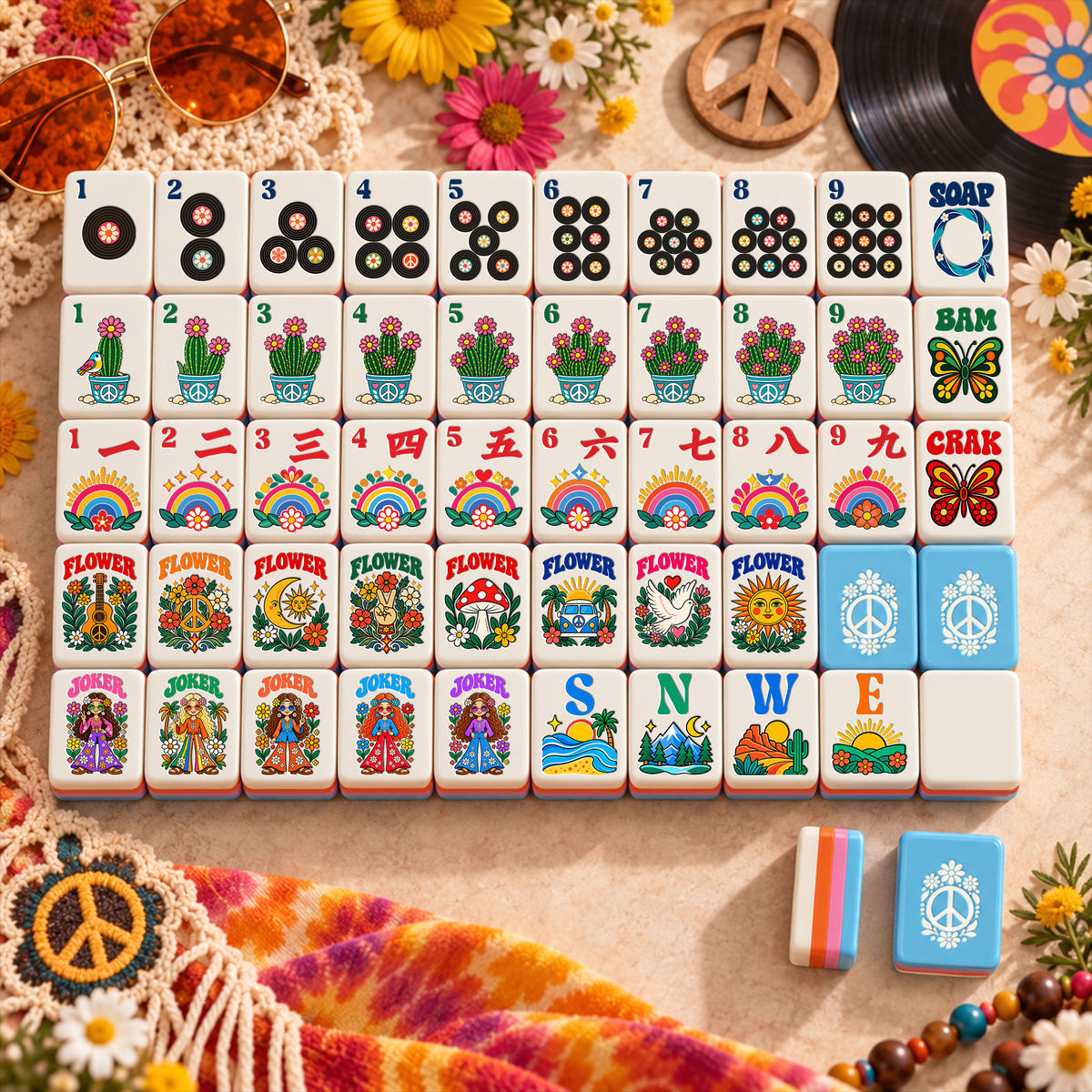
Games like mahjong share three elements: tile-based play, hand-building strategy, and a social rhythm that keeps everyone engaged. The closest cousins are Rummikub (numbered tiles you meld into sets and runs), Pai Gow (Chinese dominoes with hand rankings), Chinese mahjong (faster, fewer restrictions than American rules), and Solitaire mahjong variants you play solo on screen or tabletop. Others—Dominoes, Qwirkle, Splendor—use different mechanics (dominoes are linear chains, Qwirkle is spatial matching, Splendor is deck-building) but carry the same meditative pace and skill depth. We host weekly games with our best-selling mahjong sets, and when someone asks for alternatives, we tell them the answer depends on whether you want the exact structure of mahjong (hand-draw-discard ritual, multiple players, scoring complexity) or just the feel (calm, strategic, tile-based). This guide covers both, with a comparison table to help you pick and tips on what equipment matters most. 🀄 Shop best-selling mahjong sets →
What makes a game "like mahjong"?
Most games players call mahjong alternatives share three core traits: players draw and discard tiles or cards in turn, build melds (groups of matching or sequential pieces), and compete on hand composition or points. American mahjong, which we play here at Mahstead, requires exactly 14 tiles to form one specific hand from the current year's league card—a tight constraint that rewards memory and pattern recognition. Games like Rummikub let you be more flexible: any three identical numbers, or any sequence of numbers, counts as a set. If you love the social rhythm of mahjong (the Charleston tile-passing, the draw-discard cycle, the wait-and-watch tension), you'll find it in Pai Gow or Chinese mahjong. If you love the solo puzzle aspect, digital mahjong solitaire or tabletop tile-matching games like Qwirkle deliver that quietly. The key: know whether you're chasing the structure or the sensation.

How does Rummikub compare to American mahjong?
Rummikub plays 2–4 people with 106 plastic tiles (numbered 1–13 in four colors, plus jokers). Players draw and play tiles onto the table in sets (three identical numbers in different colors, or three+ sequential tiles in one color). Jokers are wildcards—nothing like how jokers work in American mahjong, where they fill only exposed melded groups and never substitute for a single tile or a pair. A Rummikub round takes 20–40 minutes; American mahjong hands run 15–25 minutes depending on your group's pace. Rummikub requires no score sheet (first to empty your rack wins), while American mahjong uses the National Mah Jongg League scoring system, which is more complex but fairer over long sessions. If you want faster rounds and simpler rules, Rummikub wins. If you want richer strategy and a group pastime that evolves over a season, American mahjong is your game.
Feature | Rummikub | American Mahjong | Chinese Mahjong |
Player count | 2–4 | 4 (standard) | 4 (standard) |
Tiles per set | 106 | 152 | 144 |
Round time | 20–40 min | 15–25 min | 15–30 min |
Rules complexity | Low–Medium | High | Medium–High |
Scoring system | None (race to empty) | League card / points | Point-based ranking |
Joker role | Wildcard in any meld | Fill exposed groups only | Limited or none |
Luck vs. skill | 50/50 | 60/40 skill | 70/30 skill |
Social factor | High (table talk) | Very high (ritual) | High (faster pace) |
🎁 See our most-loved mahjong sets & accessories →
What about Chinese and other regional mahjong variants?
Chinese mahjong uses 144 tiles (vs. our 152-tile American sets) and follows a simpler melds-and-honor system: you build pongs (three identical tiles), kongs (four), and chows (three consecutive numbered tiles in the same suit). The big difference is that chows can be called and exposed mid-hand—you grab a discard from any player, not just the player to your right. This speeds up play and shifts strategy: you're more reactive, less able to plan deep. Hong Kong mahjong adds even more speed and hand variants; Riichi (Japanese) introduces a betting phase and a "ready hand" declaration that ramps tension. All three play faster than American rules, which prohibit exposed chows entirely and lock you to hands printed on the National Mah Jongg League card. If your group values ritual and depth over speed, American mahjong is the more forgiving home game. If you want quick rounds and constant interaction, try Chinese or Riichi. Tiles are interchangeable across variants—any 144-tile or 152-tile set works, though we sell 160-tile acrylic American sets built for the American game's structure.

Which tile games work best for 2 or 3 players?
Standard mahjong needs four people, but we do play modified rules for smaller groups. Two- and three-player mahjong uses dummy hands or adds neutral tiles to balance draws. Rummikub works smoothly at 2–3 players with no house rules. Pai Gow (two-player dominoes) is purpose-built for pairs and has a clean hand-ranking system. Solitaire mahjong—the tabletop version where you match pairs of identical tiles from a pyramid or 8-tile layout on a mat—needs only one person and a set of tiles. Digital mahjong solitaire games let you play on phone or tablet with infinite hands. If you often host two-player nights, Pai Gow or Rummikub are faster starts than teaching mahjong house rules. A quality mahjong mat still matters for any variant—it protects tiles and keeps them organized, even in a two-person game.
What other strategy games have that same mahjong feel?
Games like Splendor, Qwirkle, and Dominoes share mahjong's meditative pace and turn-based rhythm but use different mechanics. Dominoes (28 tiles, numbered 0–6 on each half) chain linear sequences; winning depends on blocking your opponents and playing high-value tiles at the end. Qwirkle (108 wooden tiles in six colors and six shapes) is a spatial puzzle: you lay tiles in lines, and each line must have either all the same color or all different colors. Both feel calm and strategic, with zero randomness in the tiles themselves—only in what's left to draw. Splendor uses poker-like cards instead of tiles; you collect gems and buy cards to build an engine. These games don't have the social calling and claiming rhythm of mahjong, but they reward the same slow, patient thinking. If you want something lighter than a full mahjong night but still game-focused, try Qwirkle or Dominoes. If your group loves the chat and rhythm of mahjong specifically, stick with Rummikub or a Chinese variant—nothing replaces the Charleston and the draw.
✨ Find your Mahstead set — free US shipping →
What equipment do you actually need?
If you're trying a new game, you don't need fancy gear—Rummikub comes in a compact plastic box, dominoes fit in any container, and Qwirkle ships with a built-in storage tile. But if you're hosting regular game nights with mahjong or tile games, equipment makes a real difference. A quality mat protects tiles from spills and gives your hands a designated space so you're not fumbling across the table. Mahjong racks with pushers hold 15 tiles upright and let you organize your hand without memorizing—critical for reading the league card and spotting patterns. A travel bag or case keeps tiles safe between games and dust-free. Acrylic tiles (not bamboo) survive coffee spills and last through hundreds of games. We make engraved acrylic sets with permanent markings that won't fade or chip. If you're just dipping your toe into games like mahjong, start with Rummikub or borrowed tiles. If you're hosting weekly, invest in a mat and one good 160-tile set—it becomes the anchor of your game night.
What to check before you buy
Player count: Does your group always have four people? If not, learn house rules for 2–3 players or pick a game designed for flexible numbers (Rummikub works at 2–4).
Rule complexity: Are you teaching beginners monthly, or is your group stable? Complex rule sets (American mahjong, Riichi) pay off over time; simpler games (Rummikub, Dominoes) work better with rotating players.
Round time: Do you have 30 minutes or three hours? Rummikub and dominoes are faster; full mahjong hands reward patience.
Tile quality: Plastic works fine for casual play. Acrylic tiles last longer and feel more premium if you're playing weekly.
Space and storage: If you host in a small apartment, a compact game (Rummikub, Qwirkle) beats a full mat setup. If you have a dedicated table, a mat and tile storage become assets.
##

FAQ
Can I play American mahjong with fewer than four people?
Yes, using house rules. Two- and three-player mahjong typically adds a dummy hand or neutral tiles to balance turns and draws. Rummikub, Dominoes, and Qwirkle all work better at 2–3 players without house rules, so start there if you're often a smaller group.
Is Rummikub harder or easier than mahjong?
Easier to learn (15 minutes vs. an hour), but not "easier" strategically. Rummikub rewards quick pattern-spotting and aggressive play; mahjong rewards memory and long-term hand planning. Pick Rummikub for fast nights; mahjong for deep strategy.
Do I need special tiles for games like Rummikub and Dominoes?
No. Rummikub comes with its own plastic tiles. Dominoes are standard 28-tile sets sold at most game shops or department stores. You use your own mahjong tiles only for mahjong variants or mahjong solitaire.
What's the fastest tile game to teach someone new?
Dominoes (five minutes to grasp the chain rule) or Qwirkle (two minutes—match colors or shapes). Rummikub takes about 15 minutes because of joker wildcards. American mahjong typically takes 45 minutes to explain, though 10 minutes of practice gets beginners confident.
Can I use the same mat and racks for Rummikub as for mahjong?
A mahjong mat works for Rummikub (it protects the table and defines play zones), but racks with pushers are sized for mahjong's 152 tiles and won't hold Rummikub's 106. A simple tile stand or even propped book works for Rummikub. A mat is universal for any tile or card game.
Is Chinese mahjong a good entry point instead of American mahjong?
It's faster to play but sometimes harder to teach if you've never played mahjong before—exposed chows and hand variations feel abstract until you've done them five times. If you want the mahjong experience (the ritual, the social flow), start with American using our beginner guide. If you want speed and fewer rules, try Chinese or Rummikub.


View More
View More
View More
