
Filipino vs Wright-Patterson Mahjong: Key Differences Explained
Last updated: Nov 23, 2026
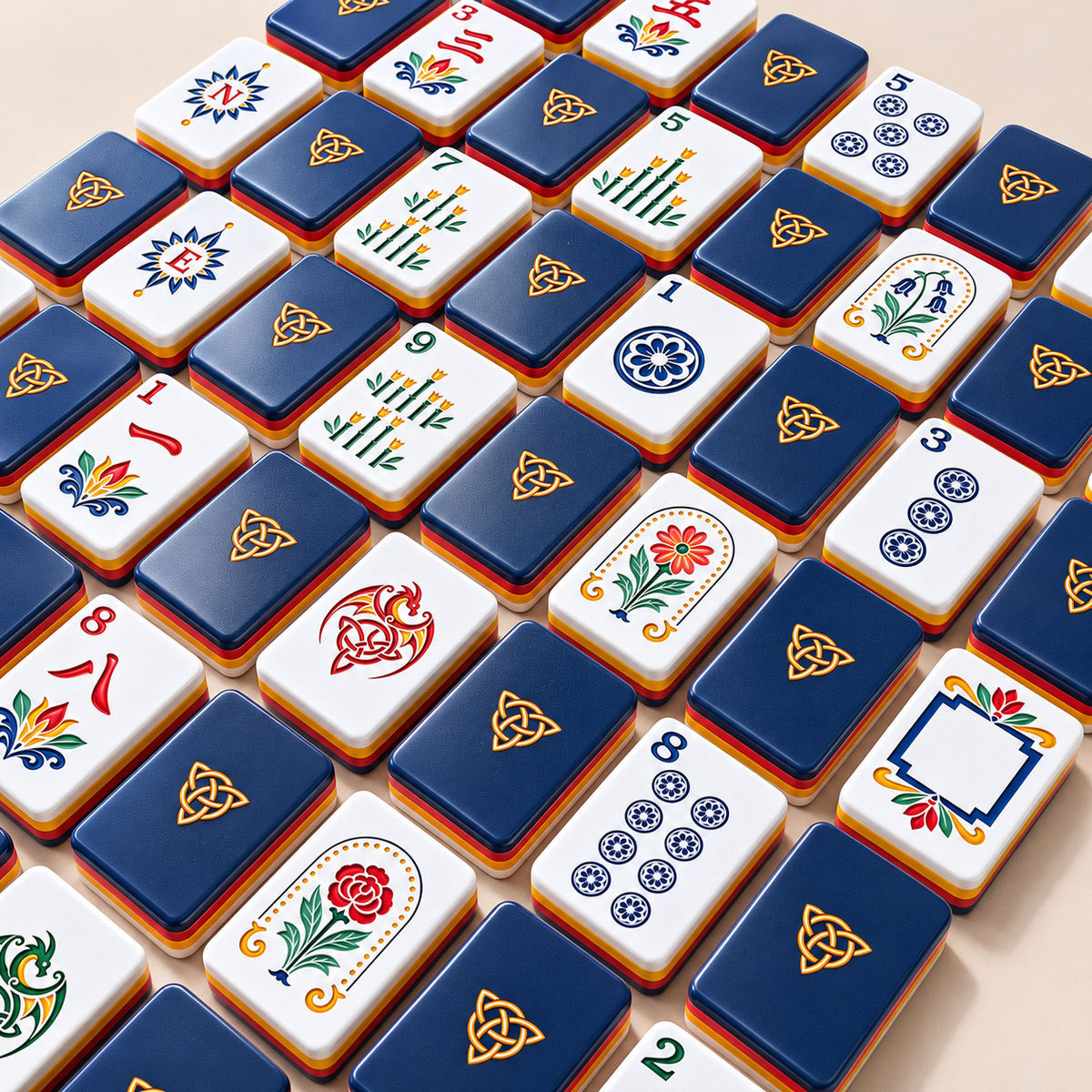
Filipino mahjong uses 144 tiles (suits Bamboo, Character, Dot; winds and dragons; no flowers or jokers) and plays with 13-tile hands plus a drawn tile, following hand patterns from a local card. Wright-Patterson mahjong, played primarily by U.S. military communities, also uses 144 tiles but follows American-style exposure rules and hand validation closer to stateside conventions. Neither uses the American mahjong standard of 152 tiles with eight jokers and the National Mah Jongg League card. If you're hosting U.S. players accustomed to modern American mahjong (152 tiles, jokers, annual League card), both Filipino and Wright-Patterson will feel unfamiliar—they're regional traditions with older rule sets. Mahstead specializes in American mahjong equipment, so we focus on the 152-tile format, but understanding these variants prevents confusion when traveling or joining established groups. 🀄 Shop best-selling mahjong sets →
What is Filipino Mahjong, and How Does It Play?
Filipino mahjong is a 144-tile variant played throughout the Philippines, often called "Filipino Mah-Jongg" or simply "Majong" in casual play. It uses traditional Chinese suit structure (Bamboo, Character, Dot) plus winds and dragons, but no flowers, no jokers, and no blank tiles. Players draw 13 tiles, then draw a 14th tile each turn, trying to form complete hand patterns (called "melds") that match a set of accepted patterns printed on a local house card—each region may have slight variations. The game emphasizes speed and hand memorization; once a player calls "mahjong," scoring is calculated per the local card. Many Filipino players learn from family tradition rather than written rulebooks, making regional rule variation common.
Key structural differences: Filipino mahjong often allows older, looser hand patterns than modern American play; players frequently build their own house rules around common patterns like "all one suit" or "dragon pung plus sequences." The pace tends to be faster, with less formal documentation of score. Unlike American mahjong (which uses jokers strategically to complete hands), Filipino mahjong relies on pure tile drawing and discarding, adding an element of luck and timing that many regional players prize.

What is Wright-Patterson Mahjong, and Where Is It Played?
Wright-Patterson mahjong emerged in the mid-20th century at Wright-Patterson Air Force Base in Dayton, Ohio, where American servicemen and their families adapted Chinese mahjong to a Western play style. It uses 144 tiles in the traditional structure (Bamboo, Character, Dot, Winds, Dragons) and does not include flowers or jokers. The variant is still played by military communities and their descendants, particularly in Ohio and scattered Air Force towns. Wright-Patterson rules emphasize hand purity and stricter exposure mechanics than some other American variants—you cannot expose a hand with mixed tile sources (e.g., jokers and pure drawn tiles in the same pung), and discard rules are enforced more formally than in casual Filipino play.
The scoring system on a Wright-Patterson card is closer to classical Chinese mahjong than to the modern American League card. Games tend to be methodical; players must verify hand legality before calling mahjong, and judges (often elder players) resolve disputes. Wright-Patterson communities guard their rule sets carefully, and learning typically requires joining an established game or finding a printed card from an Air Force or military family archive. Unlike Filipino mahjong, which spreads regionally through family networks, Wright-Patterson is geographically concentrated and passed down within tight-knit military circles.
How Do Tile Counts and Composition Differ?
Aspect | Filipino Mahjong | Wright-Patterson | American (for reference) |
Total Tiles | 144 | 144 | 152 (plus 8 jokers in play) |
Bamboo/Character/Dot | 36 each (108) | 36 each (108) | 36 each (108) |
Winds | 16 (N, E, W, S × 4) | 16 (N, E, W, S × 4) | 16 (N, E, W, S × 4) |
Dragons | 12 (Red, Green, White × 4) | 12 (Red, Green, White × 4) | 12 (Red, Green, White × 4) |
Flowers | None | None | 8 (two each) |
Jokers | None | None | 8 (never in pairs/singles) |
Blanks | None | None | Spares only, not in play |
Both Filipino and Wright-Patterson use the classical 144-tile structure inherited from Chinese play; they differ in hand patterns and scoring, not in what goes in the box. American mahjong added flowers (for decorative hands), jokers (to complete any tile in exposable melds), and an extra four tiles, shifting play toward more flexible meld-building and creative hand construction. If you're accustomed to American sets with their tile count and joker mechanics, stepping into a Filipino or Wright-Patterson game means re-learning which melds are legal and how exposure works—the physical tile set looks similar, but the rule framework changes significantly.
Which Exposure and Meld Rules Apply?
In Filipino mahjong, exposure rules are looser than in Wright-Patterson or American play. You may expose a pung (three identical tiles) or a kong (four identical) once you've drawn them; some house rules allow jokers or wild cards in place of missing tiles, depending on the table. A chow (three consecutive tiles like 3–4–5 Bamboo) is NOT exposable—only pungs and kongs can be called or laid down. Once exposed, a meld is "fixed" and cannot be rearranged; melding early gives other players information about your hand strategy, a calculated risk.
Wright-Patterson mahjong enforces stricter exposure: you may call and expose a pung or kong only if every tile in it is either drawn from your own hand or comes from a single discard. You cannot mix sources (e.g., three tiles you drew plus one from a discard), and no jokers are permitted in any meld because the variant uses no jokers. This "purity rule" makes Wright-Patterson play more conservative; players hold onto melds longer to avoid revealing strategy, and the game rewards memory and defensive play.
American mahjong, by contrast, allows exposure of pungs, kongs, quints (five identical) and sextets (six identical), and jokers can fill any position in an exposed meld except a single tile or a pair. This flexibility makes American play fast-paced; hands come together more quickly because you have more tools to complete them. If you've played American mahjong and join a Filipino or Wright-Patterson table, the first shock is realizing your exposure options are fewer and your hand will feel "stuck" until you learn the local rhythm.

How Do Hand Patterns and Scoring Differ Across Variants?
Filipino mahjong hand patterns are documented on local cards that vary by region and city. A "winning hand" typically consists of four melds (three pungs or a mix of pungs and sequences) plus a pair, similar to classical Chinese mahjong—but the accepted patterns often include quirky combinations like "all pung" (four pungs plus pair) or "mixed one suit plus honors" (Bamboo tiles mixed with any dragon, for example). Scoring is usually simple: you count fan (multipliers for patterns like "all green," "all one suit," or "dragons") and convert to points using a local table. A player who wins with a complex hand earns more; ties are rare because the hand card is so specific that tied hands are nearly impossible.
Wright-Patterson mahjong uses a printed hand card similar to American League format but with older, more restricted patterns. Scoring typically follows a point-per-meld system: each type of meld (kong, pung, etc.) earns a base value, then multipliers apply for patterns like "all one suit" or "three dragons." The card is usually guarded by the community and updated informally—there is no central authority issuing a new card each year, as the American League does. As a result, two Wright-Patterson groups in different towns may have slight scoring differences.
American mahjong, using the National Mah Jongg League card updated annually, specifies hand patterns far more precisely. The card shows sections for "Like Numbers," "Consecutive Run," "Pairs," "Consecutive Pair," and dozens of other categories, each listing exact tile combinations. Scoring is standardized: each hand earns a point value (2 to 10 points, typically), and multipliers apply for special conditions like "no chows" or "all pung." This centralization makes American play portable; any American mahjong player in the U.S. can sit down with a current League card and play, whereas Filipino and Wright-Patterson players must verify house rules first.
What Should You Check Before Hosting or Joining a Game?
If you're planning to host a mahjong game in the U.S., clarify the variant before ordering tiles or inviting players. Here's a practical checklist:
Ask your players which variant they know. Do they play American mahjong (152 tiles, jokers, League card) or a regional variant (144 tiles, house card)? Many families play Filipino mahjong at home but are willing to learn American if you provide a League card and clear rules.
Confirm tile count and components. American mahjong requires exactly 152 tiles plus eight jokers in play; Filipino and Wright-Patterson use 144 tiles with no jokers. Ordering the wrong set wastes money and creates confusion at game time.
Verify the hand card or rules document. If playing American mahjong, you need the current-year National Mah Jongg League card; if playing Filipino or Wright-Patterson, ask an experienced player to bring their house card or print one from a reliable source beforehand.
Test exposure and meld rules with one practice hand. Gather your group 15 minutes early, draw tiles, and walk through one full turn together. This prevents mid-game disputes and ensures everyone understands which melds can be called and how jokers (if any) work.
Decide on scoring before game one. Write down the point value per hand, whether there are multipliers, and how to handle a tied hand (tie-breaking rule, re-draw, or a split). Document it and review it aloud before shuffling.
If mixing variants, agree on the primary game. You cannot play Filipino and American mahjong simultaneously with the same tile set. Choose one, explain the rules clearly, and offer to teach newcomers a practice round beforehand.
Many players traveling for work or joining a new group have discovered that showing up with a different variant than expected ruins the evening. A quick phone call or email to your host asking "What mahjong variant do you play?" prevents this. If no one in your group has hosted before, starting with American mahjong is practical because our best-selling sets come complete with everything you need: tiles, a mat, racks, pushers, and access to current League card information.
🎁 See our most-loved mahjong sets & accessories →
Building Your First Game: What You'll Need
If you're hosting American mahjong (the most straightforward option for new groups in the U.S.), you'll need a complete set with 152 tiles, eight jokers, a mat, racks with pushers, and the current National Mah Jongg League card (available online or through mahjong suppliers). Our engraved American mahjong sets include tiles and are available in different design styles; pair one with our mahjong mats for a clean playing surface and racks with pushers to keep tiles organized and tidy. If you're traveling to a game or hosting at a small table, our travel bags and cases make transport easy.
For Filipino or Wright-Patterson mahjong, you'll need a 144-tile set specific to those variants (not offered by Mahstead, as we specialize in American mahjong) and a region-specific house card. If you want to pivot to American mahjong later, you'll need a new tile set anyway because the jokers and flower tiles in American play are essential to the hand patterns on the League card—they're not optional. Many experienced players keep both a 144-tile set and a 152-tile set at home, switching based on who's visiting. Starting with American mahjong equipment and learning the League card is the clearest path for a first-time host in the United States.
✨ Find your Mahstead set — free US shipping →
Honest Advice: Variant Choice and Long-Term Play
Our experience hosting weekly games shows that new players in the U.S. learn American mahjong most easily because there's published material, online tutorials, and a national community all following the same annual card. If your family plays Filipino mahjong and you want to preserve that tradition, absolutely do—but recognize that inviting American-rules players to a Filipino game requires a 30-minute teaching session, and vice versa. Mixing beginners and experienced players within the same variant is fine; mixing variants at one table, even with experienced players, creates chaos.
If you're torn between variants, ask yourself: Will my players come back regularly? American mahjong builds momentum because the League card changes yearly, keeping the game fresh and giving groups a reason to meet and re-learn together. Filipino and Wright-Patterson mahjong are beautiful traditions with deep family roots, but they require a committed core group because there's no external "annual update" to drive new interest. New players joining a Wright-Patterson group, for instance, need a mentor; they can't just buy a book and catch up.
One final note: the rise of online mahjong platforms has made learning variants easier. Many Filipino mahjong apps exist; some military communities have digitized Wright-Patterson rules. If you're curious about a variant, downloading an app and playing a few solo rounds clarifies the rules faster than reading them. Once you've decided on your variant, source your set and mat carefully—a quality tile set makes the game enjoyable, while cheap plastic tiles frustrate players and wear out quickly.

FAQ
Can I use the same tile set for Filipino mahjong and American mahjong?
No. Filipino mahjong uses 144 tiles with no jokers or flowers. American mahjong requires 152 tiles including eight jokers and eight flowers—the extra tiles are essential to hands on the League card. Using a 144-tile set for American play will leave you unable to form legal hands.
Is Wright-Patterson mahjong still widely played outside military communities?
Not widely. It survives primarily in Air Force towns and among military families who learned it from parents or grandparents. If you're joining a game advertised as "Wright-Patterson," you're likely entering an established community; ask for a rules document or mentor before your first session.
Which variant is easiest to teach to complete beginners?
American mahjong, if your group commits to learning the current League card together. The card is detailed but standardized nationwide; online tutorials and books support it. Filipino mahjong is easier within a family but harder for strangers because rules vary by region.
Do I need a different mat or rack for Filipino vs. American mahjong?
The mats and racks work with any 144-tile or 152-tile set—the tile size and shape are the same across variants. Your mat will fit any game; the only difference is what tiles you're playing with.
What if my game group plays a mix of variants?
Declare the variant before game time, provide the correct tile set and card, and stick with one game per session. Switching mid-evening confuses scoring and melds. If your group loves variety, host two separate nights: "American Tuesdays" and "Filipino Fridays," for example.
Where can I find an accurate Wright-Patterson or Filipino mahjong hand card?
For Filipino mahjong, ask experienced players in your region or search online mahjong forums—regional cards exist and are sometimes shared in PDF form. For Wright-Patterson, contact Air Force or military family networks; retired servicemembers often have archived cards. If neither option works, consult a local community center, library, or cultural organization.
Can I learn both variants at once?
You can, but it's confusing for new players. The exposure rules, scoring, and hand patterns are different enough that your brain will mix them up. If you love both, master one first, then add the second after six months of regular play in the first variant.
Are there other American-region variants besides Wright-Patterson and the modern League rules?
Yes, but they're increasingly rare. "Old American" hands (pre-1960s League card) exist in older communities; "Mah-Jongg Moderately Difficult" is an informal variant played in some senior centers. For practical purposes, when people say "American mahjong" today, they mean the current League card—it's the standard.


View More
View More
View More
