
Riichi Mahjong Flowers and Bonus Tiles: Rules and Setup
Last updated: Nov 23, 2026
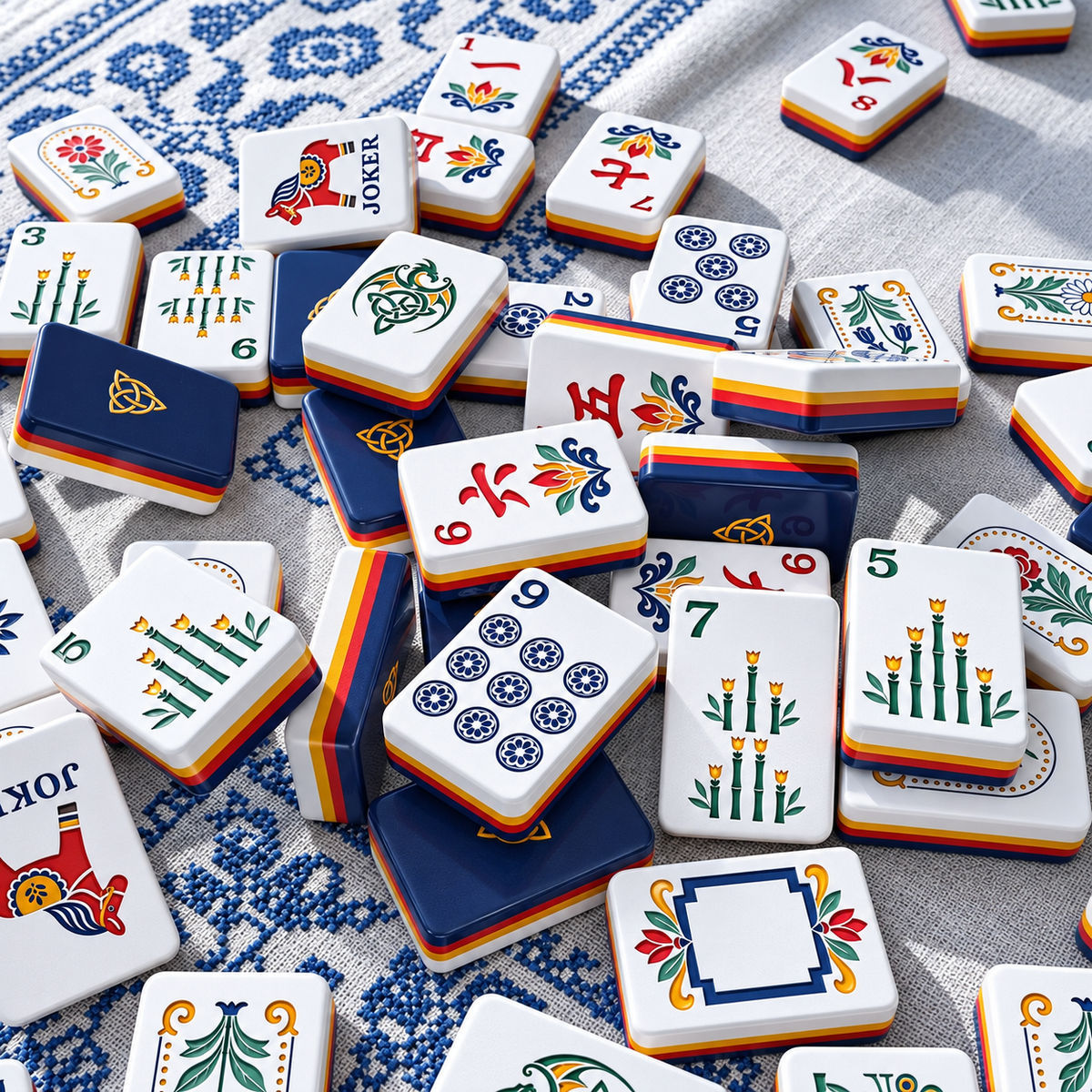
Riichi mahjong (also called Japanese mahjong) uses eight flower tiles and eight bonus tiles (honor bonuses, depending on the variant) that are drawn and scored immediately upon exposure, separate from your hand. When you draw a flower or bonus tile during the initial deal or during play, you expose it on the table, score the points listed in your ruleset, and draw a replacement from the dead wall (a reserved portion of the tile stack). This differs sharply from American mahjong, which includes flowers but treats them as part of normal hand play with no immediate points—flowers are simply worth higher scores when you declare your hand. In riichi play, flowers and bonuses function as a hand-acceleration tool: you get more draws, faster point recognition, and a clearer path to completion. A standard riichi set contains the same flowers as American (typically bamboo-themed or seasonal imagery) but the bonus tiles vary by rule variant—some use honor tiles (winds and dragons), others use numbered honors unique to that ruleset. Setup and play depend on whether you're playing Hong Kong, Chinese, or pure riichi rules; each awards different point values and restricts who can draw replacement tiles.
Riichi mahjong treats flowers and bonus tiles as special hand-building mechanics that award immediate points and extra draws. Unlike American mahjong, riichi variants use bonus tiles to speed up play and create scoring opportunities beyond the standard melds.
🀄 Shop best-selling mahjong sets →
What exactly are flowers and bonus tiles in riichi mahjong?
Flowers are eight decorative tiles numbered 1–4 (or 1–8), traditionally showing plum, orchid, bamboo, and chrysanthemum or seasonal imagery. Bonus tiles (also called "honors" or "quint tiles" depending on region) are eight additional tiles that vary by ruleset: Hong Kong style uses the four winds and four dragons; Chinese style adds numbered bonuses or special characters. When you draw a flower or bonus tile—either during the initial four-tile deal or from the wall during play—you immediately expose it, announce it to the table, score the associated points (usually 4–10 points per tile), and draw a replacement tile from the dead wall or the end of the live wall. This happens outside your normal 13-tile hand; you build toward your winning hand while flowers and bonuses accumulate on your side of the table. The key difference from American mahjong: flowers here are not optional scoring add-ons tacked onto a hand at the end—they trigger points the moment they appear and force a replacement draw. Your hand effectively stays at 13 tiles (or 14 if you drew for your turn) while bonuses sit exposed.

How do you claim and score flowers and bonus tiles?
In riichi play, you never "claim" flowers or bonuses from other players—you draw them only from the wall (live or dead). When any player draws a flower or bonus during the initial deal (dealer draws 14, others draw 13, then each player draws one more), they immediately stop, expose the tile, announce the name and point value, and draw a replacement. That replacement tile becomes part of your hand count for the draw phase. During active play, if you draw a bonus from the wall on your turn, you expose it before drawing your normal tile for that turn—so you draw the bonus (score it), then draw again to maintain your hand count. Point values depend on your ruleset: most systems award 4–10 points per flower or bonus, with higher values for ties (multiple copies or seasonal matches). Some rulesets double the points if the bonus matches the player's position (e.g., East player draws an East wind bonus). After exposure, flowers and bonuses remain on the table in front of you as visible proof of points earned; they're set aside and do not return to the play or score at hand declaration.
How do flowers and bonuses affect your winning hand?
Flowers and bonuses accelerate your hand toward completion in two ways: extra draws and fast points. Because you draw a replacement tile when you draw a bonus, you effectively get more turns to complete your hand than your opponents—especially if you draw multiple bonuses early. This means riichi hands often resolve faster than American mahjong hands. Second, bonuses grant points that count toward your hand score before you declare a win, so a player with three bonuses (12–30 points depending on variant) already has partial credit toward victory. Some rulesets allow bonuses to reduce the minimum hand complexity required; for example, a hand with flowers and bonuses may win with fewer melds than one without. However, bonuses do not count as melds themselves—they cannot fulfill suit or number patterns (like sequences or triplets). They are pure acceleration: more draws, immediate points, visible progress. A hand with no bonuses and one with four is structurally identical—the bonus hand just gets there faster and with visible points on the board.
Aspect | American Mahjong | Riichi Mahjong (Hong Kong/Chinese) |
Flowers in hand | Yes, 8 tiles; worth extra points if declared in final hand | Yes, 8 tiles; drawn immediately and scored at exposure |
Bonus tiles | None | Yes, 8 tiles (varies by variant); drawn and scored immediately |
Replacement draw | No replacement if you draw a flower during play | Yes, automatic replacement draw from dead wall or end of wall |
Points timing | Scored only when hand is declared at end of game | Scored at each draw throughout play |
Hand building | Hand stays 13 tiles; flowers are part of melds or triplets | Hand stays 13; flowers/bonuses stay exposed, separate from melds |
Acceleration effect | None—play is steady | Yes—more draws per turn means faster completion |
What are the setup and dead wall differences?
Most riichi rulesets reserve 14 tiles at one end of the wall (the dead wall or kong wall) specifically for drawing replacements for flowers and bonuses. The live wall is the remaining portion from which players draw on their turns. During the initial deal, some variants require the dealer to flip through and remove flowers/bonuses before any hand begins (called "dead hand" setup), while others allow normal dealing and resolve bonuses during deal. Once play starts, a player who draws a bonus takes a replacement from the dead wall's "live" end, not the end of the general wall. This prevents the dead wall from running out and ensures bonuses are always honored. If the dead wall is exhausted (rare in casual play but common in tournaments), play typically stops and the hand is scored as-is. Some variants allow bonuses drawn late in the hand to be replaced from the live wall if the dead wall empties. The exact rules depend on your local ruleset or tournament standard—always confirm before starting a new game group, as setup varies significantly between Hong Kong, Chinese, and pure Japanese riichi rules.

Which riichi variant should you learn first?
Hong Kong riichi is often the most beginner-friendly entry point because it uses only the four winds and four dragons as bonus tiles (familiar honor tiles from American play), awards clear point values (usually 4 or 8 points per bonus), and follows a straightforward replacement draw system. Chinese riichi adds numbered bonuses and sometimes special-character tiles, increasing complexity but also hand-building variety. Pure Japanese riichi (based on official tournament rules) uses a strict closed-hand system and disallows most open melds, making it quite different from both American and Hong Kong play—it's better suited to players who've already mastered one variant. Start with Hong Kong rules and learn the mechanics (draw, expose, score, replace, continue). Practice one full game (typically 4–8 hands, about 30–60 minutes) before moving to Chinese or Japanese variants. Most importantly: find a local group or online community that plays one standard; riichi variants are not interchangeable, and mixing rules mid-game creates confusion and disputes.
🎁 See our most-loved mahjong sets & accessories →
What to check before you buy a riichi mahjong set
When shopping for a riichi set, confirm the tile count and composition. Most riichi sets sold internationally contain 144 tiles (the standard for Japanese official play) or 152 tiles (closer to American sets but used in some casual Hong Kong play). Verify that the set includes eight flowers and eight bonus tiles clearly marked or distinctly designed—some budget sets omit or combine these. Check that suit markings (bamboo, circle, character) are easy to read at arm's length, especially if you have multiple sets and plan to mix them. Look for a mat with clearly marked discard zones and dead wall space; some riichi play zones differ slightly from American layouts. Finally, confirm your ruleset before buying: if your group plays Hong Kong riichi, you need honor-based bonuses; if Chinese, you need numbered bonuses. Mismatched tile sets will not work, and swapping sets mid-game is disruptive. Our best-selling mahjong sets include American standard (152 tiles, no bonus tiles) and can be paired with a specialized riichi rule guide or learned through YouTube tutorials; if you plan riichi-only play, seek out sets explicitly labeled for that variant.
Common mistakes when playing flowers and bonuses
Forgetting to draw a replacement: The most common error is exposing a bonus and then continuing your normal turn without drawing the replacement tile. This leaves you short one tile for your hand and breaks the game. Always: expose, announce, draw replacement first, then continue. Scoring bonuses twice: Some players add bonus points to their final hand score and remember the points scored at exposure—bonuses are scored only once, at draw. Mixing up dead wall and live wall: Drawing a replacement from the wrong end of the wall can cause players to run out of tiles mid-game. Always clarify before starting: dead wall is reserved for replacements, live wall is for normal play. Claiming bonuses are melds: Bonuses do not count as pung, kong, or sequence. They are separate scoring elements. A hand with three bonuses still needs at least one valid meld to win.
✨ Find your Mahstead set — free US shipping →
If you're transitioning from American to riichi mahjong, start by learning the dead wall concept and the immediate-draw replacement rule. Play several practice hands with a patient group. Once you're comfortable with flowers and bonuses, the rest of riichi hand-building becomes much clearer. Consider investing in a dedicated mahjong mat marked for the variant you play most; visual clarity on where bonuses sit and where the dead wall begins prevents setup disputes. And remember: riichi mahjong is not a faster version of American play—it's a fundamentally different game where flowers and bonuses are acceleration mechanics, not scoring footnotes.

FAQ
Can I use an American mahjong set to play riichi?
No. American sets have 152 tiles, no bonus tiles beyond flowers, and a different suit distribution. Riichi requires bonus tiles (usually eight additional honor-based or numbered tiles) and a 144-tile standard for pure Japanese play, or 152 with different bonus composition for Hong Kong. The rulesets are incompatible.
What happens if I draw a bonus tile on my winning turn?
You expose the bonus, score its points, draw a replacement, and then check if your hand (including the replacement tile) still meets winning conditions. If it does, you win with that bonus already scored. If the replacement breaks your hand, you do not win—your turn ends and play continues.
Do flowers and bonuses count toward the number of melds I need to win?
No. Flowers and bonuses are separate from meld counting. A valid riichi hand still needs at least one complete meld (pung, kong, or sequence, depending on your variant) regardless of how many bonuses you've drawn.
Why do some riichi sets show eight flowers and others show sixteen?
Traditionally, riichi uses eight flowers (one of each of four seasons, repeated twice). Some modern sets include sixteen to match American mahjong's pattern. Confirm with your ruleset whether you use eight or sixteen; most Hong Kong and Chinese casual play uses eight.
Can I draw a bonus tile from my opponent's discard pile?
No. In riichi, you draw bonuses only from the wall (live or dead). Opponent discards are only taken as melds (pung, kong) or for open hand completion, never as bonuses. Bonuses are wall-only mechanics.
How many points does each flower or bonus tile award?
This varies by ruleset. Most Hong Kong riichi awards 4 or 8 points per bonus. Chinese variants may award 2–10 points depending on the tile type. Japanese tournament play has a fixed schedule. Always agree on point values before starting a game.


View More
View More
View More
