
Is Mahjong Chinese or Japanese? Origins & Rules Explained
Last updated: Nov 23, 2026
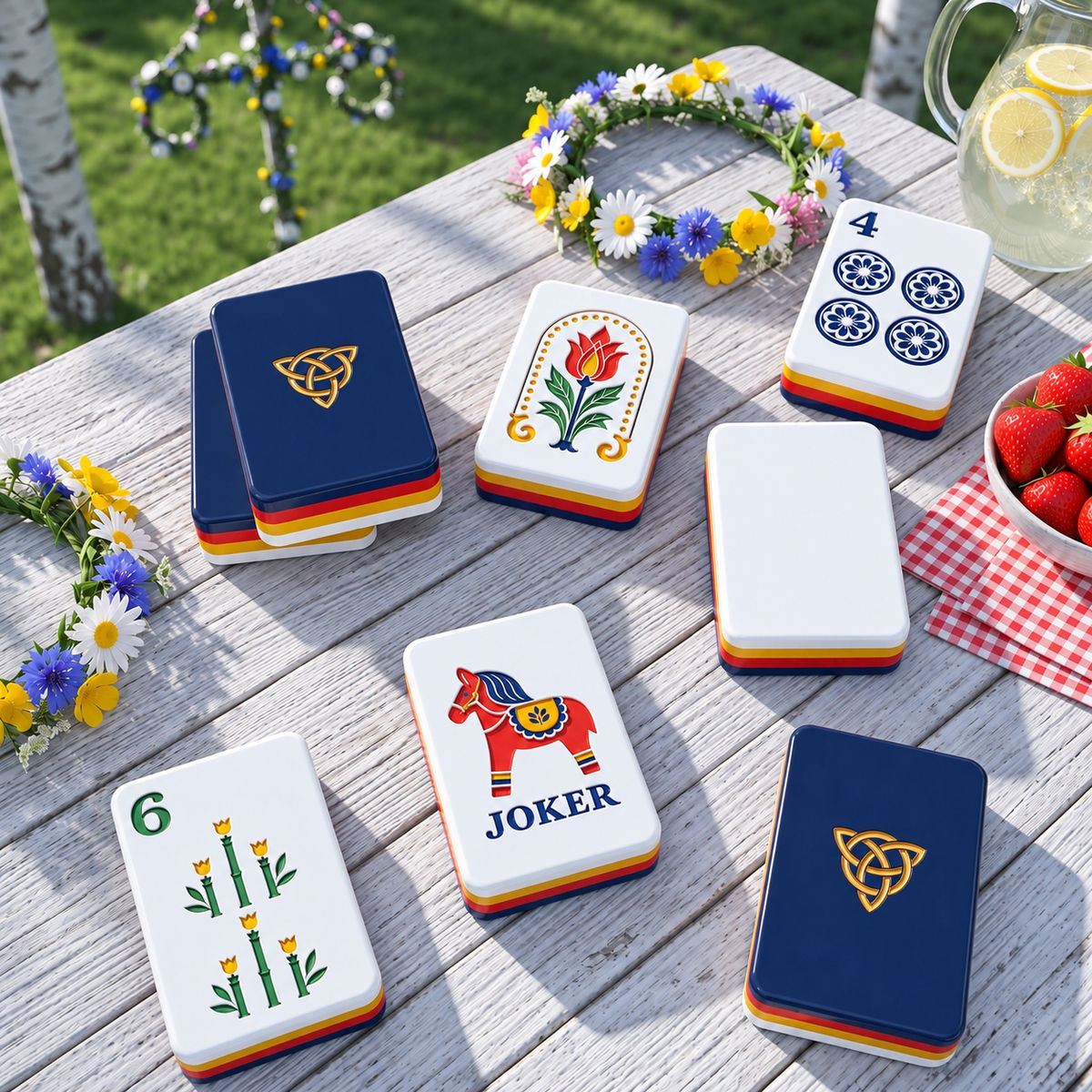
Mahjong is fundamentally Chinese. It originated in 19th-century China, likely in the Yangtze River region, and spread to Japan, where it became Riichi mahjong—a faster, point-driven variant with different tile counts and hand-calling rules. American mahjong, played with 152 tiles plus 8 jokers and hands bound to an annual card, emerged in the 1920s–1930s when Chinese merchants brought the game to California. Chinese mahjong uses 144 tiles and allows sequences (chows); American mahjong forbids chows and relies on the National Mah Jongg League card for valid hands. Japanese Riichi mahjong uses 136 tiles and emphasizes rapid play and hidden hands. All three share the core: matching sets of identical tiles (pungs, kongs) and declaring "mahjong" to win. If you're starting out, our best-selling mahjong sets include American-standard acrylic tiles with clear markings—the easiest entry for Western players.
Which variant is played where?
Chinese mahjong remains the home game in China, Taiwan, and Hong Kong, with regional rule tweaks passed down in families. Riichi mahjong dominates Japan and Korea, taught in clubs and tournaments with standardized scoring. American mahjong is the Western standard—most popular in the United States, Canada, and Australia, especially in senior communities and social groups. Each has loyal players worldwide; none is "correct" universally. Your choice depends on which rules your local group plays and which tile set you can source. We specialize in American mahjong equipment because that's what most Western players need.

How did American mahjong get its own rules?
American players in the 1920s–1930s found Chinese mahjong complex and fiddly for casual play. Designers simplified it: they locked hands to an annual card (removing endless rule debates), added jokers for flexibility, and removed sequences to speed up tile recognition. The result was the American mahjong card system, formalized by the National Mah Jongg League in 1937. American mahjong uses 152 tiles (Chinese: 144; Riichi: 136), with four jokers that can substitute for any tile except the pair or a single tile. This made the game more forgiving, faster-paced, and ideal for social play—why it thrives at home tables across North America. The annual card refresh keeps the meta alive.
What's the biggest difference in how you play?
Aspect | Chinese | Japanese (Riichi) | American |
Tile count | 144 | 136 | 152 + 8 jokers |
Sequences (1-2-3) | Allowed, can be called | Allowed, hidden only | Not allowed |
Hands | Announced verbally | Hidden until win | From printed card only |
Jokers | None | None | 8 tiles, wild |
Speed | Moderate | Very fast | Moderate to fast |
Learning curve | High | High | Moderate |
Entry point for West | Hard | Harder | Easiest |
American mahjong's printed card is the real game-changer. You only score if your hand matches a layout on that year's card—no improvising, no memory burden. You expose pungs and kongs as you build them; jokers can fill gaps. In Chinese and Riichi games, sequences matter and hands stay hidden until you're ready to declare. American players call out their tiles and exposures loudly; Riichi players keep hands private until the final win. For newcomers, American mahjong feels more transparent because the card removes guesswork.
🀄 Shop best-selling mahjong sets →

Can you play all three on the same set of tiles?
Technically, no. A Chinese or Riichi set has 144 or 136 tiles; American needs 152 plus 8 jokers. Chinese and Riichi sets often look identical (bamboo, character, dot suits), but tile markings and face art differ subtly by tradition. Mixing sets confuses players fast. If you want to learn American mahjong—or teach it—you need an American-standard 160-tile set (152 playable tiles plus spares). Our engraved American mahjong sets are built to these specs and ship free across the US. If you're curious about a friend's Chinese or Riichi set, ask them to teach you their game on their tiles—don't expect it to work for American play.
Why do Americans use jokers if the original game didn't?
Jokers were an American invention, added around the 1920s–1930s to make American mahjong more flexible and forgiving. A joker can substitute for any tile except a single unpaired tile or a pair. This mechanic solved a huge problem: with only 152 tiles, luck played a bigger role in draws. Jokers let players complete hands more often, speed up games, and reduce frustration for casual players. Chinese and Riichi purists view jokers as "easy mode," but American players see them as essential to the rhythm of the social game. If you learn American mahjong, jokers will feel natural fast. Our guide on how jokers work explains substitution rules in detail.
What to check before you buy a mahjong set
Confirm your group's variant. Ask players what version they play—American, Chinese, or Riichi. Only then pick a tile set.
Verify tile count and markings. American sets must have 152 playable tiles + 8 jokers. Check that suit symbols (Bam, Crak, Dot) are printed clearly.
Read the box description. It should state "American mahjong" and "160 tiles" (160 = 152 playing tiles + 8 spares). Avoid sets labeled "144 tiles" or "136 tiles."
Feel the tiles. Acrylic tiles (smooth, bright, durable) are best for weekly play. Bamboo tiles are traditional but chip easily on home tables.
Check for a mat and racks. If you host, a mat protects your table and keeps play orderly. Racks with pushers make organizing your hand faster and tidier.
🎁 See our most-loved mahjong sets & accessories →
Our mahjong for beginners guide walks you through setup, the Charleston (tile-passing), and first hand—all American rules. If you're starting a home group or need to replace worn-out tiles, we stock durable acrylic sets with strong suits and clear dragons. Free US shipping means your new set arrives ready to play.
✨ Find your Mahstead set — free US shipping →

FAQ
Is traditional mahjong Chinese or Japanese?
Mahjong is traditionally Chinese, originating in 19th-century China. Japan adopted and adapted it, creating Riichi mahjong—a distinct faster variant with 136 tiles. Both are authentic; neither is "wrong."
Can I play American mahjong rules with a Chinese mahjong set?
No. Chinese sets have 144 tiles without jokers; American needs 152 tiles plus 8 jokers. Rules and tile counts don't align. You need an American-standard set for American play.
What's the easiest variant for a beginner?
American mahjong. The printed card removes guesswork, jokers make hands easier to form, and social play is forgiving. Chinese and Riichi demand rule memorization and fast hand evaluation.
Do Riichi and Chinese mahjong use sequences like American mahjong?
No—American mahjong forbids sequences (1-2-3 chows). Chinese and Riichi both allow sequences and treat them as valid melds. This is a fundamental rule difference.
Where can I learn which variant my local group plays?
Ask players directly at community centers, libraries, synagogues, or country clubs where mahjong meets. Most Western groups play American; if unsure, assume American and ask.


View More
View More
View More
