
Filipino Mahjong for Beginners: Rules, Setup & First Game
Last updated: Nov 23, 2026
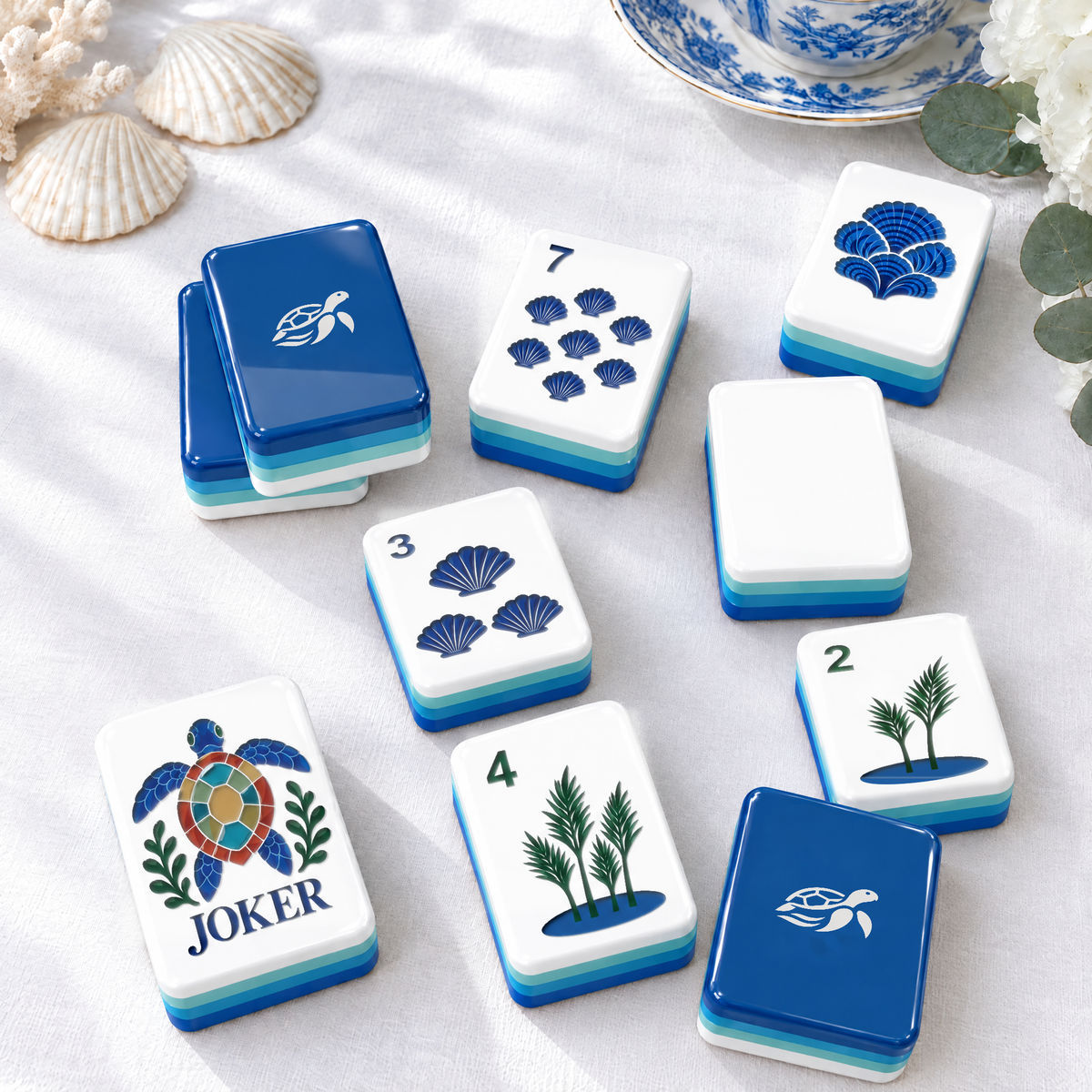
Filipino mahjong is a tile-rummy game for four players using a 144-tile set (three suits of 1–9, winds, dragons, and honor tiles) with no jokers in standard play. Players draw and discard to build melds—runs of three consecutive numbers (chows), sets of three identical tiles (pungs), or pairs—until someone completes a complete winning hand of four melds plus a pair. Games last 15–30 minutes per round. Unlike American mahjong, which uses only hands from an annual card and forbids chows on the table, Filipino mahjong allows chows to be declared and exposed freely, creating a more fluid, improvisational style. You'll need a 144-tile set (many players use sets designed for this variant), a scorepad, and players comfortable with quick decision-making. Setup takes two minutes; learning the hand-building rhythm takes a few games. Mahstead stocks versatile acrylic sets suitable for learning multiple variants. --- 🀄 Shop best-selling mahjong sets →
What tiles do you use, and how many?
Filipino mahjong plays with 144 tiles: three suits (Bams, Craks, Dots) numbered 1–9, four copies of each (108 tiles), plus 16 winds (North, East, South, West × 4), 12 dragons (three types × 4), and 8 flowers. There are no jokers in traditional Filipino play. If you already own an American mahjong set (which has 152 tiles plus 8 jokers), you can play Filipino by ignoring the jokers and one blank or spare tile—just ensure exactly 144 active tiles hit the table.

How is a hand built—what are melds?
In Filipino mahjong, a winning hand consists of four melds plus one pair (14 tiles total). A meld is either a chow (three consecutive numbers in one suit, such as 3–4–5 Dots), a pung (three identical tiles, such as three North winds), or a kong (four identical tiles). The pair must be two identical honor tiles or number tiles. Chows are the defining feature: they can be declared and laid face-up on the table during play, unlike American mahjong where chows are never exposed. This openness speeds up the game and lets all players see what's building toward a win.
What's the turn order and discarding rule?
Players sit in wind positions (East, South, West, North) and rotate dealer status each round. East begins by drawing a tile from the wall, then discarding one face-up. Players take turns in clockwise order: when a tile is discarded, the next player may claim it to complete a pung, kong, or chow (in that priority order), or pass. If you claim a tile and meld, you must then discard. If no one claims the discard, play moves clockwise to the next player, who draws from the wall and discards. The first player to complete four melds and a pair, then declare "mahjong," wins the hand and scores points—typically based on the melds' composition and the player's position.
How does Filipino scoring differ from American mahjong?
Filipino scoring is simpler and faster than American mahjong, which uses complex point-value hands from a printed card. In Filipino play, points are usually calculated by meld type: simpler melds (like all chows) earn base points, while honor tiles and special combinations earn bonuses. Some groups play fixed-point rounds (each winner gets the same payout) or double/double-double forfeit rules (losers pay in escalating amounts based on position). The scoring table you agree on before play determines payments, not a standardized league card. Many casual groups just track wins rather than complex point tallies, making games social rather than score-focused.
Aspect | Filipino Mahjong | American Mahjong | Why It Matters |
Tile count | 144 tiles, no jokers | 152 tiles + 8 jokers | Filipino games use fewer tiles; American requires jokers in nearly every hand |
Chows on table | Yes, freely declared | Never; no chows exposed | Filipino is more open; American is hand-hidden until win |
Hand source | Player's choice/improvisation | Annual National League card only | Filipino is spontaneous; American is rule-card dependent |
Melds per hand | 4 melds + 1 pair (14 tiles) | Varies by card (often 13–14 tiles) | Filipino structure is fixed; American is pattern-based |
Joker use | None in standard play | Required in most hands | American play demands jokers; Filipino plays without them |
Winning method | First to call "mahjong" | Must match printed hand exactly | Filipino allows flexibility; American demands precision |
Typical round length | 15–30 minutes | 20–40 minutes per hand | Filipino is faster, action-packed play |
What mistakes do beginners make, and how do you avoid them?
The most common beginner error is holding chows too long without declaring them. In Filipino mahjong, an exposed chow lets opponents plan; a hidden one wastes turns. Declare early and build visibly. Second mistake: over-committing to one suit. If you draw heavily into Dots, resist ignoring Craks and Bams entirely—you'll brick if no Dot draws come. Beginners also discard without watching discards, missing the meld-building patterns others announce. Always scan the table before throwing a tile. A third trap: confusing kong and pung. You need exactly four identical tiles for a kong; three is always a pung. Finally, forgetting the pair requirement: four melds alone don't win; you must have a pair. Many beginner losses happen because a player declared "mahjong" with four melds and no pair—instant hand dead. Keep a small scorepad or checklist: Draw → Assess hand → Declare/claim meld or discard → Check pair readiness.
🎁 See our most-loved mahjong sets & accessories →

Where do Filipino mahjong players in the US gather?
Filipino mahjong thrives in Filipino cultural centers, churches with large Filipino communities, community centers, and libraries in cities with significant diaspora populations (Los Angeles, San Francisco, Chicago, New York, Houston, Dallas). Search online meetup boards or community center calendars for "mahjong" and "Filipino" in your area. Many groups are informal home games; ask at local Filipino restaurants or shops if they know of regular gatherings. Meetup.com, Nextdoor, and Facebook groups often post weekly Filipino mahjong games. If no group exists near you, starting one is simple: invite 3–4 friends, teach the basic hand structure (four melds + pair), agree on scoring before play, and let the game rhythm emerge naturally over a few hands. Most beginner friction vanishes after two or three rounds.
What set should you buy to learn Filipino mahjong?
A standard 144-tile Filipino mahjong set is ideal, but many Western players start with a versatile acrylic set from our best-selling collection designed to work across variants. Acrylic tiles are durable, easy to read, and stack neatly for home games. Avoid ornate or decorative sets if you're learning: you need clear number/suit markings and uniform tile weight so draws are fair. If you own an American set (152 tiles + 8 jokers), you can adapt it by removing one blank and all jokers, leaving 144 tiles—this works fine for learning, though a dedicated Filipino set has cleaner gameplay because all tiles are active. Acrylic sets from our collection are lightweight, affordable, and designed to survive dozens of games without chipping. They come with carrying bags, making it easy to transport sets to gatherings or friends' homes.
✨ Find your Mahstead set — free US shipping →
What to check before you buy:
Tile clarity: Numbers and suits must be bold, legible at arm's length.
Tile uniformity: All tiles should feel the same weight; uneven tiles skew draws.
Set completeness: Confirm it includes all four of each tile (3 suits × 9 numbers × 4, plus 16 winds, 12 dragons, 8 flowers = 144 total).
Accessories: A carrying bag protects tiles; a mat keeps tiles organized during play.
Acrylic vs. bone/bamboo: Acrylic is affordable, durable, and low-maintenance—ideal for beginners. Bone/bamboo sets are beautiful but more fragile.
Storage: Do you have shelf space? Sets come in compact boxes or fabric cases; choose based on your storage.
How does Filipino mahjong fit into the wider mahjong family?
Filipino mahjong sits between Chinese mahjong (which allows chows but uses different hand types and seasons/calligraphy) and American mahjong (which forbids chows and uses a fixed annual card). It borrows the open-meld fluidity of Chinese play but keeps the social speed and simplified rules that suit casual Western players. Many diaspora communities play Filipino as their family game, then explore American mahjong through the National League card for structured, tournament-style play. Learning Filipino first is excellent preparation: you'll master tile recognition, meld logic, and the rhythm of draw-and-discard before tackling American's stricter hand patterns.
If you're also curious about American mahjong—the most widely played variant in North America—check out our guide to how to play American mahjong and our best American mahjong sets guide to compare rules and equipment needs.

FAQ
Can I use an American mahjong set to play Filipino?
Yes. Remove the 8 jokers and one blank tile, leaving 144 tiles. Play proceeds normally, though a dedicated 144-tile Filipino set ensures all active tiles are in play without adjustment.
What's the minimum number of players for Filipino mahjong?
Four players is standard and optimal. Some groups play three-player variants (removing one wind suit), but four creates the best game balance and speed.
Do you need an annual card like American mahjong?
No. Filipino mahjong has no official card. Players build hands freely by improvisation—any four melds plus a pair wins. This makes it more forgiving for beginners.
How long does a game take?
Most games last 8–12 rounds (hands), totaling 2–3 hours with breaks and chat. A single hand averages 15–30 minutes depending on player speed and scoring disputes.
Is there a tile-passing ritual like the Charleston?
Not in traditional Filipino mahjong. Play begins immediately after tiles are drawn and arranged in hand racks. Some Western-adapted groups add a brief tile exchange for variety, but it's optional.
Where can I find a Filipino mahjong group near me?
Search Meetup, Facebook groups, or local community centers. Ask at Filipino restaurants, shops, or churches. Many games are home-based; word-of-mouth is the fastest way in.


View More
View More
View More
