
East Wind Mahjong Tile Symbol Explained
Last updated: Nov 23, 2026
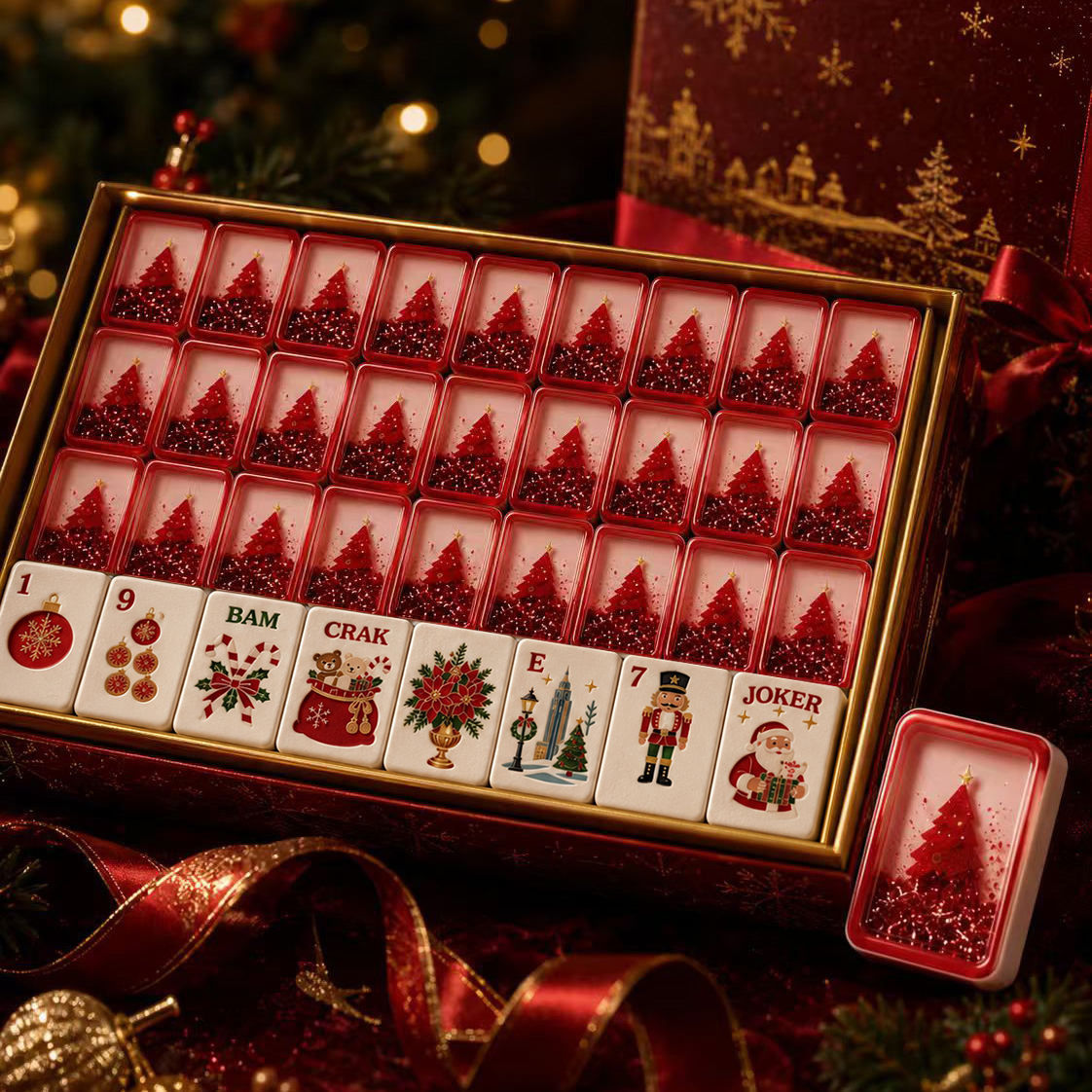
The East Wind (東) is one of four directional winds in American mahjong—the others are South, West, and North. In the American game, East always opens the round as the dealer, and players rotate around the table in compass order. The tile displays the Chinese character 東, usually printed in black on a white or colored face, and appears four times in a standard 152-tile set (one per player). East carries no numeric value; it's pure rank. You'll find it grouped with the other three winds in your tile rack. Recognizing East at a glance—and knowing it determines dealer position—is essential before your first game.
What does the East Wind tile look like?
The East Wind tile bears the Chinese character 東 (simplified: 东), which represents the compass direction "east." On most best-selling mahjong sets, the character appears centered on a light background—white, cream, or pale green—with black or dark ink. The character is typically the same size and font weight as Bam, Crak, and Dot numbers, so it reads clearly from across the table. Some decorative sets feature gold or silver inlay on the character, but the shape and placement remain standard. No number appears on the East Wind tile, unlike the numbered suits. Most players learn to spot it within the first few hands because it's the only wind tile without borders or numerical marks.

Why does East always go first?
In American mahjong, East Wind is the dealer position and plays first in every round. This convention comes from Chinese mahjong culture, where East has held primary status for centuries. The player holding East at the start of a hand deals the tiles and leads play. After the hand concludes, the dealer position rotates: East passes to South, South to West, West to North, and North to East again. The rotation happens even if East wins the hand (in many variants, East deals again). This system keeps the game fair over time because each player gets a turn at the advantage of dealing first. Understanding dealer rotation is your first step to following the flow of the game.
How do you identify East among the four winds?
All four winds appear on tiles but carry distinct characters and sometimes colors. East (東) is the first wind in compass order; the others are South (南), West (西), and North (北). On acrylic tiles, East is most often printed on white or pale-colored stock to match the simple, high-contrast style of American sets. South, West, and North may appear on the same background or occasionally on slightly tinted versions to help players sort their racks quickly during the Charleston. The key to fast recognition is character shape: 東 has a distinctive "box" structure with a cross inside, while 南 is rounder, 西 looks like a window, and 北 is angular and open. After shuffling tiles and organizing your rack during the Charleston tile exchange, you'll naturally group the four winds together, so you learn their faces by repetition.
What happens if you hold East at the start?
If you're dealt the East Wind tile during the initial draw before the Charleston begins, you become the dealer for that hand. You manage the wall (or coordinate with a dealer in some clubs), call the flow of play, and are the first to pick a tile each turn. Winning as the dealer can feel high-pressure, but it also puts you in control of the table's rhythm. Some rule sets allow East to deal again if East wins; others rotate regardless. Check your group's house rules before your first game. The real power of East isn't points or strategy—it's the privilege of setting the pace. Knowing you're East from the start lets you settle into dealer mode mentally before the first tiles leave your hand.

How do East Wind and the mahjong card work together?
The National Mah Jongg League card (released each spring) lists valid hands by year, and many hands are organized around specific wind tiles. You might see a hand pattern that requires "East with any pair" or "two winds including East and one flower." The card does not list hands by individual player or direction, but wind tiles are core to hand construction. When reading a hand from the card, identifying East correctly ensures you can form the exact combination required. Learn how to read the mahjong card for step-by-step guidance on matching tiles to listed patterns. Because wind tiles appear in so many hand types, beginners often confuse which wind is which until they've played five or six hands. Grouping your winds by character shape (as noted above) helps you stay confident even under table pressure.
A Quick Comparison: Wind Tiles at the Table
Wind | Character | Role | Play Priority |
East (東) | Box with cross | Dealer | Leads play, picks first |
South (南) | Round shape | Second seat | Plays after East |
West (西) | Window frame | Third seat | Plays after South |
North (北) | Angular open | Fourth seat | Plays after West, returns to East |
What to check before you buy a new set
Tile clarity: Make sure the wind characters (東, 南, 西, 北) are stamped or engraved deeply enough to read under table lighting. Some acrylic sets have faint printing that fades after heavy use.
Contrast: Choose a set where the character color contrasts sharply with the tile background. White tiles with black characters or colored tiles with white inlay both work; avoid pale-on-pale combos.
Size consistency: All four wind tiles should be the same physical size. Mismatched tiles slow play and look unprofessional.
Joker count: A standard American game uses 152 tiles plus 8 jokers. What's in an American mahjong set explains the exact composition; confirm your new set matches before ordering.
🀄 Shop best-selling mahjong sets → (https://mahstead.com/en-us/collection/best-selling)
Hosting your first game with East Wind confidence
Once you own a set, the next step is organizing it for play. Lay out all 152 tiles (no extras) face-down on a mahjong mat or table. Each player draws a tile; the highest number becomes East. If players draw winds, use the compass hierarchy: East > South > West > North. East shuffles and creates the wall, or designates someone to do so. Before dealing, all four players pass tiles in the Charleston ritual—a left, center, and right pass to randomize the draw. This exchange is the heart of fair play. After the Charleston, each player draws their starting hand (13 tiles), East picks the first tile from the wall, and play begins. Your entire first hand will feel chaotic, but by hand three you'll recognize East instantly and move through dealer duties without thinking.
🎁 See our most-loved mahjong sets & accessories →
If you're hosting weekly games, consider investing in a mat with pushers and racks to speed setup and reduce tile shuffling errors. A quality mat keeps East centered, helps all players see the wall clearly, and makes your table feel intentional. Over time, your players will memorize East Wind's character, its role, and the dealer rotation so thoroughly that saying "I'm East" becomes automatic.
✨ Find your Mahstead set — free US shipping →

FAQ
Can East Wind be used in a chow or sequence?
No. In American mahjong, wind tiles are honor tiles and cannot form chows (sequences). You can only use East as part of a pung (three identical East tiles), kong (four East tiles), quint, or sextet. Sequences belong only to numbered suits.
What happens if all four East Wind tiles are drawn before play starts?
All four winds can appear in a single hand if the hand pattern requires them. This is rare but legal. Each player holds their drawn tiles until the Charleston exchange shuffles the hand around the table.
How do you call East at the table?
You don't "call" East during play. If you hold East tiles and they match a listed hand on the current mahjong card, you expose them when you declare your winning hand. Exposure rules allow you to show complete pungs or kongs, including any East Wind tiles, before laying down.
Does East Wind have a numeric value for scoring?
No. Wind tiles are honor tiles with no numeric value. Your score comes from the hand pattern you form (listed on the National Mah Jongg League card) and any scoring bonuses your group applies. The position of East (dealer) may earn bonus points in some rule sets, but the tile itself has no points.
Can you use a joker to represent an East Wind tile?
Yes. In American mahjong, jokers are wild and can substitute for any tile, including East. However, jokers cannot be used to form a single tile or pair—only in multi-tile combinations like pungs, kongs, or quints. If you need East as part of a larger set, a joker can stand in.


View More
View More
View More
