
Easiest Mahjong Rules for Poker Players
Last updated: Nov 23, 2026
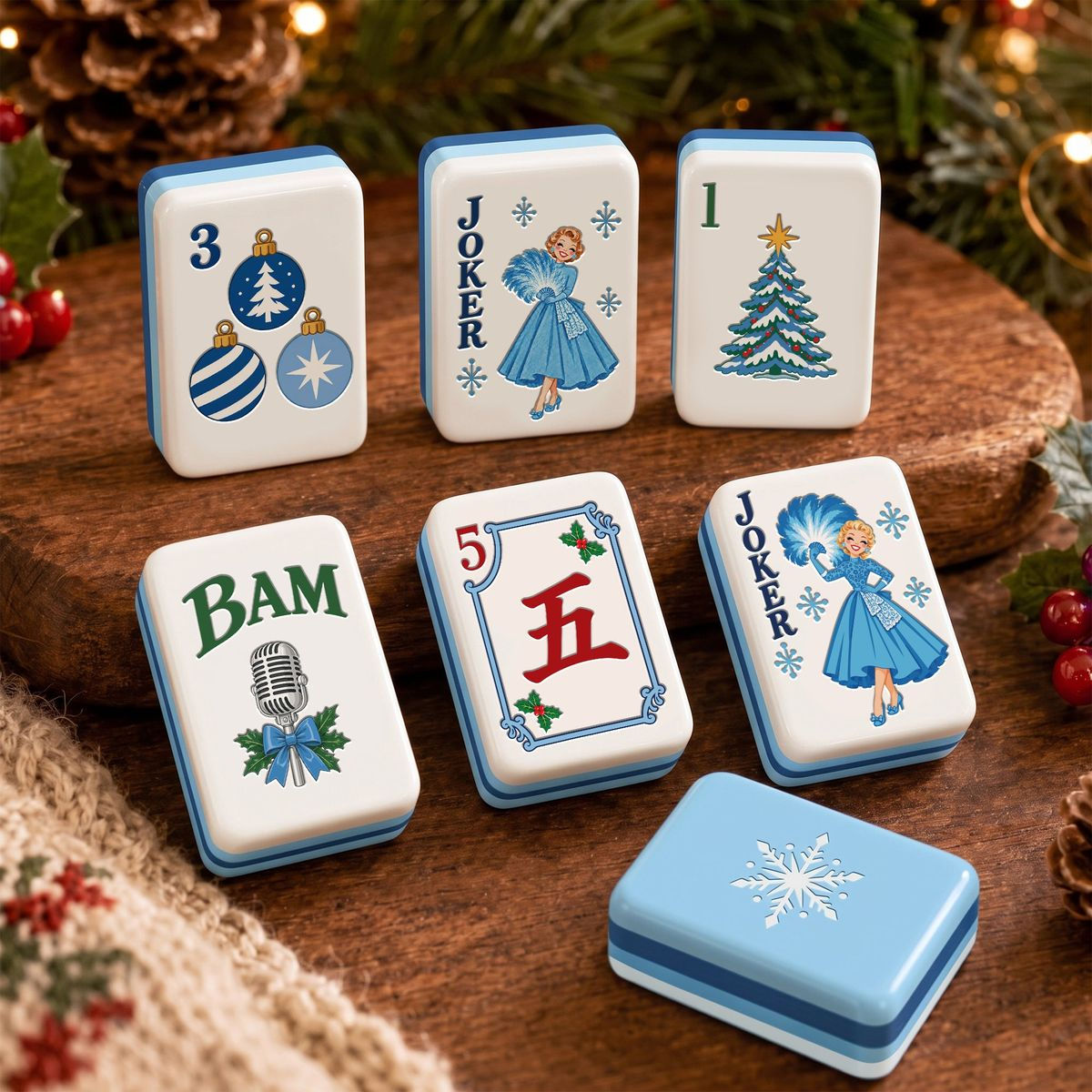
If you play poker, you already think in sets, sequences, and probabilities—the hardest part of mahjong is behind you. American mahjong uses 152 tiles (no sequences allowed; only identical pungs, kongs, and their variants), and you win by completing one hand from the current year's National Mah Jongg League card. A game takes 60–90 minutes with four players. The scoring is fixed by hand type, not bet-driven like poker. What transfers: reading opponents, tile counting, and hand potential; what's new: the rigid hand catalog, the Charleston (tile pass), and that jokers are wildcards in melds, never in pairs.
What poker skills carry straight into mahjong?
Your poker brain already parses hand strength, probability, and opponent tells—three pillars of mahjong strategy. In poker, you rank hands (flush beats straight); in American mahjong, the National Mah Jongg League card ranks all 23,000+ legal hands for that year. You don't memorize them; you scan the card. Tile counting is identical: track what's been played, infer what's left, adjust your odds. Reading the discard pile—what your opponents threw, when, and why—mirrors reading bet patterns. Bluffing is gone; tile melds are public and permanent. This honesty actually simplifies the game: less psychology, more pure math.

How is mahjong different from poker hand structure?
Poker relies on five cards and ranks them: high card < pair < two pair < three of a kind < straight < flush < full house < four of a kind < straight flush. Mahjong American rules forbid sequences (straights); you can only expose three identical tiles (a pung), four identical (a kong), five identical (a quint), or six identical (a sextet). A hand always has 14 tiles: either four melds (three tiles each) plus a pair, or three melds (four or more tiles) plus a pair plus one single tile wildcard. The National Mah Jongg League card lists every valid hand; if it's not on the card, it doesn't win. Poker is open-ended: any five-card combo might win. Mahjong is closed: only hands on the card count.
Feature | Poker | American Mahjong |
Hand size | 5 cards (fixed) | 14 tiles (fixed) |
Hand types | 10 ranks (pair, flush, etc.) | 23,000+ (year-specific) |
Sequences allowed? | Yes (4-5-6) | No (no runs/chows) |
Melds | Hidden until showdown | Exposed during play |
Wildcards | None | 8 jokers per set (can replace any tile in a meld, never in a pair) |
Bluffing | Core strategy | Not possible (all melds public) |
Betting | Variable pot, player choice | Fixed scoring by hand type |
🀄 Shop best-selling mahjong sets →
Which poker habits need to shift?
Stop looking for five-card logic; you're building 14-tile stories instead. In poker, you fold weak hands; in mahjong, you commit to one hand from the card and pivot only if draws force it. Bluffing is impossible—every exposed pung or kong tells the table your direction. Instead, your edge comes from reading discard pace: slow discards mean the player is holding a dangerous hand; fast ones mean they're flexible. Don't count just your outs; count the tiles in the discard pile to estimate how many copies remain. Poker teaches you to play tight; mahjong rewards players who adapt their hand mid-game based on what hits the wall. You'll also stop thinking in dollars and start thinking in hand point values. How to play American mahjong covers the full sequence; the core shift is from hidden strength to public meld strategy.
How does the Charleston change poker strategy?
Poker has no setup; you sit down and deal. Mahjong begins with the Charleston—a formal tile-passing ritual where each player passes 14 tiles to the left, then 14 to the opposite, then 14 to the right. During this pass, you trade tiles to build your hand hand. This is pure poker-style positioning: you're trying to read what your neighbors want and decide whether to help or hoard. If your left neighbor passes you three Dragons, they likely want Dragons; should you discard one back to slow them, or play neutral? Unlike poker's positional bet edge, Charleston positioning is about tile flow, not turn order. After the Charleston, East draws first and the game unfolds in turn. The Charleston explained walks the details; the poker parallel is this: you're bluffing with tiles, not bets. Every pass is a signal. Once live play starts, all signals go quiet—melds are public and emotion fades into counting.
What hand-reading differences matter most?
In poker, you read bet sizes, timing, and position. In mahjong, you read discard order, speed, and the melds already exposed. A player who discards two 5 Bams early is either not using Bams or has multiples and feels safe dumping one. Watch who picks up from the discard pile (a "call") versus who passes (draws from the wall instead). When someone calls a 3 Crak on turn two, they needed it badly enough to pause the table—likely building a hand with lots of 3 Craks. Poker teaches you to fold uncertainty; mahjong rewards embracing it. You adjust your hand based on what tiles move. One more critical difference: jokers in mahjong. How jokers work covers this in depth, but the key rule for poker minds: a joker replaces any tile in a pung, kong, quint, or sextet, but never counts as a tile in a pair or single tile. This breaks poker logic where wildcards are free agents; here, they have constraints. Practice reading which tiles are jokers in exposed melds, and you'll spot weak hands instantly.
🎁 See our most-loved mahjong sets & accessories →

What scoring rules should a poker player learn first?
Poker scoring is dynamic: pot size, bet history, number of opponents determine value. Mahjong scoring is fixed: every hand on the card has a point value determined by its structure and year. For instance, a hand with four quints might be worth 15 points; a hand with three quints and a kong might be worth 20. The card lists point values next to each hand. Your job is to recognize which hand you can complete and whether it's worth the tiles you need to risk. Poker players often ask, "Is this hand worth the odds?" Mahjong players ask, "Can I complete this hand at all before someone else wins?" Points matter only for settling chips after the win; they don't drive moment-to-moment strategy the way poker bets do. American mahjong scoring breaks down how points stack; the tl;dr is this: learn the hand first, then tally points. Most new players obsess over high-point hands and miss easy wins with low-point hands. Play the hand the game gives you.
What should you buy before your first game?
A full mahjong set (152 tiles), four tile racks with pushers, a mat (optional but game-changing), a score sheet, and the current year's National Mah Jongg League card. What's in an American mahjong set details every piece. Our recommendation: buy a 160-tile set from Mahstead's best-selling mahjong sets (152 playing tiles plus 8 spares so you never play short). Racks with pushers are non-negotiable; they hide your hand and organize tiles so you can scan the card without revealing strength. A mat is a wise second purchase—it defines the play zone, protects your table, and feels professional. If you're hosting weekly games, a mahjong bag or case keeps everything organized and portable. Score sheets are usually printed free or included with sets. The card comes free from the National Mah Jongg League or on several official websites.
What to check before you buy
Tile size: Most sets have tiles about 1 × 1.25 inches. Verify the set size fits your racks and hands.
Rack capacity: Standard racks hold 13–15 tiles per player. Confirm four racks are included or buy separately.
Material: Acrylic tiles last decades and clean easily; plastic is cheaper but less durable. Mahstead uses acrylic and includes pushers (small sticks that organize tiles for drawing).
Joker count: A regulation set has 8 jokers (never added to the 152 playing tiles; they're always live in-game). Confirm your set has exactly 8.
Instruction sheet: Look for a quick-start guide or link to rules. The National Mah Jongg League card is essential but usually sold separately.
Current year: The card changes every April. Confirm you're buying the 2026 card if playing in 2026.
✨ Find your Mahstead set — free US shipping →
Transitioning from poker to mahjong: a three-session plan
Session one: Learn the tile names (Bams, Craks, Dots, Winds, Dragons, Flowers), the Charleston, and how to recognize a pung, kong, quint, and sextet on the card. Don't memorize hands; just scan and call wins you see. Your poker instinct will kick in. Time: 90 minutes.
Session two: Play a full game. Focus on reading discards and building one strong hand. Ignore points for now. By turn 10, you'll feel the rhythm and recognize what "live" tiles look like. Time: 90 minutes.
Session three: Play two games. Now track what's been discarded and estimate tile scarcity. Notice when an opponent shifts hands mid-game (a sign they're stuck). Start thinking about blocking—discarding a tile someone else needs. This is poker-level play. Time: 180 minutes.
After three sessions, a poker player typically plays solid mahjong. The card is the only real mystery; living with it for a month makes it second nature.
Comparing mahjong to other games you might know
If you've played poker, you've got the probability foundation. If you've played bridge or rummy, you know melding and run logic—though mahjong forbids runs, so forget that part. If you've played gin or canasta, you know the "meld-and-lay-off" rhythm, which is close to mahjong's exposed meld system (but again, no runs). Mahjong is closest to rummy in structure (meld identical sets from a shuffled pool) but stricter in hand definition (only hands on the card win). Poker players usually learn faster than rummy players because they're used to incomplete information and hand pivoting. The learning curve is 5–10 hours of play; by hour 20, you're thinking like a mahjong player.

FAQ
Can I play mahjong with a poker bankroll strategy, betting chips each round?
Yes, but mahjong betting is fixed by hand value, not player choice. Points are pre-set on the card. You can play for chips where higher-point hands pay more, but each hand's chip value doesn't change. Poker's pot control doesn't apply. Mahjong is essentially a skill game with fixed payout tables; poker is a betting game where bet size drives value. Two very different money dynamics.
Do I need to memorize the entire mahjong card like I memorize poker hand ranks?
No. You keep the card in front of you during play and scan it for your draws. Poker hand ranks are seven; mahjong has 23,000+. After 30 games, you'll recognize 80% of hands without the card, but beginners always use it. Using the card is normal and expected, even among experienced players.
What's the one poker habit that actually hurts in mahjong?
Folding weak hands. In poker, you fold. In mahjong, you can't; you must stay in until someone wins. This shifts strategy from "play tight" to "stay alive and adapt." Weak hand? Throw safe tiles and wait. You'll often win with a hand you thought was dead. This terrifies poker players initially.
How does the "all in" idea translate to mahjong?
It doesn't. Mahjong is all-in by default: every player is always committed to winning with one of their tile combinations. You don't risk chips per hand; the game is per-hand commitment, full stop. This removes bet-bluffing but adds pure tile tension.
If four-player poker is my baseline, will three- or two-player mahjong feel different?
Drastically. Two- and three-player mahjong use different tile counts, speeds, and hand sets. 2 and 3 player mahjong rules cover these variants. Start with four-player American mahjong (the standard) before branching out. The learning curve resets for alternate formats.


View More
View More
View More
