
Is Mahjong Good for Families? Rules, Benefits & Getting Started
Last updated: Nov 23, 2026
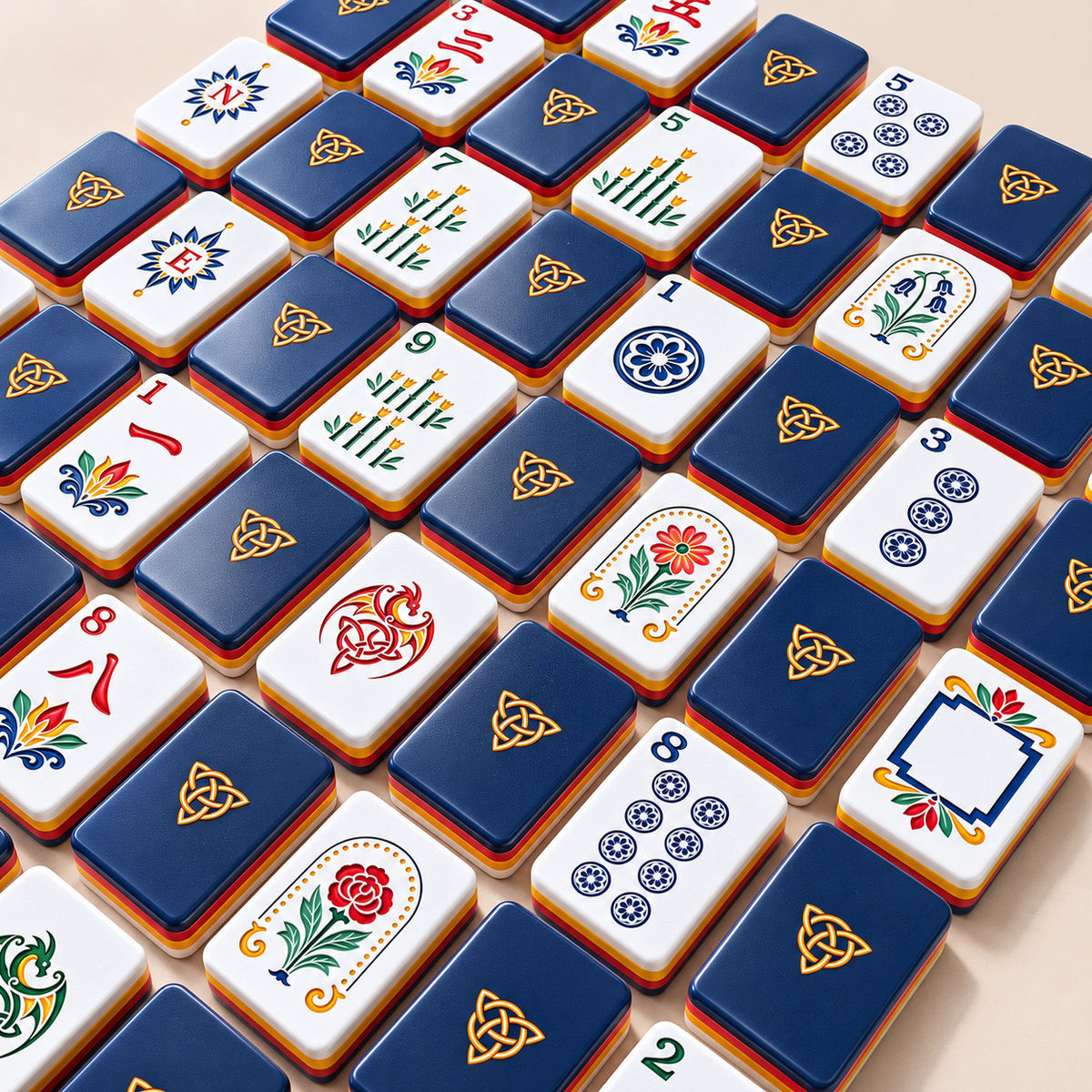
Mahjong is genuinely good for families because it combines strategy, memory work, and turn-based play in a way that doesn't demand physical skill or require years of study. American mahjong, the most accessible variant for households, uses 152 tiles and 8 jokers; a 160-tile set includes spares. Games last 1–2 hours and can include ages 8–88 at the same table. The core benefit isn't luck—it's that every player solves the same puzzle differently, building focus and reading-your-hand skills while you sit together face-to-face. Unlike board games with rigid rules, mahjong teaches pattern recognition and risk judgment. Children learn to plan ahead; adults rediscover concentration. No special math or language is required, though a current year's mahjong card and a flat surface to play on matter. Mahstead 160-tile acrylic sets are durable for repeated family play and come with racks and a mat to organize tiles clearly—key for mixed-age players who can't hold heavy hands.
Yes—mahjong is genuinely good for families because it combines strategy, memory work, and turn-based play in a way that doesn't demand physical skill or require years of study. American mahjong, the most accessible variant for households, uses 152 tiles and 8 jokers; a 160-tile set includes spares. Games last 1–2 hours and can include ages 8–88 at the same table. The core benefit isn't luck—it's that every player solves the same puzzle differently, building focus and reading-your-hand skills while you sit together face-to-face. Unlike board games with rigid rules, mahjong teaches pattern recognition and risk judgment. Children learn to plan ahead; adults rediscover concentration. No special math or language is required, though a current year's mahjong card and a flat surface to play on matter. Mahstead 160-tile acrylic sets are durable for repeated family play and come with racks and a mat to organize tiles clearly—key for mixed-age players who can't hold heavy hands.
What makes mahjong different from other family games?
Mahjong stands apart because there is no "winning strategy" everyone learns—instead, each hand is a new puzzle. Players draw and discard in sequence, so every decision affects the next three people. A child sees this instantly: if Mom picks up a Crak, she might be building that suit, so I won't throw my Craks away. Board games follow a script; mahjong requires you to read the room every turn. Play rotates, so there's no "being out" for 20 minutes. And unlike poker, there's no bluffing—just honest tile exchanges and clear hand goals written on the season's mahjong card. Games move fast enough to hold a ten-year-old's attention but slow enough for a grandmother to savor her hand.

How do you teach mahjong to kids?
Start by learning American mahjong yourself first—don't teach from a book while playing. Explain one mechanic at a time: the Charleston (tile-passing warm-up), how to read the card, what a pung or kong looks like. Play a practice hand all open (tiles face-up) so everyone sees the logic. Use mahjong racks with pushers for children under 10; racks hold tiles at eye level and prevent fatigue. Children typically grasp the basic flow by game two. Expect slower play for the first three sessions—that's learning, not boredom. Praise reading the card correctly and spotting matches, not winning. Ages 8+ can follow American mahjong; younger children enjoy simpler variants or tile-matching activities without the card. Let kids handle tiles; tactile play builds ownership.
🀄 Shop best-selling mahjong sets →
What are the real cognitive benefits?
Mahjong exercises sustained attention, pattern spotting, and short-term memory in concert. You hold 13–14 tiles in mind, track what others have discarded, predict what they need, and update your hand plan when someone calls a pung. Research on older adults shows mahjong play correlates with maintained cognitive function—not because the game is hard, but because it demands continuous, consequence-bearing decisions. For children, the benefits are similar: focus without forced studying, strategy without violence, and social interaction without screens. Families report that mahjong nights create a shared language—members reference hands days later, laugh about near-misses, and plan the next game. The activity itself is the reward; there's no trophy, no leaderboard, just four people thinking together.
How much table space and equipment do you actually need?
You need a flat surface (dining table, card table, or folding table) about 36 by 36 inches minimum. A mahjong mat protects the table and defines play zones—it rolls up, fits in a closet, and shows exactly where each player's discard pile goes, which eliminates confusion. A 160-tile set with racks and pushers is the baseline: four racks with pushers hold tiles vertically so everyone sees their own hand without strain. A current-year National Mah Jongg League card (updated every spring) costs a few dollars and must sit at the center—no card, no game. Dice (usually included in sets) randomize wall position. That's it: no batteries, no app, no subscriptions. Most families store everything in a mahjong bag or case, which keeps tiles and mat together and makes transport to a relative's house simple.
🎁 See our most-loved mahjong sets & accessories →

What age gaps actually work at the table?
Here's what we observe: ages 8 and 11 with two adults works smoothly. An 8-year-old plays on a rack, looks at an open card, and calls matches when they spot them—no special rules. A teenager and two adults play standard rules. And multi-generational tables (ages 10, 42, 55, 78) often play the most joyfully because the younger player asks "why" and resets everyone's thinking. The only real restriction is hand strength: anyone who can't hold racks needs a rack. Younger children play best in a group of at least three adults, because play flows around them rather than focusing on them. Never leave a child alone as an adult player—they need a buddy to point out moves. A family with kids aged 9, 12, and 15 plus parents typically reaches competent, fun play within five games.
Age group | Best setup | Why it works | What to watch |
8–10 + adults | Racks, open card, relaxed scoring | Kids can't hold tiles or read small type; racks + vocal help = engagement | Patience with slow decisions; celebrate correct spots |
11–15 + 1–2 adults | Standard racks, sealed card | Teens follow fast enough; adults verify card reading | Don't let kids feel babysat; treat them as equals |
16+ with adults | Standard rules or speed play | No adaptations needed | Competitive teens may rush; keep it friendly |
Multi-gen (9–80) | Racks, patient pace, clear mats | Slow enough for older wrists, fast enough for young attention spans | Avoid keeping score as primary goal |
What common mistakes derail family games?
Trying to teach while playing your first hand. You'll miss your draw, misread the card, and frustrate everyone. Watch a YouTube tutorial, read a guide, or attend one session before hosting.
Mixing American rules with Chinese or Hong Kong variants. The tiles are identical, but call rights and hand shapes differ radically. Stick to one system until everyone knows it cold. Learn American mahjong fundamentals first.
Starting without a current year's mahjong card. Old cards make hands unplayable. The card updates every spring and costs a few dollars.
Letting players hold 14+ tiles by hand without racks. Hands tire, tiles drop, and younger players see only their own cards, missing the teaching moment. Use racks from day one.
Playing on a wobbly surface or with a mat that slides. A solid mat on a level table is not luxury—it's functional. Tiles roll, games stall, and fun stops.
Scoring as the only goal. Family mahjong is strongest when connection matters more than points. Families that keep a mat and racks out between games and play twice weekly report the deepest long-term engagement.
What to check before you buy
Set size: 160 tiles (152 play + spares) is the American standard. Verify your set includes 8 jokers and spares before checkout.
Racks and pushers: Essential for under-12 players and adults with arthritis. Confirm your set includes them or buy separately.
Material: Acrylic tiles last decades through repeated family play. Bamboo and bone are beautiful but need more care.
Card included: Most sets don't include the current mahjong card. You'll buy that separately or access it online. Check your set's description.
Mat: A mat is optional but prevents tiles from sliding and teaches new players where each position's discard pile sits. Non-slip backing matters.
Storage: If you'll move the set between rooms or homes, a bag or case prevents tiles from scattering. Measure before buying.
✨ Find your Mahstead set — free US shipping →
Our pick: family-ready sets
Our best-selling collection includes 160-tile acrylic sets with racks, pushers, and mats—the complete starter kit most families need. Engraved title sets let you personalize a set with your family name or a joke ("The Tile Squad"), turning it into a heirloom. Christmas mahjong sets serve as memorable gifts that arrive ready to play. Whichever you choose, free shipping across the US means you're ready within days of ordering.

FAQ
At what age can a child play mahjong?
Ages 8+ follow American mahjong with adult guidance. Younger children (5–7) enjoy tile-matching games and learning to sort by suit but can't hold full hands or read fast enough. Start whenever a child shows interest in strategy games and can hold 10–12 small tiles or use a rack comfortably.
Do you need four people to play mahjong?
Standard American mahjong requires exactly four players. Two- and three-player variants exist but follow different rule sets and are less common in family settings. With fewer than four, learn 2 and 3 player mahjong rules separately.
How long does one game take?
One hand (single round) lasts 20–40 minutes for new players, 10–20 minutes for experienced players. A typical session is 4–6 hands, so 1–2 hours total. Kids playing their first few games often take longer because they're reading the card and thinking aloud—that's healthy.
Can adults and kids play at the same table without watering down the rules?
Yes. Use standard American rules for everyone; children simply use racks and may need a gentle nudge reading the card. They're not playing a "kiddie version"—they're learning the real game at their pace. Adults adapt by playing a bit slower and celebrating good reads.
Is mahjong luck or skill?
Both, but skill dominates over time. The draw is random, but hand-building (deciding which tiles to keep and discard) is entirely skill-based. After 10 games, players with better tile-reading and prediction consistently score higher. Families favor this because every player—young or old—improves visibly over a season.
Do you need to memorize anything before starting?
No. You need the current mahjong card, which shows every legal hand shape for the season. You read, don't memorize. Learning the card's layout and how to spot your hand goals takes one practice game. Tile names (Bams, Craks, Dots, winds, dragons, flowers) become familiar by game three.


View More
View More
View More
