
Mahjong Party Ideas in Tulsa: Host, Learn & Play
Last updated: Nov 23, 2026
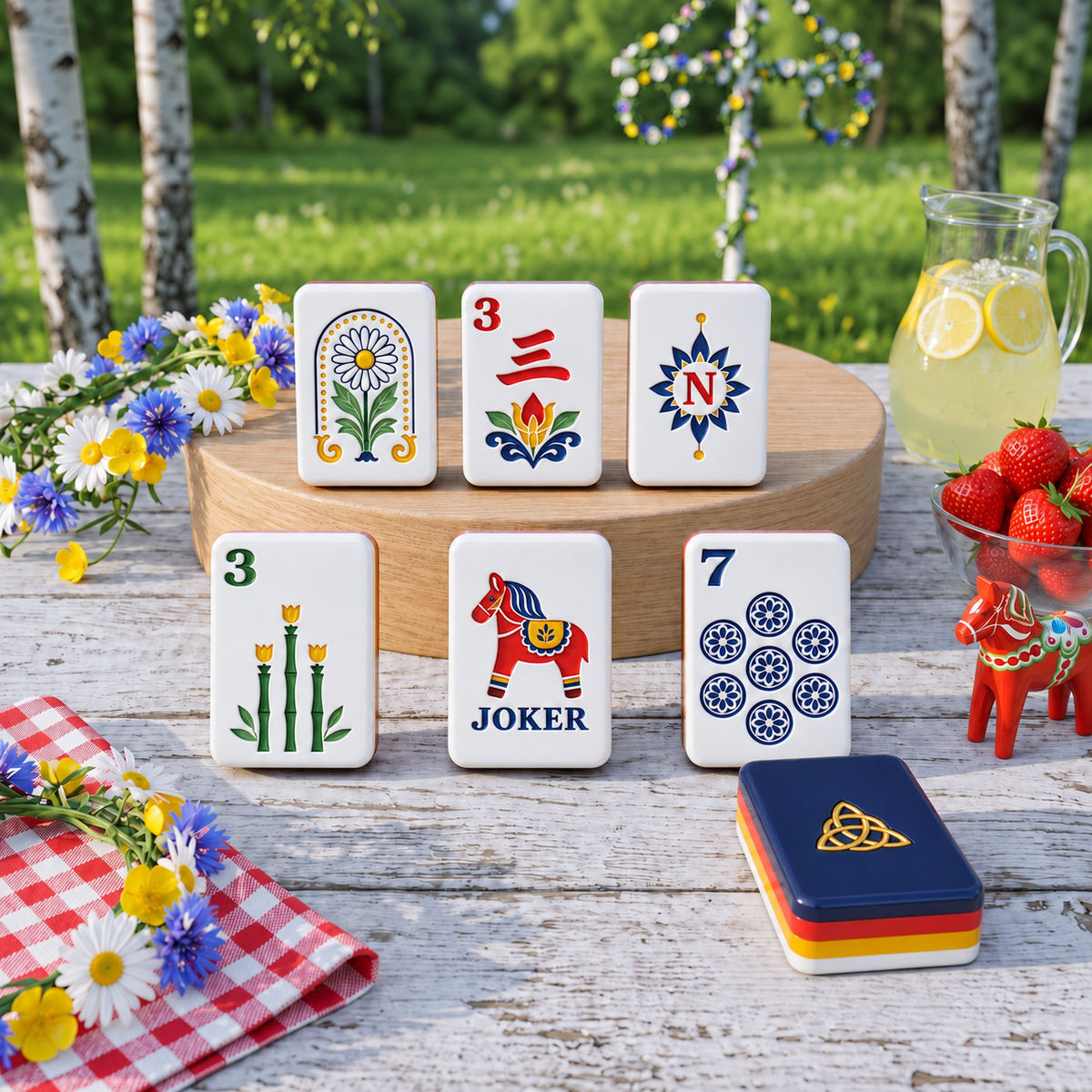
Mahjong parties in Tulsa happen in community centers, libraries, synagogues, country clubs, and private homes. You'll find existing games through Meetup boards, library bulletin boards, and local recreation departments—most welcome beginners. A four-player American mahjong game takes 20–40 minutes per round and runs 2–4 hours for a casual party. You need one 160-tile set with racks, a mat, and the current-year National Mah Jongg League card. Starting a home game costs less than hosting other card games; our best-selling mahjong sets come complete, with free US shipping. Before hosting, learn basic rules—no prior experience required—and have someone explain the Charleston (the tile-passing ritual) so newcomers don't feel lost.
Where do Tulsa mahjong players gather?
Your first move is to check Meetup (filter by "mahjong" and your city), then call your local library, community center, or recreation department—many host weekly or monthly games open to the public. Synagogues often have active groups; country clubs and retirement communities frequently run leagues. Start with a venue search, not a recruitment push. Tulsa's gaming culture is friendly to strangers showing up to learn. Most established groups have a waiting list or a "first-timer" night. If you can't find an existing game, consider asking the library if you can post a small flyer or list your game on their bulletin board—that's often how kitchen-table games grow into regular meetups. A mature game group will tell you upfront about skill levels and house rules before you join.
How do you set up your first home party?
Pick a date when you can gather four people (mahjong requires exactly four players). Reserve a dining table or folding card table—about 3 feet square works well. Send invites two weeks ahead with the phrase "no experience needed" so anxious friends don't self-exclude. On game day, lay out a mahjong mat to protect your table and mark player positions. Open your 160-tile set in front of everyone—seeing the colorful tiles builds excitement. Assign seats: East, South, West, North (East goes first). Have one person read aloud the basics before you begin. Snacks and mild drinks settle nerves. Plan 3–4 hours to allow for learning, chat, and rest between rounds.
🎁 See our most-loved mahjong sets & accessories →

What rules should a beginner host know cold?
American mahjong follows one rulebook: the National Mah Jongg League card (updated yearly each spring). Every hand you play must match an exact pattern on that card—no improvising. You cannot make a sequence (1–2–3); you may only expose a pung (three identical tiles), a kong (four identical), or longer runs of identical tiles with jokers filling gaps. Jokers can never stand alone or be part of a pair. The Charleston is a three-part tile exchange before play starts—practiced hosts do this fluidly; new hosts can simplify it the first round. Learn the full Charleston here. A player who calls "mahjong" must show a winning hand that matches the card. Wrong claim? That player sits out the rest of that round and pays everyone. Keep a printed card at the table and let players consult it freely. Most errors vanish after two rounds once players see real hands and patterns.
What equipment do you actually need?
One 160-tile set (includes racks and pushers for holding tiles upright), a mat, a card from the National Mah Jongg League, a pencil, and paper for scoring. That's it. Rack and pusher sets keep tiles vertical so no one glimpses your hand. A mat marks the table so it feels official and protects your furniture. The card (free online or printed from the League, or included in teaching materials) is non-negotiable—it governs every winning hand. Skip the scoreboard for now; write scores on paper. Once your group plays weekly, invest in a carrying case so your host doesn't lug tiles loose in a shoebox. We've seen hosts use travel-ready bags and cases to move sets between homes seamlessly—much more elegant than a cardboard box.
✨ Find your Mahstead set — free US shipping →
What are common first-timer mistakes—and how to dodge them?
Mistake 1: Assuming sequences (1–2–3) can be exposed. In American mahjong, they cannot. You must hold sequences hidden; only identical-tile groups can be exposed. New players squint at the card, see "sequences" in hand descriptions, and panic. Clarify: those sequences are part of the hidden hand, not part of the visible melds.
Mistake 2: Playing with an old card or no card. The League updates hands yearly. Last year's card won't match this year's winning patterns. Always confirm you have the current year's card before you start.
Mistake 3: Not doing the Charleston. Skipping the tile exchange feels faster, but the Charleston is part of American mahjong law. It takes 2–3 minutes and ensures fair distribution. Beginners appreciate the ritual once they learn it—it levels the playing field.
Mistake 4: Overcomplicated scoring. For a casual home party, just note who won and by how much. Full American mahjong scoring is intricate; save it for league play. A simple "you won 5 points, pay each player 5" works fine.
Mistake 5: Mixing jokers into wrong melds. Jokers fill gaps in sequences of identical tiles or extend runs. They cannot form the pair (the final two tiles in a winning hand). One player placing a joker in the pair ends the round in a foul.
Mistake | Why It Happens | Fix |
No card at table | Assumed rules are universal | Print League card or buy it |
Sequences exposed | Looks like other tile games | Read card examples aloud |
Skipped Charleston | Wanted to speed up | Learn Charleston once, use every time |
Joker in pair | Forgot one rule | Mark that rule on card with tape |
Wrong year's card | Reused old materials | Buy/print current-year card every spring |

What should Tulsa hosts check before inviting people?
Table space: Measure your table to ensure four racks fit side-by-side without crowding. A 3-foot square is minimum.
Lighting: Make sure the area is bright enough to read tiles clearly. Overhead ceiling light plus a small lamp beats glare.
Noise level: Mahjong is loud (clicking tiles, excited voices). Alert your neighbors or play at a time unlikely to disturb them.
Seating: Four firm, level chairs matter. Wobbly seats throw off tile handling.
Card clarity: Print or display the League card large enough to read from any seat. Squinting kills momentum.
Host knowledge: Watch a five-minute YouTube demo of a full round before your first game. You don't need to teach everything—let the card and real play teach.
Snacks & bathroom: Have water and light snacks; know where the bathroom is. A 4-hour session includes a break.
Connecting with the Tulsa Mahjong Community
Once you host or attend one game, you'll hear about regular meet-ups, seasonal tournaments, and holiday-themed nights. Tulsa's mahjong network grows through word-of-mouth. Ask each person you meet: "Where else do you play?" That question opens doors to existing circles. Many host groups swap hosts monthly, so you won't feel pressure to always be the organizer. Some Tulsa players form 8- or 12-person groups that rotate through home games, coffee shops, or church halls—rotating hosts means each person contributes equally.
If you're serious about hosting regularly, engraved mahjong sets add personality and help players remember your games fondly. A set with your name or your group's name etched on the case becomes a conversation piece and a keepsake.
🀄 Shop best-selling mahjong sets →
Starting Solo? Join First, Host Later
If you're nervous about hosting without experience, visit an established Tulsa game first. Sit in, watch two rounds, and ask questions during breaks. You'll absorb more by observing real play than by reading rules. After one or two visits, you'll feel confident enough to gather friends. Most experienced players love having new hosts; it spreads the hobby and builds community. Offer to bring snacks to a few games at someone else's place, then invite them to your home. That reciprocity builds trust and ensures your first party has at least one experienced player on hand.
FAQ
Do I need to know how to play before hosting?
No. Watch one existing game, read the League card examples aloud, and learn the Charleston. Your first game will teach you faster than any tutorial.
Can I play mahjong with fewer than four people?
American mahjong requires exactly four players. Variant rules exist for two or three players, but they use different hand patterns. Stick to four for your first party.
Where do I buy the current-year National Mah Jongg League card in Tulsa?
Most Tulsa game groups have extras to sell or give away. Ask at a library or community center mahjong game. You can also print it free from the League website or buy it online.
How long does a beginner game take?
One round (one winner) takes 20–40 minutes as players learn. A casual 4-hour party fits 4–6 rounds with breaks and chat built in.
What if someone wins using a wrong hand pattern?
They don't get paid. The hand must match the current-year card exactly. Show the card and move to the next round. Mistakes dissolve quickly once everyone consults the card together.
Should I serve alcohol at my mahjong party?
A beer or wine works fine; keep it light. Heavy drinking slows tile handling and blurs the card. Snacks and water matter more than booze.
How much does it cost to host a mahjong party?
One 160-tile set with racks and mat costs roughly the same as a board game and will last years. Food and card printing are negligible. No entry fee is standard for home games; keep it friendly and free.
Can I play mahjong online instead of in person?
Yes, but Tulsa's in-person scene is alive and welcoming. The social element and tile handling are part of the joy. Try both—many local players enjoy both digital and live games.


View More
View More
View More
