
Easiest Mahjong Rules for Couples: A Simple 4-Step Start
Last updated: Nov 23, 2026
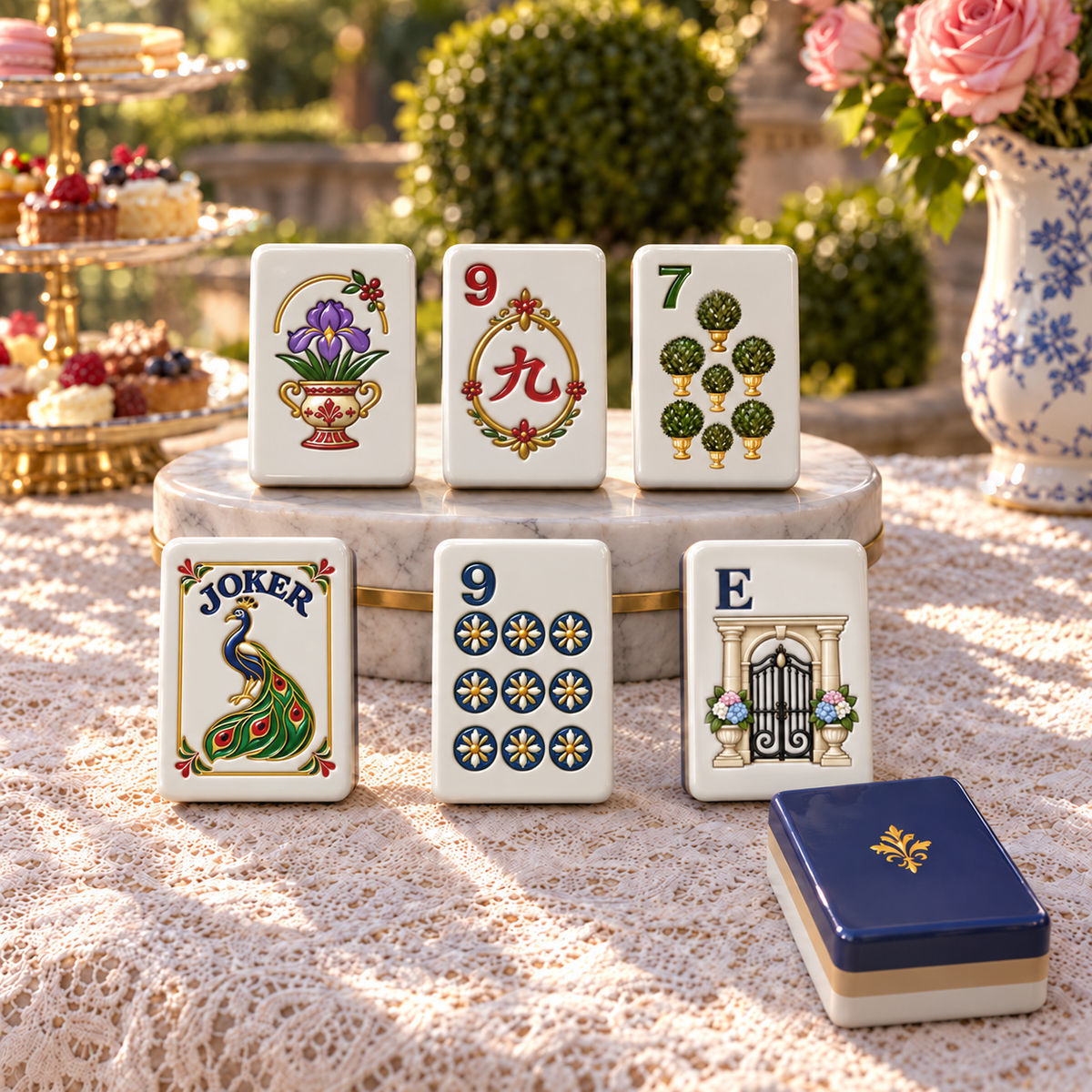
Yes, couples can play American mahjong using 2-player rules where each player controls two seating positions (North/South and East/West). The core stays the same: form hand patterns (pungs, kongs, quints) using 152 tiles, draw and discard each turn, and match the current National Mah Jongg League card. For two players, you'll skip the Charleston (the tile-passing ritual) and deal 26 tiles each instead of 13, then play to a set point total rather than rotating dealer seats. A hand usually takes 20–40 minutes. We recommend starting with a high-quality American mahjong set and keeping the NMJL card visible between you both; a mat with pushers and a rack keeps tiles organized and reduces table clutter.
Why is two-player mahjong so different from four-player?
American mahjong was built for exactly four players—one at each compass seat—because the game uses tile-passing, rotating positions, and discard strategy that depends on reading three opponents' moves. With two players, you lose that depth; you're essentially playing two four-player hands simultaneously (you and your partner occupy opposite sides). This changes draw order, defensive play, and how quickly tiles cycle through the wall. Two-player variants exist precisely to flatten this complexity and make the game social without the mental load of tracking four hands.

What are the simplest 2-player rules to start with?
The easiest 2-player American mahjong follows this setup: each player sits North and South (you) or East and West (your partner), so you're filling all four positions. Deal 26 tiles each (instead of 13) from a shuffled 152-tile set. Skip the Charleston entirely—no tile-passing before play. Player 1 (North) goes first; you draw from the wall and discard to the center, then Player 2 (East, also you) draws and discards. Continue alternating; claim tiles from the discard pile if they complete a pung, kong, quint, or sextlet, or simply draw from the wall instead. The first to complete a hand from the current year's NMJL card wins that hand and scores points. Play to an agreed total (often 500 points) rather than rotating dealer. No Charleston means faster setup and fewer rules to explain—ideal for learning.
🀄 Shop best-selling mahjong sets →
How do you keep score fairly with just two of you?
In standard four-player American mahjong, the winner collects points from each other player based on the hand's value and who held which seat. For couples, simplify: the winner scores the full hand value once per win, not multiplied by three opponents. For example, if your hand is worth 30 points, you score 30, not 90. Keep a running tally on paper or a phone note, and agree beforehand whether you'll play to 500, 1,000, or another threshold. Some couples alternate who gets to be dealer (East) after each hand; others keep the winner as dealer next round, just like four-player. The key is deciding before you start and sticking to it—consistency beats perfect fairness in a couple's game.
What equipment makes 2-player mahjong more comfortable?
Two players benefit hugely from a dedicated mat and tile racks. A mat creates a flat surface for organized play, prevents tiles sliding across the table, and keeps the discard pile visible and neat. Racks with pushers let each player organize their hand without tipping tiles or losing count—especially crucial when you're holding 26 tiles instead of 13. We recommend a mat that fits your table size (typically 36–48 inches wide for a couple) and two racks per player so you can visually separate "open" tiles (pungs, kongs you've claimed) from your "closed" hand. A mahjong mat and racks collection offers designs that add elegance while solving the practical friction of holding more tiles. Soft cases or small drawstring bags keep tiles protected between games.
What common mistakes do couples make starting out?
The most frequent errors we see:
Dealing wrong numbers. Couples often default to 13 tiles per player (standard four-player) then get confused when the wall runs out early. Confirm you're dealing 26 tiles each before your first hand.
Mixing up the card year. The NMJL releases a new card every spring. Using last year's card will make valid hands invalid. Always check the year printed on the card before you sit down.
Forgetting joker rules. Jokers can substitute for any tile in an exposed meld (pung, kong, quint) but never in a pair or concealed hand. Misplacing a joker costs hands.
Unclear discard protocol. With no third or fourth player watching, couples often accidentally bump tiles during the discard and create confusion. Discard deliberately to the center, announce it aloud, and wait one full turn before drawing the next tile.
Skipping the Charleston on purpose, then playing four-player hands. If you're using two-player adapted rules, stick to two-player hands; four-player patterns won't fit your tile distribution. Choose your variant and commit.
🎁 See our most-loved mahjong sets & accessories →

Should couples play 2-player, or is 3-player or 4-player better?
If you're consistently just two people, 2-player rules are fine and keep setup quick. However, many couples find the game richer with four-player rules once you learn the basics—it forces you to read your opponent, plan defensively, and enjoy the full strategic depth American mahjong offers. If you occasionally have friends join, learning 4-player and 3-player variants from the start means you won't have to re-learn later. A high-quality 160-tile set works for any player count, so investing in one set that scales is smart.
How long does a couple's game session usually last?
A single hand typically takes 15–35 minutes, depending on how quickly tiles move and whether anyone is still learning to read the card. A full game (playing to 500–1,000 points) usually spans 3–5 hands, so one session is roughly 1–3 hours. Most couples we know aim for 1.5 hours—two or three hands over coffee or wine on a weeknight. The slower pace compared to four-player is one reason couples enjoy it: less table chatter, more focus on each other's strategy, and no pressure from two other opponents.
What's the best way to teach your partner if they've never played?
Start with the equipment first, not the rules. Let your partner physically sort a hand of 26 tiles into suits and numbers, use the racks, and feel comfortable organizing. Show them the current year's NMJL card and pick one simple hand pattern (like three Bams, three Craks, three Dots) and ask them to find it in their hand. Once they can read the card and spot a pung, they've got 60% of what they need. Then deal a practice hand (no scoring), play it slowly, and pause to explain each discard and claim. On the second or third hand, introduce scoring but keep it light. Beginner guides and printed card reference sheets remove the pressure to memorize.
Decision Framework: 2-Player vs. Group Play
Setup | Best For | Teach Time | Game Length | Rule Complexity |
2-player, no Charleston | Couples, quiet nights, fast start | 30 min | 1–3 hours | Lowest |
3-player adapted rules | Couple + 1 guest, occasional play | 45 min | 2–4 hours | Medium |
4-player standard rules | Couple + 2 guests, serious learning | 1–2 hours | 2–4 hours | Medium–High |
✨ Find your Mahstead set — free US shipping →
What to check before you buy a set for couples play
Tile clarity: Can you and your partner easily distinguish Bams, Craks, and Dots from across the table? Engraved or printed text helps; avoid sets with tiny or faded symbols.
Rack fit: If you're buying racks, confirm they hold at least 26 tiles comfortably without crowding. Two racks per player is ideal.
Mat size: Measure your table; a mat should leave 12–18 inches of free space on each side for a discard pile and your racks.
NMJL card year: The card changes every spring—confirm you have the current year before playing for score.
Joker count: A standard 152-tile set includes 8 jokers (never add extras to play). If you buy a 160-tile set, the extra tiles are spares; use only the standard 152 + 8.

FAQ
Can a couple play American mahjong with just a basic set, or do we need racks and a mat?
A basic set works fine for learning—you can hold tiles in your hands or prop them in a row. Racks and a mat become valuable once you're playing regularly; they speed up gameplay, reduce errors, and make claiming tiles cleaner. If you're buying your first set, add a mat and one pair of racks; the investment is modest and transforms the experience.
What if we want to occasionally invite friends for 4-player games? Should we learn 2-player or 4-player rules first?
Learn 4-player rules from the start if you plan to scale up. The 2-player game uses shortcuts that feel confusing once you add players; you'll re-learn the Charleston, dealer rotations, and four-position strategy anyway. A single high-quality set works for both variants, so the only "extra" learning is patience. Many couples start 2-player for 2–3 weeks, then transition to 4-player once the basics stick.
How do we handle the NMJL card if we're just two people? Do we need two copies?
One copy is enough; keep it flat between your seats or prop it where you both see it clearly. Many couples laminate their card or buy a card holder. The card is the rulebook; it lists every valid hand for that year, so you're always in sync if you're looking at the same one.
Is 2-player mahjong as fun as 4-player?
Fun is subjective. Two-player is quieter, more strategic head-to-head play, and easier to teach. Four-player is livelier, involves more table reading and social banter, and feels closer to traditional mahjong. Most couples enjoy both depending on their mood. Start with 2-player to ease in, then try 4-player once you're confident; you'll know which you prefer after a few sessions.
My partner and I live in a small space. What's the smallest set-up that still feels like "real" mahjong?
A compact mat (36 inches), one pair of racks, and a 152-tile set are all you need. Tile sets are compact by nature—they fit in a box the size of a shoebox. If even a mat seems too much, you can play on a bare table, but you'll bump tiles constantly. For couples in tight quarters, a mat is the one investment we recommend; it lets you play the real game without frustration.
How do we know if our tiles are good quality?
Check the engraving or printing clarity, listen to how they feel shuffling (quality tiles have a crisp, distinct sound), and confirm they're acrylic or bone (not plastic). Examine the backs for consistency—all tiles should look identical. If symbols are fuzzy or tiles feel oily, they'll be hard to read mid-game. A best-selling set has been vetted for exactly this; if you're buying elsewhere, handle tiles in person before committing.


View More
View More
View More
