
Mahjong vs Chess: Strategy, Speed, and What You'll Love
Last updated: Nov 23, 2026
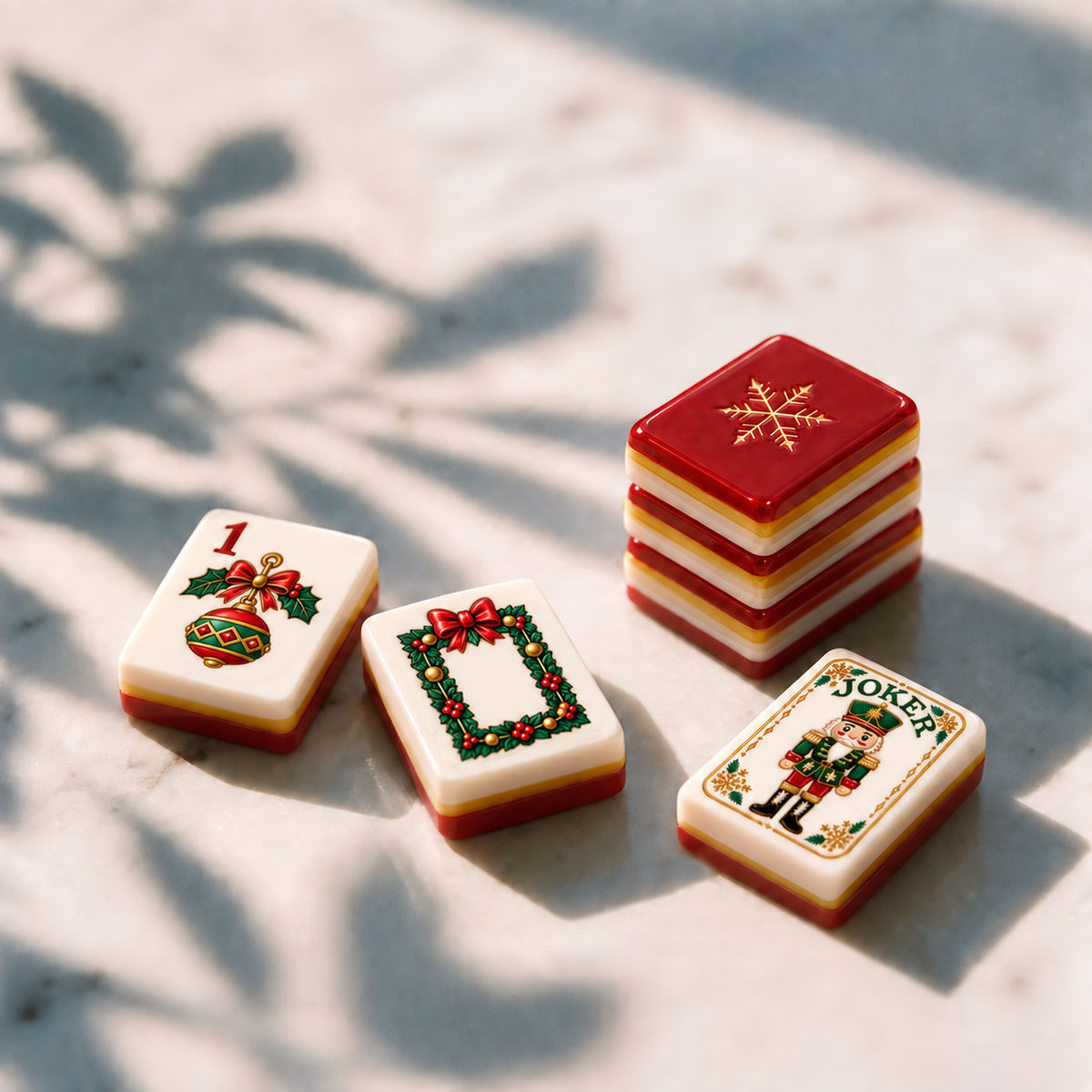
Mahjong and chess are both strategy games, but mahjong is faster-paced, social, and driven by chance and hand management; chess is turn-based, deterministic, and pure logic. In American mahjong, you draw one tile, discard one, and work toward hands from the current year's card using 152 tiles plus 8 jokers across four players—games last 1–2 hours. Chess offers unlimited positions and infinite strategic depth but no randomness; a match can stretch hours or end in minutes depending on skill and time controls. Mahjong suits players who enjoy reading opponents, making quick decisions under partial information, and hosting regular game nights; chess rewards deep calculation and solo study. Both develop memory and tactics, but mahjong is social and collaborative while chess is individual and adversarial. You don't need prior experience to learn mahjong at a weekly table—the National Mah Jongg League card drives legal hands each season, and Mahstead's 160-tile sets come ready to play.
How is the pace of play different?
Mahjong moves fast. Each turn takes 10–30 seconds: draw, assess, discard. A hand completes in under an hour; a four-hand game session (the standard) takes 60–90 minutes total. Chess games vary wildly—casual blitz is 3 minutes per side, classical tournament play can exceed 5 hours per game. Mahjong's rhythm is rhythmic and collective; chess is reflective and solo. If you enjoy real-time group energy, mahjong feels more alive.

Can you play mahjong alone, like chess?
Not the same way. Chess has infinite positions and you can solve puzzles solo or play against an engine. Mahjong is designed for four players at one table—that's where the game's strategic tension lives. You can practice hand-reading or memorize patterns, but the live social element—watching discards, reading "dead" or live tiles, blocking opponents—only happens with players. Some online platforms exist, but they lack the tactile satisfaction of real acrylic tiles and pushing them with a rack and pusher.
🀄 Shop best-selling mahjong sets →
Which game teaches better memory and pattern recognition?
Both teach memory, but differently. Chess rewards positional recall and tactical motifs you study from books and engines. Mahjong trains real-time memory: you must recall which tiles have been discarded, remember what each player threw, and infer what's in their hand. Over weeks and months of weekly games, mahjong players develop uncanny tile recall—recognizing board states instantly. Chess develops deeper, more formal pattern knowledge; mahjong develops faster, more social memory. Neither is "better"—they exercise different cognitive pathways. Mahjong's memory is practical and immediate; chess's is structured and timeless.
What about the role of luck versus pure skill?
Chess is 100% skill. Every move is available to both players; the position defines the game. Mahjong is skill plus luck. You cannot control which tiles you draw, but you can control which tiles you keep, what you discard, and how you read the table. Expert mahjong players win consistently over time despite the luck factor—they manage risk, block competitors, and adapt hand strategy based on information. A beginner might draw a winning hand; a master will win on skill. Chess has zero luck; mahjong has randomness within a framework of strategic choice. This makes mahjong more accessible to newcomers (you can win on your first night) but also less predictable for experts who want perfect control.

Why do so many people quit chess but keep playing mahjong?
Chess skill takes years to build and requires serious study—most casual players plateau and lose interest. Mahjong skill also grows with time, but the weekly social ritual keeps people coming back. You're playing with the same group, building friendships, and the game feels fresh each week because the card changes yearly. Chess is solitary and demands constant improvement to stay engaged; mahjong is social and accommodating to all levels. A beginner plays in the same game as a 20-year veteran. Chess can feel isolating; mahjong feels like a club. This social stickiness is mahjong's biggest advantage for long-term engagement.
Factor | Mahjong | Chess |
Players | Four, simultaneous | Two, alternating |
Luck factor | Yes (tile draw) | No |
Game length | 30–90 minutes | 5 minutes–5+ hours |
Social setup | Required | Optional |
Learning curve | Steep first month, then flat | Steep and continuous |
Setup time | 10 minutes (Charleston, shuffling) | <1 minute |
Equipment | Tiles, mat, racks, card | Board, pieces, clock |
🎁 See our most-loved mahjong sets & accessories →
What should you check before choosing which game to play?
Time and setting: Chess works solo; mahjong needs four committed players meeting weekly. If you don't have a table nearby, chess is available anywhere. Search your local community center, library, synagogue, or country club for mahjong groups—most cities have them. Online communities and meetup boards can connect you to tables.
Budget: Chess requires a board and pieces (one-time, minimal cost). Mahjong requires a full set, typically a 160-tile American mahjong set designed for acrylic durability. Add a mat and racks with pushers for comfortable play. These are investments, but they last decades and create a ritual you'll treasure.
Cognitive style: Do you prefer perfect information and logical depth (chess) or partial information and real-time adaptation (mahjong)? Chess players solve puzzles; mahjong players read tables.
Social appetite: Chess can be lonely. Mahjong is a weekly date. If community matters to you, mahjong wins.
Getting started with mahjong after deciding it's for you
If you've chosen mahjong, your first step is finding a regular game or starting one. Most weekly players meet on Thursday or Saturday nights. Once you have a table, you'll need a proper set. American mahjong uses 152 playing tiles plus 8 jokers—the standard inventory. A 160-tile set includes spares. Acrylic sets from Mahstead ship assembled and ready; they're designed to withstand years of weekly play.
Next, get the current year's National Mah Jongg League card—it's free online or printed through the league. This card defines every legal hand you can play. Learn how to read it, understand the Charleston tile-passing ritual, and memorize the basic rule: you expose pungs (3 identical), kongs (4 identical), and quints (5 identical)—never sequences like you'd see in chess-like tactical games. Jokers are wildcards but follow strict rules—they can't fill pairs and can't be used as a single tile.
A proper mat keeps tiles organized and audible—you'll hear the satisfying click of tiles hitting acrylic. Racks with pushers let you hold and organize your tiles like a pro; travel-ready cases protect your set between games. If you're gifting a set or want a keepsake, Mahstead offers custom engraved sets so your group's set becomes a shared artifact.
Play your first game without pressure. Mistakes teach faster than rules. After three weeks, you'll know the hands. After three months, you'll read the table and block opponents intuitively. After a year, you'll understand why mahjong players say chess is a beautiful game—but mahjong is a life.
✨ Find your Mahstead set — free US shipping →
What to check before you buy
Set quality: Acrylic tiles last; plastic chips crack. Verify the brand's durability record and that tiles ship in protective packaging.
Tile size: American mahjong tiles are standardly sized; confirm the set matches your table and hand comfort.
Completeness: A true American mahjong set contains 152 playing tiles plus 8 jokers (160 total). No fewer, no blanks in the active game.
Accessories: A mat, racks, and carrying case make play comfortable and organized—don't skip these for weekly games.
Local availability: Some cities have thriving mahjong communities; others require starting your own group. Research first.

FAQ
Is mahjong harder than chess to learn?
No. Chess openings take months to memorize; mahjong's core rules take one session. Mastery takes longer in chess, but basic competence is faster in mahjong.
Can you play mahjong with fewer than four players?
Yes, but the game changes. Three-player and two-player variants exist with modified tile counts and hand patterns—they're distinct games, not scaled-down versions of four-player American mahjong.
Do I need to buy my own mahjong set to learn?
Not to start. Join a local game first and use the group's set. Once you know you'll play regularly, a personal set becomes worth the investment—you'll use it for years.
Which is easier for beginners: American mahjong, Chinese mahjong, or Hong Kong style?
American mahjong is easiest for English speakers because hands are printed on a card; Chinese and Hong Kong require memorizing hundreds of hand patterns. Start with American; other variants branch from there.
Can you play mahjong competitively like chess tournaments?
Yes. The National Mah Jongg League sanctions tournaments and rated play. Competition exists but is smaller than chess's ecosystem; most players enjoy casual weekly games with friends instead.


View More
View More
View More
