
Do You Need a Mahjong Set? A Real Player's Guide
Last updated: Nov 23, 2026
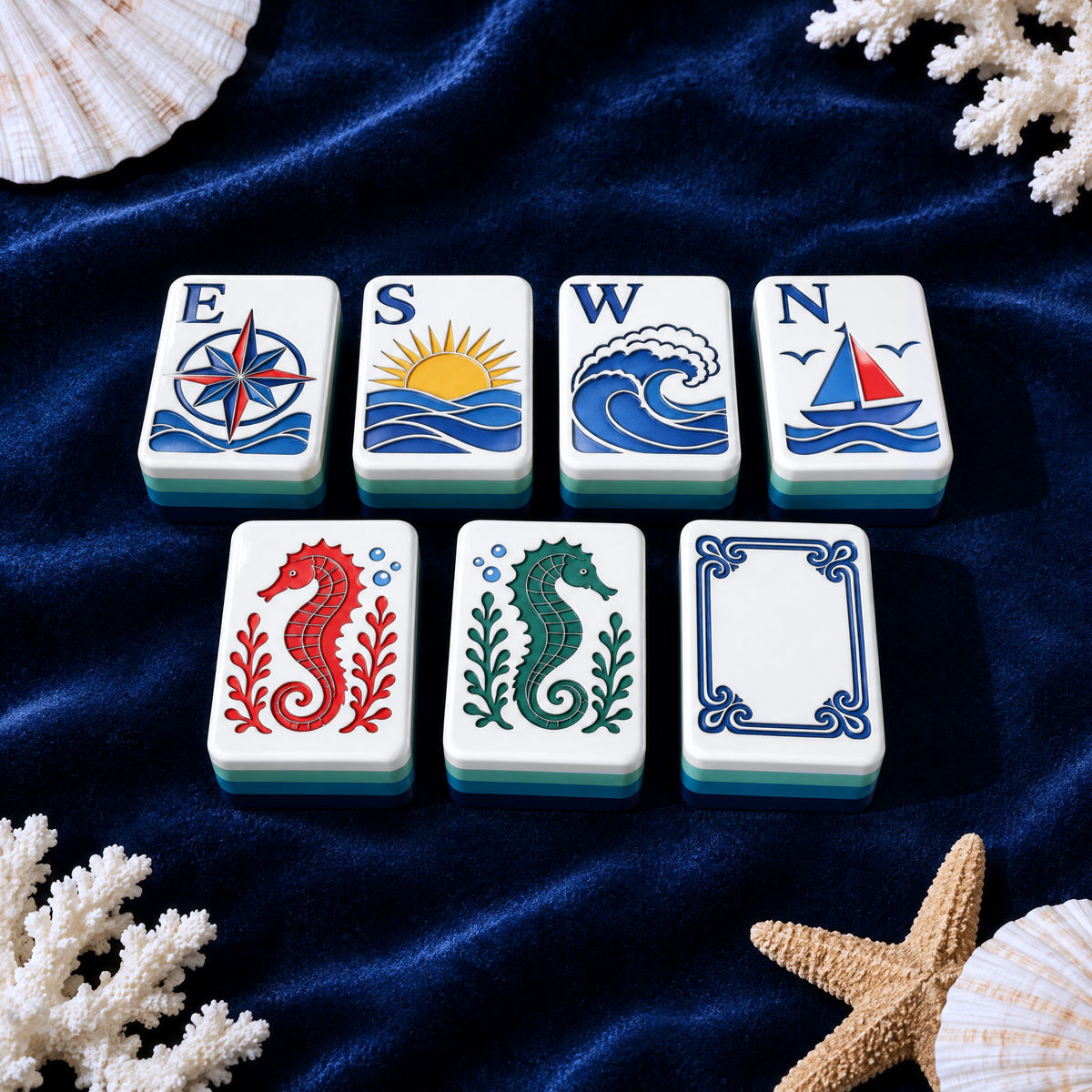
You need a mahjong set if you play regularly, host games, or travel between tables. A standard American mahjong set contains 160 tiles (152 playing tiles plus spares): three suits numbered 1–9, winds, dragons, flowers, jokers, and blanks. You'll use exactly 152 tiles per game, with 8 jokers always in play. Whether you're learning or competitive, owning a set means you control quality, backup tiles, and can host reliably. Borrowed sets often have missing or chipped tiles, wrong joker counts, or outdated design. Most players we know keep their set in a protective bag or case and bring it to weekly games. The decision hinges on frequency: occasional players at one venue might borrow; weekly hosts and travelers buy. Mahstead's engraved American mahjong sets let you personalize without compromising tile accuracy or durability.
Do you need a mahjong set if you play weekly or host games? Yes—if you're serious about the game, owning one is non-negotiable. If you play once a month at a friend's house, borrowing works. But here's what we've learned hosting for years: a personal set saves headaches, lasts longer, and lets you control the game experience completely.
What's actually inside a mahjong set, and why it matters?
A standard American mahjong set contains 160 tiles: 152 tiles you play with each hand, plus spares. The 152 active tiles break down as three suits (Bams, Craks, Dots numbered 1–9, four of each = 108 tiles), 16 winds (four each: North, East, West, South), 12 dragons (Red, Green, White "Soap"), 8 flowers, and 8 jokers. The spares replace lost or damaged tiles during storage or travel. Every hand uses exactly 152 tiles and 8 jokers—no more, no fewer. When you buy from the best-selling collection, you get all of these ready to play. Borrowed sets often have chipped edges, stuck tiles, or mismatched joker counts that slow the game and frustrate newer players trying to learn.

Who actually needs to own a set versus borrow?
Player type | Play frequency | Venue | Needs own set? | Why |
Casual learner | Monthly | Single friend's home | No | Borrowing works if tiles are well-kept |
Weekly regular | 1–2 times/week | Rotating homes | Yes | Consistency, backup tiles, control |
Host | Weekly+ | Your home | Yes | You're responsible for game flow & tile integrity |
Traveler | Weekly | Multiple venues/cities | Yes | Protection in bag/case, reliability across tables |
League player | 2–3 times/week | Club or tournament | Yes | Tournaments often require personal sets or approved stock |
Collector | N/A | Display | Yes | You're investing in art or custom design |
The clearest dividing line: if you host or travel, buy. If you play at one venue once monthly, borrowing is fine—but ask the owner if they insure or replace damaged tiles.
What separates a good set from one you'll regret buying?
A good set has smooth tile faces that don't snag on racks, consistent weight across all tiles (uneven tiles throw off shuffling), and backs that aren't slippery so they don't slide during the discard. The jokers should be clearly distinguishable—many borrowed sets have faded or ambiguous joker marks that create disputes mid-hand. Tile thickness matters: thin acrylic tiles chip easily; thick, rigid ones last years. Color saturation on the numbers should stay sharp after 50+ shuffles; cheap printing fades. The carrying bag or case prevents cracking and keeps tiles from scattering if you drop the set. Engraved American mahjong sets let you add team names, dates, or jokes without sacrificing build quality—your set becomes a keepsake, not just equipment.
Common mistakes we see: buying a "cheap" set to "try it out" (you'll abandon it after chipped tiles frustrate you), choosing a mat before a set (the set's size determines the mat), and ignoring spare tiles (you'll need one joker replacement within a year of weekly play).
🀄 Shop best-selling mahjong sets →
How do you pick between decorative, personalized, and tournament-style sets?
Tournament-style sets prioritize durability and legibility: crisp tile marks, neutral colors, no ornaments that catch on racks. These are unbeatable if you play competitive or travel. Decorative sets emphasize beauty—carved dragons, jade-look tiles, brass racks—and work beautifully for display and casual home games, but ornamental features sometimes slow shuffling or snag on felt. Personalized sets split the difference: full legibility and durability, plus custom text or team names engraved directly into the tiles. Personalized sets are ideal for gifts, clubs, or multi-year home leagues because they mark ownership and add meaning without compromising function.
If you host occasionally and play casually, a personalized set signals care and becomes a conversation piece. If you compete or play twice weekly, tournament-style keeps you focused. Decorative sets work best for display or very gentle, low-frequency play. We recommend starting with a durable, well-reviewed set in the best-selling collection, then upgrading to a personalized one if you stick with the game past six months.

Should you also buy a mat, bag, and racks right away?
Not necessarily—but if you own a set, a mat and bag quickly follow. A mat protects tiles during shuffling, keeps the table clean, and defines the play zone so tiles don't scatter. A protective travel bag lets you transport your set without worry. Racks with pushers organize your hand during play and let newer players see tiles clearly without fumbling. If you play at home weekly, add these. If you leave your set at one friend's house, you might skip them. Most of us own at least a bag and mat within a year of buying the set—they're small investments that extend the life of tiles significantly.
Don't buy everything at once. Start with the set. Add a mat when you play at different venues or on surfaces that scratch easily. Grab a bag when you start transporting the set. Pick up racks if your hands are small or you're teaching beginners.
🎁 See our most-loved mahjong sets & accessories →
What to check before you buy
Tile count: Confirm you're getting 160 tiles (152 playing + spares), not a smaller set.
Joker clarity: Look at photos or ask—jokers must be visually distinct from all other tiles.
Carrying case included: A bag or box protects against cracks during storage and transport.
Replacement policy: Some makers offer free replacements if tiles arrive damaged; others don't.
Thickness & weight: Thicker acrylic resists chips; heavier tiles (without being excessive) feel more stable during shuffling.
Color vibrancy: Check that numbers are printed clearly, not hand-painted (hand-painted fades faster).
Personal use case: Will you host, travel, or play casually at home? Your answer shapes which features matter.
What other guides can help you decide?
If you're new to the game, mahjong for beginners covers setup and first steps. If you already own a set but want to refresh your play, how to play American mahjong walks through the hand, the Charleston, and scoring. New to reading the tile distribution from the League card? How to read the mahjong card breaks it down. And if you're choosing a mat to go with your new set, how to choose a mahjong mat covers size, material, and storage.
✨ Find your Mahstead set — free US shipping →

FAQ
Can I start playing without owning a set?
Yes—borrow from a friend or find a club where sets are provided. But once you play weekly, owning one keeps games consistent and removes reliance on borrowed equipment that may have missing or damaged tiles.
How long does a mahjong set last if I play weekly?
A well-made set lasts 5–10+ years with weekly play if you shuffle gently and store it in a protective bag. Cheap sets lose tile definition within 2–3 years; durable acrylic sets are nearly indestructible if you don't drop them.
What's the difference between a 160-tile set and others I've heard about?
American mahjong always uses 152 tiles per hand. A 160-tile set includes 8 extra tiles (jokers and blanks) as spares for replacements. You never add these spares to active play—they're backup only.
Do I need a mat if I have a set?
Not immediately—but a mat protects tiles during shuffling and keeps the table clean. If you play on delicate furniture or travel between homes, a mat becomes essential within a few months.
Are engraved sets as durable as plain ones?
Yes—engraving is done on the tile surface after production and doesn't weaken the acrylic. Engraved sets function identically to plain ones and last just as long.
What's included with a typical set purchase?
A 160-tile set includes all tiles (152 playing + 8 spares), usually a carrying bag or box, and sometimes a mat or dice. Check the product description to confirm what's in your specific set.


View More
View More
View More
