
White Dragon Mahjong Tile: Symbol & Role Explained
Last updated: Nov 23, 2026
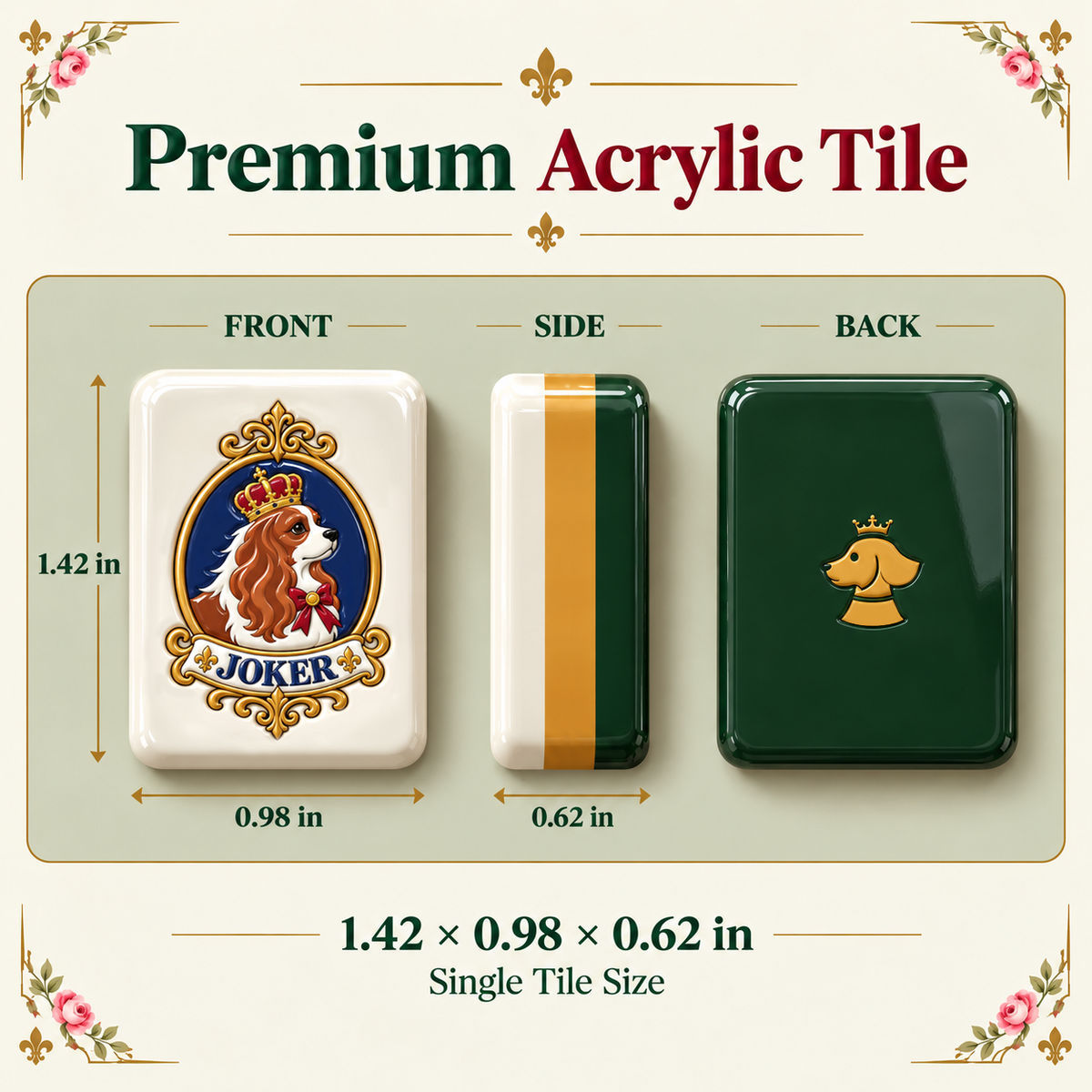
The White Dragon, called "Soap" by many players, is a single tile with dual identity: it counts as a honor (matching the Dot suit in traditional symbolism) and serves as a zero or blank in sequences. In a standard American mahjong set, there are four White Dragon tiles among the 12 total dragons (four each of Red, Green, and White). You'll recognize it by its blank or minimalist face—often simply a white square or border with no characters, in stark contrast to the Red Dragon's red character and the Green Dragon's green symbol. The White Dragon cannot be used alone (you cannot declare a hand with just one White Dragon tile) and jokers cannot substitute for a single White Dragon, but it does appear in pairs, pungs, kongs, and sequences with other tiles. Its value in a hand depends on the year's National Mah Jongg League card; players consult the card to see which patterns include White Dragons. Understanding this tile prevents costly errors at the table and clarifies why a well-made acrylic set matters—clear, durable tile faces make the White Dragon unmistakable, especially under dim game-night lighting.
The White Dragon is American mahjong's most misunderstood tile—it doubles as both a dragon honor and a zero wildcard. It counts as a honor (matching the Dot suit in traditional symbolism) and serves as a zero or blank in sequences. In a standard American mahjong set, there are four White Dragon tiles among the 12 total dragons (four each of Red, Green, and White). You'll recognize it by its blank or minimalist face—often simply a white square or border with no characters, in stark contrast to the Red Dragon's red character and the Green Dragon's green symbol. The White Dragon cannot be used alone and jokers cannot substitute for a single White Dragon, but it does appear in pairs, pungs, kongs, and sequences with other tiles. Its value in a hand depends on the year's National Mah Jongg League card; players consult the card to see which patterns include White Dragons.
Why Is It Called "Soap"?
"Soap" is slang for the White Dragon because the blank tile looks like a bar of soap—a nickname you'll hear at any American mahjong table but rarely in official League documentation. The term is purely colloquial; the formal name is White Dragon. Older players introduced the nickname decades ago, and it stuck because the image is memorable. Calling it Soap is not wrong—many seasoned players use both names interchangeably. But when reading the National Mah Jongg League card or teaching newcomers, White Dragon is clearer and prevents confusion with actual soap-shaped promotional items sometimes given away at mahjong events.

How Do You Spot It in Your Tile Set?
The White Dragon tile has a distinctly bare or minimal face compared to its siblings. The Red Dragon displays a bold red Chinese character (usually 中, meaning "center"); the Green Dragon shows a green character (usually 發, meaning "prosperity" or "develop"). The White Dragon, by contrast, is typically a plain white or cream square, sometimes with a thin border or a small engraved circle or dot—the exact look depends on your set's design and material. In acrylic sets, the tile may have a frosted or clear appearance, making it visually lighter than painted or carved alternatives. When sorting your hand at the rack, this visual simplicity is your cue: if a tile looks blank or borderline invisible among the others, you've found a White Dragon. This is why tile clarity matters—cheap or poorly engraved sets can blur the line between White Dragons and other plain tiles, leading to play errors. Our acrylic sets are designed with contrast and durability in mind, so each tile face is legible even after hundreds of games.
🀄 Shop best-selling mahjong sets →
Where Does It Fit in American Mahjong Rules?
The White Dragon follows the same rules as the Red and Green Dragons: it is a terminal honor tile and cannot form a chow (sequence). You can make a pung (three identical White Dragons), a kong (four White Dragons), or longer combinations like quints or sextets if the year's card allows. Unlike jokers, which can substitute for any tile in an exposed meld, the White Dragon must be itself—you cannot use a joker to stand in for a White Dragon in a declared hand. However, you can use a joker to replace a missing White Dragon in an exposed set (e.g., three tiles on the table with one joker, as long as the card permits). The White Dragon ranks as an honor tile, so hands that require "all honors" or "all terminals and honors" may include White Dragons. To know exactly which patterns use White Dragons, consult the current year's National Mah Jongg League card—it is your rulebook and the only source of legal hands.

What Happens If You Confuse It With Other Blank Tiles?
Confusion arises because a 160-tile set includes spare tiles—extra jokers and blanks beyond the 152 playing tiles—but only the four White Dragons in the 152-tile set are in play. If you mistakenly grab a spare blank tile during play, you have drawn an illegal tile and must correct the error immediately. The spare blanks are kept separate in the box for replacement use only; they should never be shuffled into the draw pile. Another common mix-up: confusing a White Dragon (a dragon honor) with a joker (a wildcard). They look different, but under poor lighting or on a worn mat, a tired eye can slip. The rule is unforgiving: if you declare a hand that includes a joker in a slot where a White Dragon was meant, you have an illegal hand and you lose points or are penalized depending on house rules. To avoid this, organize your rack with dragons in one section and numbered tiles in another. Many experienced players keep a small rack with pushers to separate tile groups visually.
🎁 See our most-loved mahjong sets & accessories →
How Does It Compare to Red and Green Dragons?
Aspect | Red Dragon | Green Dragon | White Dragon |
Face Symbol | Bold red character (中) | Bold green character (發) | Blank or minimal design |
Suit Association | Craks | Bams | Dots (and serves as zero) |
Frequency in Hands | Common | Common | Moderate to rare (varies yearly) |
Visibility Issue | Low—very distinct | Low—very distinct | High—easily overlooked |
Joker Substitution | Permitted in exposed sets | Permitted in exposed sets | Permitted in exposed sets |
Single-Tile Role | Cannot declare alone | Cannot declare alone | Cannot declare alone |
The three dragons form the "dragon family" of honor tiles, yet only the White Dragon carries the dual identity of honor and zero. This makes it strategically interesting: in a hand built around zeros or blanks, the White Dragon can anchor patterns that Red and Green cannot. The visual difference is the practical one—you must train your eye to spot the White Dragon instantly, or you risk bungling your tile count mid-hand.
What's the Strategic Role of White Dragons in Play?
Because the White Dragon is often underestimated or overlooked, players sometimes miss opportunities to use it. If the year's card features a pattern that needs zeros or blanks, White Dragons become valuable—you may hoard them or use them more aggressively. Conversely, if the current year's card does not call for many White Dragons, they become "dead tiles" that clog your hand. Experienced players scan the year's card before sitting down to learn which tiles are active. The White Dragon's blank appearance also makes it a useful tile for new players to learn: if you can reliably spot and manage White Dragons, you've mastered tile recognition. On the table, if an opponent discards a White Dragon late in a hand, it often signals they do not need it—a quiet but real piece of information. Keeping a clean mahjong mat with designated discard areas helps you track which White Dragons (and other honors) have been played, so you can calculate the odds of the ones still in the wall.
What to check before you buy:
Does your current set have four White Dragon tiles that are visually distinct from jokers and blanks?
Can you read each dragon face easily in typical game-night lighting?
Are your racks organized to separate dragons from numbers and to reduce mix-ups?
✨ Find your Mahstead set — free US shipping →

FAQ
Is the White Dragon the same as a joker?
No. The White Dragon is a fixed honor tile; only four exist in play. A joker is a wildcard that substitutes for any tile. They serve different functions and look different, though both are sometimes blank-faced.
Can I use a joker to replace a White Dragon in my hand?
Yes, in an exposed set (pung, kong, or longer meld declared on the table), a joker can stand in for a White Dragon if the year's card allows jokers in that pattern. But you cannot use a joker to complete a closed hand that requires a White Dragon—jokers are for exposed melds only.
Why do players call it Soap?
The blank or minimalist face of the White Dragon tile resembles a bar of soap, so older players nicknamed it Soap. It is slang, not an official term, but widely used and understood at American mahjong tables.
How many White Dragon tiles are in a set?
Four White Dragon tiles in a standard 152-tile American mahjong set, matching the count for Red and Green Dragons. A 160-tile set includes these four plus spare tiles, but only the four are used in play.
How do I know if a pattern needs White Dragons?
Consult the current year's National Mah Jongg League card. The card lists all legal hands; if a pattern includes a White Dragon symbol, that hand can use them. If your card does not show a White Dragon in a pattern you are building, you cannot declare it with a White Dragon.
What if I draw a spare blank tile instead of a real White Dragon?
Stop play immediately and return the blank to the spares kept outside the game. Draw the correct tile from the wall to replace it. Spare tiles are for replacements only and must never enter the draw pile.


View More
View More
View More
