
Best Mahjong Set for Bridge Players: A Buyer's Guide
Last updated: Nov 23, 2026
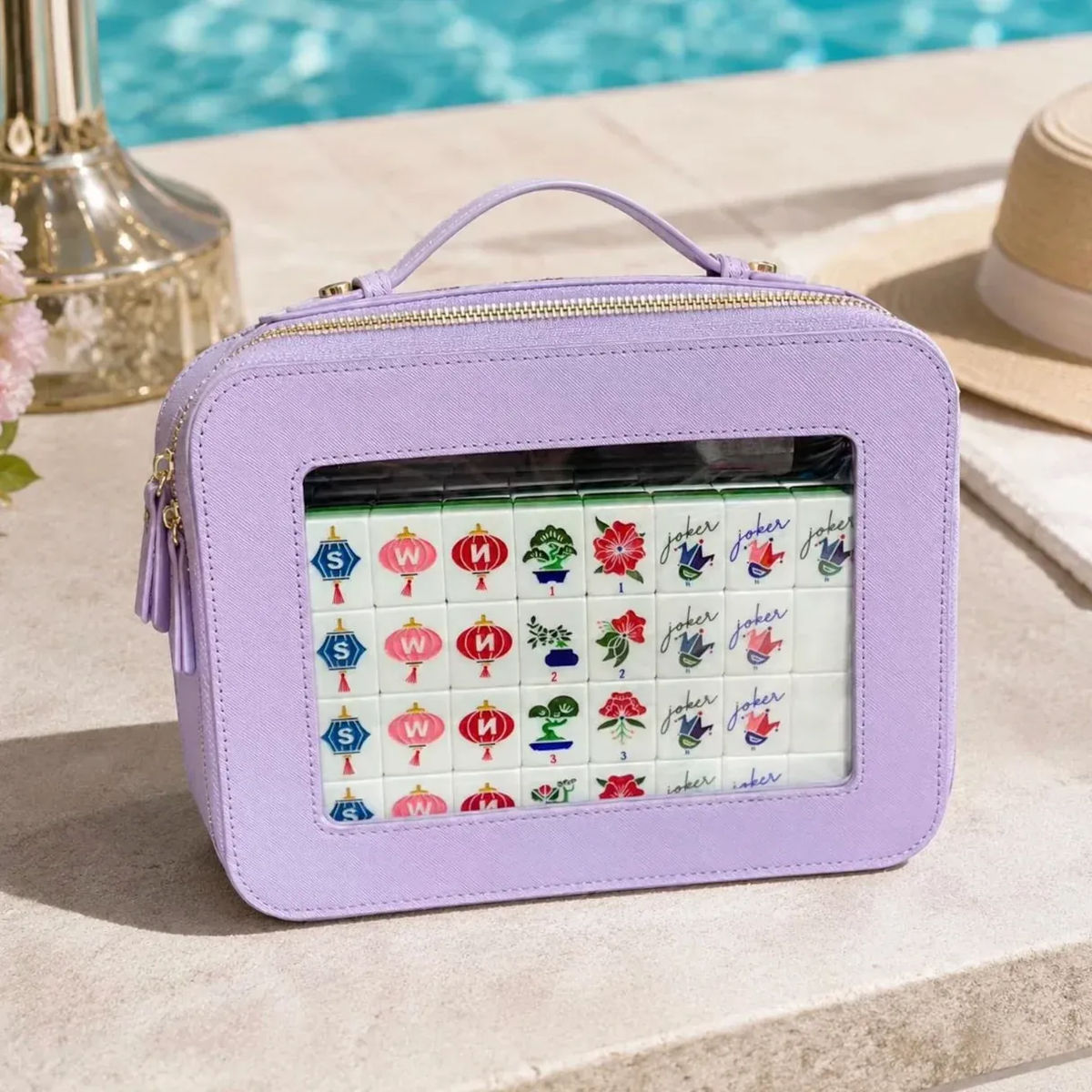
Bridge players excel at mahjong because both games demand precision, quick scanning, and table control. If you're making the switch, you'll want an American mahjong set with clear tile markings, sturdy racks that support fast discards, and a mat that won't shift during play. A standard 160-tile acrylic set with pushers—available from our best-selling collection—costs less than a new deck and lasts through hundreds of games. Look for sets with engraved suit symbols and numbers large enough to read without lifting tiles, racks with weighted or gripped bases, and a case or travel bag for protection. Avoid lightweight plastic sets that slide on cloth surfaces; they slow play and frustrate players accustomed to precision. Mahstead's engraved acrylic sets and matching mats are designed for exactly this crossover: serious tabletop gamers who already know how to host a game night properly.
Bridge players bring habits of order, fast-paced play, and exacting tile handling to mahjong. If you're making the switch, you'll want an American mahjong set with clear tile markings, sturdy racks that support fast discards, and a mat that won't shift during play. A standard 160-tile acrylic set with pushers—available from our best-selling collection—costs less than a new deck and lasts through hundreds of games. Look for sets with engraved suit symbols and numbers large enough to read without lifting tiles, racks with weighted or gripped bases, and a case or travel bag for protection. Avoid lightweight plastic sets that slide on cloth surfaces; they slow play and frustrate players accustomed to precision.
🀄 Shop best-selling mahjong sets →
Why bridge players pick up mahjong so fast
Bridge and mahjong both reward hand management, bidding logic, and real-time decision-making under time pressure. Bridge teaches you to hold and conceal tiles, count distribution, and read opponents' plays. Mahjong's National Mah Jongg League card—the hand guide you consult during play—functions like bridge convention charts: you learn to scan it fast and spot patterns. The main difference: mahjong enforces rotation (each player takes turns as dealer), and the Charleston tile-passing ritual replaces deal shuffling. Bridge players usually master American mahjong in 3–5 games because the tile-based scoring and pattern recognition tap skills you already own. Your edge: you're comfortable with racks, discards, and holding a quiet face during play.
What tile quality means for fast, accurate play
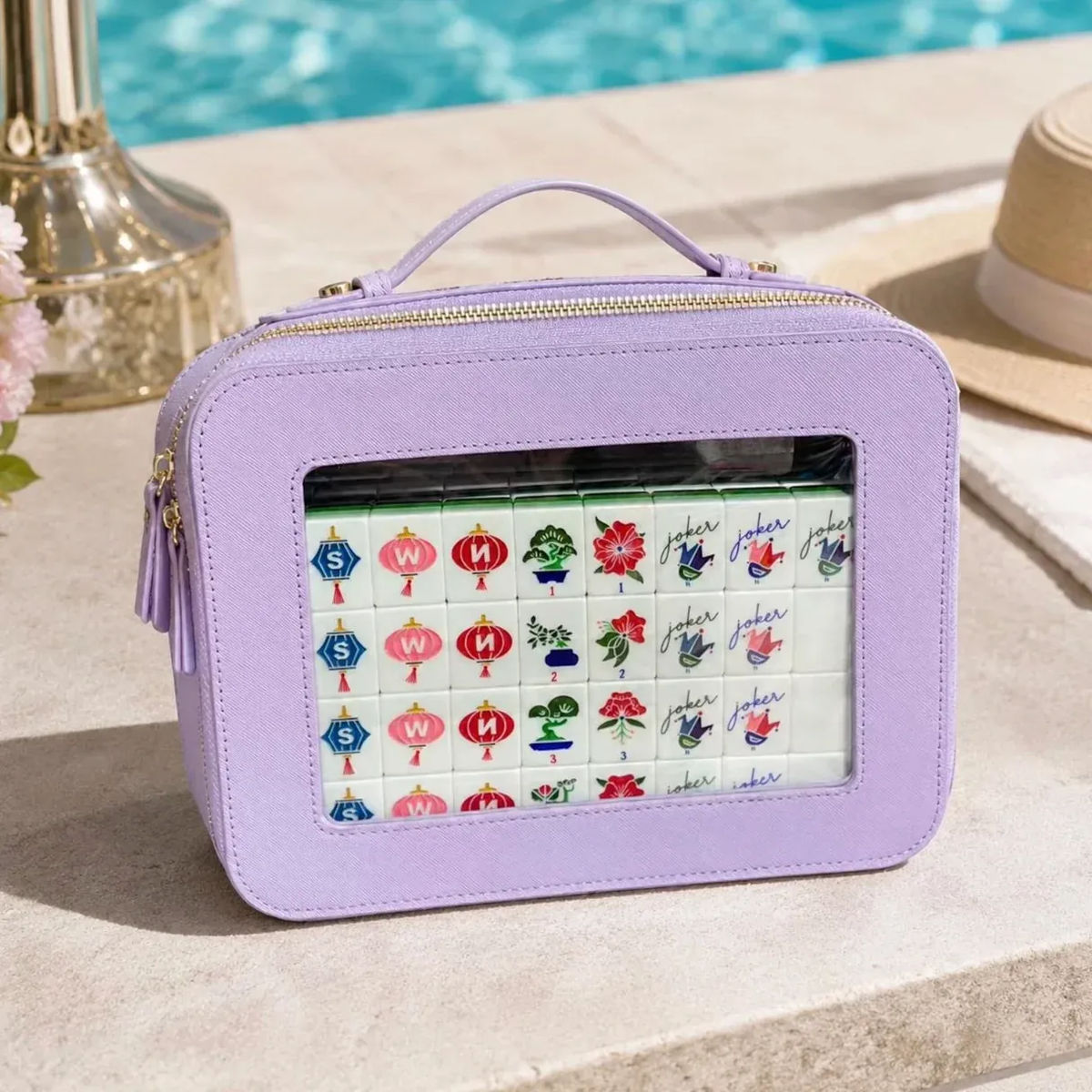
Bridge players read tiles by shape, color, and number in one glance. Acrylic tiles engraved with bold suit symbols (Bam, Crak, Dot) and clear numerals let you identify your hand without lifting a single piece. Cheap plastic sets use thin painted markings that wear off after weeks of shuffling; engraved tiles stay sharp for years. The weight matters, too: a standard acrylic tile (about 0.5 ounces) feels substantial in your palm and moves decisively across a mat. You need enough friction between tile and playing surface so a discard doesn't slide into your neighbor's rack. Lightweight tiles skate on cloth mats—they slow play and create disputes about whether a tile was truly played. Engraved American mahjong sets solve both: the markings stay visible through hundreds of games, and the heft rewards crisp, controlled movements. A precision player recognizes quality at first touch.
🎁 See our most-loved mahjong sets & accessories →
Racks and pushers: why bridge players demand pusher sets
In bridge, you arrange your cards in neat rows and execute plays without fumbling. Mahjong racks serve the same function: they hold 13 tiles in front of you, upright so only you see them, arranged in the order you choose. The pusher—a flat bar sitting at the base of each tile—lets you slide one tile forward to indicate your discard. This prevents the chaos of players reaching across the table or dropping tiles. Bridge players accustomed to crisp play expect racks with: (1) a solid base that doesn't tip when you push a tile, (2) slots deep enough to grip without tiles toppling, (3) pushers that slide smoothly and don't catch. Lightweight racks with shallow slots create friction and slow discards. Mahjong racks with pushers designed for serious play use weighted bases and precision-cut pushers so a 15-person game moves as fast as bridge: about 3–4 minutes per hand. If you're hosting, your guests will notice immediately.
Mats: stability, size, and the bridge player's preference
Bridge tables use felt or cloth to silence cards and prevent sliding. A mahjong mat does the same. Standard mats measure roughly 36" × 26" (enough for four players, racks, discards, and the player card). The mat's underside often has a rubberized backing to grip your table and prevent bunching during play. Bridge players notice mat quality because a bunching mat means constant adjustments—the opposite of flow. A good mat: (1) sits flat under its own weight, (2) uses textured fabric that grips tiles and slows accidental slides, (3) has marked discard areas so tiles don't drift into the center, and (4) rolls or folds neatly for transport. Some sets come with no mat; you'll play on a bare table and lose the tactile feedback of a controlled surface. Choosing a mahjong mat deserves the same attention you'd give a bridge table pad—it's the foundation of smooth play.

Comparison: three buying paths for bridge players
Scenario | Best choice | What you get | Why it works |
Hosting a regular game at your home | Best-selling set + mat + racks + case | 160-tile acrylic set, 4 racks, mat, travel bag | Full setup, professional feel, lasts years; your guests feel the difference |
Joining an existing game as a guest | Best-selling acrylic set alone | 160-tile set in a compact box | Plays anywhere; bring to weekly games; sets the standard for quality |
Gift for a bridge friend trying mahjong | Personalized tiles, matching mat | Shows you understand the hobby; the engraving is a keepsake; no learning curve on equipment |
✨ Find your Mahstead set — free US shipping →
What to check before you buy
Tile count and composition: A mahjong set must have exactly 160 tiles (152 playing tiles + 8 spares). Do not buy 144-tile "travel" sets if you're hosting; they're short two suits and won't support full games. Verify the set includes four copies of each number 1–9 in Bams, Craks, and Dots; four of each wind; four of each dragon; and eight flowers. Jokers are spares; never add them to play.
Rack fit: Hold the racks before buying if possible. They should fit your hand span comfortably and not tip when you push a single tile. Test the pusher with your thumb—it should slide with light pressure, not grind or stick.
Mat texture: Run your hand across the playing surface. It should grip a tile enough to stop a casual flick, but not so much that moving tiles becomes stiff. A mat that's too slick (glossy) frustrates bridge players; one that's too rough (terry cloth) feels cheap.
Case durability: Bridge players travel with their materials. A reinforced nylon bag with padded compartments protects tiles and racks. Check for interior organization: separate slots for racks, a zipped pocket for the tile set, and room for a mat rolled at the side.
Shipping and returns: Mahjong equipment ships free across the US from Mahstead. Verify your set arrives undamaged before your first game; check that all tiles are present and that racks don't rattle or show stress marks.
The bridge player's advantage in mahjong
You already know how to hold a hand, scan for patterns, and play under pressure. The tile quality, rack stability, and mat control you invest in now will pay back instantly when you host your first game. Bridge players who choose precision-made sets with racks and mats set a standard for their group: play moves fast, tiles stay where they're played, and everyone enjoys the ritual. Your experience hosting bridge nights means you'll spot the value of a solid case, a non-slip mat, and racks that don't wobble. Those details aren't luxuries—they're the difference between a game that flows and one that stutters.

FAQ
Do I need the National Mah Jongg League card to play?
Yes. American mahjong hands come only from the current year's official card, issued each spring. You'll consult it during play to verify hand patterns. Most groups print one card per player or keep a laminated copy at the table. Bridge players find this as natural as using a convention card.
Can I use bridge cards or chips for scoring?
No. American mahjong uses a tile-based scoring system tied to hand patterns and tile count. The card determines point value; you settle scores in cash (pennies per point) or chips per your group's rule. Learn to score American mahjong before your first game—it's different from bridge.
How many jokers are in a 160-tile set?
A standard American mahjong game uses 152 tiles (no jokers in play). The 160-tile set includes 8 extra jokers as spares in case one is lost or damaged. Jokers are never added to active play.
What if a bridge player wants to learn Hong Kong or Riichi mahjong instead?
Those variants use different hand patterns, rule sets, and sometimes fewer tiles. If you're joining a local American mahjong group, start with American rules and the NMJL card. If you're exploring other variants, confirm your group's rules before buying a set; they may require a different tile mix or no card at all.
Do engraved sets cost more than plain acrylic?
Engraved sets have clear, durable markings that never fade; plain acrylic tiles use painted symbols prone to wear. Both are acrylic and last years, but engraved tiles justify their value for hosted games. See current prices on the product page.


View More
View More
View More
