
Acrylic Mahjong Racks: Which Type Works Best for Your Game
Last updated: Nov 23, 2026
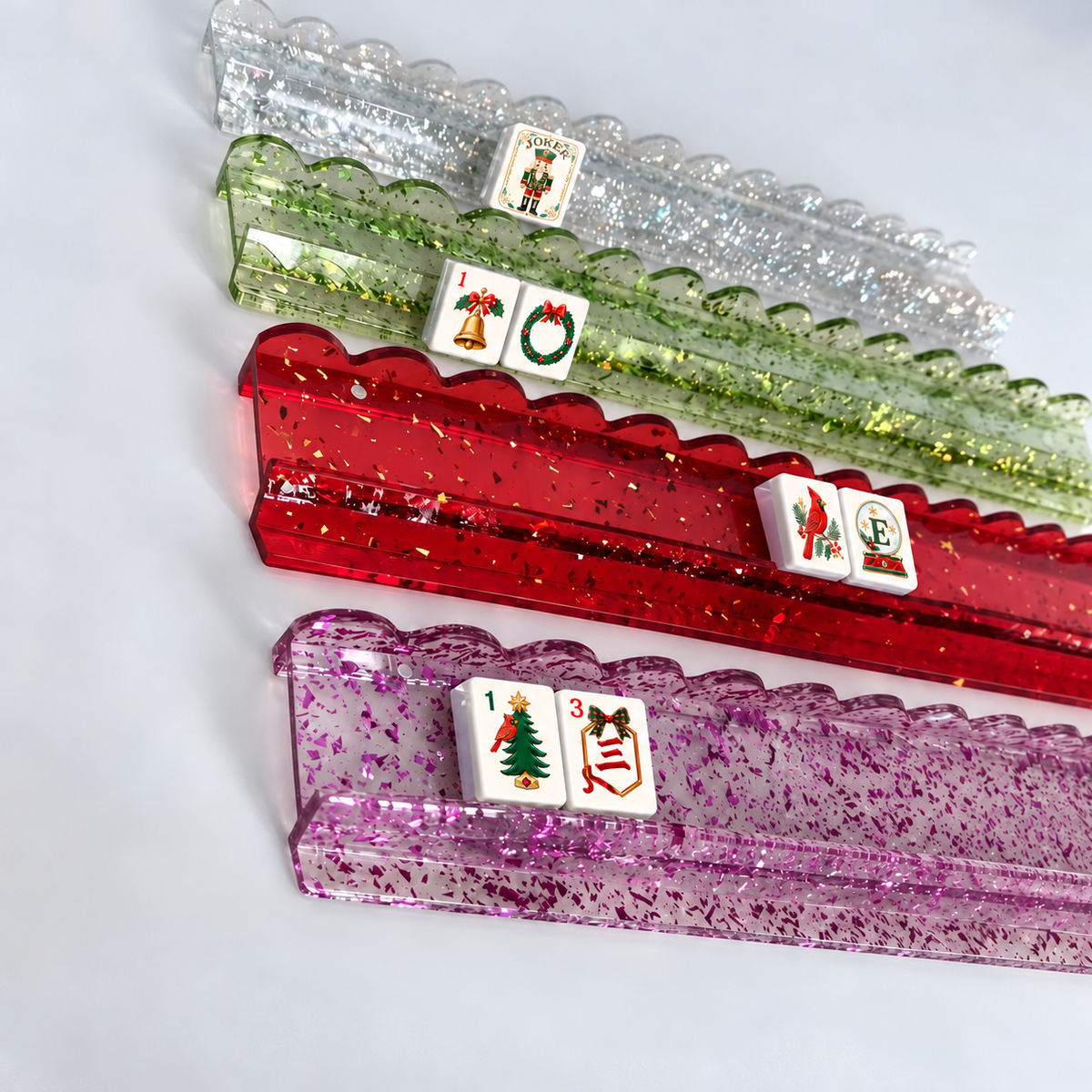
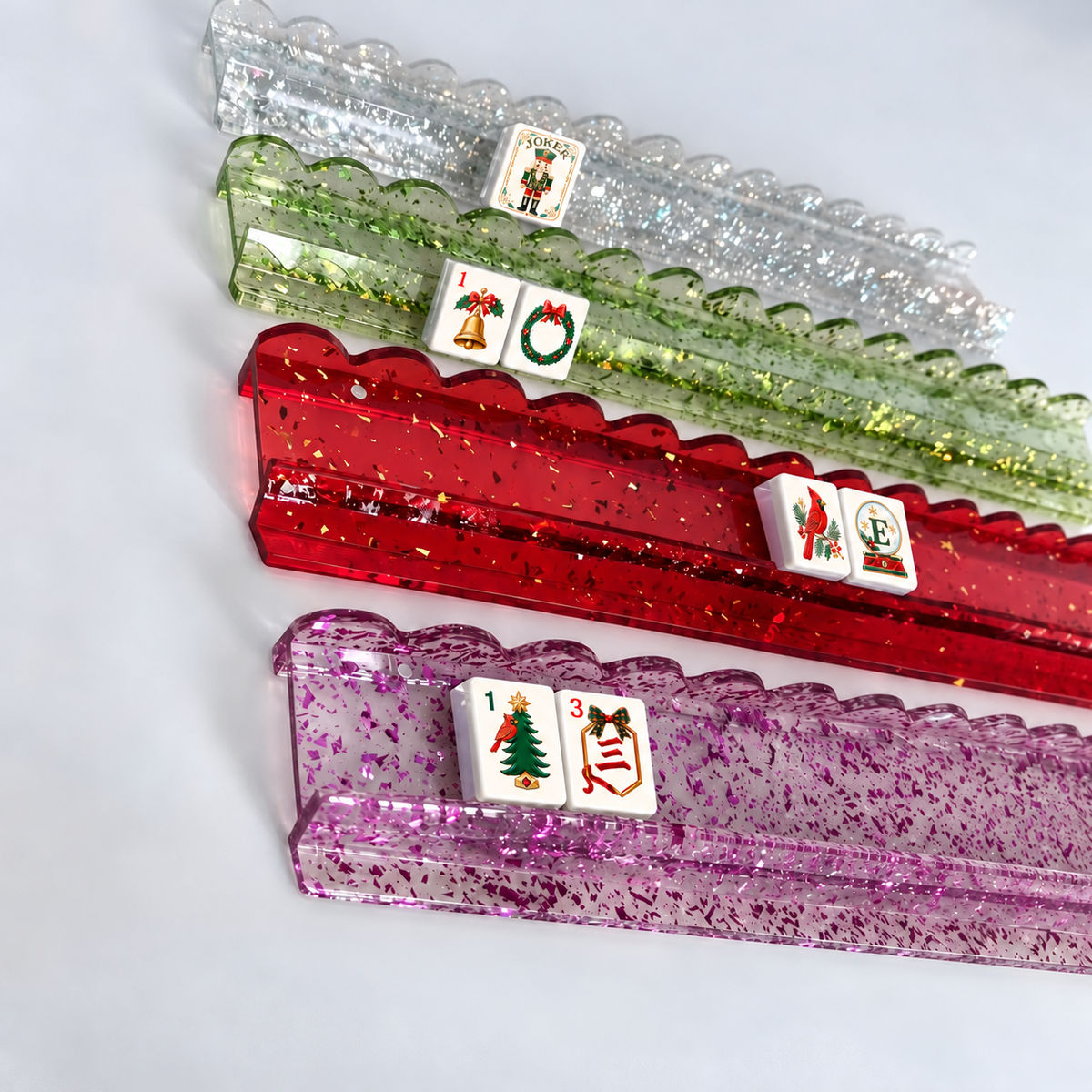
Acrylic mahjong racks are tile holders that sit in front of each player, displaying drawn tiles at a clear angle while pushers hide the tile face until play. American mahjong racks typically hold 14–16 tiles and come in three main types: compact open racks (lowest profile, best for small tables), pushers-included sets (slowest reveal, highest security), and wall-mounted or tiered designs (rare, specialist use). Most players buy racks as part of a full set from Mahstead's best-selling collection, where sets include four matching acrylic racks plus a mat, dice, pushers, and a case. Standalone rack replacements exist but are less common; most hosts simply reorder a complete set. Acrylic outlasts bamboo, won't yellow, and cleans with mild soap and water.
Acrylic racks are the backbone of a modern American mahjong game. They hold your hand upright, angled away from opponents' sight, and let you organize tiles for fast counting and calling. Before you shop, understand the real differences—because the wrong choice creates table friction, slow play, or hidden hands that breed mistrust.
What makes acrylic racks better than bamboo or wood?
Bamboo racks warp with humidity, splinter over years, and yellow under kitchen light. Acrylic holds its shape through decades of weekly games, resists stains and odor, and cleans in seconds. We've hosted games in Texas heat and dry winters; acrylic never shifts. Wooden racks look traditional but demand coasters, careful storage, and eventual replacement. Acrylic costs less upfront and lasts longer—a practical win for clubs, family players, and weekly hosts. Most modern sets use acrylic because retailers and players learned this lesson the hard way.
Do you need pushers with your racks?
Yes, if you want to prevent accidental tile reveals and keep the game fair. A pusher is a small flat stick, usually acrylic or bamboo, that sits in front of the rack to hide your tile faces until you've sorted your hand. When you draw a new tile, you push it onto the rack one tile at a time, keeping your full hand hidden until you're ready to display exposures (melds like pungs, kongs, or quints). Without pushers, casual players peek; serious players or money games demand them. Most mahjong racks with pushers come as a four-piece set (one for each player), stored flat in the case and deployed before play begins.
How do rack size and tile capacity affect gameplay?
Standard American racks hold 14–16 tiles comfortably. A 14-tile rack suits 4-player games where draws and discards stay tight; a 16-tile capacity lets you organize your hand with breathing room, useful if you sort by suit or number and like to rearrange mid-game. Compact racks (under 9 inches wide) fit tight dining tables but force tiles close together—fine for players with steady hands and good eyesight, cramped for those who prefer space. Wider racks (11–13 inches) suit larger tables and players who value ease of reading. Buy as part of a complete set and test the racks at your first game; if tiles feel crowded or the angle is too steep, you'll know before investing in spares. Mahstead's best-selling mahjong sets include racks sized for standard American play—the default works for 95 percent of home games.
🀄 Shop best-selling mahjong sets →
Should you buy standalone racks or a complete set?
Almost always buy a complete set. Standalone racks are rare, hard to match in acrylic style, and often cost more per unit than buying four racks as part of a full set. A complete set bundles racks, a mat, tiles, pushers, dice, storage case, and—crucially—everything sized and colored to work together. If you lose a single rack years later, you can order a replacement, but starting with a mismatched rack is a false economy. For new players, buy once from our mahjong racks collection and inherit the whole ecosystem. For seasoned players replacing old equipment, choose a set style that matches your play level: casual hosts pick modern engraved designs; serious players or clubs invest in durable, plain finishes designed to survive years of intensive use.

What's the difference between novelty-engraved and plain racks?
Novelty-engraved racks carry titles, jokes, or personal names laser-etched onto the acrylic—"Mahjong Night," "Tile Divas," "The Winners' Table," or initials. Plain racks are smooth acrylic, undecorated. Engraved designs are conversation starters, perfect for gifts or hosting parties; they make the game feel special and festive. Plain racks are professional, timeless, and ideal for clubs or regular weekly games where aesthetics are secondary to durability and function. Both are equally durable acrylic and hold tiles identically. The choice is personal: if you're hosting casual friends or marking a milestone, engraved American mahjong sets add personality; if you're a serious player investing in equipment for years of heavy use, plain acrylic is the safer bet.
Rack Type Comparison Table
Rack Style | Capacity | Best For | Durability | Setup Speed |
Compact open (no pusher) | 14–15 tiles | Small tables, casual play | High (acrylic) | Instant |
Standard with pushers | 14–16 tiles | Standard 4-player games | High, security-focused | 1 minute (setup) |
Engraved novelty | 14–16 tiles | Gifts, themed hosting | High (acrylic), personal flair | 1 minute (setup) |
Plain (professional) | 14–16 tiles | Clubs, weekly players, resale | Highest (timeless) | 1 minute (setup) |
🎁 See our most-loved mahjong sets & accessories →
What to check before you buy
Tile angle and visibility. Before ordering, ask the seller: what angle does the rack hold? A 45-degree tilt is standard; steeper angles hide your hand better but strain your wrist. Flatter racks are easier on shoulders but expose tiles to neighbors if they lean.
Pusher length and material. Pushers should extend the full width of the rack. Bamboo pushers feel traditional but can splinter; acrylic pushers last longer and slide smoother. Test both if possible; some players prefer the grip of bamboo, others the glide of acrylic.
Set contents and case. Confirm the set includes four racks (one per player), four pushers, a mat, dice, 160 tiles, and a case. If any piece is missing or sold separately, factor in the true cost. Mahstead's sets arrive complete; no surprises.
Acrylic thickness and clarity. Thin acrylic cracks under pressure; thick acrylic (⅛ inch or more) is standard. Check that the acrylic is clear (not cloudy) and free of bubbles. Cloudy acrylic is a factory defect and affects visibility.
Shipping and assembly. Acrylic racks ship well because they're lightweight and hard to break. Confirm free US shipping and that nothing requires assembly—Mahstead ships ready to play.
How to organize tiles in your rack for faster play
Once you have racks, speed improves with practice. Sort tiles into three columns: suited Bams on the left, Craks in the center, Dots on the right. Within each suit, arrange from low to high number (1–9). Honors (winds and dragons) group to the far left or right edge. Jokers stay at the top edge until played. This layout lets you call melds in under 2 seconds—your eyes find the pattern instantly. Pushers hide your hand while you arrange; opponents never see your sort strategy. New players should practice the sort at home before their first game to avoid slowing the table.
✨ Find your Mahstead set — free US shipping →

FAQ
Can I use old wooden racks with new acrylic tiles?
Yes, physically they fit. But wood warps in humidity and splinters; acrylic racks last longer and clean easier. If your wooden racks are comfortable and well-maintained, keep them—mixing materials is fine. For new purchases, choose one material per set for consistency.
Do I need pushers if I'm playing casually with friends?
No, pushers are optional for casual home games. They slow play and add setup time. Use them only if someone worries about hand-hiding or if money is on the table; otherwise, open racks speed the game and make tiles easier to read.
What's the standard rack width?
Most racks are 10–13 inches wide (per manufacturer specs). Compact racks fit tight tables; wider racks suit larger surfaces and players who spread tiles. There's no "standard"—test at your venue before ordering if possible.
Can I buy replacement racks individually?
Standalone racks are uncommon in retail. It's cheaper to buy a new complete set than hunt for matching replacements. If you lose a rack, contact Mahstead for availability; otherwise, reorder a full set.
Are engraved racks more fragile than plain ones?
No. Laser engraving doesn't weaken acrylic. Engraved racks are as durable as plain ones. The only difference is aesthetics—novelty designs are fun for gifts; plain is timeless.
How do I clean acrylic racks?
Wipe with a soft cloth and mild soap and water. Dry immediately. Avoid abrasive pads or harsh chemicals, which can fog the acrylic. Acrylic cleans far easier than bamboo or wood.


View More
View More
View More
