
Common Mistakes in Chinese Official Mahjong
Last updated: Nov 23, 2026
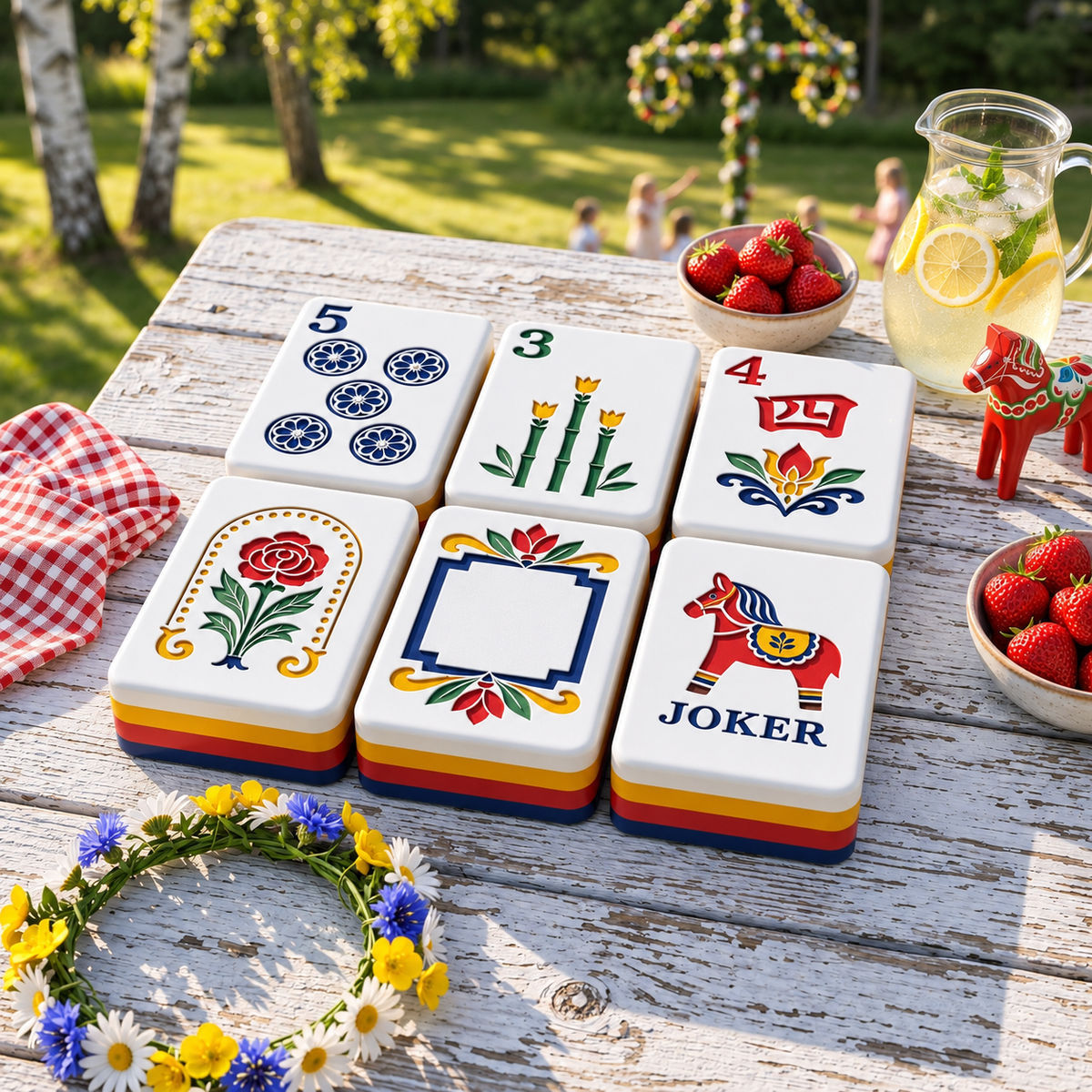
Chinese official mahjong uses the same 152-tile set as American play but replaces hand patterns from a printed card with 14-tile standing hands built around melds: pungs (three identical), kongs (four identical), chows (three consecutive in one suit), and pairs. The core mistakes American players make are: (1) trying to call chows or claim melds in ways American rules forbid, (2) misunderstanding which melds count toward a winning hand, (3) drawing and discarding in the wrong order, and (4) failing to honor the "eye" (the pair that must be present in every legal hand). We recommend learning one variant deeply before mixing rules; switching between American and Chinese play at the same table causes collisions.
Why do American players struggle with chows in Chinese mahjong?
In American mahjong, chows—sequences like 3-4-5 Bams—cannot be called or exposed by other players; they are purely personal melds that stay concealed until the hand is declared winning. Chinese official play allows any player to call a discard to complete a chow and expose it immediately. An American player discards a 5 Bam expecting it to stay in the pool; the player on the right calls it for a 3-4-5 Bam chow and claims the tile. The American player is shocked. The solution: memorize which discards are safe in Chinese play (typically tiles that already appeared in exposed melds or are unlikely to complete a chow) and accept that the game flows faster because more players claim tiles mid-hand.

What's the difference between a pung and a kong in Chinese rules?
Both pungs and kongs must contain identical tiles only—never mixed suits or numbers. A pung is three identical tiles; a kong is four. In Chinese play, a pung is almost always exposed (shown face-up on the table) when claimed or declared, while American play allows concealed pungs in the final hand. The biggest mistake is discarding a tile when you hold three of it, only to have another player immediately claim the discard to expose a pung and threaten the win. Another error: forgetting that after declaring a kong, you draw an extra tile from the end of the wall—American players often skip this step because American mahjong rarely involves kongs mid-play. Count your tile draws carefully and track how many are left in the wall.
How does the "eye" (pair) differ between variants?
Every winning hand in Chinese official mahjong must include exactly one pair—called the "eye." This pair sits outside any meld; it is never part of a chow or pung. American mahjong also requires a pair in winning hands, but since hands come from a printed card, the pair location is specified by the card. In Chinese play, you choose where the pair sits, and a common mistake is building a hand with two pairs (thinking one will serve as backup) or building without any pair at all, then being unable to win even after drawing a winning tile. Before declaring win, count: one pair + four melds of three tiles each = 14 tiles. If the count doesn't add up, your hand is dead.
Why is draw order and timing a trap for American players?
In American mahjong, each player draws one tile at the start of their turn and discards one at the end, and the Charleston happens before play begins. Chinese official play has no Charleston; the game starts with the East player already holding 14 tiles and all other players holding 13. On each turn, a player draws one tile and discards one, which means the hand size oscillates. An American player often loses track of the tile count and draws when they should discard, or discards when they should draw, throwing the entire table out of sync. The table must stop and recount. Remedy: say "draw" and "discard" aloud or point to the wall and discard pile before acting, and count your hand before each turn—it should be 14 tiles before you draw, then 15 after, then back to 14 after you discard.
🀄 Shop best-selling mahjong sets →
What scoring and winning declarations trip up switchers?
American mahjong assigns points based on hand complexity and rarity (from the printed card), and a player must match a hand exactly to the card to win. Chinese official play uses a point system based on the melds themselves and bonuses for specific patterns (like all pungs, or melds of the same suit). A player may win off a discard by calling it ("pung," "chow," or "kong") or by drawing from the wall. An American player often fails to recognize valid winning hands because they expect every winning combination to follow the American card's logic. Learn to scan for patterns: all same suit, all pungs, specific number combinations—these are common bonuses. Also, respect the "claim window": when a discard hits the table, other players have seconds to call it; if you hesitate, the turn passes. Study a Chinese rule sheet specific to your regional variant (Hong Kong, Taiwanese, Shanghai) because scoring and bonuses vary widely.

When should you avoid mixing American and Chinese rules?
The worst table is one where half the players follow American rules and half follow Chinese rules. Chaos ensues over whether chows can be called, how many tiles you can expose, and what wins. We've hosted games where an argument over a single discard consumed 20 minutes because the rulebook was ambiguous. Solution: at the start of the session, all four players agree on one variant and one rulebook. Post a cheat sheet on the mat or keep a rules sheet visible. If players are learning, stick to one variant for the entire session—do not switch mid-game. If your group has a mix of skill levels, rotate who plays which variant, or run two separate games rather than contaminating one.
What tile visibility errors do beginners make?
In Chinese play, concealed melds (tiles in hand, not yet exposed) are private; exposed melds sit face-up for all to see. An American player sometimes exposes a pung accidentally (leaving it slightly visible in their rack) or fails to expose a declared pung or kong properly, leading to disputes over which tiles are claimed vs. private. Clear communication is essential: when you call a tile for a meld, state the meld name ("pung," "chow," "kong"), show it on the table in front of you, and then rearrange your hand. Use racks with pushers to keep tiles separate and upright; pushers make it almost impossible to accidentally show or hide a tile. Another tip: use a muted or textured table rather than glass or glossy plastic, which can reflect tile faces and create accidental visibility.
🎁 See our most-loved mahjong sets & accessories →
Error | American Rule | Chinese Official Rule | Why It Matters |
Chows | Never called or exposed during play | Any player can claim a discard for a chow | Discards feel less safe; game tempo is faster |
Pung concealment | Can stay hidden in final hand | Usually exposed when claimed or declared | Table sees more melds; fewer hidden surprises |
Pair ("eye") | Required; location set by hand card | Required; player chooses location | Must count to 14 before winning |
Draw/discard order | Fixed: draw then discard each turn | Draw, then discard (hand swings 13–14–13) | Miscount loses the game for everyone |
Scoring | Points based on hand rarity from card | Points based on meld patterns and bonuses | No printed card to reference; learn patterns |
Win declaration | Must match exact card pattern | Call "pung," "chow," "kong," or draw to win | Claiming rules are active and fast |
What to check before you buy a set for Chinese play
Before investing in a new set, confirm your group's rules: ask whether you're playing Hong Kong, Taiwanese, Shanghai, or another regional variant—each has scoring tweaks. Ensure the tiles are large and clearly marked (numbers and suit symbols must be visible at arm's length) so melds are spotted instantly. If you're mixing skill levels, choose tiles with thick prints that don't fade or rub off; we've seen players struggle with worn tiles in online groups because they can't read the faces. Count the jokers in your set: Chinese play uses fewer jokers than American (typically 0–2 per game, not the 8 in American play), so a standard 160-tile set has more than enough. Store the set flat in a padded bag or case to prevent warping, which causes tiles to stick in melds or expose hidden tiles when you don't want them to.
Common beginner Q&A
Q: Can I use an American mahjong set to play Chinese official mahjong?
A: Yes. Both use 152 identical tiles. The difference is the rules and hand patterns, not the equipment. You'll discard the printed card and play by Chinese variant rules instead. No set conversion needed.
Q: Do I need to learn joker rules for Chinese mahjong?
A: Jokers are typically not used in traditional Chinese official play, or are used sparingly (0–2 per hand as per house rules). Check your group's rulebook. American mahjong relies heavily on jokers to complete hands; Chinese play does not.
Q: How long does it take to learn Chinese mahjong if I know American?
A: Switching variants takes 2–4 weeks of weekly play if you study the rulebook and stay focused on one variant. The tile knowledge transfers; the meld and scoring logic must be relearned.
Q: What if someone declares a winning hand that breaks the rules?
A: Stop the game, count the tiles aloud, and check them against the rulebook. If the hand is illegal (wrong pair count, invalid melds), that player cannot win that round. Note the error and resume.
Q: Is Chinese mahjong played with a mat and racks like American?
A: Yes. We recommend a durable mat to keep tiles in place and racks with pushers to organize your hand and prevent accidental exposure.
Q: Can I switch between American and Chinese rules in the same sitting?
A: Not recommended. Pick one variant and play it for the entire session. Switching mid-game causes disputes and slows play to a crawl.
✨ Find your Mahstead set — free US shipping →
Ready to dive into the mahjong variants pillar? Start with a clear rulebook for your chosen variant, a well-lit table, and racks that keep your tiles upright and visible. The rest is repetition and respect for the rules.

FAQ
What is the main error American players make when switching to Chinese official mahjong?
Trying to play chows as hidden, personal melds. In Chinese official play, chows are actively called and exposed by other players, making discard safety and game tempo very different from American rules.
Can you use the same tiles for American and Chinese mahjong?
Yes. Both variants use a 152-tile set with identical suit and number distributions. The rules and hand patterns differ, not the equipment.
How do I count a legal winning hand in Chinese mahjong?
One pair (the "eye") plus four melds of three tiles each (pungs, kongs, or chows) equals 14 tiles. If your count differs, the hand is dead and cannot win.
Why do tile visibility and rack organization matter in Chinese play?
Concealed tiles must stay hidden; exposed melds must be clear and readable. Poor organization leads to accidental exposure or disputes over which tiles are claimed. Racks with pushers eliminate this problem.
Should I mix American and Chinese rules at the same table?
No. Mixing rules causes confusion over chows, melds, and win declarations. All four players must agree on one variant and one rulebook for the entire session.
How many jokers does Chinese official mahjong use per hand?
Typically 0–2, depending on regional rules. American mahjong uses 8 jokers per game. Check your local rulebook to confirm before play.


View More
View More
View More
