
Chinoiserie Mahjong Set: What to Choose & Why
Last updated: Nov 23, 2026
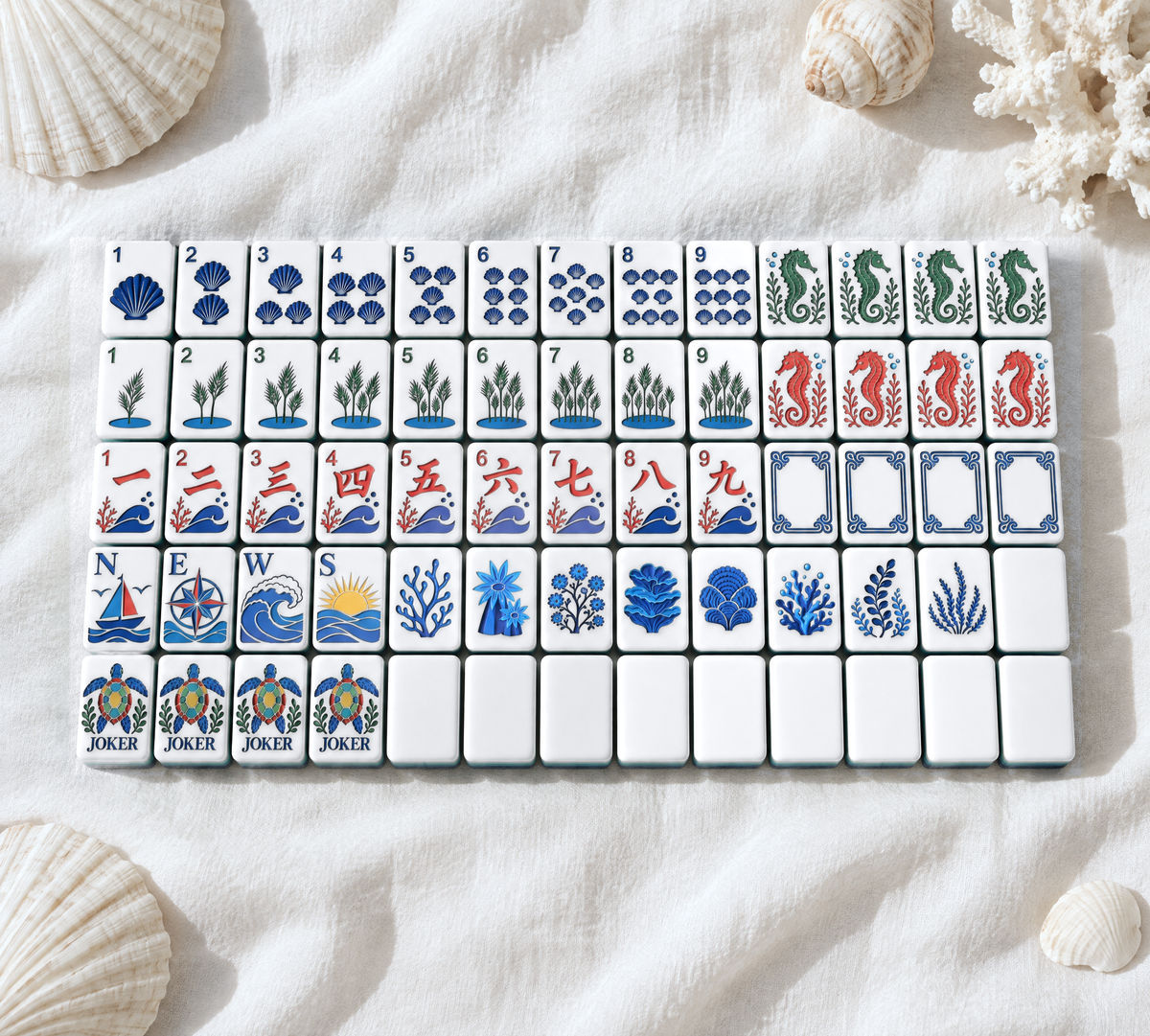
A chinoiserie mahjong set merges traditional Chinese or pan-Asian visual motifs—lacquer finishes, hand-painted dragons, jade-inspired colors, ornamental tile faces—with modern American mahjong rules and the 152-tile count. These sets range from subtle (tone-on-tone painted numerals) to bold (gilt detailing, sculptural racks, silk-lined cases). Cost varies widely based on tile material, hand-painting labor, and case quality. Acrylic chinoiserie sets from our best-selling options offer durability in weekly games: they resist cracking, shuffle smoothly, and retain painted detail through thousands of plays. Before ordering, confirm 152 tiles plus 8 jokers, check tile weight (3–5 grams is ideal), verify case foam lining, and ask whether decorative racks or pushers are included.
🀄 Shop best-selling mahjong sets →
Why choose chinoiserie over plain American sets?
Chinoiserie mahjong sets appeal to players who want their game table to reflect décor, family heritage, or simple joy in beauty. A decorated set doesn't change gameplay—it still requires the same American mahjong rules, card reading, and tile counting—but it transforms the ritual. We've found that hosting with a visually distinctive set encourages slower, more mindful play and often draws new players in. Hand-painted details, inlaid mother-of-pearl accents, or enamel-work on racks create an heirloom quality that plain sets can't match. The trade-off: decorative sets require more careful storage (avoid extreme heat or humidity, which can crack lacquer) and sometimes cost 20–40% more than utilitarian acrylic. If you play weekly and love your table to show it, chinoiserie justifies the investment.

What materials actually hold up in a real game?
Acrylic chinoiserie tiles are the sweet spot for durability and beauty. They withstand shuffling, stacking, and years of weekly play without chipping painted numerals the way composite or cheaper resin can. Resin chinoiserie sets look gorgeous but often feel heavier (4–6 grams per tile), slow down rapid tile draws, and can yellow or cloud over 5+ years. Lacquered wood or bamboo racks with acrylic tiles is a classic pairing—the aesthetic holds up, but wood can warp if stored in damp basements or near radiators. We test all our acrylic sets by shuffling 500+ times before boxing; the paint stays crisp. Before ordering, ask the vendor for a material breakdown: if it says "acrylic tiles with resin accents," confirm which parts are resin (usually decorative dragons or case trim, not the 152 playing tiles). Avoid "mixed material" sets where the number tiles are one compound and honor tiles another—they shuffle unevenly and can jam in racks.
🎁 See our most-loved mahjong sets & accessories →
How does a chinoiserie set fit your game space?
Chinoiserie design ranges from restrained (ivory tiles with black numerals, minimal case ornament) to statement pieces (gold-inlaid dragons, lacquered hardwood racks, silk drawstring bags). Your choice should echo your regular play environment. A formal dining room benefits from jewel-tone tiles and a case with brass hardware; a casual living-room game works with lighter pastels and a soft travel bag. Consider how visible the case is when closed—some chinoiserie cases are display-worthy, meant to sit on a shelf; others are meant to live in a closet. Also weigh your racks. Decorative racks with ornamental pushers slow tile draws slightly (friction from carved detail) but add elegance; plain acrylic racks play fastest. Check whether your mat (if you use one) complements the tile colors. A burgundy or deep green mat can look jarring against soft celadon tiles, but a cream or taupe mat unifies them. If you're buying a full set including mat and racks, most chinoiserie-style collections coordinate these for you.

What's the difference between hand-painted and printed chinoiserie?
Hand-painted chinoiserie tiles carry detail that printed tiles cannot: brushwork texture, slight color variation from tile to tile (which looks rich, not sloppy), and longevity. Paint adheres better than ink; after 1000 shuffles, a hand-painted numeral stays sharp while printed numerals can blur or fade. Hand-painted sets cost 30–50% more but last decades. We've hosted games with hand-painted sets that are 15+ years old; tiles are still brilliant. Printed sets look identical when new and cost less, but the economic advantage erodes if you play weekly—you'll likely rebuy one in 5–8 years. If you play casually (once or twice yearly), printed is fine. If you're a regular and want your set to feel like an heirloom, hand-painted justifies the extra spend. A middle ground: photo-transfer chinoiserie, which applies a detailed image under a protective acrylic coating. It lasts longer than ink printing but costs less than hand-painting. Ask vendors whether detail is hand-applied, printed, or transferred; it's usually in the product description.
How to compare chinoiserie sets side-by-side before you buy
Use this checklist to evaluate options across vendors:
Feature | What to look for | Why it matters | Deal-breaker if… |
Tile material | 100% acrylic playing tiles | Acrylic resists cracking, shuffles smoothly | Set uses mixed materials or composite |
Tile weight | 3–5 grams per tile | Lighter tiles draw faster, heavier slow you down | Over 6 grams (fatigues hands) or under 2.5 (feels cheap) |
Numerals | Hand-painted or transfer (not ink-printed) | Lasts through 1000+ shuffles without fading | Ink-only; will blur in 3–5 years |
Tile count | Exactly 152 tiles + 8 jokers | American mahjong standard; confirm total | Fewer than 152 or unclear joker count |
Case interior | Foam-lined compartments for each honor | Protects tiles from shifting during transport | Loose tiles in a cloth bag (tiles crack, paint chips) |
Racks | Included with matched pushers (or optional) | Slows play tactically; must match tile aesthetic | Racks sold separately at 50%+ of set cost |
Finish | Lacquer, acrylic coating, or natural polish | Resists moisture, dust, staining | Unfinished wood or thin varnish |
Before you order: Email the vendor with a photo of your game table and ask whether they'd recommend matte or glossy finish, and which of their chinoiserie colors suits your décor. Serious sellers respond thoughtfully. If they ignore you or push the most expensive option, shop elsewhere. We always want you playing with a set you love, not one that felt wrong when it arrived.
Chinoiserie + American mahjong: do the aesthetics change the rules?
No. A chinoiserie set plays exactly the same as a plain set. You still need the current-year National Mah Jongg League card, you still perform the Charleston tile pass the same way, jokers work identically, and scoring doesn't shift. The beauty is ritual and joy, not mechanics. That said, ornate racks can slow the draw by a fraction of a second (carved detail adds friction); if your group plays speed mahjong, mention this to your vendor and ask for smooth-finish pushers. Similarly, if tiles are very decorative (raised enamel work, pronounced sculptural numerals), they can stack awkwardly in a tight rack. Test the fit before your first game if you're buying an unfamiliar set. We've hosted tournaments with simple acrylic sets and ornate chinoiserie sets side-by-side—the beautiful set didn't slow us down, but it did make us linger over the game.
✨ Find your Mahstead set — free US shipping →
What to check before you buy a chinoiserie set
Confirm the complete tile list. 152 identical playing tiles (Bams, Craks, Dots, Winds, Dragons, Flowers) plus 8 jokers, totaling 160 tiles in play. Any set missing jokers or with fewer than 152 isn't complete American mahjong.
Ask about painted detail coverage. Do all 152 tiles have hand-painted or transfer numerals, or only the honor tiles? If only honors are decorated, the numbered tiles may feel plain by comparison.
Check case lining. Foam compartments should hold tiles snugly so they don't rattle or chip during shipping. Loose tiles in a bag lead to paint loss and cracked edges.
Verify racks and pushers are included. Some chinoiserie sets sell racks separately at significant cost. Know the total investment upfront.
Ask about storage conditions. Lacquered or enamel finishes need cool, dry storage. If you live in a humid climate or near a heating vent, ask whether the finish is moisture-resistant.
Request a sample or photo of an actual finished unit. Vendor photos are often idealized. Seeing a real tile close-up (numerals, finish, color accuracy) helps avoid surprises.
Confirm free shipping and return policy. Sets are heavy; shipping costs add up. Check whether returns are free if the set isn't as pictured.

FAQ
Is a chinoiserie set more fragile than a plain mahjong set?
No. Acrylic chinoiserie tiles are just as durable as plain acrylic. The difference is maintenance: lacquered cases and hand-painted details need cool, dry storage and gentle handling. Avoid extreme heat, direct sunlight, and damp basements. Played indoors at room temperature, they last 15+ years.
Can I use a chinoiserie set for speed mahjong or tournament play?
Yes, if the tiles shuffle smoothly and stack properly in your racks. Test the tile weight and rack fit before committing to a tournament. Some ornate designs can catch in racks; ask the vendor about this. American mahjong tournament rules don't restrict set aesthetics.
How much more expensive is hand-painted chinoiserie than printed?
Hand-painted typically costs 30–50% more, based on vendor pricing and material complexity. The premium reflects labor (each tile is individually brushed) and longevity. For casual play, printed saves money; for weekly games, hand-painted pays off over 5–10 years.
Do I need a special mat or case for a chinoiserie set?
No. A chinoiserie set uses the same 152-tile structure as any American mahjong set, so standard mats, racks, and cases fit. However, aesthetically coordinating your mat and case with your tiles elevates the experience. See our mahjong mats collection for colors and textures that complement decorative sets.
What if I buy a chinoiserie set and it doesn't match my table décor?
Return it, if the vendor allows. Always confirm the return window and condition before ordering. We recommend buying from sellers with clear 30-day return policies. If unsure, ask to see a photo of a finished set next to a neutral background, or request a fabric swatch sample if the set includes a bag or mat.
Can I engrave or personalize a chinoiserie set?
It depends on the base material and existing design. Acrylic chinoiserie sets with hand-painted details are difficult to engrave without disturbing the paint. Plain-tile acrylic chinoiserie sets (neutral base, decorative racks/case only) can sometimes accept engraving. Ask the vendor whether personalization is available. We offer engraved American mahjong sets on custom orders; some may accept chinoiserie aesthetics as well.


View More
View More
View More
