
Large Print Mahjong Set: Choose the Right Tile Size for Your Game
Last updated: Nov 23, 2026
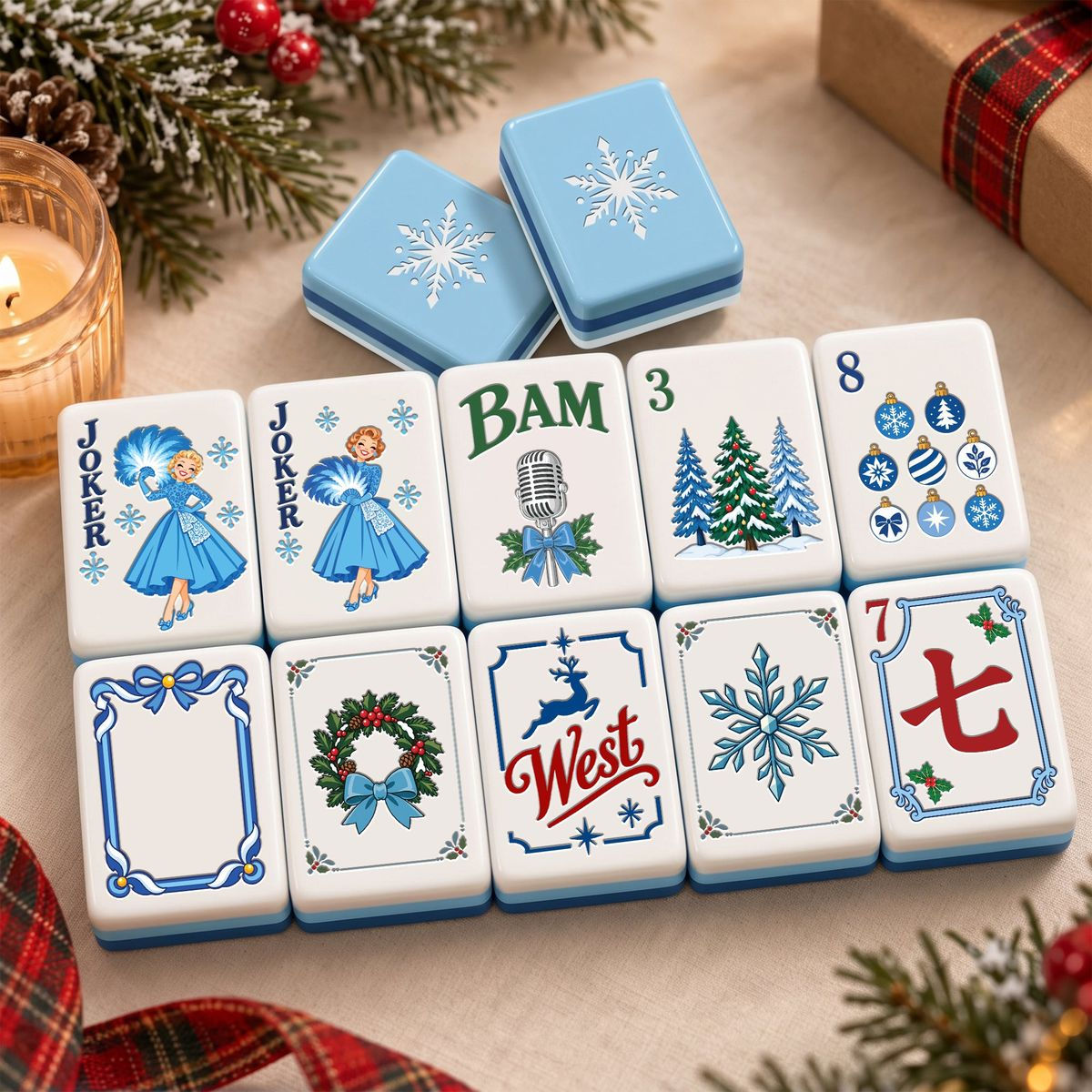
Large print mahjong sets feature tiles with bolder, more legible characters and symbols, making them ideal for players who struggle with standard 1-inch tiles or prefer seeing tiles clearly during fast play. The term refers more to character boldness and contrast than absolute tile size—most American mahjong sets use 1¼-inch tiles as standard, but the engraving depth, font weight, and background color matter far more for readability. Sets with deeper engravings and high-contrast finishes (white symbols on dark bamboo or jade resin, for example) feel easier on the eyes than flat-printed versions. Acrylic sets, which dominate American play, offer superior clarity because light passes through the tile, making symbols pop. Our best-selling mahjong sets include options with heavy engraving; you'll want to compare samples or ask sellers for close-up photos before ordering. Cost varies widely—expect mid-range pricing for good print clarity—but what matters most is checking the contrast ratio and asking whether engravings are hand-cut (sharper) or machine-routed (consistent). Avoid sets where photos show symbols that fade into the tile color or where the print appears faint under table lighting. 🀄 Shop best-selling mahjong sets →
What does "large print" actually mean in mahjong?
"Large print" in mahjong is marketing shorthand, but it doesn't always mean bigger tiles. It usually describes sharper engraving, higher contrast, or bolder lettering rather than a literal jump in size. Standard American tiles are 1¼ inches; we rarely see sets larger than that without custom orders. The real gain comes from deep, hand-cut engravings that catch light and create shadow, making symbols visible even in dim lighting or from a distance. Acrylic and resin materials excel here because the characters are carved or embedded into the tile itself, not printed on top. When shopping, ask for close-up photos of the tile face under different lighting angles—that's your best test.

Who really needs a large print set?
Large print sets suit players with presbyopia (age-related vision changes), players who sit further from the wall during play, and anyone hosting mixed-age games where younger players have normal sight but older players benefit from enhanced clarity. They're also chosen by groups playing in venues with poor overhead lighting, such as community center basements or outdoor patios at dusk. If your regular game includes anyone who squints at tiles, leans forward repeatedly, or asks other players to read tiles aloud, a large print set upgrades everyone's comfort and pace. It's not strictly necessary for younger players with 20/20 vision, but it rarely hurts—clearer tiles simply make the game flow faster for all.
How does tile material affect readability?
Acrylic and polished resin tiles offer dramatically better print clarity than plastic or bamboo because light transmits through or reflects off a smooth, consistent surface. Hand-engraved acrylic tiles—where symbols are routed into the tile face and often inlaid with contrasting paint—create a 3D effect that catches light and shadows, making symbols "pop" under any angle. Machine-stamped tiles can achieve similar results if the depth is consistent and the finish is smooth. Bamboo tiles, traditional in Chinese and Hong Kong games, typically feature painted symbols that wear over time; they're beautiful but require strong lighting and closer viewing. For American mahjong, where the game is fast and tiles change hands frequently, acrylic with deep engravings is the industry standard for clarity. If you're shopping online, request or search for "engraved" or "hand-cut" tiles—those keywords signal superior print definition.
✨ Find your Mahstead set — free US shipping →
Comparing tile sizes and designs: a quick reference
Design Type | Tile Size | Best For | Print Clarity | Light Sensitivity |
Standard acrylic, deep engraving | 1¼″ | Most players, all ages | Excellent | Low—works in dim venues |
Acrylic with inlaid paint | 1¼″ | Players wanting vibrant color | Excellent | Low—paint sits in routed grooves |
Polished resin (jade/marble finish) | 1¼″ | Players seeking luxury feel | Very good | Moderate—glossy finish can glare |
Laminated bamboo (Hong Kong style) | 1″ or smaller | Traditional game enthusiasts, collectors | Fair—requires strong light | High—painted symbols fade in shadows |
Double-sided tiles (some acrylic sets) | 1¼″ | Scoring or variant play | Excellent | Low—both sides readable |
The takeaway: acrylic with deep engravings beats all other materials for readability in standard American play.
What to check before buying a large print set
Before ordering, verify three things: (1) Engraving depth—ask the seller for a close-up photo or video showing tile symbols under raking light (light from the side); deep shadows mean sharp readability. (2) Material and finish—confirm tiles are acrylic or polished resin, not flat-painted plastic; ask whether engravings are hand-cut or machine-routed. (3) Character contrast—the symbols should stand out from the tile background; if the photo shows faint or blended lettering, move on. Request or look for images of all four suits (Bams, Craks, Dots, winds) to ensure consistent quality. Check whether the set includes 152 usable tiles plus spares (most American sets do), and confirm you're ordering from a US seller if you need quick delivery. Mahstead's engraved American mahjong sets are a solid starting point for comparison—you can see samples in their collections and compare engravings against other vendors.

Size and spacing on the mat: does layout matter?
Tile size affects how many tiles fit comfortably on a standard mat. A 1¼-inch American tile leaves adequate spacing for a 4-player game on a 32–36 inch mat; larger tiles would crowd the layout. The real usability gain comes from mat design: quality mahjong mats with marked zones and a non-slip base keep tiles organized and visible from all angles, which compounds the benefit of large print tiles. If your group is aging or includes players with mobility issues, pair a large print set with a mat that has raised or textured zones; that combination lets players locate tiles by feel and sight. Some mats include guides for tile stacking or sorting, which is a godsend if someone's vision or fine motor skills are declining. In short: large print tiles + a well-marked mat = the clearest, slowest-paced game your group can have.
🎁 See our most-loved mahjong sets & accessories →
Engraving vs. printing: the clarity showdown
Hand-engraved tiles have symbols routed or carved into the acrylic, then often inlaid with paint—this creates permanent, high-contrast symbols that survive hundreds of games. Machine-printed tiles have symbols applied to the surface, which can fade or scratch with heavy use. In a weekly game over 2-3 years, engraved tiles remain crisp; printed tiles begin to look worn. Engraved tiles typically cost more upfront but hold value and playability longer. For a large print set, engraving is non-negotiable—it's the technology that creates the clarity you're paying for. When comparing sets, ask directly: "Are these tiles engraved or printed?" If the seller hesitates or uses vague language like "detailed" or "high-quality," ask for a macro photo of a worn tile from a demo set. Mahstead's engraved American mahjong sets use hand-cut engravings, which sets them apart from mass-market flat-print alternatives.
Storage and transport: protecting your investment
A large print set is an investment, so plan for protection. Acrylic tiles are durable but can scratch or crack if loose in a bag. Mahjong bags and cases with custom compartments or rigid interiors preserve tile clarity by preventing surface damage and minimizing chipping. A dedicated case also keeps your mat, racks with pushers, and dice organized for game night setup. If you're hosting weekly games or traveling to another player's home, investing in a quality case pays off within a season—scratched tiles become unreadable under light, and once engraving clarity is compromised, you can't restore it. Choose a case sized for 160-tile sets (152 playing tiles plus spares); overstuffed cases promote friction and damage.
What to check before you buy
Readability checklist:
[ ] Request a macro photo of tiles under raking (side) light—symbols should cast shadows
[ ] Confirm tiles are acrylic or polished resin, not plastic
[ ] Ask whether engravings are hand-cut; machine-routed is acceptable if depth is >0.5 mm
[ ] Check that all four suits (Bams, Craks, Dots, winds) are equally crisp in photos
[ ] Verify the set includes 152 playing tiles plus spares
[ ] Test contrast: can you read symbols from 3 feet away in the photo?
[ ] Confirm US-based shipping if you need delivery within 2 weeks
Game-setup checklist:
[ ] Pair your set with a quality mat that has marked zones
[ ] Invest in a case or bag if you're hosting or traveling
[ ] Check your venue's lighting before the first game—bring a portable lamp if needed
[ ] Have a demo game with your actual player group to confirm everyone can read tiles comfortably

FAQ
Is a large print set the same as a bigger tile?
Not exactly. "Large print" usually means sharper, deeper engravings and higher contrast, not necessarily larger physical tiles. Standard American tiles are 1¼ inches; the clarity upgrade comes from hand-cut engravings and quality materials like acrylic, not size alone.
Can I use a large print set with players who have normal vision?
Absolutely. Clearer tiles make the game faster and more enjoyable for everyone—not just older players or those with vision issues. Younger players benefit from faster tile recognition, which speeds up play and reduces mistakes.
What's the best material for a large print American mahjong set?
Acrylic with hand-cut engravings is the gold standard. Polished resin is also excellent. Avoid flat-painted plastic or bamboo if clarity is your priority; those materials don't hold sharp engravings or fade over time.
How do I know if engravings are hand-cut vs. machine-printed?
Ask the seller directly. Request close-up photos of tiles under raking light—hand-cut engravings cast clear shadows and appear 3D. Printed tiles look flat and can fade or chip easily.
Do I need a special mat for a large print set?
Not required, but pairing your set with a mat designed for American mahjong amplifies the benefit—marked zones and non-slip backing let all players see and organize tiles clearly.
How much should I spend on a large print set?
See current price on the product page. Quality acrylic sets with deep engravings range across the Mahstead collection; compare specs (engraving depth, material, finish) rather than price alone—a mid-range engraved set outlasts a cheap printed set.
Will my large print tiles scratch or fade with weekly play?
Hand-engraved acrylic tiles are durable and resist fading for years of weekly play. Printed tiles can fade or chip within 1-2 seasons. A protective case extends the life of any set by preventing surface damage during transport.
Can I get a large print set in time for this month's game?
See current information on shipping options when you order. Mahstead offers free US shipping; delivery time varies by location and order date.


View More
View More
View More
