
Can You Call a Tile for a Pair in Mahjong?
Last updated: Nov 23, 2026
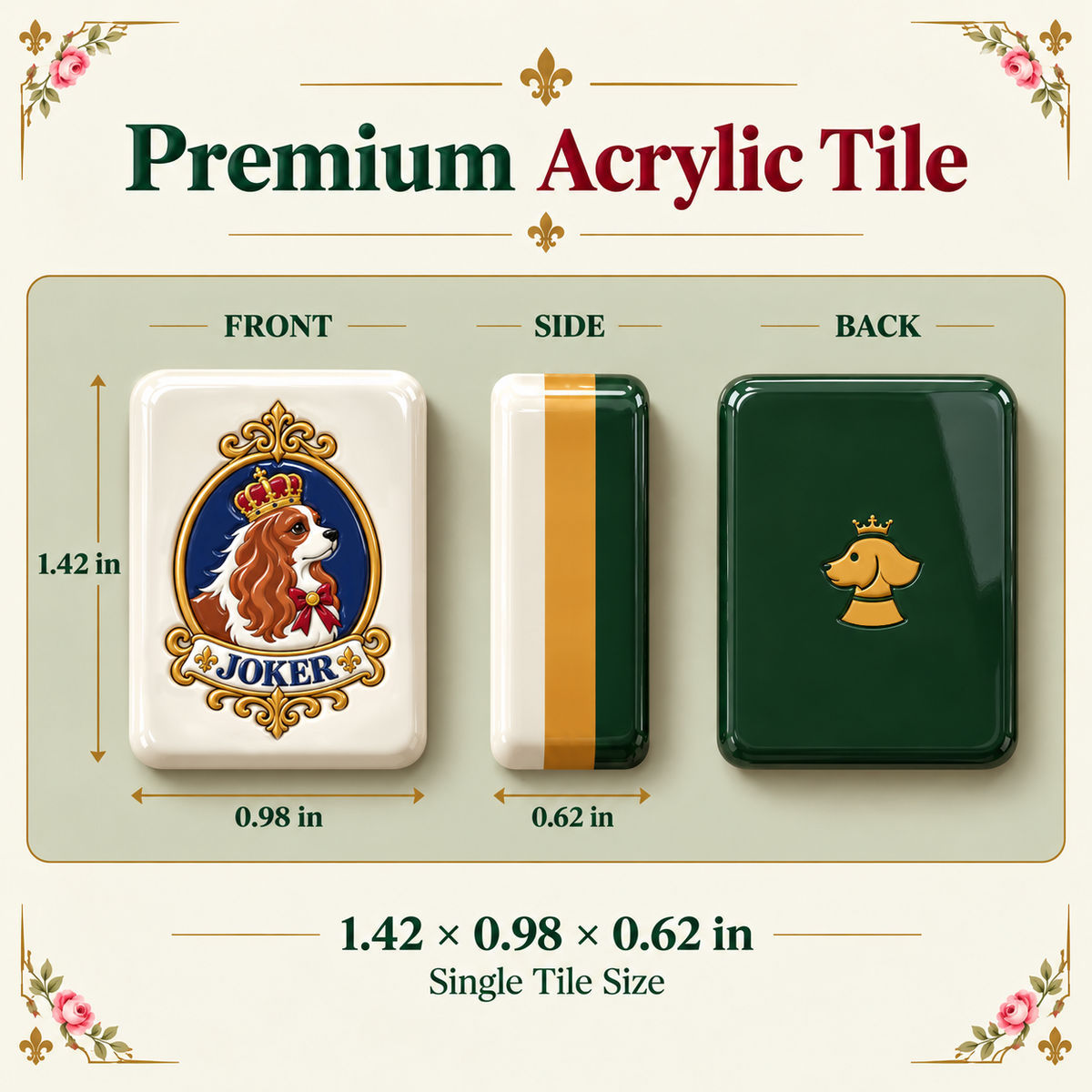
No, you cannot call a tile for a pair in American mahjong. Pairs must come from tiles already in your hand; you cannot claim any tile from the wall, the dead wall, or another player's discard to complete a pair. Only pungs (three identical tiles), kongs (four identical tiles), and certain quint/sextet combinations can be exposed after claim. Jokers cannot be used in a single tile, a pair, or any partial combination. Every hand you play must match exactly the pattern listed on the current year's National Mah Jongg League card. This rule applies whether you're playing with a best-selling acrylic set or bamboo tiles—the gameplay rules never change, only the equipment.
Why can't you call tiles for pairs?
American mahjong enforces a strict hierarchy: only melds of three or more identical tiles can be claimed and exposed. Pairs are the foundation of every legal hand but are always hidden in your rack until you win. This rule keeps the game fast and creates strategic tension—you must plan which melds to build before announcing your hand. The restriction forces you to draw strategically and manage your hand carefully rather than reactive calling, which is why American mahjong plays differently from Chinese, Hong Kong, or Riichi variants where calling rules are much looser.

What tiles CAN you call and expose?
You can claim and expose a pung (three identical tiles) from any player's discard or the wall. You can also claim and expose a kong (four identical tiles). Certain hands allow quints (five identical tiles) or sextets (six identical tiles, often using jokers), and these follow the same calling rule—you expose them immediately and continue drawing. Jokers cannot appear in any single-tile position or as part of a pair, which prevents them from "filling in" incomplete melds. The National Mah Jongg League card shows which melds and combinations are valid for that year; if a hand requires a pung in a specific suit and number, only those three identical tiles qualify—no jokers, no substitution.
How does the pair rule affect strategy?
Because you cannot call for a pair, you must carry pairs in your concealed hand throughout the game. This means your winning hand always contains at least one hidden pair that nobody sees until you declare "Mah Jongg." Strategic players often hold pairs early to keep options open, then decide mid-game whether to break them up for other melds. If you're chasing a hand that needs two pairs, you must draw both from the wall yourself or hold them from the start. New players often ask whether they can "wait" on a discarded pair tile—the answer is always no. This hidden-pair requirement also means you cannot win on a pair you just picked up; the pair must be complete before your winning draw.
🀄 Shop best-selling mahjong sets →
What's the difference between American pair rules and other mahjong variants?
Variant | Pair calling? | Chow/sequence? | Joker use | Card-based? |
American | No | No | Restricted (no pair/single) | Yes, NMJL card |
Chinese | Yes, can claim | Yes | Flexible | No |
Hong Kong | Yes, can claim | Yes | Flexible | No |
Riichi/Japanese | No calling at all | Yes | No jokers | No |
Taiwanese | Yes, can claim | Yes | Flexible | No |
American mahjong stands alone in its strict no-calling-for-pairs rule combined with no-chow structure. This makes the game puzzle-like: you assemble the exact hand pattern on the card using only concealed draws and exposed melds of three or more. Other variants treat mahjong as a real-time calling game where tile claims happen constantly and sequences (1-2-3, 2-3-4) are core melds. If you learn American rules, switching to Chinese or Hong Kong will feel shockingly open; if you learn Chinese first, American feels restrictive until you realize the strategy depth hidden in that constraint.

Common mistakes beginners make with pairs
Mistake 1: Assuming you can claim a pair discard. You cannot. If another player discards a Tile you need as your pair, it passes by. You must have a pair already in hand or draw one yourself.
Mistake 2: Holding jokers thinking they fill a pair slot. Jokers never complete a pair. If your hand calls for a pair of 3 Dots, you must have two actual 3 Dots; no joker substitution.
Mistake 3: Trying to call a pair to "complete" an unfinished hand. You cannot expose a pair mid-hand. Pairs stay hidden and are revealed only when you win.
Mistake 4: Confusing a pung with a pair. A pung is three identical tiles and can be claimed and exposed; a pair is two identical tiles and must be concealed. A four-tile kong is also claimable and exposable.
Mistake 4 (continued): Many new players see someone expose three of a suit and think "that's like a pair"—no, that's a pung, an entirely different animal.
🎁 See our most-loved mahjong sets & accessories →
How to read the NMJL card and spot pair rules
The National Mah Jongg League card (updated every spring) lists hand patterns with symbols. A pair is always shown as two identical tile symbols stacked or side-by-side, often marked at the start or end of the sequence. To read the card:
Find the section matching your hand type (e.g., "Like Numbers," "Consecutive Run").
Scan the rows for your tiles and count.
Spot the pair symbol (usually at the left edge or right end).
Confirm all four elements: suit, number, pattern, pair location.
The pair on the card is not a recommendation—it is your pair. If the card shows the pair as the last two tiles and you're waiting on it, you cannot claim any other tile to complete the pair. You must draw it yourself. How to read the mahjong card goes deeper, but the core rule is simple: card dictates, pair hides, game ends when you declare.
What to check before you buy a mahjong set
Before investing in a set, confirm it's a full American mahjong set with 152 playing tiles (plus spares in a 160-tile count). Verify it includes:
Three suits (Bams, Craks, Dots) numbered 1–9 with four copies each.
16 winds (four each: North, East, West, South).
12 dragons (Red, Green, White).
Eight flowers.
Eight jokers.
Check the rack quality—you'll spend hours holding it. Racks with pushers should be smooth, light, and stable. For hosting weekly games, a padded mat keeps tiles quiet and organized; choosing a mahjong mat is as important as the tiles themselves. If you travel to different homes, a durable travel bag or case protects your investment and keeps everything together.
✨ Find your Mahstead set — free US shipping →
Next steps: building confidence with pair rules
Start by playing a few practice hands on paper. Write out a hand from the current NMJL card and simulate draws. Notice where the pair sits. Practice calling pungs and kongs while the pair stays in your concealed hand. After three games, the rule will feel natural. Join a weekly group at a local community center, library, or synagogue to see how experienced players manage pairs—you'll pick up rhythm and timing by observation.
For your first set, choose one with clear, large-print tiles so reading pairs is fast during play. Engraved American mahjong sets with names or themes make weekly hosting more personal and memorable. Free US shipping means you can upgrade without travel cost. Set up a mat and racks, gather three friends, and play your first round with the pair rule locked in your mind. The game opens up after that.

FAQ
Can I claim a discarded tile to make a pair if I'm waiting on it?
No. Pairs must always come from your hand. If another player discards your needed pair tile, it passes. You must draw it from the wall yourself.
Is a pung the same as a pair?
No. A pair is two identical tiles (concealed). A pung is three identical tiles (exposed and claimable). They are different melds with different rules.
What if I draw a tile that gives me two of a kind—do I have to expose it?
No. Pairs stay in your hand. You expose only pungs, kongs, and quints/sextets. The pair is revealed only when you win.
Can a joker be part of my pair in American mahjong?
No. Jokers cannot be used in pairs, single tiles, or any position less than three tiles. A pair must be two actual identical tiles.
If the NMJL card shows a pair at the end, can I wait on any tile that looks similar?
No. The pair must be exactly the two tiles shown on the card. If it calls for a pair of 5 Dots, you need both actual 5 Dots—no joker, no other number.
Do other mahjong variants have the same pair rule?
No. Chinese, Hong Kong, and Taiwanese mahjong allow calling for pairs and other melds. Only American mahjong keeps pairs concealed and restricts calling to three or more identical tiles.
How many pairs are in a typical American mahjong hand?
Usually one to three, depending on the hand pattern. Every winning hand has at least one pair; many hands have two or more. All pairs stay hidden until you win.


View More
View More
View More
