
What Is Concealed Kong in Mahjong? Rules & Play
Last updated: Nov 23, 2026
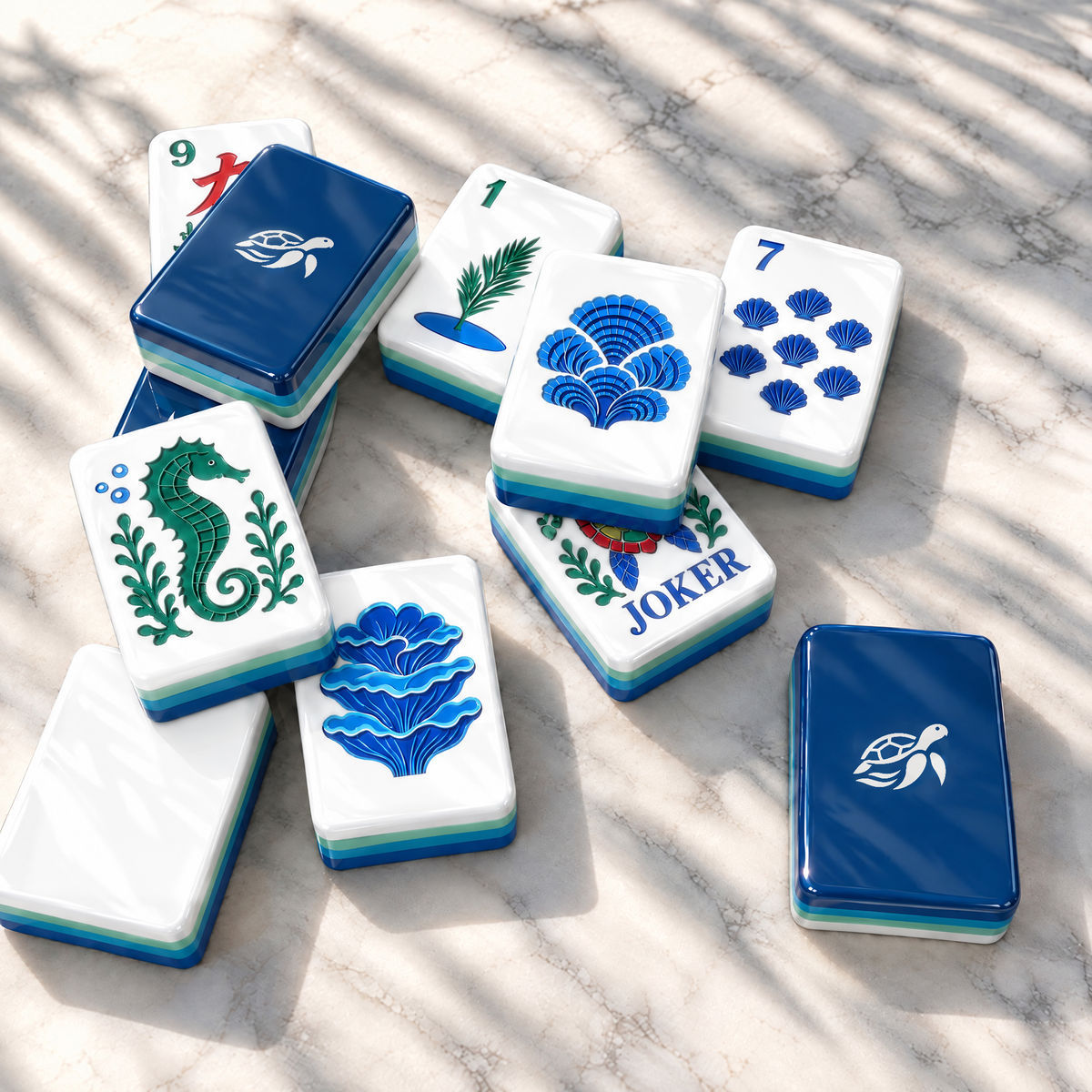
A concealed kong (or hidden kong) is four identical tiles—same number and suit—that you draw from the wall and declare as a complete set of four without ever exposing any tile during the hand. In American mahjong, the concealed kong must be melded on your turn, and you draw a replacement tile from the end of the wall. In Chinese mahjong variants, a concealed kong scores significantly higher (often double) than an exposed kong because only you built it; no discard from another player formed part of it. The key difference: an exposed kong uses at least one tile another player discarded, while a concealed kong comes entirely from your draws. American mahjong also allows you to add a joker to convert a pung (three tiles) into a kong by declaring it on your turn. A concealed kong is not the same as a pung; it must contain exactly four identical tiles, and jokers cannot be used to replace any of the four in an American concealed kong pung (the joker rule applies only when converting an already-exposed pung). Understanding this mechanic is crucial because it affects scoring, hand strategy, and when you can legally claim a win from another player's discard.
A concealed kong is four identical tiles—same number and suit—that you draw from the wall and declare as a complete set of four without ever exposing any tile during the hand. In American mahjong, the concealed kong must be melded on your turn, and you draw a replacement tile from the end of the wall. In Chinese mahjong variants, a concealed kong scores significantly higher (often double) than an exposed kong because only you built it; no discard from another player formed part of it. The key difference: an exposed kong uses at least one tile another player discarded, while a concealed kong comes entirely from your draws. American mahjong also allows you to add a joker to convert a pung (three tiles) into a kong by declaring it on your turn. A concealed kong is not the same as a pung; it must contain exactly four identical tiles, and jokers cannot be used to replace any of the four in an American concealed kong pung (the joker rule applies only when converting an already-exposed pung). Understanding this mechanic is crucial because it affects scoring, hand strategy, and when you can legally claim a win from another player's discard.
How does a concealed kong differ from an exposed kong?
An exposed kong uses at least one tile another player discarded; a concealed kong is four identical tiles you drew entirely from the wall. In American mahjong, both are melded on the table and take up rack space. In Chinese variants, a concealed kong is worth significantly more points—often double the score—because you alone built it. Once you declare either kong, you draw a replacement tile. The scoring bonus for concealment exists because the hand is harder to read and you took no help from opponents.
🀄 Shop best-selling mahjong sets →

Can you claim a win after melding a concealed kong?
Yes, if your hand is otherwise complete after the concealed kong is declared. In American mahjong, you must still have a valid hand from the current year's NMJL card after the kong is in place. In Chinese mahjong, winning immediately after declaring a concealed kong often triggers a bonus. However, if you draw the replacement tile after the kong and it does not complete your hand, play passes to the next player. You cannot hold a concealed kong and delay declaring it; it must be melded immediately when you have all four tiles.
What happens when you convert a pung to a kong with a joker?
In American mahjong, if you already have three identical tiles exposed on the table (a pung), you can add a joker to that pung on your turn to convert it into a kong—creating a four-tile set with one joker. This is a special rule; jokers cannot be used in any other way in American mahjong (never as a single tile, never in a pair). When you add the joker, you must draw a replacement tile from the end of the wall. Chinese mahjong does not use jokers in play; tiles are always original. This conversion strategy is unique to American mahjong and requires careful planning because you lose a joker that could have been saved for other hands.
Why is a concealed kong worth more in Chinese mahjong?
In Chinese variants, a concealed kong is worth double (or more) because it represents harder-to-predict progress and requires no help from other players. Scoring rewards independent tile gathering; if another player's discard contributed to the kong, the score is lower. The exact multiplier depends on your region and ruleset—Cantonese, Hong Kong, Riichi, Taiwanese, and Sichuan mahjong each have different point scales. American mahjong does not use a separate scoring system for concealment; instead, the card itself determines whether a concealed kong is part of a legal hand pattern, and the hand's position on the card sets the points. This is why reading the current NMJL card is essential in American play.
What mistakes do players make with concealed kongs?
One common error is declaring a concealed kong too early, before confirming it completes a valid hand on the card—in American mahjong, an unused concealed kong does not score unless it is part of a listed pattern. Another is forgetting to draw the replacement tile from the wall's end after melding; in American mahjong, you draw from the far end, not the normal draw position. A third is assuming a concealed kong can be converted with a joker in the same way a pung can—it cannot; the joker upgrade applies only to exposed pungs. In Chinese mahjong, some players wrongly think a concealed kong must remain hidden; in fact, once declared, it is exposed on the table like any other meld. Finally, newer players sometimes confuse a concealed kong with a pair or a hidden pung; a kong must always have exactly four identical tiles.
🎁 See our most-loved mahjong sets & accessories →

Concealed Kong Decision Framework
Scenario | American Mahjong | Chinese Mahjong | Action |
You draw four 5 Dots on the same turn | Declare concealed kong immediately; check if it fits a hand pattern on the card | Declare concealed kong immediately; record high score bonus | Meld and draw replacement from wall end |
You have three 3 Bams exposed; you have a joker | Convert pung to kong by adding the joker; draw replacement | Not applicable (no jokers in Chinese play) | Use joker only on exposed pung |
You have four 2 Craks; you already completed a hand | Do not declare the kong; a complete hand ends the round | Declare the kong first if hand not yet closed; check scoring rules | Melding order matters in Chinese; hand completion in American |
Another player discarded the fourth tile you needed | This is an exposed kong, not concealed; lower score in Chinese | Exposed kong; no concealment bonus | Follow exposed kong rules |
When to call a concealed kong vs. hold it
In American mahjong, you must declare a concealed kong on your turn if you have all four tiles. Holding it risks your hand being invalidated if you do not complete a legal pattern. In Chinese mahjong, the timing is also immediate, but the concealment bonus applies only if you declare it before drawing the replacement tile—do not delay. Strategic players use concealed kongs to signal strength (a draw that gives you all four of one tile is rare) and to boost their score. However, declaring too early can telegraph your hand to opponents, who may then discard less useful tiles. The safest approach is to verify first that the concealed kong is part of your target hand, then declare it.
✨ Find your Mahstead set — free US shipping →
What to Check Before You Buy
Tile clarity: Ensure engraved tiles clearly show all four characters or numbers so you can instantly spot all four identical tiles when building a concealed kong. Our engraved American mahjong sets use deep laser engraving for legibility in any light.
Rack quality: A sturdy rack with pushers helps you organize four identical tiles side by side without accidentally revealing intent to opponents. Mahstead racks with pushers are sized for four-tile spreads.
Wall stability: A non-slip mat keeps the wall (remaining tiles) from collapsing when you draw the replacement tile after a concealed kong. Check our mat collection for secure surfaces.
Spare joker supply: In American mahjong, you may convert a pung to a kong with a joker; having extra jokers in your set means you're never caught short. All Mahstead 160-tile sets include spare tiles.
Current NMJL card: Always play with the year's official card to know which concealed kong patterns are legal hands; print or carry a laminated copy.
How concealed kongs fit into the broader game
In American mahjong, a concealed kong is one type of meld (pung, kong, or quint) that you can expose; the card determines when it scores. Understanding how jokers work clarifies when you can upgrade a pung to a kong using a joker—a rule unique to American play. In Chinese mahjong, the concealed kong is a core strategic element because the scoring reward for building one independently is substantial. Both games reward players who gather all four of a tile type before any opponent contributes a discard. Mastering the timing and recognition of concealed kongs will sharpen your ability to read the table and predict other players' hands. When you see a player draw a tile and immediately expose four identical ones on the wall, you know they have a strong, independent hand—and that the scoring is about to shift in their favor.

FAQ
Can a concealed kong be declared after you have already drawn the next tile?
No. In both American and Chinese mahjong, you must declare a concealed kong on the turn you complete it, before drawing your next tile. Once you draw, the opportunity closes. This rule prevents players from holding concealed kongs secretly and claiming them retroactively.
What happens if I declare a concealed kong but then realize it does not fit any hand on the card?
In American mahjong, if the concealed kong is not part of a valid hand pattern on the current year's NMJL card, it is still a legal meld but does not contribute to your score. You have wasted the opportunity to use those four tiles in a different, higher-scoring hand. Always check the card before melding.
Can I use a joker to fill in one of the four tiles in a concealed kong?
No. In American mahjong, a concealed kong must be four identical original tiles—no jokers. Jokers can only be added to an already-exposed pung to convert it into a kong. Chinese mahjong has no jokers, so this rule does not apply.
Does declaring a concealed kong end my turn?
No. After declaring a concealed kong in both variants, you draw a replacement tile from the end of the wall and continue your turn. If that replacement tile completes your hand, you can win on the same turn. Otherwise, play passes to the next player.
If I meld a concealed kong and then win on the same turn, do I get both the concealed kong bonus and the win bonus?
In Chinese mahjong, yes—the concealed kong bonus (often double) applies, and the winning hand is scored normally. In American mahjong, the card's listing determines the score; if the hand includes a concealed kong pattern, that pattern's score is what you earn. You do not double-count; the card is the source of truth.
Is a concealed kong the same as a hidden or dark kong?
Yes. "Concealed kong," "hidden kong," and "dark kong" are regional names for the same mechanic: four identical tiles you drew entirely from the wall without any opponent's discard. The term varies by Chinese region and game variant.


View More
View More
View More
