
Two-Player Mahjong Terms and Glossary
Last updated: Nov 23, 2026
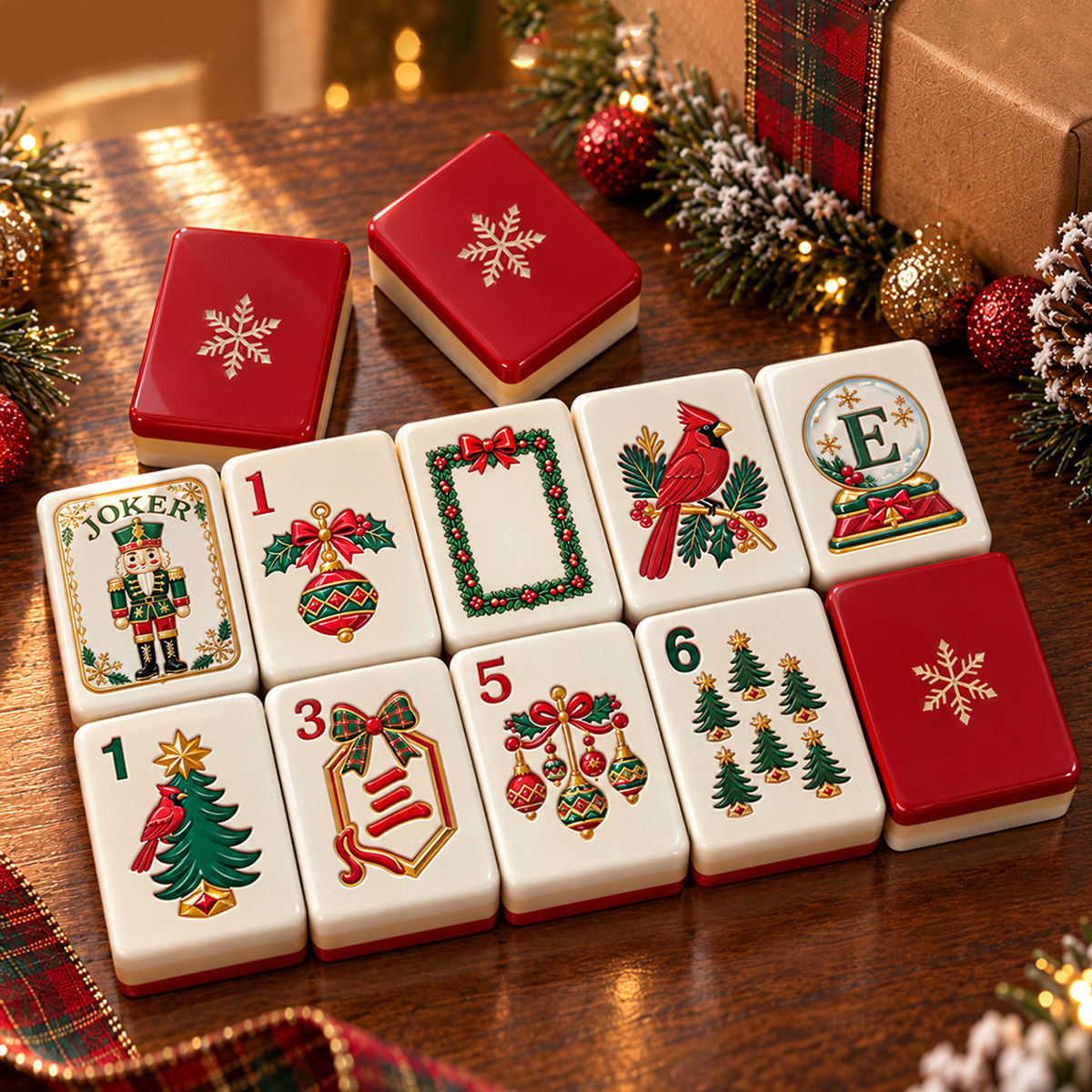
Two-player American mahjong uses the same 152-tile set and National Mah Jongg League card as four-player games, but with critical rule adjustments: each player draws 14 tiles instead of 13, the dead wall shrinks, and hands must complete with no more than one pair of jokers per combination. "Pair" means two identical tiles (never a different tile; a pair never contains a joker). "Pung" is three identical tiles; "kong" is four. "Chow" (sequence like 1-2-3) doesn't exist in American mahjong—only pungs, kongs, quints (5), and sextets (6) can be exposed. The winner's hand comes only from the current year's card. Our best-selling acrylic sets come with the current card so both of you can verify hands instantly and play without confusion.
Why Two-Player Mahjong Needs Its Own Glossary
Standard four-player American mahjong rules don't translate directly to two players. When you cut the table from four to two, the tile flow, hand structure, and strategy shift entirely. You'll hear terms used differently—"dead wall" means something else, "wall" takes new meaning, and several combinations that work in four-player games become impossible with only two hands drawing. Learning the two-player vocabulary prevents you from accidentally following four-player rules mid-game, which derails both players' strategy and confuses scoring. We teach our regular pairs the exact terms here so they stay synchronized.
What Do "Pair," "Pung," and "Kong" Mean in Two-Player Mahjong?
Pair: two identical tiles (e.g., two 5 Dots). A pair can never include a joker; only real tiles count. In two-player hands, pairs are far fewer than in four-player games because the hand is smaller. Pung: three identical tiles (e.g., three 5 Dots, three East Winds, three Red Dragons). Pungs can include one joker maximum per pung (e.g., two 5 Dots + one joker = a valid pung). Kong: four identical tiles. Kongs can include two jokers maximum (e.g., two 5 Dots + two jokers = a kong). The National Mah Jongg League card shows which combinations require all four real tiles (no jokers allowed) versus which allow joker substitution. In two-player games, kongs are rarer because fewer tiles remain in circulation after the wall shrinks.

How Does Two-Player Mahjong Change the Standard Dead Wall and Wall?
The dead wall in two-player mahjong is the stack of tiles set aside before play begins; in four-player games it holds 14 tiles, but in two-player it shrinks to just 6 tiles (or sometimes 8, depending on house rules—agree before the first hand). The wall is the remaining tiles available for drawing. With two players drawing from a smaller pool, the wall is exhausted faster, making draws more predictable and hands harder to complete. "Drawing from the wall" means taking the next face-down tile in sequence as you need new tiles. In two-player, once the wall runs out, no more tiles can be drawn—the hand ends in a draw or someone wins. This tighter tile economy is why two-player hands from the card are usually shorter and built around high-value combinations.
What Is "Going Mah Jongg" in a Two-Player Hand?
"Going Mah Jongg" means you've completed a legal hand from the current year's card and won the hand. Your completed hand must contain exactly the number of tiles shown on the card for that pattern (usually 14 tiles for two-player). A legal hand has all combinations (pungs, kongs, quints, sextets, pairs) add up to 14, no more, no fewer. You cannot use tiles from the prior year's card or make up a hand—it must match the card exactly. Once you call "Mah Jongg," play stops, your hand is verified against the card, and scoring begins. If your hand doesn't match the card, you may face a penalty (house rules vary; some allow a "dead hand" penalty, others declare the hand void). Always lay out your tiles so both players can see every combination clearly—confusion about which pair went where is the number-one cause of disputes at our games.
What Terms Describe How Tiles Move Between Players in Two-Player Games?
Charleston is the mandatory tile-passing phase before the first hand begins; each player passes tiles to their right neighbor (in two-player, you pass directly to your opponent). This ritual randomizes the starting hand and is required under the National Mah Jongg League rules. Discard is a tile you play face-up to the center of the table, signaling you don't need it and your opponent can take it (or "call" it) for their hand. Drawing from the wall is taking a fresh tile from the remaining stack when you don't call an opponent's discard. Picking or claiming a tile means taking your opponent's discard for your hand. A valid claim must create a pung, kong, quint, or sextet—you cannot claim a tile to build toward a future combination. In two-player, claims happen far more often because there are fewer tiles in motion, so discards are read more carefully.

What Score and Bonus Terms Apply Only to Two-Player Games?
Two-player hands score differently than four-player hands. Points or score value is printed on the card; a hand worth 30 points in four-player might be worth 40 in two-player, or vice versa—the card itself specifies. Limit hand is a hand worth the maximum payout (usually 500–1000 points depending on house rules and the variant). Minimum hand is the lowest-scoring hand that qualifies as a win (often 20 points in two-player, compared to 30 in four-player). Double or going double means you've completed a hand twice in one game round (rare in two-player but occurs if both players' hands are on the same card line and you win first). Payment is how much your opponent pays you; in two-player, only one opponent pays, so winnings are higher per hand than in four-player. Some house rules include bonus points for shutouts (winning without your opponent scoring), which are especially common in two-player because one player controls the entire hand structure.
Term | Definition | Appears in Two-Player? | Why It Matters |
Pair | Two identical tiles, never a joker | Yes | Required in every hand; pairs are scarce |
Pung | Three identical tiles, max one joker | Yes | Most common exposed combo |
Kong | Four identical tiles, max two jokers | Yes | Rare but high-value when it appears |
Dead wall | Tiles set aside before play | Yes, smaller (6–8 tiles) | Shrinking dead wall changes game pace |
Mah Jongg | Completed legal hand matching card | Yes | Win condition; must match card exactly |
Charleston | Pre-game tile-passing ritual | Yes | Required by League rules |
Discard | Tile played face-up to center | Yes | Opponent can claim for pung/kong only |
Quint | Five identical tiles, max two jokers | Yes | Rare but high-scoring |
Sextet | Six identical tiles, max two jokers | Yes | Rare; usually only one per hand |
Limit hand | Maximum-scoring hand | Yes | Variant payouts; check house rules |
What Common Mistakes Happen When Players Use Four-Player Terms for Two-Player Games?
The biggest mistake is confusing pair with combination. A pair is strictly two identical tiles; a combination is any pung, kong, quint, or sextet. New players often say "I'm building a pair of 5 Dots" when they mean "I'm chasing a pung." This confusion leads to miscalls: you cannot claim an opponent's discard if it only builds toward a pair—you need three tiles already in hand. Another error is forgetting the dead wall is smaller, leading players to draw tiles that don't exist, creating mid-hand chaos. A third is assuming jokers work the same everywhere: in American mahjong, a joker can replace one tile in a pung, kong, quint, or sextet, but never stand alone and never pair. If someone says "I have a joker pair," that hand is dead. Finally, players sometimes reference hands from last year's card, which is illegal—all hands must come from the current year's card issued every spring. Post the current card on your mat during play so no one guesses.
🀄 Shop best-selling mahjong sets →
What Should You Check Before Starting a Two-Player Game?
Before the first tile is drawn, both players must agree on and write down:
Dead wall size (6 or 8 tiles; most common is 6 for true two-player, 8 for variants).
Minimum hand score to qualify as a win (often 20 points; adjust per house rules).
Payment rules (does the winner receive double from one opponent, or do you track cumulative scores over many hands?).
Penalty for a dead hand (hand that doesn't match the card; varies from void to penalty points).
Which year's card you're using (the current card is issued every spring; older cards are not legal for sanctioned play but some groups use them for casual games—just decide together).
Joker and blank tile rules (how many spare jokers/blanks are in your set; confirm you're playing with exactly 152 tiles + 8 jokers as the game dictates).
Check that your tiles are acrylic American mahjong sets or similar, with clear suit colors and wind/dragon symbols so neither player misreads a tile. If tiles are worn, stained, or chipped, they can be misidentified in fast play—replace them to avoid disputes.
🎁 See our most-loved mahjong sets & accessories →
How Does the Scoring Glossary Translate from Four-Player to Two-Player?
The National Mah Jongg League card lists a point value for each hand pattern. In four-player games, the winner collects that amount from each of the three other players (e.g., a 30-point hand pays 30 from each opponent). In two-player, you collect from one opponent only, so many groups double the payment to keep the game competitive (a 30-point hand becomes 60 points). Shutout scoring (winning while your opponent discarded the entire hand without claiming a tile) is common in two-player and may carry a bonus multiplier (e.g., 1.5× or 2× the hand value). End-of-game settlement in two-player is simple: tally all hands won and lost, then the player with the higher total score pays the difference to the other player. Some groups track cumulative season scores across many sessions to determine a champion. Always clarify payment direction before shuffling: does the winner pay if they go over a certain limit, or does only the loser pay? Two-player is high-stakes because every hand directly shifts points between two people, so transparency prevents resentment.
✨ Find your Mahstead set — free US shipping →

FAQ
Can I use last year's mahjong card for two-player games?
No, not for official play. The National Mah Jongg League card is updated every spring, and hands must come from the current year only. Casual home games may use older cards, but both players must agree first. Always confirm which year's card you're playing before the Charleston.
What happens if I accidentally claim a tile but it doesn't make a legal pung or kong?
The claim is void (you cannot take the tile back). In many house rules, this results in a penalty or a dead hand. Always verify your claim creates three or four identical tiles before saying "pung" or "kong"—there's no undo in mahjong.
In two-player, can I see my opponent's tiles before they complete their hand?
No. Each player keeps their tiles face-down and hidden except for exposed combinations (pungs, kongs, etc.). You can see only what's been played as discards and what your opponent has exposed; their hidden hand is secret until they call Mah Jongg.
How many tiles does each player start with in two-player mahjong?
After the Charleston, each player holds 13 tiles. The player East (determined by dice or agreement) draws first, taking one tile from the wall, bringing their hand to 14. West then draws to 14. Play continues: one player discards, the other either claims it or draws from the wall.
What is a "limit hand" and how much does it pay in two-player?
A limit hand is the highest-value hand on the card (usually worth 500–1000 points depending on house rules and the variant). Payment for a limit hand is often double or triple the normal settlement. Confirm your group's limit-hand rule before you start; some groups waive the limit entirely for casual two-player games.
Can a joker ever stand in as a pair in two-player mahjong?
No. A pair must be two identical real tiles (e.g., two 5 Dots, two Red Dragons). Jokers can never be part of a pair. If you have only one real tile and one joker, you do not have a pair, and your hand is incomplete.


View More
View More
View More
