
Book Club Mahjong Party Ideas: Hosting a Welcoming First Game
Last updated: Nov 23, 2026

A mahjong party for a book club starts with four players, one American mahjong set (152 tiles + jokers), the current National Mah Jongg League card, and 30–60 minutes of learning time before the first real hand. Most players benefit from watching the Charleston (the tile-passing ritual) once before doing it themselves, then playing 2–4 hands while keeping the card visible. Host a potluck or snacks-and-drinks setup so people can chat and reset between games without rushing. Avoid mixing play variants (American, Chinese, Riichi, Hong Kong) in one evening—choose American and stick with it. Buy from our best-selling collection for sets tested by weekly hosts; if your group loves wordplay or inside jokes, engraved tiles add a personal touch that becomes a memory years later.
How do book clubs make room for a mahjong night?
Replace one monthly book discussion with a "game dinner" where mahjong is the centerpiece. You don't need everyone to know the rules beforehand—in fact, the learning curve is part of the fun. Set the event for 90 minutes to two hours so people have time to ask questions, play 2–4 hands, and share a meal without feeling rushed. Hosting at someone's dining table or living room works better than a bar or loud restaurant because players need to hear each other call tiles and spot the card. One tip: send the host a copy of the National Mah Jongg League card 48 hours early so they can print extra copies for the table.

What do new players actually struggle with first?
The biggest stumbling block isn't the hand patterns—it's the Charleston, the tile-passing ritual that happens before every game. New players often forget they're passing three times, or they don't realize they can pass fewer tiles on the third pass (the "dead wall" pass). Spend 5 minutes walking through one Charleston with real tiles before you sit down to play. The second confusion point: how jokers work in American mahjong—they're wildcards that substitute for exactly one tile in an exposed pung, kong, quint, or sextet, but never in a pair or single. Play one practice hand where you pause and say aloud "I'm calling a pung of three 5 Dots—one is a real 5 Dot and two are jokers." Hearing it spoken makes it stick.
🀄 Shop best-selling mahjong sets →
What's the easiest meal setup for a mahjong night?
Keep food simple: cheese, crackers, olives, fruit, and chocolate on the table during play; save a full meal for after you're done. Mahjong requires both hands to move tiles, so finger foods and drinks with lids are friendlier than plates. A 90-minute session means people are focused, not hungry enough for a sit-down dinner. One book club trick: have a "ready timer"—when someone finishes their turn too quickly, call out "dealer's choice of snack" so the next round begins only after people have refilled water or grabbed a handful of nuts. This keeps energy steady without calling a formal break.
Setup Element | What It Does | What to Avoid |
Printed card copies | Players can check hand patterns without passing one card around | Laminated cards get sticky from snack fingers |
Dice or a spinner | Determines who deals first; speeds up the start | Using a phone app; table noise drowns out a phone beep |
Tile racks with pushers | Keeps tiles organized so newbies can find their matches faster | Letting people hold loose tiles; they drop them or miss a call |
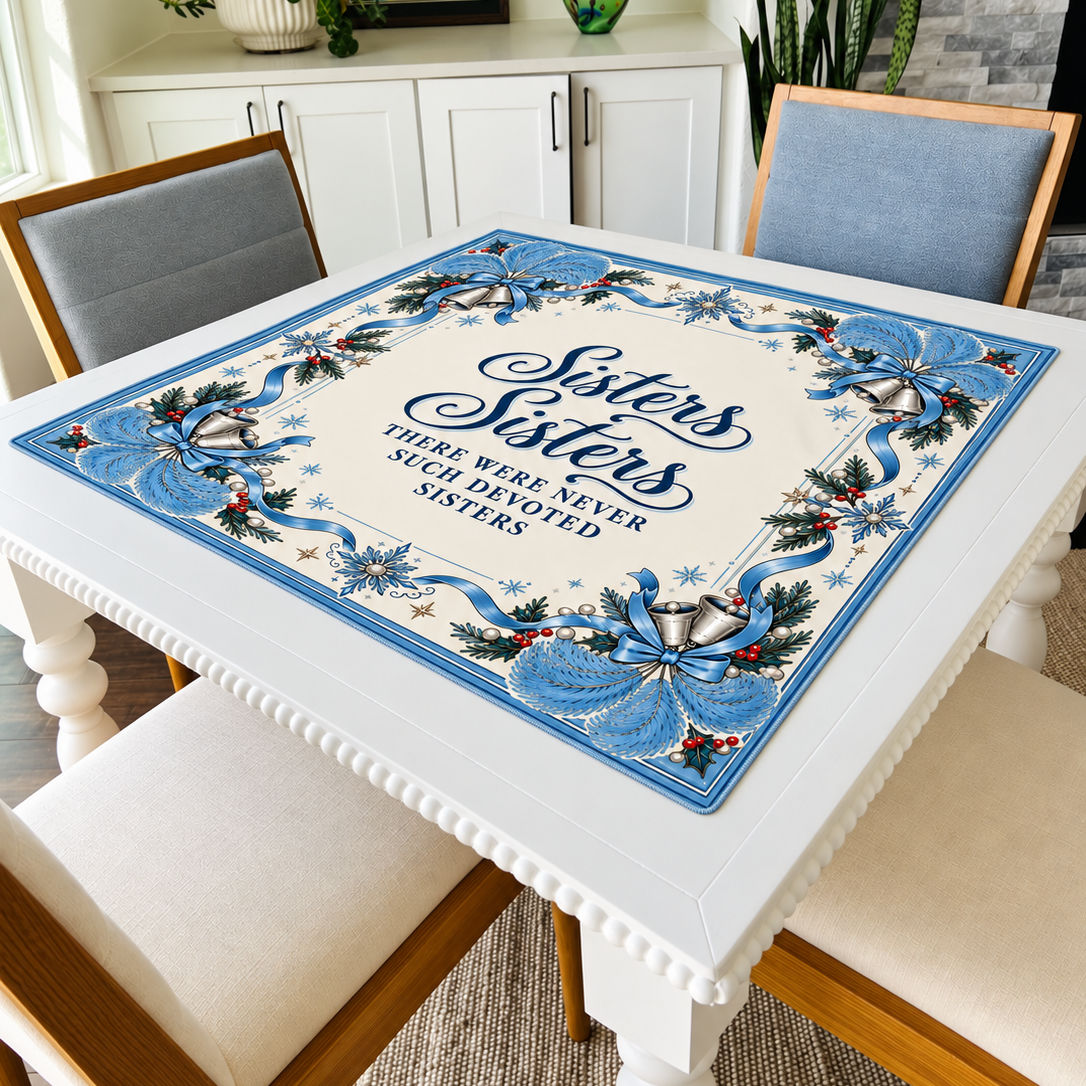
A mat | Marks the boundary between play area and snack/drink zone | None—a mat always helps players focus |
No music or TV | Players hear each other call "pung," "kong," and "mah jongg" | Background TV makes it impossible for beginners to follow turns |
How do you teach hand patterns without overwhelming beginners?
Keep the first night focused on three basic hand patterns—straight run sequences (like 1–2–3 Bams, 4–5–6 Craks), matching sets (like three 7 Dots or two 1 Bams), and pairs—rather than diving into the full card. Ask each player to find one hand on the card before you start, so they feel ownership of their strategy. During play, let them keep a finger on their target hand while the game continues. Most learners play their second game much faster because the card vocabulary clicks in; by game four or five, they're calling discards and spotting patterns naturally. The magic moment: when a new player scores their first "mah jongg," they own that win and they're hooked.

What gear makes hosting feel professional but stays budget-conscious?
A mahjong mat with a removable cover defines the play zone and protects your table; a cloth one can be wiped clean and stored flat. Tile racks with pushers are the secret weapon—they let players organize tiles by suit and number so beginners can spot a pair or a pung without fumbling. If your book club meets monthly, a set of engraved American mahjong tiles becomes a talking point: players remember "the book club set" and look forward to game night. Skip expensive tournament-grade tables and focus on a quality set and a few backup accessories that live in a dedicated bag—a good mat, racks, and a bag travel together and last years of weekly games.
🎁 See our most-loved mahjong sets & accessories →
What to Check Before You Buy a Set for Book Club Play
Tile size: Most adult hands are comfortable with standard acrylic tiles (roughly 1.25 inches); if anyone in your group has vision or dexterity concerns, ask the host to let them hold a sample before buying.
Set count: A 160-tile set contains all 152 play tiles you'll need plus spares—never buy below 152 tiles.
Joker count: You play with exactly 8 jokers; a complete 160-tile set has enough.
Racks included: Many sets include basic racks; if not, buy separate ones—they cut confusion by 70%.
Replacement plan: If a tile breaks in year two, can you order a replacement? Check before you buy.
Storage: Your set needs to live somewhere safe between parties. A dedicated bag keeps everything together and protects tiles from dust and damage.
✨ Find your Mahstead set — free US shipping →
A Hosting Checklist for Your First Book Club Mahjong Night
[ ] Print 4–5 copies of the current National Mah Jongg League card (free online; update each spring).
[ ] Set up the mat and place racks at each seat 15 minutes early so the room feels intentional.
[ ] Have new players sit at the same table for games 1–3 so they build confidence in one group.
[ ] Assign one experienced player per table (or assign the host) to call discards and rule on plays during the first hand.
[ ] Keep snacks and water to the side—no drinks over the mat.
[ ] Play 2–4 hands the first night, not six; energy and focus matter more than game count.
[ ] After the first 30 minutes, pause and ask: "What question would help you play the next hand?" Answer honestly.
[ ] Take a photo of the winning hand and send it to the group the next day—it builds anticipation for next month.
FAQ
Do all four players need to know American mahjong before the party?
No. One host or experienced player can teach the group live; most learners grasp the core rules in 15 minutes if you focus on tile-calling and the card. Walking through one practice Charleston and one demo hand before the first real game cuts confusion in half.
What if someone in the book club is a Chinese mahjong player?
Chinese and American mahjong use different tile counts, hand patterns, and scoring. If you're hosting American night, choose American and keep it simple for learners. If the group wants both variants, play them on separate evenings so rules don't bleed together.
How many tiles does each player get at the start?
Each player draws 13 tiles after the Charleston and the dealer picks one more (14 total). During play you draw one tile per turn and discard one, so your hand stays at 13 until someone calls "mah jongg."
Can we play mahjong with just two or three people?
Yes—American mahjong rules exist for 2 and 3 players—but four is the standard and the easiest learning curve. If your book club has only three regulars, start there and invite a fourth when possible.
What's the cheapest way to host if no one owns a set?
Buy one affordable complete set in the best-selling collection and split the cost four ways; it's less than two coffee dates. Use a cloth mat you already own or borrow one, and print the card free. Most first-timers realize the set pays for itself after two or three parties.
Do we need a score sheet if we're just playing for fun?
No. If you're playing for points (per the NMJL scoring system), keep a paper score; if you're playing social mahjong, skip scoring and just celebrate wins. New players often enjoy the game more when they focus on learning, not points.


View More
View More
View More
