
American Mahjong Winning Hands: How to Read, Build & Play Them
Last updated: Nov 23, 2026
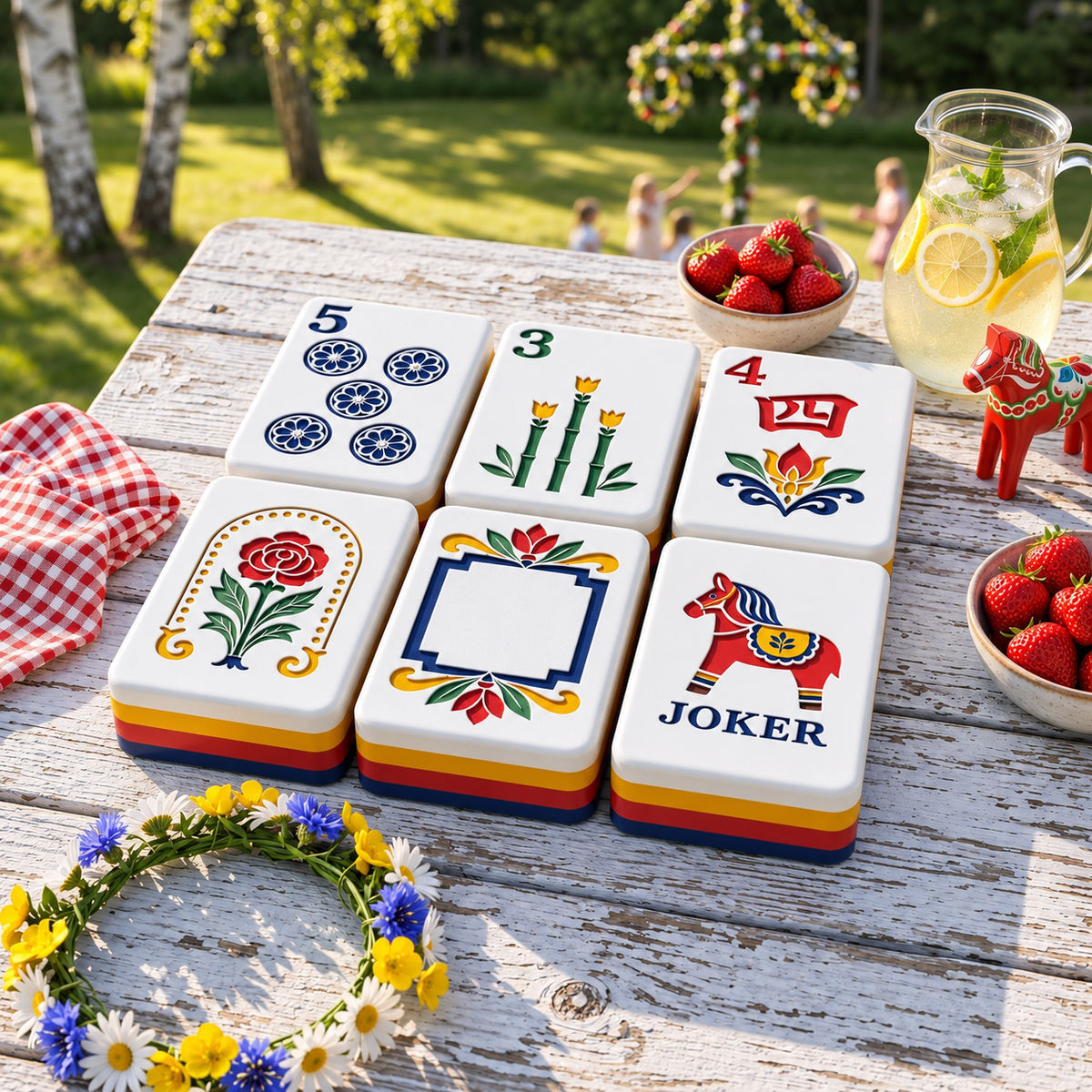
In American mahjong, a "winning hand" (or "mah jongg") is fourteen tiles arranged into melds—pungs (three identical tiles), kongs (four identical), quints (five), or sextets (six)—that exactly match one pattern printed on that year's National Mah Jongg League card. The card is released each spring and dictates every legal hand; you cannot win with hands not listed. A winning hand requires one concealed pair and the remainder in exposed or concealed melds (no sequences/chows allowed in American mahjong). You win by being first to complete your hand after the Charleston tile-pass and live play; winners earn points based on the hand type (suit combinations, number of jokers, etc.). Beginners often misread the card sections or illegally use jokers in pairs—both costly mistakes.
How do you read the mahjong card to find winning hands?
The National Mah Jongg League card is your rulebook. It's organized into colored sections (All Simples, Consecutive Runs, Like Numbers, Pairs, Kong Studies, Flowers & Seasons) and each section lists dozens of hand patterns. Each line shows the tile composition: three Bams (B), four Dots (D), two Craks (C), plus wind tiles (N/E/W/S), dragons (R/G/W), flowers, and joker placeholders (•). Start by identifying what tiles you have, then search the card systematically—begin with your heaviest suit. Learn how to decode the card completely to avoid the most common error: confusing "all Bams" (meaning all melds use Bam tiles) with mixed-suit hands.

What makes a legal American mahjong winning hand?
Fourteen tiles forming one concealed pair plus melds—that's the law. All visible melds (those you expose or call) must be three or more identical tiles; you cannot call a sequence like 3–4–5. Jokers can replace any tile in any meld except the pair; if a joker stands in for a tile, that tile is "named." A pung is always three identical tiles (never 1–2–3 Bams); a kong is four identical. The pair must be concealed (hidden in your rack, unrevealed until you win) and must be two of the same tile. If your hand comes from the card and you have exactly fourteen tiles with the right structure, it's legal. Common blunder: trying to use two jokers in a single pung—forbidden, because that pung would have no real tiles.
Which hand types appear most often in weekly games?
All Simples (1–8 in each suit, no 9s, winds, or dragons) dominates beginner tables because many players start there. Like Numbers (e.g., all 5s and 7s, no other numbers) is also frequent. Consecutive Runs (ascending or descending number sequences within suits, e.g., B1–B2–B3, B3–B4–B5) requires more tile discipline but wins consistently when the Charleston flows well. Pairs and Like Numbers draw defenders who know the card intimately. Kong Studies (hands built around one or more kongs) spike when a player gets lucky early draws. Flowers & Seasons hands are rarer in 4-player but common in shorter games where the card rotates. The "frequency" shifts year to year as the card changes, so study your current league card and mark the hands you see repeatedly at your table.
🀄 Shop best-selling mahjong sets →
How do jokers work in a winning hand?
Jokers (wild tiles) replace any single tile inside a meld—pung, kong, quint, or sextet—but never in the pair or as a single tile. If you have three 5 Dots and one joker, the joker becomes a 5 Dot and the meld is "four 5 Dots" (a kong). The hand on the card will show a joker placeholder (•) where a joker is allowed; if you use a joker differently (e.g., as a second tile in a pair), your hand is illegal and you cannot win. Jokers have specific rules that many beginners break—most common error is naming a joker but then forgetting which tile it represents, causing confusion on later draws. In American mahjong, you have eight jokers available during play; standard sets include spares, so you never run short.
What are the mistakes that disqualify a hand?
Mistake | Why It Loses | How to Avoid |
Hand not on card | You must match card exactly | Verify three times with a partner before claiming |
Joker in pair | Jokers forbidden in pairs | Mark your pair as real tiles only before drawing |
Two jokers in one meld | Not allowed; only one per meld | Recount your melds aloud while building |
Meld has fewer than 3 tiles | Minimum is pung (3 identical) | Never count concealed tiles in a meld |
Pair is concealed but pair is showing | Pair position visible means it's exposed | Place pair at the end of your rack, hidden |
Hand has 13 or 15 tiles | Must be exactly 14 | Audit tile count after every draw and discard |
The single biggest trap: confusing the card's layout. If the card lists "B1 B1 B1 B2 B2 B2 • • • W N • • •" and you build B1 B1 B1 B2 B2 B2 with two jokers and a White dragon, you're matching the card. But if you substitute incorrectly—say, using a Red dragon instead—it's not that hand and you lose. Slow down, point at each tile, and match one by one. Another common disaster: pulling a tile and forgetting it was a joker; you name it "5 Dots" but later realize you already used a real 5 Dot elsewhere, creating a meld with impossible duplicates.

How do winning hands change with the season?
The National Mah Jongg League releases a new card each spring, so winning hands rotate annually. February or March marks the changeover; the previous year's card is retired. This forces all players to relearn patterns, keeping the game fresh. Some players keep older cards for practice; however, tournament and league play requires the current year's card only. If you're playing casually at home, you and your group can choose to stick with an older card (many groups do for consistency), but competitive play demands the current one. Some hands stay relatively stable year to year—All Simples rarely changes dramatically—but Kong Studies, Flowers, and Like Numbers can shift significantly, throwing off players who relied on muscle memory.
🎁 See our most-loved mahjong sets & accessories →
How does a winning hand differ across mahjong variants?
American mahjong has no chows (sequences)—only pungs, kongs, quints, and sextets in melds. Chinese Classical and Hong Kong mahjong allow chows (e.g., 1–2–3 Craks), require winning on a self-drawn tile or a call, and use a vastly different scoring system. Riichi (Japanese) forbids exposing melds mid-game and penalizes illegal declarations harshly. Taiwanese mahjong mixes elements but plays faster and with looser pair rules. In American mahjong, you can expose melds (pungs, kongs, etc.) before winning and still win with a legal hand; this is normal strategy, not a penalty. The card dictates everything in American play, whereas Chinese and Riichi players memorize base patterns and build on them. If you play multiple variants, keep your current-year American card and a rules summary close by, as the rule sets are fundamentally different.
Learn the fundamentals of American mahjong play here to anchor your understanding before diving into variants.
What's the winning hand strategy: defense vs. offense?
Offense means building toward a hand on the card as fast as possible, calling tiles from the discard pile and exposing melds early to signal strength and block opponents. Defense means slowing down, discarding unpredictably, and watching what others expose to predict their hand type—then discarding tiles they need. New players often ignore defense, exposing their entire hand structure; savvy opponents see "All Simples" announced by your melds and throw high numbers at you. A balanced strategy: expose one or two melds to speed your win, but keep your pair and critical concealed melds hidden. Study the card before each hand (during the Charleston) and decide which patterns you can reach; don't chase too many hands or you'll draw dead tiles. Advanced players memorize 5–7 backup hands in case their primary target dries up. Late in the game (when few tiles remain), offense dominates—go for the visible win. Early on, defense and flexibility win more hands long-term.
✨ Find your Mahstead set — free US shipping →
How to build your first winning hand: a checklist
Verify the year. Check the top of your card for the current season's date (e.g., 2026).
Count your tiles. After the Charleston and live play, tally exactly fourteen tiles in your rack.
Identify your suits and numbers. List what you hold (e.g., B1 × 3, B2 × 3, D5 × 2, W × 2, joker × 4).
Find candidate hands on the card. Start with the section matching your most tiles (e.g., "All Simples" if you have no dragons or winds).
Match exactly. Point to each tile position on the card and check your rack one by one.
Verify melds and pair. Confirm your pair is real tiles (no jokers), and all melds are pungs/kongs/quints/sextets with the right tiles or legal joker substitutions.
Announce the hand type. Call clearly: "Mah jongg, All Simples" (or whatever the card section name is).
Expose melds if required. Lay them face-up on the table in order so other players can audit.
Record the hand. Write down the pattern and your score for tallying at the end of the session.
What to check before you buy a set for home play
Ensure your set has a current-year card included or purchase one separately—many sets come with a card holder but not the card itself. Verify the set contains 152 playing tiles plus 8 jokers (160 total tiles in the box); our best-selling designs include this standard. If you play weekly, invest in a quality mat with printed rack lines and racks with pushers to speed up play and keep tiles organized. A durable travel bag or case protects your set on the way to friends' homes. For gift-giving or memorable sets, engraved designs with titles or jokes add personality without changing gameplay. Beginner-friendly printed cards with large text are worth the investment if your eyesight is sensitive to small print.

FAQ
Can a winning hand use the same tile number across different suits?
Yes. A hand might include B1 B1 B1 (Bam 1s), C1 C1 C1 (Crak 1s), D1 D1 D1 (Dot 1s) in separate melds, as long as the full pattern is listed on the card. The card shows which combinations of suits and numbers are legal.
What happens if I claim "mah jongg" but my hand doesn't match the card?
Your hand is null and you cannot win that round. You must play on and continue building. In formal league play, an illegal claim is penalized (you may lose points or sit out a hand); house rules vary, so clarify before play.
Can I win with a hand that uses all eight jokers?
The card will show how many jokers are permitted in each hand pattern. If the card lists a hand as "• • • • • •" (six joker placeholders), then yes, that hand uses six jokers; you cannot add more. Follow the card exactly.
How long does it take to find and verify a winning hand?
Five to thirty seconds for experienced players, longer when you're learning. Slow down, audit with a partner, and never rush the verification—a miscounted hand forfeits the win.
Do I have to expose my melds, or can I win concealed?
In American mahjong, you may win with all melds concealed if the card allows it (some hand patterns permit this). However, many players expose melds mid-game as strategy; exposing does not prevent you from winning. The pair must always remain hidden until you win.
What's the difference between a pung and a kong in a winning hand?
A pung is three identical tiles; a kong is four identical tiles. Both are legal melds in a winning hand. The card specifies which melds are required for each hand pattern (e.g., three pungs and two pairs vs. two kongs and three pungs).


View More
View More
View More
