
American Mahjong vs. Mahjong Solitaire: Core Differences
Last updated: Nov 23, 2026
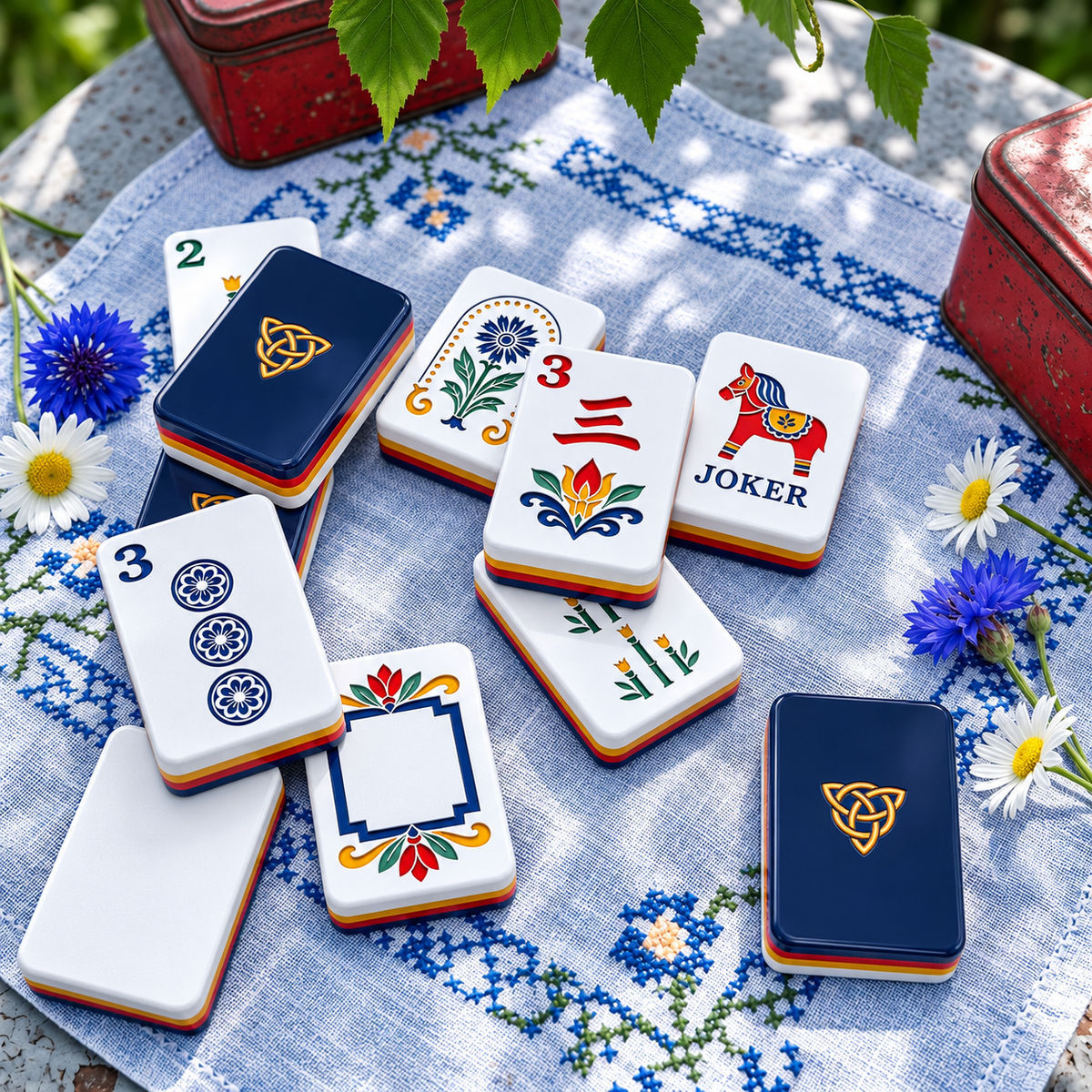
American mahjong is a four-player game using 152 tiles (Bams, Craks, Dots, Winds, Dragons, Flowers, and Jokers) where players form matched sets to complete hands printed on the current year's National Mah Jongg League card. Rounds take 30–60 minutes; play involves the Charleston (tile-passing ritual), drawing and discarding, and calling exposed sets. Mahjong solitaire, by contrast, is a one-player computer or puzzle variant where you match and remove identical tiles from a static layout—no cards, no opponents, no scoring. American mahjong requires learning rules, strategy, and hand patterns; solitaire is instantly playable but offers no multiplayer interaction. Most Mahstead players host American mahjong weekly and enjoy the social, skill-based depth; solitaire suits casual solo play. The games share tile imagery but play nothing alike.
American mahjong and mahjong solitaire look related but are fundamentally different games. One is a four-player strategy game rooted in Chinese card traditions; the other is a tile-matching puzzle you play alone. If you're curious which fits your group or schedule, here's how they differ—and which one we recommend for hosting a real game night.
Is American mahjong a team game or individual?
American mahjong is strictly a four-player individual game. Each player aims to build a winning hand by drawing, discarding, and calling sets—Pungs (three identical tiles), Kongs (four identical), Quints (five), and Sextets (six). Your score depends on completing a hand listed on the current year's National Mah Jongg League card and declaring it first. You're not cooperating; you're competing. Turns rotate clockwise. A full game (typically eight rounds) takes an hour or more, and the social rhythm—the Charleston passing ritual, the wait while others play, the tension of the final draw—is half the appeal.
Mahjong solitaire has no opponents or turns. You sit alone, remove matching tile pairs from a pyramid, tower, or pattern, and clear the board. There's no scoring system, no yearly card, no hand memorization. Winning is simply clearing all tiles; losing is getting stuck. It's meditative rather than competitive.

What tiles does American mahjong use?
American mahjong uses exactly 152 tiles per game: three Bam (bamboo), Crak (character), and Dot (circle) suits numbered 1–9, four copies each (108 tiles); 16 Winds (four copies each: North, East, West, South); 12 Dragons (four Red, four Green, four White); 8 Flowers; and 8 Jokers. You play with all 152 every time—that's the fixed pool. Sets sold as 160-tile collections include spare Jokers and blanks for replacements but never add those spares into active play.
Mahjong solitaire layouts vary by design. A pyramid might use 28 or 36 tiles; a tower, 144 or more. No solitaire variant mirrors American mahjong's tile set. The suits and symbols are often styled similarly for visual familiarity, but solitaire games don't enforce American rules.
How do you win at American mahjong?
Winning American mahjong requires three steps. First, study the current National Mah Jongg League card—it lists all legal hand patterns for the year. Second, collect and arrange tiles into one of those patterns: either a "Like Hand" (all one suit), "Consecutive" (runs are not allowed in American mahjong; instead look for numbered sequences using the card), or mixed patterns with Pungs, Kongs, exposed and concealed sets. Third, call "Mahjong" when your hand matches a card pattern and no exposed or illegal tiles have been used. If your hand is illegal, you pay a penalty. Most games reward winning hands with points based on complexity (simpler hands are worth fewer points; difficult hands more).
Mahjong solitaire has no hand structure. You win by matching two identical tiles and removing them from the board until no tiles remain. There's no card, no scoring—just clear or get stuck.
What's the pace and social element?
American mahjong games move in turn-based cycles: East wind plays, then South, West, North. Players draw, discard, and call Pungs or Kongs. Conversation flows. Downtime exists—while other players take their turns, you analyze your hand, plan ahead, and chat. A complete game (eight hands) typically lasts 60–90 minutes. Many players host weekly games; friendships and traditions build. The pace rewards patience and table talk.
Mahjong solitaire is instant feedback with no wait. You click or tap, tiles disappear, and you move forward—or you're blocked. Pace is yours alone. No social rhythm. Perfect for lunch breaks or flights, but solitary.
How do strategy and luck differ?
American mahjong blends luck (which tiles you draw) and strategy (which tiles you keep, when you call, how you read opponents' discards). Skilled players recognize hand patterns fast, calculate probabilities, and deduce what other players need. Jokers—wild tiles—are precious and must be managed carefully. The yearly card introduces fresh patterns annually, so learning never stops. Luck matters, but consistent players win more often.
Mahjong solitaire is primarily spatial observation and luck. You scan the board for matching pairs, click them, and hope cascading tiles unlock new matches. Strategy is minimal—you can't control which tiles appear or how they fall. It's puzzle-like: either a solution exists or it doesn't.

Core Differences: A Quick Comparison
Aspect | American Mahjong | Mahjong Solitaire |
Players | 4 (competitive) | 1 (solo) |
Tiles | 152 fixed (American set) | Variable by layout (not tied to American rules) |
Objective | Match your hand to the yearly League card | Remove all tiles by matching pairs |
Time per game | 60–90 minutes (8 rounds) | 5–15 minutes per board |
Skill ceiling | High (memory, pattern recognition, probability) | Low (spatial matching, pattern completion) |
Social | Central (table talk, turns, traditions) | None |
Learning curve | Moderate (rules, card patterns, strategy) | Instant |
Where played | Weekly home games, clubs, tournaments | Phones, tablets, browsers, solo |
Yearly updates | New hand patterns annually from League | Usually static |
Which One Should You Choose?
Choose American mahjong if:
You want a social, regular game night with the same group.
You enjoy strategy, memory challenges, and learning new patterns yearly.
You value the ritual: the Charleston, the tile draw, the final call.
You're willing to invest time in learning rules and hand structures.
Choose mahjong solitaire if:
You want a quick mental break (5–15 minutes).
You prefer solo play without opponents or scheduling.
You like spatial puzzles and instant feedback.
You don't want to memorize rules or buy a physical set.
Most of us at Mahstead host American mahjong weekly because the depth and friendship are irreplaceable. But solitaire is a fine gateway—many players discover solitaire first, enjoy it, and eventually ask a friend to teach them the real game.
🀄 Shop best-selling mahjong sets →
Getting Started with American Mahjong
If you've decided American mahjong is for you, here's what to set up a proper game night:
1. Buy a 160-tile American mahjong set. Look for best-selling mahjong sets with clear tile markings and a sturdy case—you'll play weekly for years. Acrylic tiles are durable and easy to read under most lighting.
2. Get a mat or table cover. A dedicated playing surface keeps tiles contained and makes calling exposed sets clearer. See our mahjong mats collection for options that protect both the set and your table.
3. Add racks with pushers. These hold your tiles upright and let you manage your hand without fumbling. Pushers make moving tiles smooth and reduce casual mistakes.
4. Grab a current League card or access one online. The National Mah Jongg League publishes a new card each spring. You must play from the current year's card—last year's is not legal. The card lists all winning hands for the season.
5. Learn the Charleston. This tile-passing ritual opens every game. Each player passes tiles to their right, across, and left in a set sequence. Learn more about the Charleston.
6. Study how jokers work. Jokers are wildcards—valuable but rule-bound. They can substitute for any tile in an exposed set but never form a single tile or pair alone. Understanding joker strategy separates beginners from regular winners.
🎁 See our most-loved mahjong sets & accessories →
What to Check Before You Buy
Tile clarity: Can you read each suit symbol and number in normal home lighting? Acrylic and painted tiles are usually best.
Case quality: Does it close securely and protect tiles from dust and spills? A cloth-lined wooden or acrylic case lasts decades.
Set completeness: Count 152 playing tiles (not counting spares). If even one suit is missing a tile, the game doesn't work.
Rack fit: If buying racks separately, confirm they accommodate standard American tile height and width.
Mat or cover: Ensure it fits your table and has a non-slip backing so tiles don't slide during play.
✨ Find your Mahstead set — free US shipping →
The Bottom Line
American mahjong and mahjong solitaire are separate games played for different reasons. American mahjong is a strategic, social, competitive tile game for four players using a yearly League card—it rewards learning and builds weekly traditions. Mahjong solitaire is a solo tile-matching puzzle with instant gratification but no multiplayer depth. If you're building a game night, American mahjong is the choice. If you want a five-minute brain break, solitaire fills that role. Many players do both, but they're not the same game.
To host your first real American mahjong night, you need a 160-tile set, a mat, racks, and the current League card. Start with our best-selling sets—they're designed for weekly play and come with everything you need except the card. Then gather three friends, learn the rules, and claim your spot at the table.

FAQ
Can you play American mahjong with fewer than 4 players?
Yes—2 and 3 player rules exist, though 4 is standard. Rules adjust tile draws and scoring. Most home games use 4 players.
Do I need to memorize the entire League card?
No. You memorize patterns over time as you play. Beginners often keep the card visible during play and reference it. Experienced players recognize hands quickly from shape and color alone.
Can I convert a mahjong solitaire game to American rules?
No. Solitaire boards use different tile counts, no jokers, and no hand structure. American mahjong requires the specific 152-tile set and yearly card. They're fundamentally separate systems.
Is American mahjong harder to learn than solitaire?
Yes. Solitaire is instant (match tiles, remove them); American mahjong requires learning hand patterns, the Charleston, exposure rules, and scoring. Plan 2–3 sessions to feel comfortable, then years to master strategy.
What if my mahjong set is missing a tile?
The game cannot be played legally. A 160-tile set includes spares, so you can replace it. If a core playing tile is missing, contact the seller or buy a replacement spare.


View More
View More
View More
