
Mahjong Racks with Pushers Dimensions: What Fits Your Table
Last updated: Nov 23, 2026

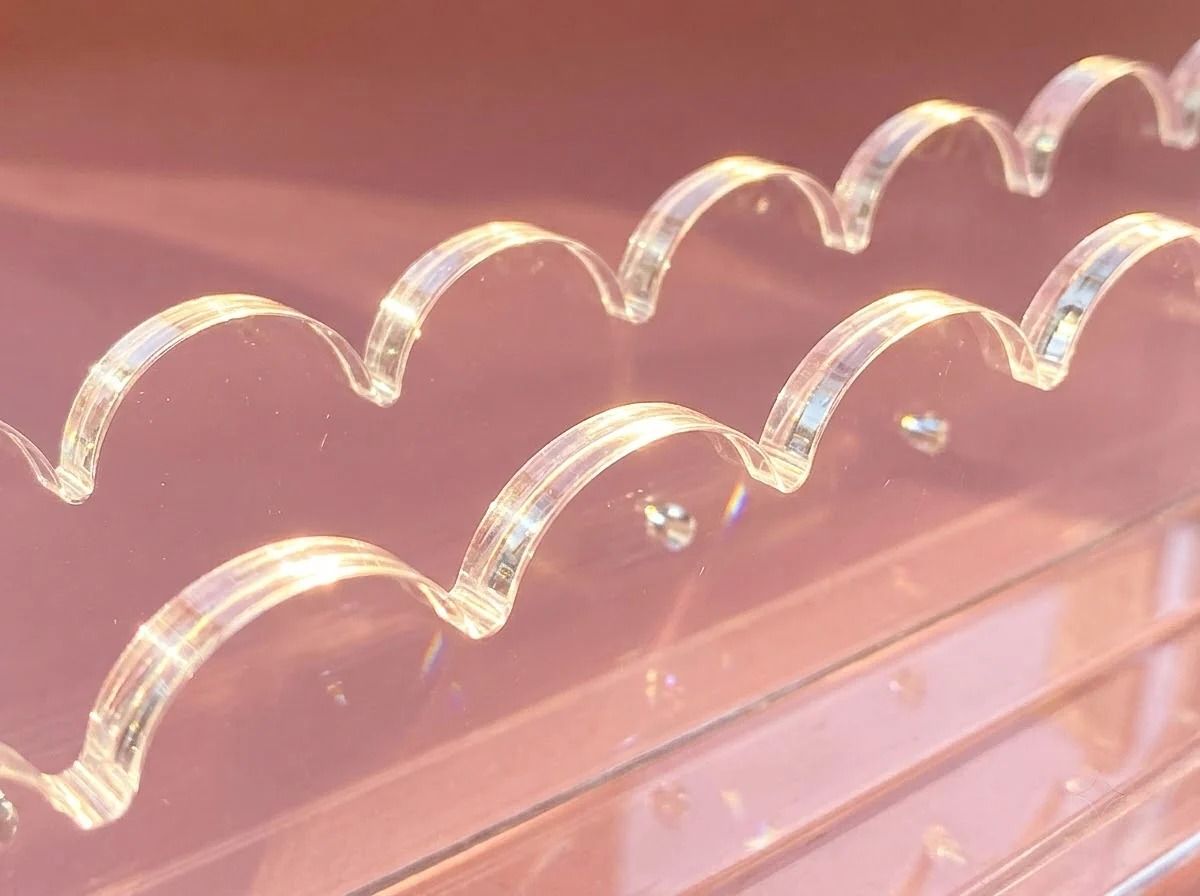
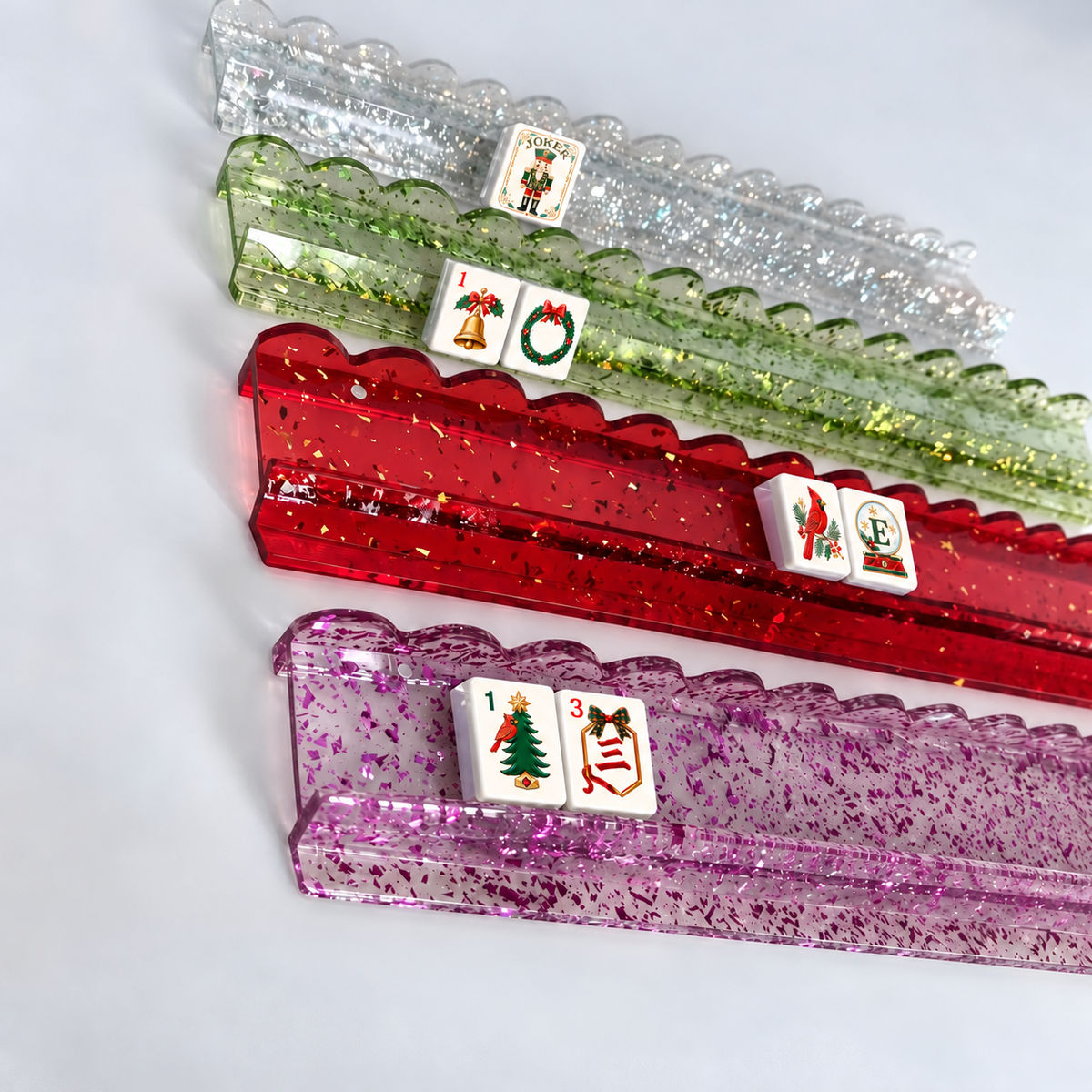
An American mahjong rack holds 14–18 tiles vertically in a line, with pushers standing ready to slide tiles forward as you form melds. Standard rack width runs 16–22 inches (accounting for tile depth and pushers), and typical height is 2–3 inches for the rack body alone—enough to rest your forearm comfortably during play. Most racks include one pusher per player; a four-player set needs four racks and four matching pushers. We recommend measuring your table depth first: racks sit in front of each player, so if your table is shallow, a narrower rack prevents the game from crowding the center. Pushers themselves vary in length (usually 8–12 inches) to suit hand sizes and mat layouts. Mahstead's collection of mahjong racks with pushers offers designs in acrylic with engraved options, sized for standard American tile dimensions (roughly ¾ inch per tile). Check your table's width before ordering—a typical dining table (36–42 inches) comfortably seats four players with standard-sized racks.
How Do I Measure for the Right Rack Size?
Start by measuring your table's depth (the distance from the edge to the center). Subtract 12–14 inches for the center play area where tiles are discarded and melded. The remaining depth is what your racks can occupy. Next, measure how many tiles you typically hold in your hand at once: beginners often hold 14–15, advanced players sometimes manage 18 with crowding. Most racks accommodate 16 tiles comfortably. If your hand size is small or you prefer loose spacing, choose a rack that holds 14. For larger hands or experienced players, aim for 16–18 tile capacity. Width varies by brand: acrylic racks built for standard American tiles are usually 18–21 inches wide including the pusher slot. Write these numbers down before shopping to avoid ordering racks too wide for your game table or too narrow for your typical hand size.

What's the Difference Between Rack Styles?
American mahjong racks come in three main styles: slanted (tiles lean back at an angle, easier to read), straight (tiles stand vertically, more compact), and tiered (two or three rows, rare in home play but good for teaching large groups). Slanted racks are the most popular because they reduce neck strain during long games and make tile recognition faster. Straight racks save table space and suit players who prefer minimal setup footprint. Pushers also vary: flat pushers (simple rectangles) are lightweight and affordable; grooved pushers grip tile edges better and reduce accidental knocks; contoured pushers have handles or curves for different grip styles. Your choice depends on table size (slanted racks need more depth) and hand comfort (grooved or contoured pushers suit arthritic hands or sweaty palms). The best-selling mahjong sets often ship with standard straight racks and flat pushers—a safe default for most home games.
Rack Style | Best For | Typical Width | Why Choose |
Slanted | Long games, readability | 19–22" | Reduces fatigue, easy tile scanning |
Straight | Compact tables, fast setup | 16–18" | Space-saving, minimal footprint |
Tiered (2 rows) | Teaching, large groups | 20–24" | Separates melds from hand |
Tiered (3 rows) | Demo play, tournaments | 22–28" | Maximum visibility (rare at home) |
What Size Pushers Do I Need?
Pushers are measured in length and width. Standard length is 8–10 inches for typical hand spans; tall players may prefer 10–12 inches. Width matters less (usually ½ to 1 inch) but affects grip comfort. A narrow pusher (½") is precise but can feel cramped; a wider one (¾–1") spreads effort across more fingers and reduces repetitive strain. Test before committing: hold a ruler or spatula at the length and width you're considering, and move it forward and back the way you would during play. If the motion feels natural and your wrist stays straight, that size works for you. Pushers made of smooth acrylic are standard; some players prefer wood for a warmer feel, though wood wears faster. Choose material to match your rack's material (acrylic or wood) so the touch and glide feel consistent. Most racks and pushers from Mahstead's collection are paired by design, so order them together rather than mixing mismatched sizes.
🎁 See our most-loved mahjong sets & accessories →
How Many Racks and Pushers Do I Need?
A four-player game requires four racks and four pushers—one set per player. If you host two-player games, you need two racks; for three players, three racks. Many home players buy an extra rack and pusher for replacement or teaching, since racks and pushers occasionally crack from drops or years of sliding tiles. If you plan to host games with rotating players (6–8 people total, but only 4 playing at once), order 5–6 racks and pushers so setup feels relaxed and backups are always ready. Families or clubs that play multiple tables simultaneously need multiplied counts—four tables = 16 racks and 16 pushers minimum. Check whether your set comes with racks and pushers included or whether you're buying them separately; some acrylic tile sets from Mahstead include them, while others require you to order racks as add-ons.
What Should I Check Before Buying?
Tile thickness and slot fit: Racks are designed for tiles of specific thickness (American tiles are typically ¾–⅞ inch). Verify that the rack's tile slots match your tile size—too loose and tiles shift during play, too tight and you can't insert or remove them smoothly. Pusher weight and balance: A pusher that's too light bounces off tiles; too heavy strains your hand. Acrylic pushers (lighter) suit quick taps; wood pushers (heavier) give more control but demand more effort over long games. Material compatibility: Acrylic racks and pushers glide smoothly on acrylic mahjong mats (which we recommend for serious players). Wooden racks can catch on felt or cloth. Engraving and personalization: If you're ordering racks as a gift or to mark your set, ask whether engraving is available and where (on the pusher handle or rack side). Spare parts: Check whether replacement pushers or individual racks can be purchased later if something breaks. We stock our mahjong racks so replacements are accessible without reordering a whole set.
✨ Find your Mahstead set — free US shipping →
Measurement Checklist Before You Order
[ ] Table depth (center edge to mid-point): _____ inches
[ ] Tiles you typically hold in hand: _____ (usually 14–18)
[ ] Your hand span (thumb to pinky, relaxed): _____ inches
[ ] Preferred pusher length: _____ inches
[ ] Number of players at your table: _____ (= racks needed)
[ ] Rack material preference (acrylic or wood): _________
[ ] Will you place racks on a mahjong mat?: Yes / No
[ ] Do you need engraved/personalized racks?: Yes / No
FAQ
Can I use a rack made for a 144-tile Chinese set with my American tiles?
No. American tiles are larger and thicker than Chinese tiles. A Chinese rack's slots will be too narrow. Always match rack size to your tile dimensions—ask the retailer to confirm compatibility with American (standard) tiles before purchase.
What happens if my rack is too narrow for my hand?
Tiles will overflow onto your mat or fall over. You'll have to hold extras in your hand, which defeats the purpose of the rack and slows play. Measure your typical hand size first, then choose a rack that comfortably holds 2–4 more tiles than you usually need.
Do I need a pusher if I play casually?
A pusher is not required but makes play cleaner and faster, especially during long sessions. Without one, you'll move tiles by hand, which risks knocking over the rack or exposing tiles accidentally. For weekly games, a pusher is worth the small investment.
Can I buy racks and pushers separately from tile sets?
Yes. Mahstead sells racks and pushers as standalone items to replace worn ones or expand your setup. Order them individually if your set didn't include them or if you need extras.
How do I know if my rack is too tall or too short?
Your forearm should rest lightly on or just above the rack when your elbow is bent at roughly 90 degrees and your hand hovers over the tiles. If the rack is too low, you'll hunch; too high, your arm aches. Standard height is 2–3 inches. Test at a friend's game before committing to a size.
Are engraved racks more prone to breaking than plain ones?
No. Engraving on acrylic or wood does not weaken the material if done correctly. Mahstead's engraved racks with pushers hold up as well as plain versions. The engraving is a surface decoration that doesn't compromise durability.
What's the best material for pushers if I have arthritis?
Wider, contoured pushers (¾–1 inch wide) reduce hand strain. Wood or heavier acrylic distributes force across more fingers. Avoid thin, light pushers; they require a pinch grip that aggravates joints. Smooth, textured edges help too. Test a sample in-hand if possible.
Do I need to buy a mat to use racks and pushers?
No. Racks and pushers work on any flat surface—a dining table, card table, or bare wood. However, a mahjong mat protects your table, keeps tiles quiet, and prevents racks from sliding around during play. Most regular players pair racks with a mat.


View More
View More
View More
